
Key Takeaways
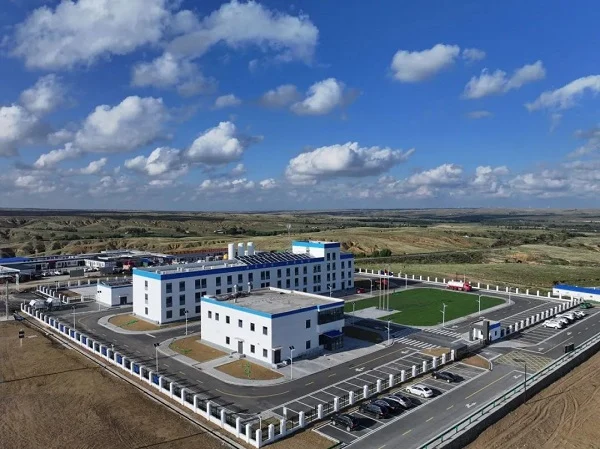
1. CNNC has produced its first barrel of natural uranium from the National No. 1 Uranium project in Ordos, Inner Mongolia, marking a key step in China’s nuclear energy strategy.
2. The Ordos facility uses CO2 + O2 in-situ leaching, an environmentally friendly method that minimizes waste compared to traditional uranium mining.
3. The project is branded as a “third-generation smart uranium mine” due to its use of remote-controlled mining and real-time digital monitoring.
4. Once fully operational, the project aims to enhance China’s energy security and reduce reliance on imported uranium, which currently comes mainly from Kazakhstan and Namibia.
5. The Ordos operation is the first of several planned ISR mining bases in northern China, supporting the country’s goal to increase nuclear energy output and establish long-term fuel security.
China National Nuclear Corporation (CNNC) has revealed that they have produced their first barrel of natural uranium from the largest in-situ recovery (ISR) mining project in the country, situated in Ordos, Inner Mongolia. This is a significant advancement in China’s nuclear energy strategy, which heavily relies on imports.
Important Achievements
The demonstration project, known as ‘National No. 1 Uranium,’ showcases important success in both operational and environmental efficiency.
The Ordos facility employs a method called CO2 + O2 in-situ leaching instead of traditional uranium mining, which typically involves digging and has a larger negative environmental impact. This innovative process dissolves uranium underground and brings it to the surface through a closed-loop system, minimizing waste in solid, liquid, and gas forms.
Modern Mining Technology
CNNC has branded this project as a “third-generation smart uranium mine,” thanks to its use of remote-controlled mining, automated processes, and real-time digital monitoring that ensures the technical success of the extraction. Previously, the deposit was considered unviable due to difficulties with extracting sandstone uranium.
The pilot demonstration of the 55-gallon barrel of uranium production signifies the shift from construction to trial mining, though the mine is not yet fully operational. As of now, CNNC has not announced when they expect the mine to begin full commercial operations.
Enhancing Energy Security
“Once fully operational, the project will provide a strong resource foundation for national energy security and the development of the nuclear industry, while greatly improving the international competitiveness of China’s natural uranium sector,” stated CNNC.
The success of this pilot project is crucial for reducing China’s reliance on imported uranium, which currently makes up a large portion of the country’s supply. According to World Bank data from 2023, 66% of this uranium comes from Kazakhstan and 33% from Namibia.
China has laid out a plan to boost its nuclear energy output, which currently contributes 5% of the total energy supply, with 58 reactors in operation and 32 more being built. This growth necessitates more fuel sources. Therefore, dependable domestic fuel sources are becoming increasingly vital, especially as global uranium markets face tightening and geopolitical issues impact supply chains.
The Ordos operation is the first of several planned ISR bases throughout northern China, including the Songliao, Erlian, and Yili basins, aimed at establishing long-term fuel security.
Source:
link
Leave a Reply