
Key Takeaways
1. Meta has finally released a native Instagram app for the iPad, 15 years after the device’s launch.
2. The new app prioritizes Reels as the main feature for discovering and sharing content.
3. A new Following tab organizes accounts into three categories: All, Friends, and Latest for easier navigation.
4. The app’s layout allows for simultaneous viewing of comments alongside Reels without changing video size.
5. This update follows the recent launch of an enhanced WhatsApp experience for iPad users.
In 2010, Steve Jobs introduced the first iPad, a device that aimed to provide the “internet in your hands.” Yet, for 15 years, Meta has avoided creating a native Instagram app for this device.
Finally Here!
That has changed with the debut of a native Instagram experience specifically for Apple’s tablet. The press release exclaims, “It’s finally here!” indicating that they took quite a while to get to this point.
Focus on Reels
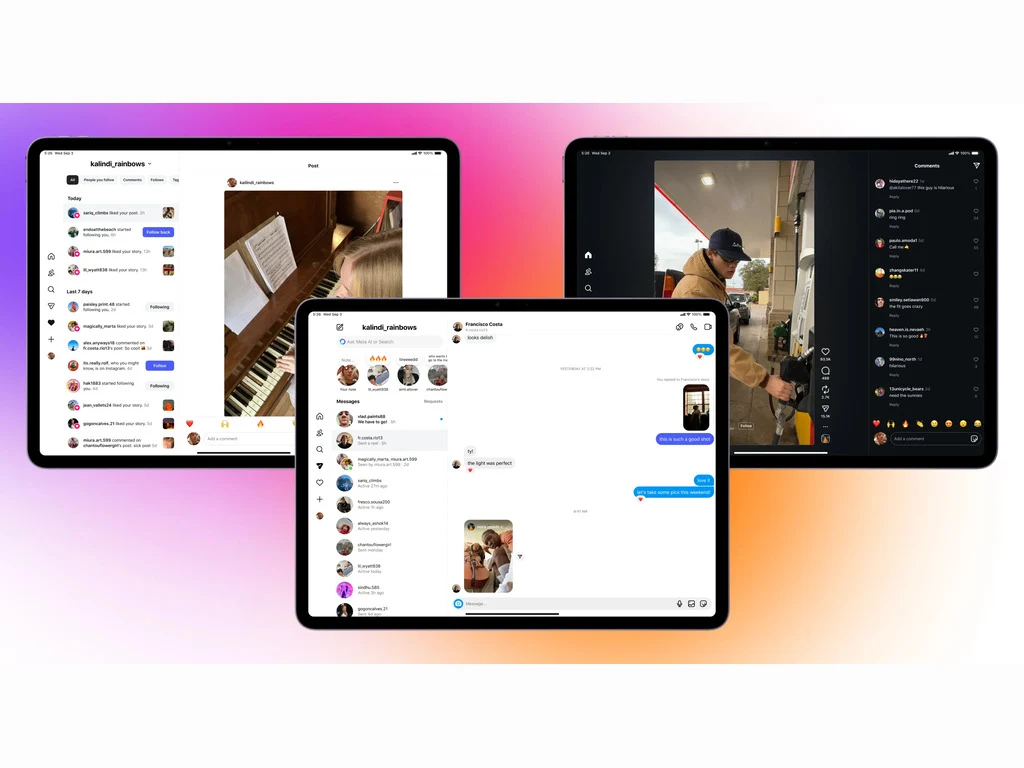
The fresh app emphasizes Reels, making it the “main way for users to find and share entertaining content.” Upon opening the app, users are directly taken to Reels, with Stories displayed above. The navigation menu has been repositioned to the left, making it easier to move around the app with just a few taps.
New Following Tab
There’s a new Following tab that organizes your followed accounts into three distinct categories: All, Friends, and Latest. The All category shows posts and reels from everyone you follow, while Friends filters to only show content from those who follow you back. The Latest section arranges posts in chronological order, showing the newest content first.
This revamped interface aims to simplify catching up on messages and notifications, featuring layouts that show both tabs. For instance, when viewing Reels, comments will appear on the side without altering the video size. The updated app is currently being launched to users all over the globe via the App Store on Apple devices.
This update marks the second major Meta app to receive an enhanced experience for larger screens, following WhatsApp, which was released for the iPad a few months earlier.
Source:
Link


