Category: Software

  • Channels on WhatsApp are undergoing testing for polls

    Channels on WhatsApp are undergoing testing for polls

    WhatsApp is expanding its feature set once again, this time with the addition of polls in Channels on Android. This new feature was introduced in a recent beta update, version 2.24.2.11, allowing some testers to create polls within Channels. The polls option can be accessed through the paperclip icon in Channel chats and enables users to create questions with up to 12 options.

    Polls in Channels

    The polls icon in Channel chats is displayed in green, which is different from the usual yellow. However, the core functionality of the polls remains consistent. Votes are anonymous, and even the poll creator will not be able to see individual responses. While not all beta testers have access to this feature, its presence suggests that a wider rollout could be on the horizon. Users on the Android beta program who are interested in gauging opinions within their Channels should keep an eye out for the green polls icon.

    Availability and Future Updates

    At the moment, it is uncertain when this feature will be available to all users. As it is still in the early stages, it will undergo further testing and improvements in future beta versions. While the idea of using polls in Channels is exciting, it may take some time before it becomes accessible to everyone.

    Bug Fix for Android Users

    In a separate beta update, version 2.24.2.12, a recent bug fix was addressed for Android users. A previous update had unintentionally caused the display of Status update thumbnails next to contact names to break. However, this new update restores that functionality, bringing back a familiar convenience for users.

    Flurry of Activity from WhatsApp

    These recent developments, along with the beta testing of advanced text formatting and themes on Android, indicate a flurry of activity from WhatsApp at the beginning of 2024. With more features and improvements in the pipeline, the popular messaging app seems determined to keep users engaged and excited for future updates.

  • EU Google Users Now Have the Option to Opt Out of Data Sharing from Services including YouTube, Maps, and More

    EU Google Users Now Have the Option to Opt Out of Data Sharing from Services including YouTube, Maps, and More

    European Users Gain Control Over Data Sharing with Google Services

    Google is making a significant change to its suite of services for European users in response to the EU’s Digital Markets Act (DMA), which will be enforced starting on March 6th. The new policy introduced by Google allows users to have granular control over data sharing across select Google services, including popular ones like YouTube, Maps, and more.

    Adjusting Data Sharing

    With this update, users now have the freedom to choose which Google services can access their data. They can decide to stop sharing their data with all, some, or none of these select services, giving them greater control over their personal information.

    Unlinking Google Services

    Users can now unlink certain Google services from their data sharing. The list of services that can be unlinked includes some of Google’s most popular offerings, such as Search, YouTube, Ad services, Google Play, Chrome, Google Shopping, and Google Maps.

    Limitations and Exceptions

    While the new policy gives users more control, there are certain limitations and exceptions to data sharing. Google clarifies that data sharing may still occur in specific situations, such as completing transactions, fulfilling legal obligations, or preventing fraud. These exceptions ensure that essential functionalities are not compromised.

    Balancing Personalization and Features

    Google acknowledges that linking services can enhance personalization of content and ads. By having Google services linked, users can enjoy a more tailored experience. However, if services are unlinked, certain features may be lost. For example, if Search, YouTube, and Chrome are disconnected, search recommendations and the Discover feed won’t be as personalized. Similarly, if Search and Maps are unlinked, Search reservations won’t appear in Maps.

    User Control and Data Usage

    Ultimately, the decision to unlink services rests with individual users. While there may be some feature loss, it also provides users with more control over their data usage within the Google ecosystem. This change aligns with the EU’s efforts to empower users and ensure transparency in data handling.

    The DMA’s Impact

    The DMA not only affects data sharing but also restricts Google’s ability to prioritize its own services in Search results. This creates a more level playing field for competitors. While Google embraces the DMA, other tech giants like Apple, Meta, and TikTok are challenging its designation in court.

    In conclusion, European users of Google’s suite of services now have greater control over their data sharing. The new policy allows users to selectively unlink certain services while still maintaining essential functionalities. This change reflects Google’s compliance with the EU’s Digital Markets Act and its commitment to empowering users in managing their personal information.

  • ColorOS 14 Stable Update Release Schedule for January 2024

    ColorOS 14 Stable Update Release Schedule for January 2024

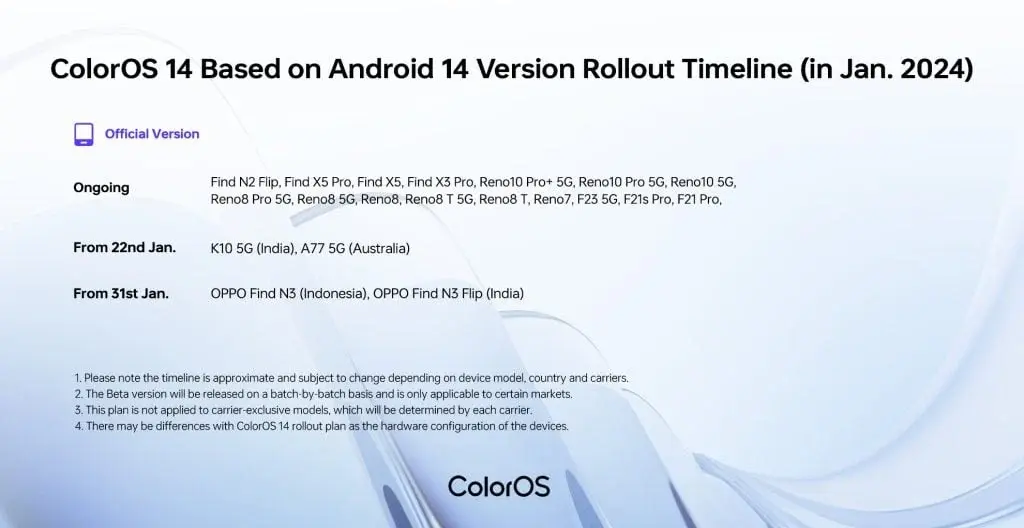
    During the unveiling of the Oppo Reno 11 on January 12, the company is currently engaged in efforts to deliver the ColorOS 14 update to the remaining smartphones.

    ColorOS 14 Update Schedule

    According to the ColorOS 14 stable update timeline posted in January 2024, the Oppo K10 5G in India and the Oppo A77 5G in Australia are scheduled to receive the ColorOS 14 update commencing on January 22. In the meantime, various Oppo smartphones have already begun receiving updates, such as the Oppo Find N, Find N2 Flip, Find N3 Flip, Find X5 Pro, Find X5, Find X3 Pro, Reno10 Pro+ 5G, Reno10 Pro 5G, Reno10 5G, Reno8 Pro 5G, Reno8 5G, Reno8, Reno8 T 5G, Reno8 T, Reno7, F23 5G, F21s Pro, and F21 Pro.

    Ongoing Deployment

    Following this month, the rollout of the ColorOS 14 update will extend to smartphone foldables, including the Oppo Find N3 in Indonesia and India. Nevertheless, some countries have already received the Open Beta update a few days ago. The official announcement will be made through the Oppo Official Community Forums in the respective regions.

    Notable ColorOS 14 Features

    ColorOS 14 introduces a range of new features, such as a complete design overhaul, performance enhancements, and stability improvements. The update brings the Aquamorphic Design, which enhances sound effects, color schemes, and user interactions. Furthermore, it enhances the Always-On Display (AOD) with the Homeland AOD, displaying natural scenes and linking Environment Vision pages to daily steps. AI-powered Smart Touch simplifies daily activities, while Smart Image Matting and Trinity Engine upgrades improve image editing. Smart charging dynamically adjusts the charging current based on usage conditions to ensure safety and privacy. Moreover, ColorOS 14 integrates Snapchat with Bitmoji AOD for quicker app navigation and real-time updates, providing users with a comprehensive and user-friendly mobile experience.

    Detailed Analysis and Beta Channels

    Users can refer to our detailed review of ColorOS 14 to gain further insight into the smartphone operating system. This scheduled timeline pertains to the ColorOS 14 stable rollout, while the beta channels are receiving their respective updates. Additionally, ColorOS 14 is currently being deployed to both flagship and non-flagship devices, including the Oppo A77, A77s, and A57.

  • Samsung Reveals Cutting-Edge Tizen and Ecosystem Features at CES 2024

    Samsung Reveals Cutting-Edge Tizen and Ecosystem Features at CES 2024

    Samsung Unveils 2024 TV Lineup and Enhanced Tizen OS

    Samsung has recently announced its 2024 television lineup and an upgraded version of its Tizen operating system ahead of CES 2024. The company’s focus is on improving the home TV experience by offering personalized features, gaming enhancements, and accessibility options.

    Personalized Tizen OS and Revamped TV Plus Interface

    The new Tizen OS for 2024 puts emphasis on personalization through the use of artificial intelligence (AI). This allows for customized content and services for different household members through individual profiles on their smart TVs. Additionally, Samsung has redesigned its TV Plus interface, providing users with a more intuitive home screen for easier navigation and faster content discovery. The updated interface now connects with Samsung accounts, offering personalized content recommendations and easy access to preferred channels based on viewing history.

    Gaming Enhancements and Updated Ecosystem

    Samsung has partnered with Performance Designed Products (PDP) to release a specially designed wireless controller for the Samsung Gaming Hub. This controller comes with a built-in rechargeable battery that offers up to 40 hours of playtime, a 30-foot Bluetooth connection range, and dedicated buttons for gaming and TV volume control.

    The updated ecosystem from Samsung focuses on connected and inclusive experiences, with Samsung Daily+ serving as a central hub. This feature combines personal training, telehealth services, video calls, and remote PC solutions. The new additions to this ecosystem include the Workout Tracker, TechnoGym and F45 fitness content, FlexIt live fitness sessions, and Tail veterinary consultations.

    Seamless Connectivity and Accessibility Features

    Samsung introduces Multi Control, a connectivity feature that allows users to manage multiple screens using a single Bluetooth keyboard or mouse. This feature aims to improve work-from-home efficiency. The latest Samsung TVs also enhance compatibility across devices, simplifying seamless connections between TVs, smartphones, and wearables.

    The company has also introduced the SmartThings Mobile Plugin, which turns smartphones into versatile remotes for new apps and services. Additionally, Samsung extends its 360 Audio feature to TVs, providing users with immersive audio experiences. The Vibrary feature allows users to enjoy high-quality images and music from both their TV and mobile devices.

    Samsung places great importance on accessibility and has introduced innovative features to cater to users with disabilities. The Audio Subtitle feature, which uses AI and OCR, provides voice-guidance for embedded subtitles directly on the TV. The company also offers the Remote for Barrier-Free app to assist users with disabilities. Moreover, Samsung introduces the AI-powered Relumino Together Mode to aid those with low vision.

    Conclusion

    Samsung’s 2024 TV lineup and Tizen OS updates offer a more personalized, connected, and inclusive home entertainment experience. With a focus on gaming, fitness, and accessibility, Samsung aims to make its TVs the center of the smart home.

  • OPPO Reno 11 Series to Receive Three OS Updates and Preloaded with ColorOS 14 in India

    OPPO Reno 11 Series to Receive Three OS Updates and Preloaded with ColorOS 14 in India

    OPPO Reno 11 Series to Come with Long Software Support

    OPPO is all set to launch its Reno 11 series in India on January 12, consisting of a standard and pro model. The brand has already revealed the key specifications and features of the upcoming smartphones ahead of the official launch event later this week. Now, OPPO has announced the software support duration for the Reno 11 series.

    Software Support Duration

    OPPO released ColorOS 14 in November last year, and now the brand has confirmed that the Reno 11 series will be the first smartphones in the country to come pre-installed with ColorOS 14-based Android 14 out of the box. In addition, the Reno 11 series will be eligible for three OS updates and four years of security patches. This means that the devices will receive updates up to Android 17 version.

    ColorOS 14 Features

    ColorOS 14 introduces Aquamorphic design, which seamlessly integrates common elements such as bubbles and capsules into the status bar without cluttering the display. The Go Green style for Always-on Display (AOD) promotes environmental consciousness. The update also brings performance improvements, enhanced security and privacy features, and AI-powered capabilities. For a detailed list of changes in ColorOS 14, you can visit the official website.

    Impressive Specifications

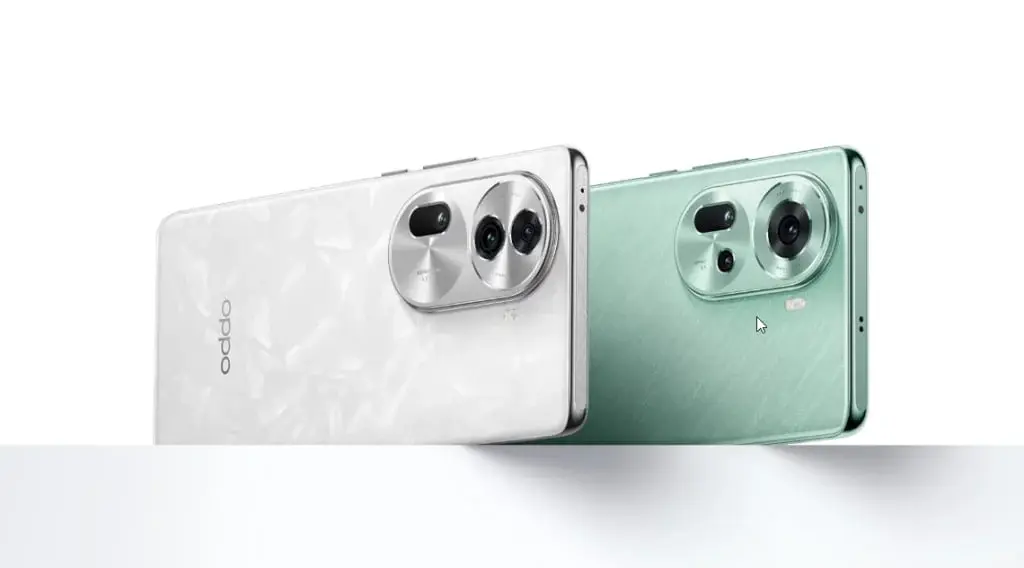
    The Reno 11 series is confirmed to feature a 6.7-inch AMOLED screen with curved edges, a 120Hz refresh rate, and HDR10+ certification. The upcoming smartphones boast a slim design with a pill-shaped camera module. The Reno 11 series will house a 50MP main sensor, a 32MP telephoto unit, and an additional camera. For selfies, there will be a 32MP front-facing snapper.

    Conclusion

    With the Reno 11 series, OPPO is not only bringing impressive specifications but also ensuring long-term software support for its customers. The devices will come with ColorOS 14-based Android 14 out of the box and will receive three OS updates and four years of security patches. This commitment to software support ensures that users can enjoy up-to-date features and security enhancements on their Reno 11 smartphones for years to come.

  • Latest Windows 11 Insider Build Sees Microsoft Parting Ways with WordPad

    Latest Windows 11 Insider Build Sees Microsoft Parting Ways with WordPad

    Farewell to WordPad and People App

    Microsoft has announced that WordPad, the text editor that has been a part of Windows for nearly 30 years, will be removed from the operating system in a future update. The latest Windows 11 Insider build (26020) no longer includes WordPad, and this change is intended to be permanent. Users will not be able to reinstall the program through official channels after the stable build rolls out to the public.

    The announcement was made on the Windows Insider Blog along with other new features of the Windows 11 Insider build (26020). These features include enhanced voice access tools and improved text-to-speech voices. However, the removal of WordPad stands out due to its long history and familiarity with many users. According to the blog post, starting with this build, WordPad and the People app will no longer be installed after doing a clean install of the OS. In a future flight, WordPad will be removed on upgrade, and it will not be reinstallable. The blog post also mentions that WordPad is a deprecated Windows feature.

    WordPad has not received updates in years and was considered to be somewhere between a basic notepad and a full-fledged word processor. While it was free and did not require internet access, most users have found better alternatives elsewhere. Therefore, the removal of WordPad is not a huge surprise.

    In addition to WordPad, the People app will also be removed, and the Steps Recorder will no longer receive updates. Microsoft suggests ClipChamp as a potential replacement for the Steps Recorder.

    Updates to Notepad and Other Additions

    While WordPad is bidding farewell, Notepad, the reliable text editor, continues to see changes. The latest build of Windows 11 adds some improvements to Notepad, including accessibility tweaks for voice control and the ability to pause and resume printing. However, some users may find the constant tinkering with Notepad unnecessary.

    Apart from these changes, the new build of Windows 11 brings a few other noteworthy additions. Users will now receive a notification when their computer is in energy saver mode, which can be helpful in managing power consumption. Additionally, users can now give their devices more descriptive names, making it easier to share and identify them.

    Overall, while the removal of WordPad may disappoint some longtime users, it is clear that Microsoft is focusing on enhancing other features and providing better alternatives for text editing and productivity. Users can explore various third-party applications that offer more advanced functionality and modern design.

  • Yonyou Enters New Era with President Wang Wenjing’s Resignation

    Yonyou Enters New Era with President Wang Wenjing’s Resignation

    Change: The Crucial Element for Advancement

    Change is an inevitable force that drives progress in various sectors, particularly in technology. Wang Wenjing, previously celebrated as the ‘king of software’ in China, has recently relinquished his position as president of Yonyou Network Technology. This shift signifies a significant transformation for the company, a prominent figure in enterprise management systems over the years.

    Despite stepping down from the presidency, Wang continues to play a vital role at Yonyou as its chairman and CEO, focusing on strategic initiatives and product innovation.

    Yonyou Confronts Uphill Battles

    Yonyou, renowned for its enterprise resource planning (ERP) software, has encountered its fair share of obstacles. In the post-pandemic world, businesses globally have faced challenges, and Yonyou is no exception. Established in 1988, the company has experienced more prosperous times, with recent years marked by sluggish sales and escalating losses. Nevertheless, Yonyou’s resilience remains noteworthy, as it maintains a prestigious position among the top 10 ERP software providers on a global scale.

    A Novel Perspective Brought by the New President

    The selection of Chen Qiangbin, a seasoned individual at Yonyou, as the new president represents a strategic maneuver. Chen’s extensive background in software development, sales, and management offers a fresh outlook and potentially a new trajectory for the company. His expertise could prove instrumental in navigating current market adversities and capitalizing on opportunities within China’s thriving digital economy.

    Flexibility and Metamorphosis

    Yonyou’s evolution over the years, transitioning from selling software licenses to providing cloud-based services, showcases adaptability—an indispensable quality in the dynamic tech industry. In 2022, cloud services constituted a significant portion of the company’s revenue, underscoring its successful pivot towards a software-as-a-service model. This transformation might serve as the impetus required for Yonyou to regain profitability.

    Tenacity in the Midst of Challenges

    Despite the challenges posed by the current economic landscape impacting the tech sector, Yonyou’s third-quarter results last year displayed promising indicators, with revenue growth evident across all sectors. This resilience in the face of adversity is commendable and indicates a continued strong demand for ERP systems.

    An Encouraging Tomorrow

    Wang Wenjing’s voyage alongside Yonyou, from its initial days focusing on accounting software to now competing with global titans such as Oracle and SAP, has been extraordinary. As Yonyou navigates through this transitional phase, drawing upon lessons from its history coupled with a novel leadership strategy, the future appears promising. The company’s expansive global footprint, with over 230 branches worldwide, positions it favorably to seize new prospects and surmount existing challenges. Only time will unveil what lies ahead for the company.

  • Crucial Feature That Gmail for Android Has Been Missing Since Its Launch Is Now Finally Implemented

    Crucial Feature That Gmail for Android Has Been Missing Since Its Launch Is Now Finally Implemented

    Differences in Features between Android and iOS Versions of Apps

    It is not uncommon to find differences between the Android and iOS versions of the same app. Sometimes, one version may have features that are missing in the other. For instance, Instagram on iOS tends to maintain higher post quality compared to its Android counterpart, leading many content creators to prefer using iPhones over Android flagship smartphones.

    However, what if Google, the company behind Android, had actually made the iOS app better than the Android one? You probably wouldn’t have expected such a scandal, right? Surprisingly, this was the case until recently when a crucial Gmail feature, previously only available on iOS, finally made its way to the Android app. Let’s delve into the details.

    Android’s Gmail App Adopts ‘Select All’ from iOS Version

    Gmail, Google’s popular email app, is available on both Android and iOS platforms. Personally, I have been using it on my iPhone for years and, in my opinion, it surpasses other options. One of the most useful features for me has been the ability to “select all” while deleting unnecessary emails. Nowadays, we receive emails from various platforms on a daily basis.

    Even when a friend sends you a direct message on Twitter, you end up receiving an email notification about it. Dealing with such spam and notifications can be overwhelming, which is why the ‘select all’ function has been a lifesaver. However, despite being available on iPhones for a long time, this feature was missing from the Android Gmail application until recently.

    Fortunately, it seems that Google has finally listened to its users and developed this much-requested feature. Although it is not yet available on every phone, it is expected to be accessible to all users through upcoming updates. However, it’s important to note that this feature does not allow you to select all emails for deletion. Instead, it only enables you to select and delete 50 emails per page. If you wish to delete all emails, here are the steps you need to follow:

    Steps to Delete All Emails on Computer:

    1. Sign in to Gmail.
    2. Click on the checkbox below the search box in the upper left corner.
    3. A warning message saying “Select all x conversations” will appear. Click on this warning message to select all emails.
    4. Click on the “Delete” button at the top.

    Steps to Delete All Emails on Mobile:

    1. Open the Gmail app.
    2. Open your inbox.
    3. Tap on the three dots in the upper left corner.
    4. Tap on “Select all”.
    5. Tap on the “Delete” button at the top.

    By following these steps, you can delete all emails in your inbox. Deleted emails will be moved to your trash folder and will be permanently deleted after 30 days.

    In conclusion, the Android Gmail app has finally adopted the ‘select all’ feature from its iOS counterpart. While it may not be available on all devices just yet, it is expected to be rolled out to all users through future updates. This improvement will undoubtedly make managing emails on the Android platform much easier and more efficient.

  • OxygenOS 14 Update Now Ready for OnePlus 9R and 8T

    OxygenOS 14 Update Now Ready for OnePlus 9R and 8T

    Latest Stable Update OxygenOS 14 Now Available for OnePlus 8T and OnePlus 9R

    After much anticipation, the Stable OxygenOS 14 update, which is based on Android 14, is finally being deployed to the OnePlus 9R and OnePlus 8T smartphones. This update introduces a range of thrilling new modifications and feature enhancements. Presently, the update is exclusively accessible for the India editions of both phones. Initially, the rollout will target closed beta and open beta users before gradually becoming available to all regular users.

    Firmware Specifics

    The OnePlus 8T is getting the firmware KB2001_14.0.0.200 (EX01), whereas the OnePlus 9R is being upgraded with the firmware LE2101_14.0.0.300 (EX01). Both devices are sharing the same update log, showcasing noteworthy inclusions such as:

    Introduction of New File Dock and Content Extraction Attributes

    Among the key highlights of this update is the integration of the File Dock and Content Extraction attributes. Through the File Dock attribute, users can now effortlessly move files between applications, simplifying file management tasks. Moreover, the Content Extraction attribute empowers users to identify and extract text directly from the screen, making tasks involving information extraction from various sources more efficient.

    Various Enhancements

    Apart from the features mentioned above, the Stable OxygenOS 14 update introduces numerous other enhancements to enrich the overall user experience. Although the official log furnishes a comprehensive list of these enhancements, specific details are left unspecified.

    It is crucial to acknowledge that, at present, this update is solely accessible for the India variants of the OnePlus 9R and OnePlus 8T. Users residing outside India might experience a slight delay in receiving the update for their devices. Nonetheless, OnePlus has a reputation for swift software updates, indicating that the Stable OxygenOS 14 update will soon be globally accessible.

    To ensure a seamless installation process, it is advisable to possess a stable internet connection and ample battery life before commencing the update. Users can manually search for the update by navigating to Settings > System > System Updates.

    Once the Stable OxygenOS 14 update is successfully installed, users of OnePlus 9R and OnePlus 8T can relish the new features and enhancements it brings along. Whether it’s the convenience facilitated by the File Dock attribute or the efficiency boosted by the Content Extraction feature, this update strives to elevate the overall usability and functionality of the devices.

    In summary, the Stable OxygenOS 14 update is now making its way to OnePlus 9R and OnePlus 8T smartphones, introducing exciting new changes and feature enhancements. Users are now able to make the most of the advantages offered by the File Dock and Content Extraction attributes, alongside other enhancements designed to elevate the overall user experience. While the update is currently limited to India editions, it is anticipated to become available worldwide soon.

  • Elon Musk’s Twitter (X) Value Drops to $12 Billion, a 71% Decrease from $44B Acquisition

    Elon Musk’s Twitter (X) Value Drops to $12 Billion, a 71% Decrease from $44B Acquisition

    Elon Musk’s Twitter Acquisition: A 71% Decline in Value

    Elon Musk, the renowned billionaire behind Tesla, SpaceX, and Starlink, is also known for his acquisition of the social media platform Twitter (X) for a staggering $44 billion. However, recent reports reveal that X’s value has plummeted by 71%, currently standing at $12 billion. Let’s delve into the details of this significant decline.

    Challenges in Monetizing Twitter

    Since taking over Twitter, Musk has been tirelessly working to address the platform’s biggest challenge of monetization. However, there have been stumbling blocks along the way, with Musk’s responses to criticisms drawing attention.

    One notable incident involved accusations of antisemitism on the platform. When questioned about his stance on the matter, Musk responded with an expletive-laden expression, which only further exacerbated the situation. These controversies have resulted in new problems rather than solving existing ones.

    Loss of Advertising Agreements

    The consequences of such controversies have been evident in the form of terminated advertising agreements. Prominent companies like Apple have severed their ties with Twitter under Musk’s leadership. In an attempt to mitigate these issues and reduce reliance on advertising, the company introduced features like ad-free streaming and curated sharing through the X Premium subscription, developed in collaboration with Grok AI. Unfortunately, these efforts have not yielded the desired results, as X’s value continues to decline.

    Fidelity’s Impact on X’s Value

    Fidelity, a mutual fund that initially supported Musk’s acquisition of X, played a significant role in the platform’s decline. The fund reduced X’s value by a staggering 71.5%, causing the platform’s worth to plummet to only 28.5% of its original $44 billion acquisition value in 2022. In contrast, competitors such as Meta and Snap have experienced increased stock values, positioning themselves as more secure advertising options compared to X.

    The Road Ahead for Elon Musk and Twitter

    With X’s value taking a significant hit, Elon Musk faces an uphill battle in revitalizing the platform’s fortunes. The challenges of monetization and controversies surrounding the platform require careful navigation and strategic decision-making. As Musk continues to juggle his numerous successful ventures, it remains to be seen how he will steer Twitter towards a path of profitability and regain its lost value.

    In conclusion, Elon Musk’s acquisition of Twitter (X) for $44 billion has resulted in a substantial decline in its value, now standing at $12 billion, a 71% decrease. The challenges in monetization, coupled with controversies and terminated advertising agreements, have contributed to this decline. As Musk strives to address these issues, the future of Twitter under his leadership remains uncertain.