Category: Phones

Stay updated with the latest phone news, reviews, and trends. Discover cutting-edge smartphones, features, and innovations in our Phones category at GizNewsDaily

  • Google Pixel 8a Price Leaked, Exceeds Pixel 7a Cost

    Google Pixel 8a Price Leaked, Exceeds Pixel 7a Cost

    Pixel 8a details are circulating widely across various platforms! Render images have been making rounds, and Google inadvertently unveiled the phone’s design in an official Google Fi advertisement. While most aspects of the phone are pretty much known to us, the pricing remained a mystery until now!

    Pixel 8a Pricing Unveiled

    Tipster Paras (via PassionateGeekz) recently spotted the smartphone at a Canadian retailer, finally disclosing its cost. The 128GB model of the Pixel 8a is set to be priced at CA$ 708.99, with the higher-tier 256GB version tagged at CA$ 792.99.

    Price Comparison with Pixel 7a

    To put things into perspective, the Pixel 7a debuted at CA$ 599 in Canada for the base 128GB model. Hence, the Pixel 8a emerges as approximately 10% pricier than its predecessor. However, the retailer’s listing doesn’t reveal any additional details about the smartphone.

    Pixel 8a Specifications (Rumored)

    The Pixel 8a’s design has been disclosed through numerous leaks and renders, showcasing a striking resemblance to the Pixel 8, complete with a familiar visor camera bump and rounded edges. It is expected to be available in multiple colors like Obsidian, Porcelain, Bay, and Mint.

    One of the significant upgrades for the Pixel 8a is its display, which will feature a 120Hz refresh rate, a first for a Pixel A-series phone. The screen will be a 6.1-inch OLED panel boasting a peak brightness of 1400 nits.

    Similar to the high-end Pixel 8, the Pixel 8a will run on the Google Tensor G3 processor, albeit in an underclocked version. It will also pack 8GB of RAM and the Titan M security chip, operating on Android 14 upon boot.

    The camera setup is anticipated to utilize the same sensors as the Pixel 7a, with a 64MP primary sensor, a 13MP ultrawide sensor, and a 13MP selfie camera. Moreover, it may incorporate some of the new camera features seen in the Pixel 8, such as Best Take and Magic Eraser.

    Addressing a historical weak point, the Pixel 8a is rumored to sport a larger 4,500mAh battery with faster 27W wired charging, an upgrade from the Pixel 7a’s 18W. Wireless charging at 7.5W is also expected. Additionally, there are speculations about an enhanced battery stats feature that will provide insights into manufacturing date, charging cycles, and battery health.


  • Nothing Phone (2) Receives Nothing OS 2.5.5 Update with Bug Fixes

    Nothing Phone (2) Receives Nothing OS 2.5.5 Update with Bug Fixes

    After the recent launch of the Nothing OS 2.5.5 update for the Nothing Phone (2a), the brand has now initiated the rollout of the same update for the Phone (2). Users of the device have been eagerly anticipating this update, hopeful that it will address various issues that have emerged on the Phone (2) recently. Let's delve into the details of what this update entails.

    The update, sized at 206MB, introduces ChatGPT integration and widgets. Scheduled for late April, this update will extend system-level ChatGPT access, enabling functions like screenshot sharing and the inclusion of Nothing-themed widgets. Moreover, it addresses multiple bugs, incorporates Ultra XDR for the camera, introduces an HDR switch within Photo and Portrait Modes, integrates a RAM Booster, and adds Recorder and Battery Widgets. For a comprehensive overview of the changes, refer to the complete changelog provided below.

    Nothing Phone (2) Nothing OS 2.5.5 Update Changelog

    ChatGPT Integration
    The latest ChatGPT version from the Play Store offers the following features:

    • A new gesture option in Nothing X to initiate voice conversations with ChatGPT for Nothing Ear & Nothing Ear (a).
    • Newly introduced ChatGPT widgets to launch ChatGPT in various modes directly from your home screen for enhanced accessibility.
    • A button on the screenshot and clipboard pop-up for seamless content pasting into a new ChatGPT conversation.

    Additional Features

    • The camera now supports Ultra XDR. Access this feature via Camera settings > Ultra XDR.
    • Photo and Portrait Modes in the camera app now feature an HDR switch, toggled through the settings at the top.
    • Added the RAM Booster feature, accessible through Settings > System > RAM Booster.
    • Included a Ring Mode option in Quick Settings for simplified sound management.
    • Introduced a new Recorder widget for convenient on-the-go audio recording.
    • Implemented a new Battery widget for improved power usage monitoring.
    • Added Glyph Interface Debug Mode to developer options.

    Improvements and Bug Fixes

    • Enhanced system stability, NFC functionality, and Wi-Fi connection stability.
    • Optimized animations for smoother app and widget openings.
    • Improved response speed when configuring Bluetooth in Quick Settings.
    • Refined volume settings for a more intuitive user experience.
    • Enhanced album cover display clarity in the Music Player widget.
    • Addressed various issues, such as flickering during app launches from Quick Settings on the lock screen and on the AOD interface.
    • Resolved multiple bugs, including those related to SIM card switching with enabled Data during call feature, lock screen widget disappearance post-screen share, abnormal lock screen wallpaper display interruptions, and display inaccuracies with Bluetooth connectivity to a watch.
    • Rectified issues like frequent refreshing and flickering during Wi-Fi configuration in the Quick Settings widget.

    The update will be rolled out gradually, potentially causing delays in receiving the OTA notification for some users. To check for the update's availability or if you haven't received the notification yet, navigate to Settings > System > System update.

  • Pixel 9 Pro Design Revealed in Real-Life Photos

    Pixel 9 Pro Design Revealed in Real-Life Photos

    Google is preparing for the launch of the Pixel 9 series later this year, which is rumored to include three models: the Pixel 9, a more robust but smaller Pixel 9 Pro, and the larger flagship, the Pixel 9 Pro XL.

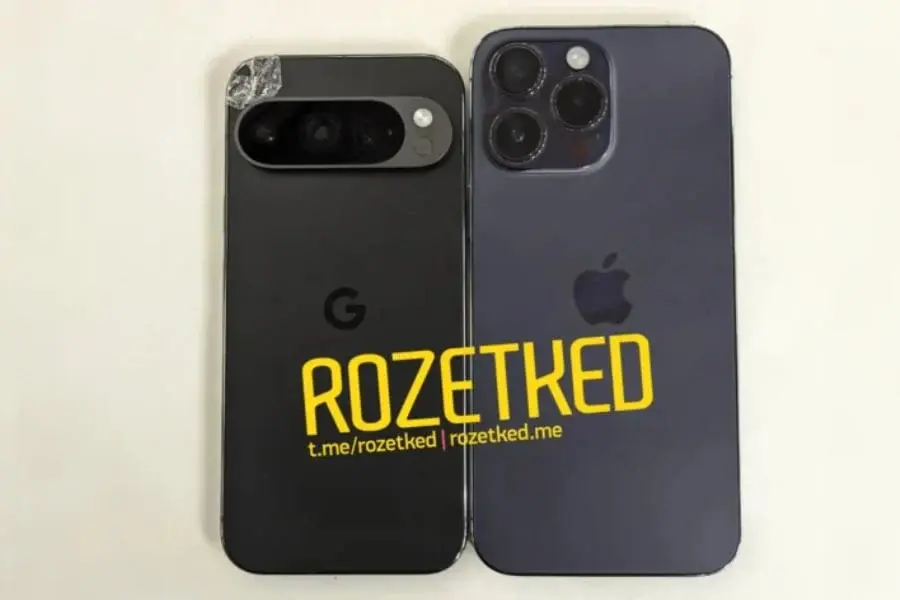
    We have already seen renders of all three devices, and now, actual images of the Pixel 9 Pro have surfaced online. These images, shared by a Russian site called Rozetked, purportedly reveal the design of the Pixel 9 Pro along with potential specifications.

    Pixel 9 Pro Design and Specs

    Upon initial inspection, the phone in the images shows signs of wear, with visible cracks on the back, yet they offer significant insights into the device.

    Compared to the iPhone 14 Pro Max with a 6.7-inch display, the Pixel in question appears smaller, hinting at a 6.1-inch screen size. Notably, the triple camera setup on the back strongly indicates that it might be the Pixel 9 Pro.

    Notable Features and Upgrades

    The regular Pixel 9 is expected to maintain a dual-camera setup similar to its predecessor, while the rumored Pixel 9 XL could sport a triple camera setup coupled with a 6.7-inch screen. The leaked image aligns well with the anticipated features of the Pixel 9 Pro.

    One of the images showcases the phone in fast boot mode, revealing its codename as "caiman" and some essential specifications. These details correspond with previous reports linking this codename to the Pixel 9 Pro.

    Enhanced Performance

    A noteworthy highlight from the leaked information is a significant RAM upgrade for the Pixel 9 Pro. The device is reported to house 16GB of LPDDR5 RAM, a notable increase from the maximum 12GB in the Pixel 8 Pro. However, storage capacity is expected to remain at 128GB.

    Additional photographs provide a comprehensive 360-degree view of the device, showcasing a design featuring flat sides meeting the front and back with a gentle curve. A cutout at the top, likely for the mmWave antenna, resembles that of the Pixel 8 Pro.

    It is crucial to bear in mind that these details are leaks and, although they correspond with earlier renders, exercising caution is advisable.


  • Xiaomi launches HyperOS update for Redmi Note 13 Series in India

    Xiaomi launches HyperOS update for Redmi Note 13 Series in India

    Xiaomi has introduced a significant update for its well-received Redmi Note 13 series in India. Previously operating on MIUI, the Redmi Note 13, Redmi Note 13 Pro, and Redmi Note 13 Pro+ can now enjoy the new HyperOS.

    Performance Boost and Enhanced Features

    The latest update brings about a notable enhancement in performance, a refreshed interface, and a range of new features aimed at enriching the overall user experience.

    The HyperOS update on the Redmi Note 13 series introduces "Comprehensive Refactoring," a technology that optimizes task scheduling and distributes workloads across the phone’s different processing units. This optimization is anticipated to result in smoother performance, especially in resource-intensive activities like gaming. Additionally, the update promises improved power efficiency during gaming sessions.

    Security and Interface Enhancements

    HyperOS places a strong emphasis on security with "End-to-End Security" measures designed to safeguard user data and privacy. It also incorporates various interface enhancements to improve usability.

    The update offers a customizable lock screen with diverse styles, backgrounds, and widgets, while the control center now boasts a label-free layout for convenient access to essential functions.

    Camera Upgrades and Design Philosophy

    For photography enthusiasts, the Redmi Note 13 Pro+ 5G receives a camera boost through the new OS update. However, detailed information regarding these enhancements or whether they are exclusive to the Pro Plus model is currently undisclosed.Redmi Note 13 Pro+ 5G receives

    HyperOS also introduces fresh app icons and animations inspired by Xiaomi’s new "ALIVE DESIGN PHILOSOPHY." Xiaomi claims that the animations are now more lightweight and responsive.

    Improved File Management and Weather Updates

    The File Manager app has been revamped with enhanced categorization options for better organization and file management. Weather information is now displayed with new animations that accurately depict current weather conditions.

    Xiaomi has additionally made optimizations to the base software stack of the Redmi Note 13 5G series. The deployment of HyperOS for the Redmi Note 13 5G series is expected to be gradual, so users may experience delays in receiving the update.


    Xiaomi launches HyperOS update for Redmi Note 13 Series in India
  • MediaTek Dimensity 6300: Powering Next Wave of Affordable 5G Phones

    MediaTek Dimensity 6300: Powering Next Wave of Affordable 5G Phones

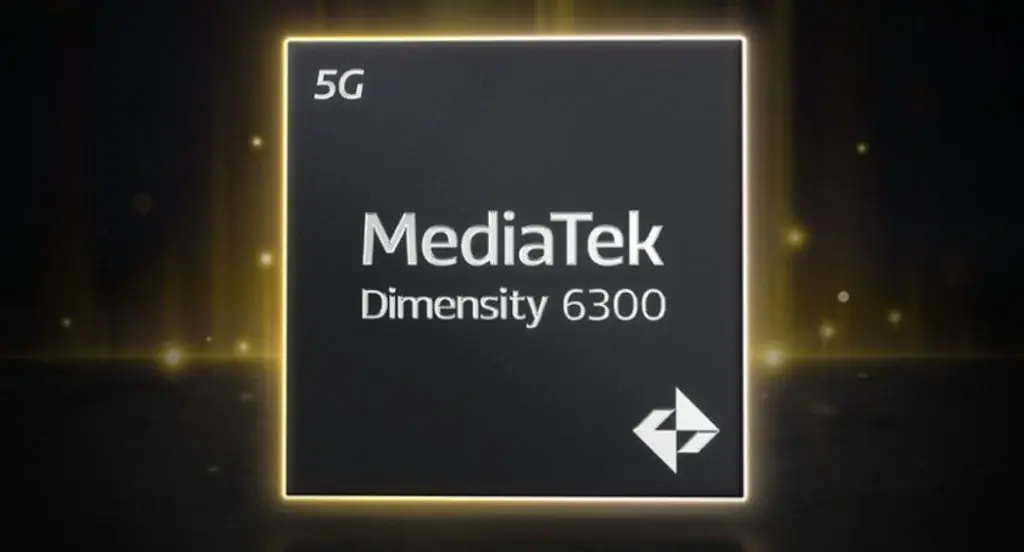
    MediaTek has entered the competitive mid-range market with the introduction of the Dimensity 6300, a new chipset designed to power upcoming affordable 5G smartphones.

    Specifications and Features

    The Dimensity 6300 is built on a 6nm process, representing a modest improvement from its predecessor, the Dimensity 6100+. MediaTek claims a 10% increase in CPU performance, attributed to two faster Cortex-A76 cores clocked at 2.4GHz, along with six Cortex-A55 cores running at 2GHz. Graphics processing is managed by a Mali-G57 MC2 GPU, a common choice in this segment.

    Enhanced Efficiency and Connectivity

    One notable feature is the integrated 5G modem that adheres to the 3GPP Release 16 standard. MediaTek boasts of enhanced power efficiency through their UltraSave 3.0+ technology, promising a 13% to 30% improvement in sub-6GHz 5G connections compared to competitors.

    Display and Camera Capabilities

    The Dimensity 6300 supports Full HD+ displays with a 120Hz refresh rate. Camera capabilities are mid-range, supporting up to 108MP sensors and dual 16MP configurations.Dimensity 6300 supports Full HD+ displays

    Connectivity and Storage Options

    Connectivity options include Bluetooth 5.2 and dual-band Wi-Fi 5 (a/b/g/n/ac), while storage is limited to UFS 2.2 and RAM is capped at LPDDR4x.

    The Realme C65 5G is set to be the first smartphone featuring the Dimensity 6300, scheduled for release later this month. MediaTek’s initiative is expected to prompt other manufacturers to follow suit, offering budget-friendly 5G connectivity solutions.

    While not groundbreaking, the Dimensity 6300 represents a significant step towards making 5G technology more accessible to a wider audience.


    MediaTek Dimensity 6300: Powering Next Wave of Affordable 5G Phones
  • Apple Removes WhatsApp and Threads from China App Store

    Apple Removes WhatsApp and Threads from China App Store

    Apple has taken down WhatsApp and Threads, messaging apps owned by Meta (formerly Facebook), from the App Store in China due to national security concerns, as reported by Reuters.

    Both WhatsApp, a widely used end-to-end encrypted messaging platform, and Threads, a newer social networking app, are no longer accessible for download on iPhones in China. Apple acknowledged the removal, attributing it to national security issues, although specifics are limited. Apple stated, “The Cyberspace Administration of China ordered the removal of these apps from the China storefront based on their national security concerns.” Meta has not provided further comments and directed inquiries back to Apple.

    Extension of App Removal

    According to app monitoring entities Qimai and AppMagic, the removal of WhatsApp and Threads is part of a broader trend. There are reports indicating that Signal and Telegram, two messaging apps known for their emphasis on privacy, have also been taken down from the Chinese App Store. While Apple has not officially confirmed these additional removals, the AppleCensorship website, which tracks changes in the Chinese App Store, lists Signal and Telegram as “disappeared.”

    Impact on Signal and Telegram

    Signal president Meredith Whittaker clarified the situation by stating, “Signal was already blocked in China by the country’s Great Firewall.” Although Signal may have been downloadable previously, registrations and messages on the app are reportedly blocked in China. This implies that the removal from the App Store may not significantly affect users, as they would encounter obstacles in using the app even if downloaded. The scope of China’s recent actions against messaging apps remains unclear, shedding light on the ongoing conflict between national security interests and user privacy, especially in encrypted communication platforms.

  • Exynos 2500 vs Snapdragon 8 Gen 4: Galaxy Series Performance Edge

    Exynos 2500 vs Snapdragon 8 Gen 4: Galaxy Series Performance Edge

    Samsung's Exynos processors have often been criticized for falling short in terms of power efficiency and performance compared to Qualcomm's Snapdragon lineup. However, a recent rumor by PandaFlashPro on X hints at a substantial improvement with the upcoming Exynos 2500.

    Potential Leap in Performance

    The leak suggests that the Exynos 2500 might outshine Qualcomm's Snapdragon 8 Gen 4 in both power efficiency and raw performance. This improvement is attributed to Samsung's purported use of a more advanced second-generation 3nm fabrication process for the Exynos 2500, while Qualcomm is expected to continue with a 4nm process for the Snapdragon 8 Gen 4.

    Technological Advancements

    A smaller manufacturing process typically results in enhanced power efficiency and performance due to increased transistor density. This advancement indicates that while the Exynos 2400 was on par with the Snapdragon 8 Gen 3, the Exynos 2500 could potentially surpass its competitor.

    Dual Variant Possibility

    Notably, there are rumors circulating about the existence of two Exynos 2500 variants: the Exynos 2500-A, speculated to be an octa-core processor for smartphones like the upcoming Galaxy S25 series, and the Exynos 2500-B, rumored to feature a 10-core CPU catering to devices with greater demands such as tablets and laptops in the Galaxy Tab and Galaxy Book series.

    Potential Integration with Google's TPU

    There's also speculation about Samsung potentially incorporating Google's Tensor Processing Unit (TPU) instead of its own Neural Processing Unit (NPU) in the Exynos 2500. However, these claims are currently premature and should be taken with caution.

    The Exynos 2500 seems poised to become a leading contender among mobile processors in 2025, promising superior performance and power efficiency compared to its Qualcomm counterpart. As with all leaks, it's crucial to approach these details with skepticism until official information is released closer to the Exynos 2500's launch.

  • How Huawei Thrives Without Google: Key Survival Strategies

    How Huawei Thrives Without Google: Key Survival Strategies

    The tech industry in the United States boasts giants like Google, Meta, Microsoft, Amazon, and Apple, with a significant presence that shapes the global market for mobile devices. Huawei, a Chinese company, managed to navigate this competitive landscape despite facing challenges that stemmed from US government restrictions.

    Huawei’s Resilience Amidst Challenges

    Huawei emerged as one of the top three smartphone sellers globally in 2019, surpassing Apple in sales during various quarters of 2018 and 2019. However, its success faced a setback when the US government imposed restrictions on its operations within the country.

    In May 2019, Huawei, along with other Chinese entities, found themselves on the US Entity List, barring them from collaborating with US-based organizations. This move meant that Huawei devices could no longer include popular Google-owned apps like YouTube, Google Maps, and Google Drive, impacting their market offerings significantly.

    Innovation and Adaptation

    Despite the hurdles, Huawei showcased resilience and innovation. In response to the ban, the company introduced HarmonyOS, initially unveiled in 2019 and later positioned as a mobile operating system in 2020 with HarmonyOS 2.0. The introduction of HarmonyOS marked a pivotal moment for Huawei’s software development journey.

    In a strategic move, Huawei diversified its offerings by launching the Huawei P50 series with HarmonyOS, although lacking 5G support. Additionally, the company invested in establishing an in-house chip fabrication plant, culminating in the Kirin 9000S chip, featuring 5G capabilities, showcased in the Huawei Mate 60 and Mate 60 Pro smartphones.

    Software Evolution and Independence

    Huawei’s software ecosystem, including the Huawei AppGallery and HarmonyOS, witnessed significant growth post-US ban. The Huawei AppGallery garnered over 530 million active users in early 2021, escalating to 580 million active users by late 2022. Moreover, the HMS ecosystem flourished, boasting a remarkable increase in global developers from 1.6 million to over 5.4 million.

    While HarmonyOS retains some ties to Android through the Android Open Source Project (AOSP), Huawei’s focus on HarmonyOS Next promises complete independence from the Android OS, setting the stage for a unique software experience that will challenge conventional norms.

    Huawei’s Adaptation to Google App Alternatives

    To counter the absence of Google apps, Huawei developed alternatives like Huawei Assistant, Huawei Gallery, Zoom, Skype, Huawei Cloud, Deego, Huawei Browser, and Huawei AppGallery, offering users a seamless experience on their devices.

    In conclusion, Huawei’s strategic investments in chip manufacturing, software development, and ecosystem growth showcase its determination to thrive in a competitive market. The upcoming HarmonyOS Next signals a new chapter for Huawei, positioning it as a formidable player alongside American tech giants.

    For more information, Huawei recently unveiled the Pura 70 series powered by the Kirin 9010 chipset, highlighting the company’s ongoing commitment to innovation and consumer satisfaction.


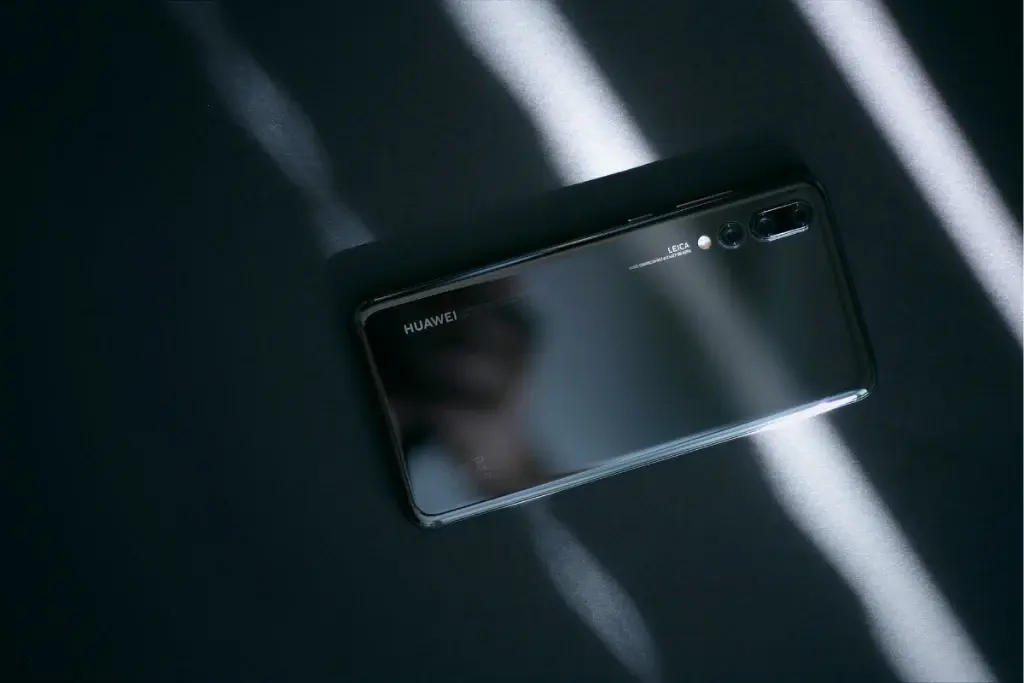
    Image Credit: Alex Escu/Unsplash

  • Huawei Kirin 9010 Chip Performance Test

    Huawei Kirin 9010 Chip Performance Test

    Huawei’s most recent flagship smartphone, the Pura 70 Ultra, equipped with the new Kirin 9010 System on Chip (SoC), has been extensively examined by reviewers from a Chinese publication. The review sheds light on the capabilities of the new chipset, indicating that the Kirin 9010 represents more of an incremental advancement rather than a significant leap forward.

    Kirin 9010: An Evolution in Chipset Design

    The Kirin 9010 appears to be a refined version of the Kirin 9000S that powers the Mate 60 series. It is structured with a single 2.3GHz Taishan core, three 2.18GHz Taishan mid-cores, and four lower-clocked 1.55GHz Cortex-A510 cores, which are optimized for less demanding tasks. While the core architecture closely resembles the Kirin 9000S, Huawei has made notable adjustments to the clock speeds of the cores. The Mali-G78 GPU, clocked at 750MHz, remains consistent across both chipsets.

    Performance Benchmarks and Comparisons

    In terms of synthetic benchmarks, the Pura 70 Ultra achieved an AnTuTu score of 940,000 points, with GeekBench 6.2 single-core scores of 1,431 points and multi-core scores of 4,430 points under normal ambient conditions. Activating the phone’s performance mode led to slight improvements, boosting single-core scores to 1,440 and multi-core scores to 4,436, outperforming the Kirin 9000S on paper.

    ProcessorGeekbench Single-CoreGeekbench Multi-CoreAnTuTu Overall
    Kirin 901014404436940,000
    Kirin 9000s13504200700,000

    Graphics Performance and Real-World Testing

    Despite the advancements in CPU performance, the GPU performance, as indicated by the 3DMark Wild Life EXTREME test, only showed marginal gains. The phone, however, demonstrated competent performance in real-world scenarios, handling demanding games like Genshin Impact and Honkai: Star Rail relatively well. In Genshin Impact, running at maximum settings with a locked 60fps frame rate, the Pura 70 Ultra managed an average frame rate of 60.2fps initially, stabilizing at 55.7fps over time. The device’s temperature peaked at 46.8 degrees Celsius during this test. Honkai: Star Rail, set at very high settings and 60fps locked, yielded an average of 53fps over 15 minutes, with the back cover temperature reaching a maximum of 49.6 degrees Celsius.


  • itel S24 Launch Confirmed in India, Specs & Price Teased

    itel S24 Launch Confirmed in India, Specs & Price Teased

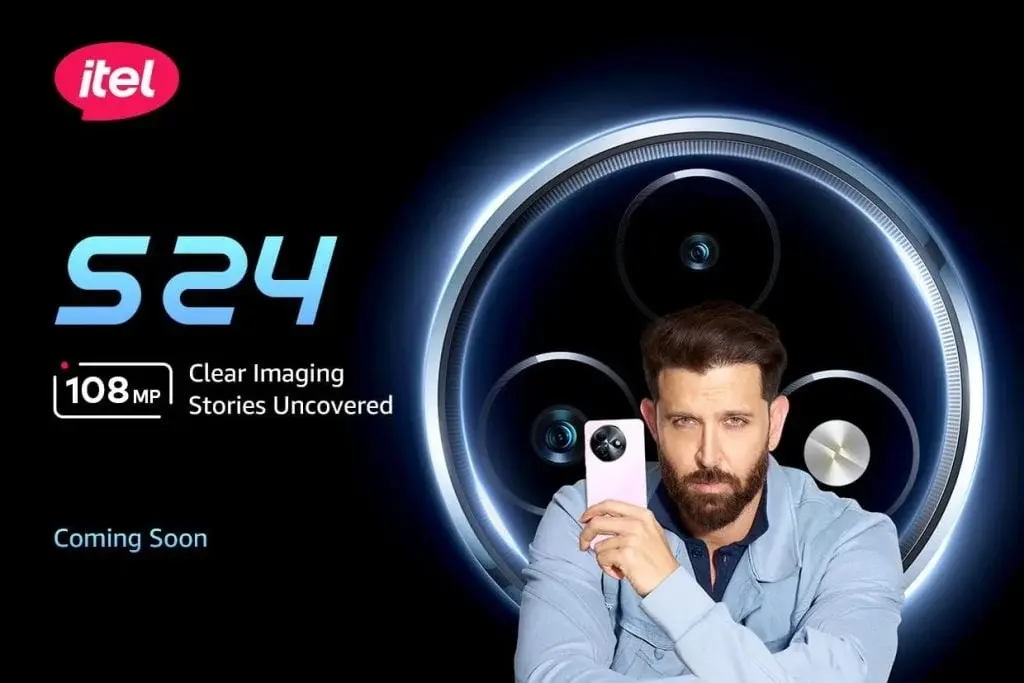
    itel has recently unveiled the Super Guru feature phone, boosting it with YouTube and 4G support. Following this, the brand has now introduced two new products – the itel S24 smartphone and the itel 11T Pro TWS earbuds. The itel S24, previewed on Amazon, is expected to be priced under Rs 10,000 and will come with a complimentary itel Icon smartwatch as a purchase incentive.

    Features of itel S24 Smartphone

    The itel S24 is positioned as the successor to the itel S23 from the previous year. The smartphone boasts a circular camera module hosting a primary 108MP sensor and an additional lens, promising diverse camera modes and functionalities. Noteworthy is the phone’s color-shifting rear panel that alters under sunlight. Powering the device is a MediaTek Helio G91 processor, although further specifics are yet to be disclosed. However, a prior official listing highlighted potential configurations of 8GB RAM and 256GB storage, alongside an HD+ display offering a 90Hz refresh rate. The S24 will be energized by a 5,000mAh battery supporting 18W fast charging.

    Insights into the itel 11T Pro TWS Earbuds

    The itel 11T Pro TWS earbuds are designed with a substantial 13mm driver and incorporate 360-degree super bass technology for enriched bass output. A preview image of the earphones depicts an in-ear build with a stem and silicone ear tips for enhanced comfort and fit.