Category: Phones

Stay updated with the latest phone news, reviews, and trends. Discover cutting-edge smartphones, features, and innovations in our Phones category at GizNewsDaily

  • Realme GT Neo 6 Reservation Listing: Snapdragon 8s Gen 3

    Realme GT Neo 6 Reservation Listing: Snapdragon 8s Gen 3

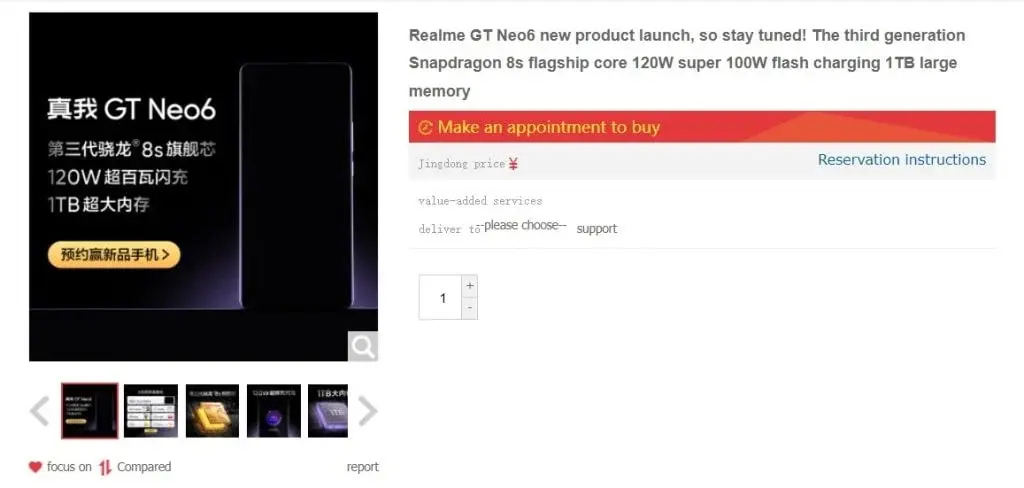
    Last year, Huawei introduced the Mate 60 series under the Pioneer Plan, which aimed to launch new products directly into stores. Following a similar strategy, Huawei has now unveiled the Huawei Pura 70 series. Similarly, Realme seems to be adopting a comparable approach with the upcoming Realme GT Neo 6, which has appeared for reservations on Jingdong Mall without an official announcement.

    Realme GT Neo 6 Emerges on Jingdong Mall

    The Snapdragon 8s Gen 3 chipset will power the Realme GT Neo 6, as shown in the Jingdong Mall listing. While the battery size remains unconfirmed, the device is expected to feature 120W fast charging and a 1TB storage variant.

    The pricing details for the Realme GT Neo 6 are yet to be disclosed. However, the phone is anticipated to be available for purchase in China in the near future.

    Display and Configuration Details

    Rumors suggest that the Realme GT Neo 6 will sport a 6.78-inch OLED panel, similar to the one found on the Realme GT Neo 6 SE released last month in China. This display is likely to offer a 1.5K resolution, a 120Hz refresh rate, and a peak brightness of 6,000 nits. Additionally, the screen will feature 8T LTPO technology, providing smoother refresh rate transitions and lower power consumption compared to its competitors.

    The top-tier configuration of the Realme GT Neo 6 is expected to include 24 GB of LPDDR5x RAM and 1 TB of UFS 4.0 storage. The device may come equipped with a 5,500mAh battery, although details about its camera capabilities remain undisclosed. Future updates might shed light on this aspect in the upcoming days.

  • Redmi K40 gets Xiaomi HyperOS update on Android 13

    Redmi K40 gets Xiaomi HyperOS update on Android 13

    Xiaomi has initiated the rollout of the HyperOS update for the Redmi K40 device, introducing a fresh user interface and customization options to enhance the phone's functionality and user experience.

    Redmi K40 HyperOS Update

    • Update package version: 1.0.3.0.TKHCNXM
    • Update size: 1.5GB
    • Security Patch: January 2024

    Android Version Differences

    Notably, there is a distinction in the Android version updates within the Redmi K40 series. For instance, the Redmi K40 and K40 Game Enhanced Edition models have received HyperOS updates based on Android 13, while other devices in the lineup have been updated to Android 14.

    Data Backup Recommendation

    Before proceeding with the installation of any significant software update, it is advisable to back up your data. This precautionary measure helps safeguard your important information in case of unexpected issues during the update process.

    Changelog Highlights:

    • Low-level refactoring: Enhancements to Xiaomi's ThePaper OS bottom layer for improved hardware performance.
    • Key task identification and dyeing technology: Efficient resource allocation based on task priority for enhanced performance and reduced power consumption.
    • Ultra-low-power rendering framework: Enhances battery life and provides smoother animations.
    • SOC integrated frequency modulation: Faster response to computing power demands with fewer frame drops and improved performance.
    • Refresh storage technology: Reduces storage fragmentation for prolonged device usability.
    • Intelligent network selection capability: Smoother network operation in weak signal areas.
    • Cross-terminal intelligent connection: Improved device connectivity and collaboration through Xiaomi HyperConnect framework.
    • Global security: Enhanced security and privacy architecture for interconnected devices.
    • Aesthetics of life: Visual and dynamic enhancements for a more pleasing user experience, including new motion language, weather design, and icon upgrades.

    This update aims to not only improve the performance and security of the Redmi K40 but also enhance the overall user experience with a focus on aesthetics and functionality. Users can expect a more seamless and efficient operation with the introduction of these new features and optimizations.

  • Vivo S19 and S19 Pro MIIT certification: Launch Coming Soon

    Vivo S19 and S19 Pro MIIT certification: Launch Coming Soon

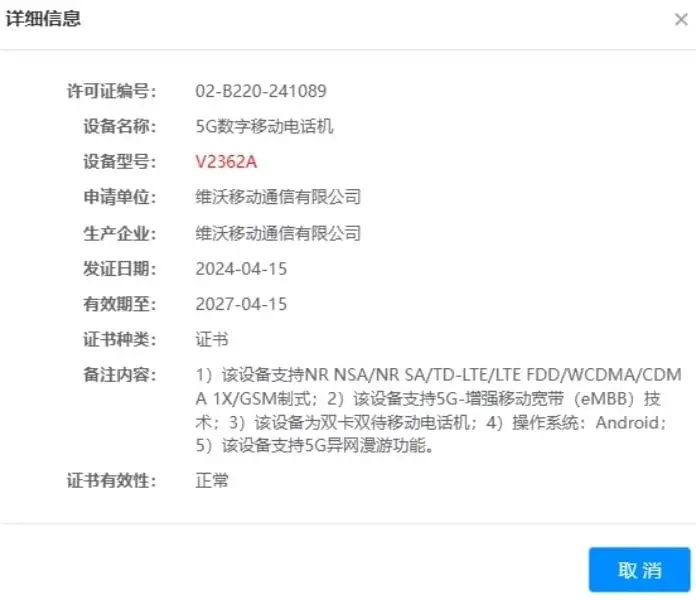
    Two new Vivo smartphones, presumed to be the upcoming S19 and S19 Pro models, have recently gained certification from China’s Ministry of Industry and Information Technology (MIIT). These devices are identified by the model numbers V2364A and V2362A.

    Certification was granted subsequent to their appearance on the 3C certification website, affirming that both phones will support 80W wired fast charging. With these recent certifications, it appears that the S19 series is preparing for an imminent official launch.

    Certification and Approval

    Presently, there is limited information accessible regarding the Vivo S19 series smartphones. The certifications do not disclose many specifics about the devices.

    Spec Recap of Vivo S18 Series

    To provide context, let’s revisit the specifications of the Vivo S18 series. Both the S18 and S18 Pro showcase a 6.78-inch display with a resolution of 2800 x 1260.

    The display panel boasts a 10-bit color depth, a 120Hz refresh rate, and an impressive peak brightness of 2800 nits.

    Internally, both variants are equipped with a 5000mAh battery that supports 80W fast charging. In terms of performance, the standard model features a Snapdragon 7 Gen 3 SoC, while the Pro version utilizes the MediaTek Dimensity 9200+ chipset.

    Furthermore, the rear camera setup includes a 50MP main sensor with OIS, an 8MP ultra-wide sensor, and a studio-grade soft light ring on the S18 model.

    On the other hand, the S18 Pro comes with a 50MP primary lens with OIS, a 12MP telephoto lens, and a 50MP ultrawide sensor. Both phones include a 50MP front camera for selfies.

    Vivo typically refreshes its S-series smartphones every six months. Considering that the Vivo S18 series was introduced in China last December, it is likely that the Vivo S19 series will be launched around June. Stay tuned for further updates.


  • Oppo Reno 12 & Reno 12 Pro Launching Soon: Expected Specs

    Oppo Reno 12 & Reno 12 Pro Launching Soon: Expected Specs

    Now that the May Day holidays in China are coming to a close, various smartphone manufacturers are preparing to introduce new smartphone models for the second quarter of this year. Among them is Oppo, which is anticipated to launch the Reno 12 series in China as early as this month.

    Oppo Reno 12 Series Design

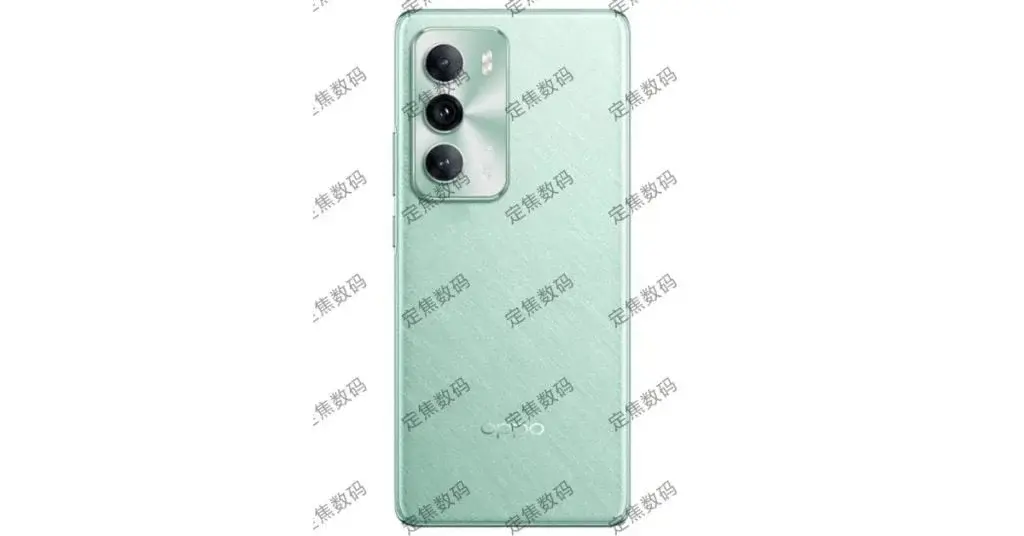
    The upcoming Reno 12 and 12 Pro are projected to showcase an OLED display with quad-curved micro-curvature on the front, maintaining a thin and lightweight design. A mock render of the rear panel of the Reno 12 duo displays a simple design with a vertically aligned triple camera system.

    Oppo Reno 12 Specifications (Rumored)

    Reports suggest that the Reno 12 may feature a 6.7-inch OLED display with a 1.5K resolution, a 50-megapixel front camera, and a rear camera setup comprising a 50-megapixel main sensor, an 8-megapixel ultra-wide lens, and a 50-megapixel telephoto camera with 2x optical zoom. The device could be powered by Dimensity 8200 or Dimensity 8300 chipsets, offering up to 12 GB of RAM and 512 GB of storage, along with various features like fast charging, an in-screen fingerprint scanner, and ColorOS 14.

    Oppo Reno 12 Pro Specifications (Rumored)

    The Oppo Reno 12 Pro is expected to house the Dimensity 9200 or 9200+ chipset, up to 16 GB of RAM, and up to 512 GB of storage. Other specifications are likely to mirror those of the Reno 12.

    Oppo is also working on additional products, including the Oppo Pad 3 and the Enco R3. The Pad 3 is anticipated to be the first tablet powered by the Snapdragon 8 Gen 3 chipset, while the Enco R3 could feature a semi-in-ear design with advanced audio capabilities. Rumors suggest the launch of these products between May and June, possibly not alongside the Reno 12 series.

    There is limited information on the Oppo Pad 3 or Enco R3. However, the expected prices for the Reno 12 and 12 Pro in the Chinese market are around $499 and $799, respectively. It is speculated that a modified version of the Reno 12 series might reach the global market in July, with the Oppo Pad 3 possibly rebranded as the OnePlus Pad 2 globally.

  • Global Vivo X Fold 3 Pro on Geekbench with Snapdragon 8 Gen 3

    Global Vivo X Fold 3 Pro on Geekbench with Snapdragon 8 Gen 3

    Vivo recently introduced the X Fold 3 and X Fold 3 Pro in China, and now indications suggest that these devices are gearing up for a global release, with appearances on certification platforms worldwide. The Pro variant has made an appearance on the Geekbench benchmark platform, shedding light on some crucial specifications.

    Insights from Geekbench

    The global Vivo X Fold 3 Pro, identified as model number V2330, displayed impressive scores on Geekbench, hitting 2146 points in single-core performance and 6304 points in multi-core tests. The device is expected to run on the Qualcomm Snapdragon 8 Gen 3 processor, offering a substantial 16GB of RAM and likely featuring Android 14 with Vivo’s FuntouchOS interface.

    Expansion into Global Markets

    Following its listing on the Bureau of Indian Standards (BIS) database, the X Fold 3 Pro seems poised for a launch in India. While Vivo has not yet disclosed a specific global release date for the X Fold 3 series, the recent certifications strongly hint at an imminent launch.


    Global Vivo X Fold 3 Pro on Geekbench with Snapdragon 8 Gen 3

    Specifications of Vivo X Fold 3 Pro

    The Vivo X Fold 3 Pro boasts a 6.53-inch outer display with a resolution of 2,480 x 2,200 pixels, while unfolding reveals an 8.03-inch inner display with 2,748 x 1,172 pixels resolution, both featuring OLED panels with a 120Hz refresh rate and up to 4,500 nits peak brightness. Biometric security is handled by an ultrasonic fingerprint scanner.

    The device is equipped with a Snapdragon 8 Gen 3 processor, complemented by up to 16GB of LPDDR5 RAM and a generous 1TB of UFS 4.0 storage. Powering the phone is a 5,700mAh battery supporting 100W wired charging and 50W wireless charging.

    Camera and Connectivity Features

    The Vivo X Fold 3 Pro houses a triple rear camera setup with a primary 50MP OV50H sensor featuring OIS, a 50MP ultra-wide-angle lens, and a 64MP periscope lens offering 3x optical zoom and a 70mm focal length. Selfie enthusiasts will appreciate the 32MP front camera.

    Connectivity options encompass Wi-Fi 7, dual 5G SIM support, and NFC, while the device also offers a stereo speaker configuration with Wireless Lossless Hi-Fi audio support.

  • Japan Reveals World’s First 6G Device: 20x Faster than 5G

    Japan Reveals World’s First 6G Device: 20x Faster than 5G

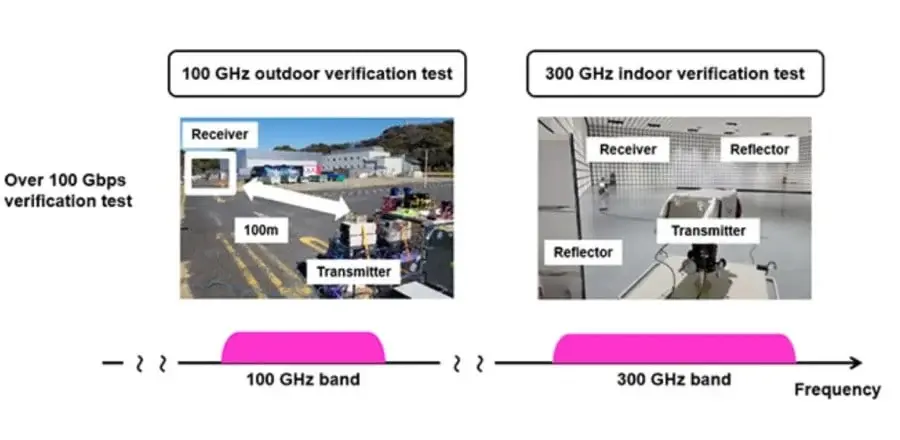
    A Japanese consortium recently introduced the world's first high-speed 6G prototype device, capable of transmitting data at an impressive 100 gigabits per second (Gbps) and covering over 300 feet, marking a significant advancement over current 5G technology.

    Collaborative Innovation

    The prototype device was developed through a partnership among major Japanese telecom companies, including DOCOMO, NTT Corporation, NEC Corporation, and Fujitsu, showcasing a collective effort towards future technological advancements.

    Successful Test Results

    On April 11th, the consortium disclosed successful test outcomes, demonstrating that the prototype device can achieve remarkable speeds of 100 Gbps indoors using the 100 gigahertz (GHz) band and outdoors using the 300 GHz band, showcasing promising capabilities for next-generation connectivity.

    Impressive Speeds and Limitations

    Despite the impressive speeds achieved, it is essential to temper expectations as 6G is currently tested within a single device and not yet a commercially viable network. Moreover, the technology carries its own limitations and challenges that need to be addressed for widespread implementation.

    5G, the current leading standard in connectivity, boasts a theoretical maximum speed of 10 Gbps, but real-world speeds often fall below this benchmark, hovering around 200 megabits per second (Mbps) for users. The utilization of higher frequency bands in 5G, while offering faster speeds, also imposes constraints such as reduced signal travel distances and penetration strength.

    6G technology operates at even higher frequency bands than 5G, potentially posing challenges for devices to receive the necessary frequencies for accelerated data transfers. Factors like distance, environmental barriers such as walls, and weather conditions like rain can significantly disrupt 6G signals, emphasizing the need for further optimization.

    While the transition from 4G to 5G largely focused on enhancing data capacity for activities such as video streaming and mobile browsing, the advent of 6G networks could revolutionize connectivity by enabling real-time holographic communication and immersive virtual and mixed-reality experiences, unlocking new possibilities for users.

    However, before the widespread adoption of 6G technology and the realization of its transformative potential, significant infrastructure upgrades are imperative. A comprehensive revamp of existing cell towers and the development of a new generation of smartphones equipped with built-in 6G antennas are essential steps to mainstreaming this cutting-edge technology.

  • OnePlus 13 Mockup: Company Design Backward Trend

    OnePlus 13 Mockup: Company Design Backward Trend

    OnePlus is anticipated to unveil its upcoming flagship smartphone, the OnePlus 13, later this year. Speculation has been circulating about a fresh design for the device, although specific details have been scarce up to this point.

    Design Changes Unveiled

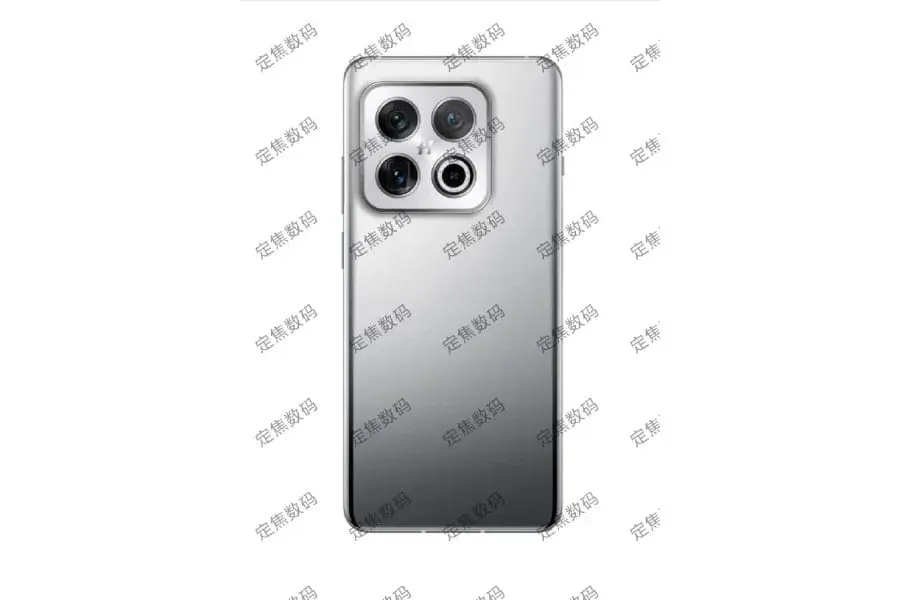
    Today marks a turning point as a mockup render of the OnePlus 13 has appeared on Weibo, revealing alterations to the design, particularly at the back.

    OnePlus has traditionally favored a circular and hinge-style camera setup for its premium phones. However, the leaked renders indicate a departure from this norm, showcasing the OnePlus 13 with a rectangular camera island on its rear.

    Notable Design Shifts

    While the new design deviates from its predecessor, some observers have drawn parallels to the 2022 OnePlus 10 Pro. The primary distinction lies in the fact that the camera module of the OnePlus 13 does not seamlessly integrate with the metal frame, resulting in a slight elevation.

    Camera Setup and Features

    The rectangular module on the OnePlus 13 accommodates a triple-camera system along with a ring-shaped LED light. Positioned at the center of the island is a Hasselblad logo, adding a touch of branding to the device.

    On the right side of the phone, familiar placements of the power and volume buttons are evident, while the left frame likely hosts the signature OnePlus alert slider.

    It’s essential to bear in mind that the render is merely a speculative representation, and the final design of the OnePlus 13 could differ significantly. Therefore, it is advisable to approach this leak with caution.

    Expected Specifications

    In terms of specifications, rumors suggest that the smartphone will feature a 6.8-inch OLED LTPO display with a 2K resolution, possibly incorporating an in-display fingerprint scanner. Powering the device is expected to be the Snapdragon 8 Gen 4 chipset.

  • Redmi K80 Series: Snapdragon 8 Gen 4 Launch Timing Leaked

    Redmi K80 Series: Snapdragon 8 Gen 4 Launch Timing Leaked

    Earlier this week, reports surfaced hinting that Xiaomi may lead the way in introducing smartphones equipped with the Snapdragon 8 Gen 4 chip within their premium Xiaomi 15 series.

    Redmi's Affordable Alternative

    It is also speculated that Redmi is planning to unveil a device featuring the Snapdragon 8 Gen 4 but at a more budget-friendly price point. This anticipated phone is expected to be part of the forthcoming Redmi K80 series.

    Potential November Launch

    A recent leak from Weibo tipster Smart Pikachu now suggests that the Redmi K80 series could potentially debut in the market as early as November.

    Qualcomm is slated to launch the Snapdragon 8 Gen 4 SoC in October. Subsequent speculations indicate that Xiaomi might reveal the Xiaomi 15 series smartphones during the same month, possibly paving the way for the introduction of Redmi K80 series devices in November.

    Expected Features

    If the rumors hold true, the Redmi K80 Pro is rumored to incorporate the Snapdragon 8 Gen 4 chip, while the standard model might run on the Snapdragon 8 Gen 3 processor.

    Additionally, as per the tipster, both the Redmi K80 and K80 Pro are anticipated to feature a 2K resolution display akin to the Redmi K70 and K70 Pro models.

    However, Smart Pikachu indicates that there might not be a Redmi K80E, the supposed successor to the K70E, this year. This decision purportedly aligns with Xiaomi's strategy to concentrate the Redmi K series on premium offerings.

    Despite the limited information available at present regarding the upcoming Redmi K80 phones, we will continue to provide updates on any new developments.

  • Moto G85 5G Launch Imminent: Pricing Seen on European Retail Site

    Moto G85 5G Launch Imminent: Pricing Seen on European Retail Site

    Back in September 2023, Motorola introduced the Moto G84 5G smartphone across various markets. Currently, the company is gearing up for the launch of its follow-up model, known as the Moto G85 5G.

    Anticipation Builds for the Moto G85 5G

    Recently, the Moto G85 5G made an appearance on a European retailer's website, hinting at an imminent release. The listing reveals a price tag of around €300 for the 12GB+256GB variant, aligning with the initial cost of its predecessor, the Moto G84 5G.

    Unveiling the Moto G85 5G

    Although Motorola has yet to make an official announcement regarding the Moto G85 5G, the smartphone's presence in retail listings indicates a probable launch in the latter half of 2024. To gain insight into what awaits with the Moto G85 5G, let's delve into the features of its predecessor.

    Moto G84 5G Specifications:

    The Moto G84 5G impresses with a 6.55-inch FHD+ pOLED display boasting a rapid 120Hz refresh rate and a brightness of up to 1300 nits. Powered by a Snapdragon 695 processor, it comes equipped with 12GB of RAM, 256GB of storage (expandable up to 1TB), and a 50MP rear camera with OIS. The device also features an 8MP ultra-wide camera and a 16MP front camera for capturing moments with clarity.

    Ensuring security, the phone integrates an under-display fingerprint sensor. It provides support for 5G across 14 bands, dual 4G VoLTE, and a range of connectivity options. Keeping it running is a 5000mAh battery supported by 30W turbocharging. For audio enthusiasts, the device includes a 3.5mm jack, stereo speakers enhanced with Dolby Atmos technology, and dual microphones. Additionally, it boasts an IP54 water-resistant rating.

  • OnePlus Devices Eligible for OxygenOS 15 (Android 15) Update

    OnePlus Devices Eligible for OxygenOS 15 (Android 15) Update

    OxygenOS remains a highly favored Android skin globally, offering a refined and feature-rich user experience. With each update, the focus is on enhancing user interactions and introducing new functionalities while refining existing ones. The forthcoming OxygenOS 15, based on Android 15, promises to deliver long-awaited features for OnePlus devices.

    Android 15 Beta Testing and OxygenOS 15

    Android 15 is presently undergoing beta testing, indicating an imminent stable release following a few months of testing. OnePlus users are eagerly anticipating the Android 15-based OxygenOS 15 update to experience the new enhancements and features.

    OxygenOS 15 Eligible Devices and Release Details

    While an official list of OxygenOS 15 supported devices is pending, there's speculation based on OnePlus' update history. Notable OnePlus models are expected to receive the OxygenOS 15 update, offering users a glimpse of what to expect.

    OnePlus OxygenOS 15 (Android 15) Eligible Devices List:

    • OnePlus 12
    • OnePlus 12R
    • OnePlus 11
    • OnePlus 11R
    • OnePlus 10 Pro
    • OnePlus 10T
    • OnePlus 10R
    • OnePlus Nord 3
    • OnePlus Nord CE 3
    • OnePlus Nord CE 3 Lite
    • OnePlus Open
    • OnePlus Pad

    OxygenOS 15 Release Timeline

    The Android 15 beta phase is set to continue until June, following which the platform stability phase will focus on refining the OS for a stable release. While the exact stable release date remains undisclosed, expectations point towards an October launch coinciding with Google's Pixel 9 series reveal.

    For further details on OxygenOS 15 features and updates, users with newer OnePlus devices may access early builds for testing purposes, although these versions may contain bugs. The stable rollout of OxygenOS 15 is anticipated to follow a similar schedule to its predecessor, OxygenOS 14.

    Anticipated OxygenOS 15 Features

    Several notable features expected in Android 15 and OxygenOS 15 include:

    • Satellite Connectivity Support: Enabling satellite connectivity for messaging apps.
    • Partial Screen Sharing: Enhanced privacy with single app screen sharing.
    • Notification Cooldown: Reducing notification volume for repeated alerts.
    • Universal Keyboard Vibration Control: Offering centralized control over keyboard vibrations.
    • Sensitive Notifications: Enhancing security by protecting sensitive information.
    • Edge-to-Edge Apps: Ensuring apps utilize edge-to-edge displays for immersive experiences.
    • High-Quality Webcam: Introducing a high-quality webcam mode for improved PC connectivity.

    As Android 15 unfolds, additional features may be revealed, potentially at the upcoming Google I/O event. Stay tuned for the latest updates on OxygenOS 15 and Android 15 developments.