Category: Phones

Stay updated with the latest phone news, reviews, and trends. Discover cutting-edge smartphones, features, and innovations in our Phones category at GizNewsDaily

  • Xiaomi Mix Flip Battery Size and Charging Speed Leaked

    Xiaomi Mix Flip Battery Size and Charging Speed Leaked

    Xiaomi has recently announced that the Xiaomi Mix Flip and Mix Fold 4 will be launched this month in China. The Mix Flip will be Xiaomi’s inaugural foldable phone with a flip-style design. Both devices are anticipated to be powered by the Snapdragon 8 Gen 3 chipset. A recent leak on Weibo has disclosed details about the phone’s battery capacity and charging features.

    Xiaomi Mix Flip Battery Specifications (Rumored)

    The Xiaomi Mix Flip, identified by the model number 2405CPX3DC, was listed in China’s 3C certification database in May. This listing indicated that the device might come with a 67W fast charger. The latest leak reveals that the device will be equipped with a 4,700mAh battery and will support 67W fast charging, as shown in the screenshot above.

    Comparatively, the only other flip-style foldable phone with a larger battery is the Honor Magic V Flip, which includes a 4,800mAh battery and supports 66W fast charging. The Mix Flip will feature the high-end Snapdragon 8 Gen 3 SoC, whereas the Magic V Flip uses the older Snapdragon 8+ Gen 1 chipset.

    A recent report highlighted that the Mix Flip will be available in several configurations: 12 GB RAM + 256 GB storage, 12 GB RAM + 512 GB storage, 16 GB RAM + 512 GB storage, and 16 GB RAM + 1 TB storage. The rear camera setup is expected to include a 50-megapixel primary camera with OIS support and a 60-megapixel OmniVision OV60A telephoto camera with 2x optical zoom.

    Xiaomi Mix Flip Schematic by Tipster DCS

    Last month, a leaked schematic suggested that the Mix Flip will feature a substantial 4-inch cover display. Additionally, it will be the only clamshell foldable phone to include an external earpiece. The device will also sport a side-mounted fingerprint sensor. Further details about the device have yet to be disclosed.

    Xiaomi Mix Flip Battery Size and Charging Speed Leaked
  • Realme GT 7 Pro to Feature 6,000mAh Battery, 100W Charging

    Realme GT 7 Pro to Feature 6,000mAh Battery, 100W Charging

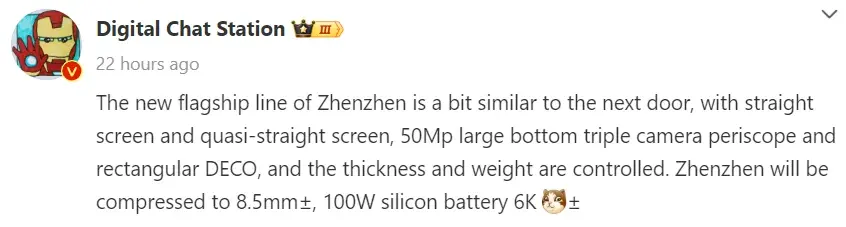
    Realme is anticipated to introduce the Realme GT 7 Pro flagship smartphone towards the end of this year. Speculations are circulating that the Xiaomi 15 and 15 Pro will launch as the first Snapdragon 8 Gen 4 phones globally in October in China. Considering the announcement of the Realme GT 5 Pro in December 2023, it is likely that the GT 7 Pro will debut in China in the same month. However, some rumors indicate that the GT 7 Pro could be the initial Snapdragon 8 Gen 4 phone to reach the international market. Currently, the rumor mill is gradually revealing its key features. The latest leak, from the reliable tipster Digital Chat Station, provides insights into its battery size and charging capabilities.

    Realme GT 7 Pro Key Specifications (Rumored)

    The screenshot above indicates that DCS has not explicitly named the device in the leak. Nevertheless, the emoji used by the tipster strongly suggests that he is referring to Realme’s forthcoming Snapdragon 8 Gen 4 device, the GT 7 Pro.

    According to DCS's Weibo post, the GT 7 Pro will resemble a competing device, possibly the OnePlus 13, featuring a flat or nearly flat display. The phone will be equipped with a 6,000mAh silicon-negative electrode battery, supporting 100W fast charging. Despite the substantial battery, the device will remain slim, with a thickness of around 8.5mm.

    Camera and Additional Features

    The GT 7 Pro will boast a triple-camera setup housed in a rectangular module, including a 50-megapixel primary sensor and a periscope telephoto camera, likely the Sony IMX882 sensor with 3x optical zoom.

    Previous news reports indicate that the GT 7 Pro will be Realme’s first phone to feature an ultrasonic in-screen fingerprint scanner and offer IP69-rated dust and water resistance. Other details of the phone are yet to be disclosed.

  • Xiaomi 15 and 15 Pro Specs Leaked Ahead of October Launch

    Xiaomi 15 and 15 Pro Specs Leaked Ahead of October Launch

    Multiple sources have indicated that Xiaomi plans to unveil the Xiaomi 15 and 15 Pro flagship smartphones in October this year. These devices are anticipated to be the first in the world to feature the Snapdragon 8 Gen 4 processor. Recently, a new leak on Weibo has surfaced, revealing the speculated specifications for these upcoming smartphones. Here is what the leak suggests about the Xiaomi 15 and 15 Pro.

    Xiaomi 15, 15 Pro Specifications (Rumored)

    According to the leak, the Xiaomi 15 will be a compact flagship device with a 6.36-inch flat OLED display offering a 1.5K resolution. In contrast, the Xiaomi 15 Pro will be a larger model, featuring a 6.73-inch OLED screen with micro-curvature on all four sides, supporting a 2K resolution. Both screens are expected to provide a 120Hz refresh rate and reach up to 1400 nits of brightness in high brightness mode (HBM).

    The Snapdragon 8 Gen 4-powered smartphones will come with LPDDR5x RAM and UFS 4.0 storage. The standard Xiaomi 15 is expected to house a 4,800mAh or 4,900mAh battery, supporting 100W wired and 50W wireless charging. On the other hand, the Pro variant is rumored to have a 5,400mAh battery, with support for 120W wired and 80W wireless charging.

    Camera and Other Features

    The Xiaomi 15 series will reportedly feature a 32-megapixel front camera. The base model will include two 50-megapixel OmniVision OV50H sensors for the primary and ultrawide cameras. Additionally, it will have a 50-megapixel Samsung JN1 telephoto camera with 3x optical zoom.

    For the Xiaomi 15 Pro, the back will boast a 50-megapixel OmniVision OV50N primary camera, a 50-megapixel Samsung JN1 ultrawide lens, and a 50-megapixel periscope telephoto camera with 3x optical zoom. Both models will offer an IP68 rating, 5.5G connectivity, dual speakers, and an IR blaster. The Xiaomi 15 will include an 0809B linear motor and an optical in-screen fingerprint scanner, while the 15 Pro will feature an x-axis linear motor and an ultrasonic in-display fingerprint sensor.

    Readers should take this information with a grain of salt, as the details may not be entirely accurate.

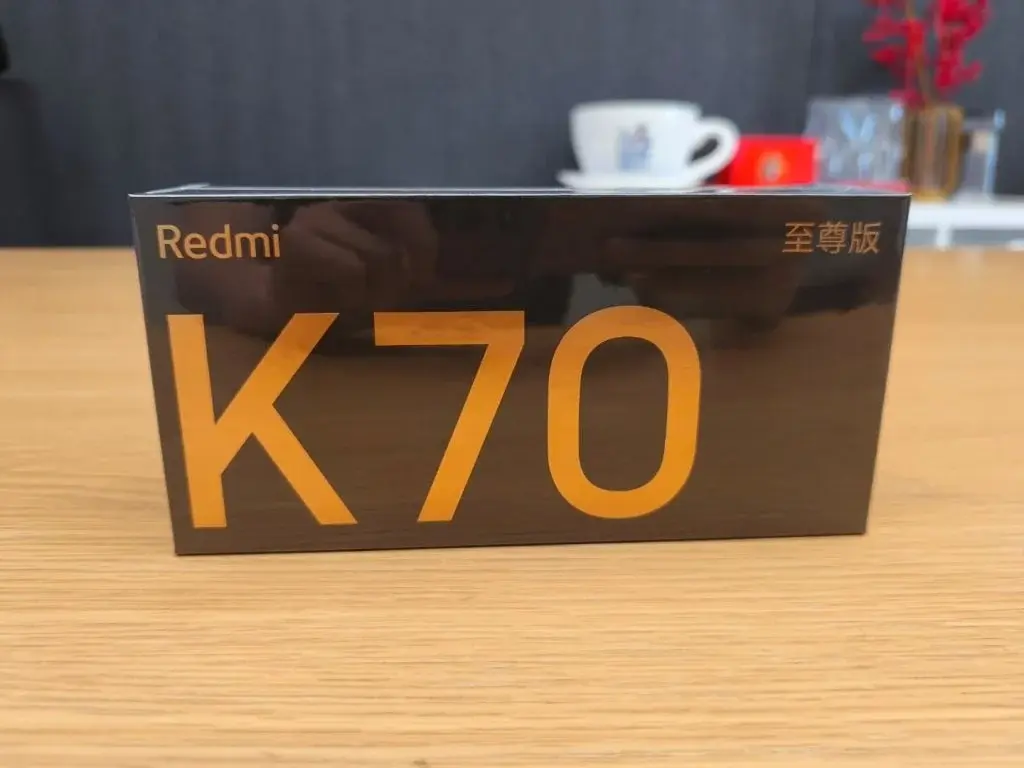
  • Redmi K70 Ultra: C8+ Screen with High-Frequency PWM & DC Dimming

    Redmi K70 Ultra: C8+ Screen with High-Frequency PWM & DC Dimming

    The Redmi K60 Ultra made its debut in August last year, and its successor is anticipated to launch this month. Recently, tipster Digital Chat Station revealed that the upcoming phone will feature 3840Hz high-frequency PWM dimming below 60 nits brightness and DC dimming above that level. According to the IEEE Std1789-2015 international standard, screen flicker frequencies above 3125Hz are considered safe for the human eye, making this display eye-friendly.

    Advanced Display Technology

    The display will incorporate C8+ luminous materials, co-developed by Xiaomi and Huaxing. This innovation enhances display efficiency and significantly extends the panel’s lifespan by over 100%. The Redmi K70 Ultra will be the first device to feature this advanced display panel, which reduces eye strain and delivers vibrant colors. The screen will have a 1.5K resolution and a flat design.

    Powerful Performance

    A recent Geekbench listing indicates that the phone will be powered by the Dimensity 9300+ chipset. This chipset includes a Cortex-X4 performance core clocked up to 3.4GHz, three Cortex-X4 cores at 2.85GHz, and four Cortex-A720 cores at 2.0GHz. It utilizes TSMC’s 3rd generation 4nm fabrication process and features an 18MB L3 + SLC cache. The device is expected to come with UFS 4.0 fast storage and could offer configurations up to 24GB of RAM and 1TB of storage.

    Enhanced AI and Graphics

    The phone will support on-device generative AI models such as “Tongyi Qianwen”, “Baichuan”, and “Wenxin Yiyan”, providing various multimodal generative AI capabilities. Additionally, it will include a discrete graphics chip for super-resolution and super-frame functionalities in gaming.

    Robust Design and Specifications

    The device will boast an IP68 rating for dust and water resistance, similar to its predecessor. For reference, the K60 Ultra is equipped with the Dimensity 9200+ (4 nm) chipset and offers configurations like 256GB with 12GB or 16GB RAM, 512GB with 16GB RAM, and 1TB with 16GB or 24GB RAM. It features a 50MP main camera with OIS, an 8MP ultrawide, a 2MP macro camera, and a 20MP front-facing camera.


  • Xiaomi 15 Ultra Release Set for 2025: Exclusive News

    Xiaomi 15 Ultra Release Set for 2025: Exclusive News

    Xiaomi is already gearing up for its next high-end flagship, the Xiaomi 15 Ultra. While the company is already in the process of developing the Xiaomi 15 and Pro models, it is now turning its attention to the Ultra variant. It’s intriguing to see what enhancements the Xiaomi 15 Ultra will bring compared to its predecessor, the Xiaomi 14 Ultra.

    Expected Features

    The Xiaomi 15 Ultra is anticipated to feature a new Qualcomm processor, the Snapdragon 8 Gen 4, along with superior camera capabilities. Despite some believing it’s premature for the Xiaomi 15 Ultra, Xiaomi plans to release the Xiaomi 15 and Ultra globally. Following the trend of the Xiaomi 14 Pro, the Xiaomi 15 Pro will remain exclusive to the Chinese market.

    Addressing Previous Issues

    The Xiaomi 14 Ultra, while boasting superior features, had some issues, particularly with camera fogging, a problem also seen in the Xiaomi 13T, Xiaomi 14, and Xiaomi 14 Pro. This issue led to dissatisfaction among users, with some returning their devices. Therefore, it’s crucial for Xiaomi to resolve this problem in the new Xiaomi 15 Ultra to boost sales. Aside from this, the Xiaomi 14 Ultra was an excellent device.

    Anticipated Launch

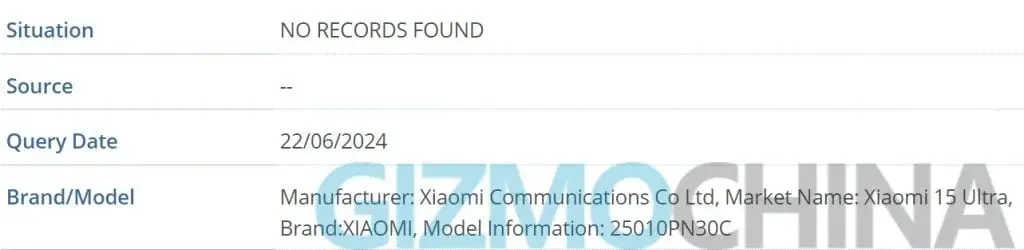
    We expect the Xiaomi 15 Ultra to be a highly advanced smartphone powered by the latest Snapdragon 8 Gen 4 processor. This processor will be used across the Xiaomi 15, Xiaomi 15 Pro, and 15 Ultra models, continuing Xiaomi’s tradition of utilizing the latest Snapdragon SOCs annually. The Xiaomi 15 and Pro models have already been spotted in the database, and now the highly anticipated "Ultra" device has appeared in the IMEI database. The Xiaomi 15 and Ultra are set to be officially unveiled at MWC 2025.

    Model Numbers

    25010PN30C

    25010PN30G

    25010PN30I

    The Xiaomi 15 Ultra comes with three different model numbers: 25010PN30C, 25010PN30G, and 25010PN30I. The first model number is for the Chinese version, while the others are for the Global and Indian versions, respectively. This means the Xiaomi 15 Ultra will be accessible worldwide.

    The "2501" at the start of the model number indicates January 2025. However, we anticipate the global introduction of the new Xiaomi 15 series in February 2025. As noted earlier, the Xiaomi 15 and Xiaomi 15 Ultra will have a global launch, whereas the Xiaomi 15 Pro will be exclusive to China. These are the initial known details about the new Xiaomi 15 Ultra.


  • Coolpad Teases Cool 50: AG Glass Back, 4700mAh Battery

    Coolpad Teases Cool 50: AG Glass Back, 4700mAh Battery

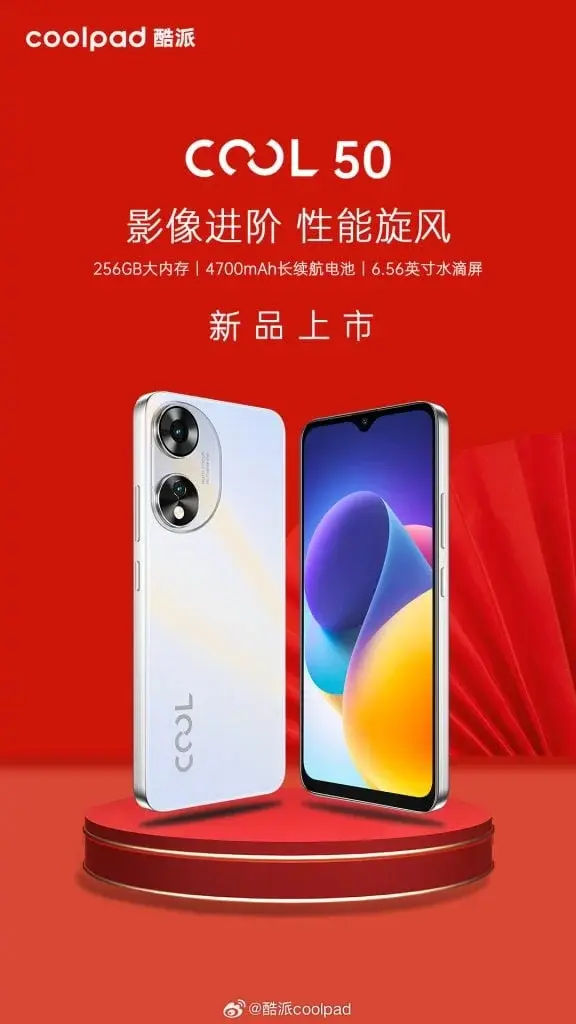
    Chinese smartphone manufacturer Coolpad has unveiled its newest budget-friendly smartphone, the Cool 50.

    The device features a sizable 256GB storage capacity, a robust 4700mAh battery for extended use, and an AG glass back cover that lends a premium touch. The Cool 50 is equipped with a 6.56-inch waterdrop display on the front, while the back houses dual cameras and an LED flash.

    Color Options and Availability

    Available in three appealing colors—Snow Domain Silver, Frosted Black, and Sakura Pink—the official pricing for the phone has yet to be disclosed. However, Coolpad has confirmed that the Cool 50 will be available through both online and offline channels.

    Recently appearing on the China Compulsory Certification (CCC), the Cool 50 is noted to have a screen resolution of 720×1600 pixels and dimensions of 163.6×74.8×9.2mm. The phone weighs around 199g.

    Technical Specifications

    While the specific processor model remains unknown, certification details indicate that the Cool 50 will feature an octa-core CPU clocked at 1.8GHz.

    Coolpad’s latest release follows the earlier launch of the Cool 60, a budget smartphone introduced in China earlier this year. The Cool 60 is priced at 599 yuan ($83) and features a UNISOC T760 chipset, 4GB RAM, and 128GB storage.

    The Cool 60 sports a 6.51-inch, 720p LCD screen with a 90Hz refresh rate and includes a 13MP rear camera and a 5MP front camera. It also supports 5G networks and split-screen functionality.

    Launch Details

    The exact launch date for the Cool 50 is currently unknown. However, the company is offering limited-time deals for its Weibo users, suggesting that the release may be imminent. Full pricing and specifications will be announced at that time. Stay tuned for updates.

  • Xiaomi Smart Factory Operates 24/7 Without Human Intervention

    Xiaomi Smart Factory Operates 24/7 Without Human Intervention

    Xiaomi CEO Lei Jun announced on Weibo that their new generation smartphone production facility in Changping, Beijing will soon be operational. He also shared a video showcasing the factory.

    Advanced Automation and Dust-Free Environment

    This new factory will be a “dark factory” capable of running 24/7 without human intervention. The machines within the facility can work together seamlessly and maintain a dust-free environment through micron-level dust removal.

    Intelligent Production and High Output

    The production quality will be managed by Xiaomi’s self-developed intelligent machines, capable of producing one smartphone every second. The promotional video calls this smart factory a preliminary step in Xiaomi’s future ventures.

    Significant Investment and Production Capacity

    Xiaomi has invested 2.4 billion yuan into this new production process. The Changping factory spans 81,000 square meters and has received certification as a “national smart manufacturing benchmark enterprise,” with an annual capacity of 10 million flagship smartphones. This facility will produce the upcoming foldable phones, the Xiaomi MIX Fold 4 and Xiaomi MIX Flip.

    Previous Automation Efforts

    Xiaomi has been employing automation in its production processes for some time. Their smart factory in Yizhuang, Beijing became operational in 2019. This facility was responsible for producing the company’s first book-style foldable, the Xiaomi Mix Fold, during its first phase.

  • Microsoft Bans Android in China, Requires iPhones for Work

    Microsoft Bans Android in China, Requires iPhones for Work

    Microsoft is implementing a significant policy change for its employees in China. Starting this September, iPhones will be the required device for work purposes, effectively preventing Android phones from accessing company resources. An internal memo revealed by Bloomberg News points to security concerns as the main reason for this change.

    Security Concerns and Google Mobile Services

    The core issue stems from the unavailability of Google Mobile Services (GMS) in mainland China. These services are essential for Microsoft’s security applications, such as Microsoft Authenticator and Identity Pass, which are now mandatory for all employees. Without Google Play, the official app store for Android, being accessible in China, Apple’s App Store is the only platform where these apps can be reliably downloaded.

    Transition to iPhone 15

    To facilitate this transition, Microsoft will provide each employee currently using an Android phone with a new iPhone 15. These devices will be available for pick-up at designated collection points across China. It’s worth noting that this policy only impacts work phones; employees are still free to use their personal Android devices.

    Broader Implications

    This move comes amid rising cybersecurity concerns following a significant cyberattack, believed to be linked to Russia, which affected several US government agencies earlier this year. In response, Microsoft initiated the Secure Future Initiative, a comprehensive program focused on enhancing its security protocols.

    The policy change is likely to draw attention given the ongoing geopolitical tensions between the US and China. Recently, Chinese government entities have advised employees to avoid using foreign devices at work due to similar security concerns. Additionally, the US has imposed several stringent sanctions on Chinese companies operating within its borders.

    Microsoft’s decision to require iPhones for its staff in China underscores the complexities of operating in a market with limited access to certain software and services. While the company prioritizes security, this move also inadvertently contributes to the ongoing tech rivalry between the US and China.

  • Leaked Honor Magic V3 Case Photos Reveal Upcoming Design

    Leaked Honor Magic V3 Case Photos Reveal Upcoming Design

    In recent news, the back cover for the yet-to-be-released Honor Magic V3 has been seen online. During an interview in China, Honor’s CEO Ming Zhao presented an accessory crafted for the Honor Magic V3. Although the Weibo video doesn’t give a full view of the Magic V3’s design, it does showcase a new case tailored for the upcoming foldable phone.

    Honor Magic V3 Real-Life Images

    Should the rumors hold true, the Magic V3 is anticipated to be a potent foldable smartphone. Despite its foldable nature, it has a folded thickness of 9.7mm. For comparison, the Xiaomi 14 Ultra is slightly thinner at 9.2mm. While the Magic V3 might not match the 14 Ultra in terms of camera specifications, achieving a 9.7mm thickness in a foldable device is quite remarkable. Additionally, the phone is expected to feature a 5200 mAh battery.

    The back cover of the Magic V3 sports Honor’s new circular camera array design. The new case seems to envelop the camera and might also serve as a stand, although its complete functionalities remain uncertain. For more details, you can watch the video shared on Weibo via the provided link.


    Leaked Honor Magic V3 Case Photos Reveal Upcoming Design
  • Kirin 9100 Set to Outperform Snapdragon 8 Gen 2, Claims Tipster

    Kirin 9100 Set to Outperform Snapdragon 8 Gen 2, Claims Tipster

    Huawei is anticipated to launch a new Kirin chipset, the Kirin 9100, later this year. This processor is speculated to power the forthcoming Mate 70 series, which will also be the first Huawei phone to come pre-installed with HarmonyOS NEXT.

    Potential Performance Leap

    There are speculations that the Kirin 9100 might represent a significant performance improvement for the Chinese tech giant. However, doubts remain due to Huawei and its chip manufacturer, SMIC, lacking the latest chip manufacturing technology as a result of the US trade ban.

    Kirin chips have so far struggled to compete with offerings from Qualcomm and MediaTek. However, the Kirin 9100 might be an exception. A new rumor indicates it could outperform Qualcomm’s flagship Snapdragon 8 Gen 2 chipset.

    Rumors and Speculations

    The information comes from an X tipster, jasonwill, who appears confident that the upcoming Kirin chip will exceed the performance of the Snapdragon 8 Gen 2. If Huawei’s next-gen Kirin SoC is indeed faster, this would represent a substantial improvement compared to the current-best Kirin 9010, which struggles to compete even with mid-range chips like the Snapdragon 7+ Gen 2.

    Additionally, the tipster suggests that the Kirin 9100’s performance could enhance the user experience, even if its on-paper specifications “may not match those of the 8gen3”.

    Software Optimization

    How could Huawei achieve this? The likely answer is software optimization. Huawei is expected to launch HarmonyOS NEXT alongside the Kirin 9100, completely distancing itself from Google’s Android platform.

    According to Huawei, HarmonyOS NEXT is three times more efficient in memory utilization compared to Android. This efficiency translates to smoother UI performance on Huawei devices, even those powered by older Kirin chipsets.

    Another factor contributing to the Kirin 9100’s performance is its manufacturing process. The chip is reportedly set to be mass-produced using SMIC’s 5nm node. While this technology isn’t the most advanced, it should still provide better performance and power efficiency compared to previous Kirin chipsets.

    While it’s exciting to anticipate Huawei’s upcoming chip matching the performance of its competitors, it’s prudent to remain skeptical as such a significant leap forward seems almost too good to be true for Huawei to achieve in one go.