Stay updated with the latest phone news, reviews, and trends. Discover cutting-edge smartphones, features, and innovations in our Phones category at GizNewsDaily
Unihertz has revealed the camera specifications for their forthcoming Jelly Max compact phone. The device features a sophisticated triple-camera setup, headlined by a robust 100-megapixel OVA0B sensor in the main camera, ensuring high-detail photo captures.
Exceptional Telephoto Lens
Photography lovers will be delighted with the phone’s dedicated 8-megapixel telephoto lens, which offers a 3.4x optical zoom, making it ideal for capturing sharp close-ups of distant subjects. Complementing this setup is a 32-megapixel GD1 front-facing camera, perfect for high-quality selfies and video calls.
Design and Display Details
Aesthetically, the Jelly Max follows the “translucent exploration version” design seen in its predecessor. The rear fingerprint sensor is conveniently located beneath the camera module on the back cover. It’s crucial to highlight that the official Weibo account clarifies that while the Jelly Max shares the same screen size (5.03 inches) and resolution (1520 x 720) as the Qin 3 Ultra phone, the displays are not identical.
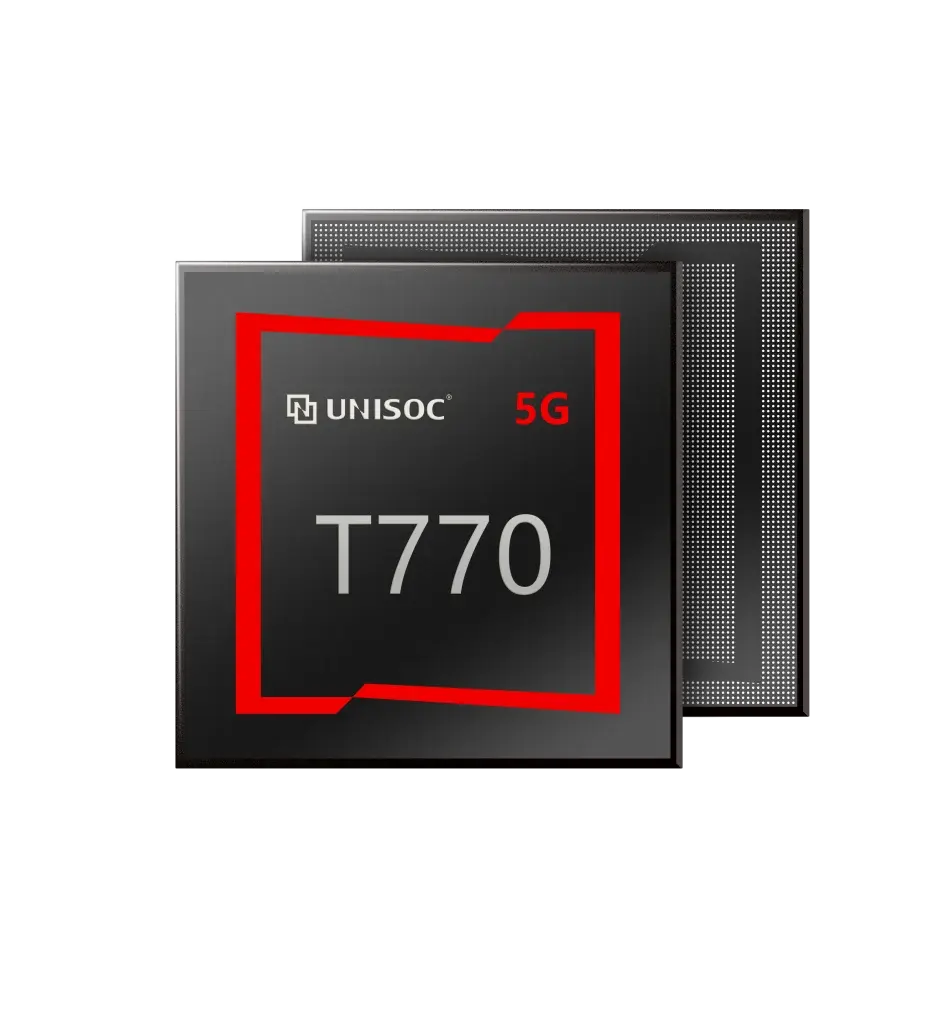
Unisoc has recently introduced a new 5G-capable System on Chip (SoC) titled the Unisoc T760, designed for budget-friendly devices.
Unisoc T760 Specifications:
The T760 is built using a 6nm EUV manufacturing process. It features an octa-core CPU with four Cortex-A76 cores for high performance and four Cortex-A55 cores for energy efficiency. The GPU is an ARM Mali-G57 MC4, which ensures smooth graphics and gaming experiences.
A Neural Processing Unit (NPU) with a processing power of 3.2 TOPS is included in the T760, enhancing AI functionalities such as facial recognition and camera performance. According to Unisoc, the T760 achieves an average AnTuTu V10 score of 510,000.
The T760 supports displays up to Full HD+ resolution with a 120Hz refresh rate and QHD+ displays at 60Hz. For cameras, it supports sensors up to 64MP and can handle quad-camera configurations. The image quality is further improved by Unisoc’s Vivimagic 6.0 imaging engine and Acutelogic 3A technology.
Battery efficiency is a standout feature, with Unisoc claiming a 37% reduction in power consumption during 5G data usage and an 18% reduction in 5G standby, which contributes to longer battery life.
Connectivity and Memory Options:
The T760 offers comprehensive connectivity options, including support for NSA/SA 5G networks, GSM, WCDMA, TDD-LTE, FDD-LTE, and advanced navigation systems such as GPS, Glonass, Beidou, and Galileo. Additional features include Wi-Fi 802.11ac, Bluetooth 5.0, FM radio support, and memory configurations up to 32GB of LPDDR4X RAM with storage options of EMMC 5.1 and UFS 3.1.
Availability:
This new chipset from Unisoc will be featured in upcoming budget smartphones in India, providing consumers with more affordable 5G device options. The T760 is already integrated into several Chinese smartphones like the Nubia Mavericks 5G and Coolpad COOL 60, and it is anticipated to power the forthcoming HMD smartphones.
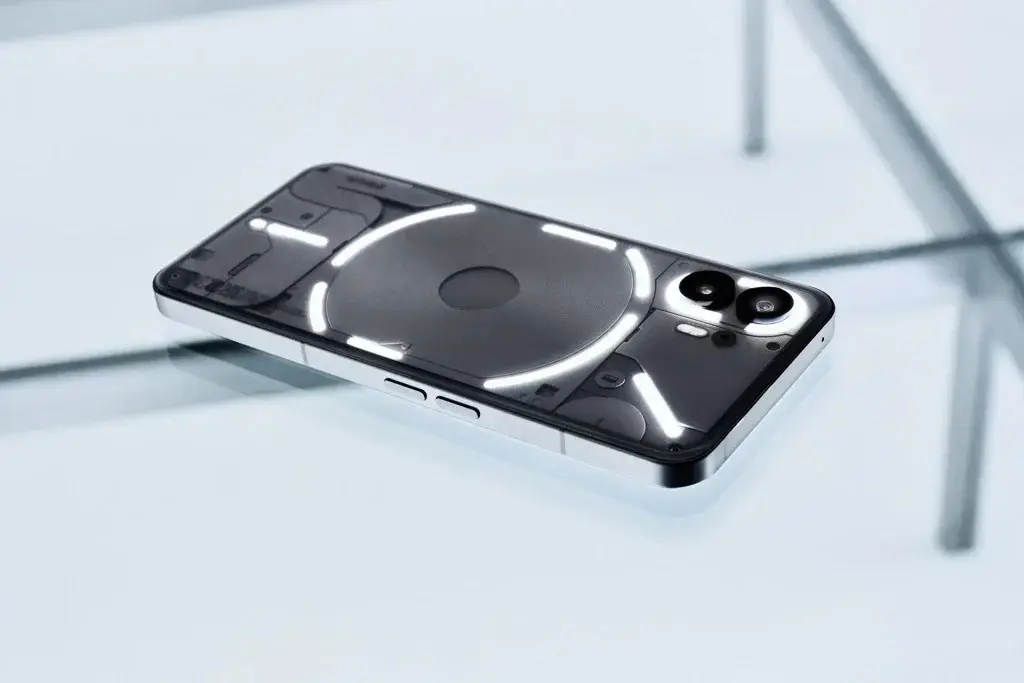
Nothing has rolled out the latest Nothing OS 2.6 update for its Nothing Phone (2), bringing a host of new features, game mode improvements, and crucial bug fixes. This update has a size of 87MB. Below is the full changelog.
New Features & Experience Improvements
Added support for deleting wallpaper history in Wallpaper Studio.
Enhanced initial setup for the Weather Widget/app with user-friendly prompts to add a specific city.
Added support for displaying CMF Watch battery level in the Quick Settings Bluetooth tile.
Optimized the Low Lag Mode experience for Nothing earbuds.
Game Mode Enhancements
Tap the left sidebar for quick access to Game Dashboard during games.
Incoming calls during games can now appear in a pop-up view.
Added support to reject third-party app calls during gameplay.
Support for one-tap callback after rejecting a regular call.
Optimized light notifications to show more information during games.
Support for blocking notifications during gameplay to reduce distractions.
Bug Fixes
Fixed an issue affecting voice and call recording in WhatsApp.
Resolved anomalies when making emergency calls in certain scenarios.
Fixed an issue where some apps could not use the Cloned Apps feature properly.
Other general bug fixes.
As with most firmware updates, the Nothing OS 2.6 update is being deployed in stages. This staggered rollout allows Nothing to monitor for any potential issues and ensures a stable update process. Users who have not yet received the OTA notification can manually check for the update by going to Settings > System > System Update.
I made an error in my report regarding the Galaxy S25+, suggesting it might not be released, and I apologize for that. Samsung will indeed continue with the “Plus” model in the Galaxy S25 series. I should have waited before claiming that the Galaxy S25+ might not be launched. Everyone can make mistakes; the key is to learn from them.
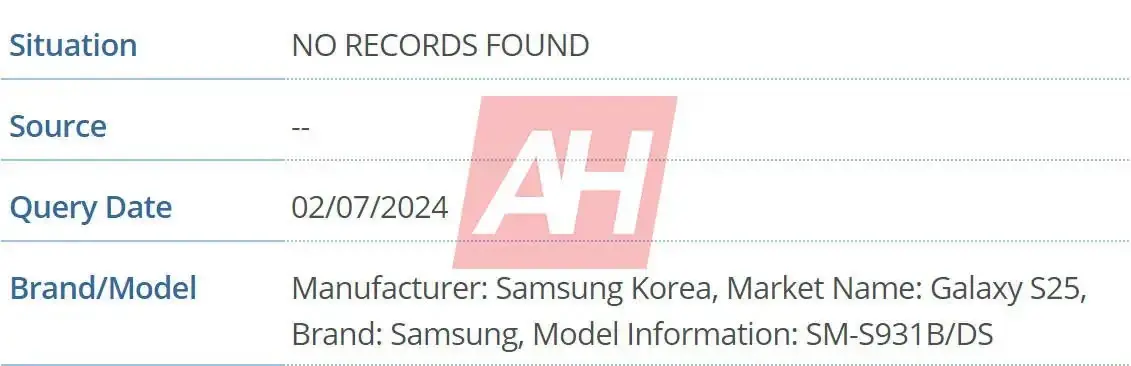
The reason behind my initial report was that all Galaxy S24 series models were added to the database in July 2023. The same applied to the Galaxy S25 series. Initially, when I only saw the Galaxy S25 and Galaxy S25 Ultra in the database, I assumed the Galaxy S25+ would not be introduced. However, after further analysis of the GSMA database, I can confirm that the Galaxy S25+ will indeed be officially available worldwide.
No smartphone is introduced if it is not added to the GSMA database, indicating that the device isn’t in the production plan. Each smartphone must have an IMEI number, which is crucial for making calls, connecting to the internet, and other functionalities. Thus, the GSMA database plays a vital role.
Previously, we reported that the Galaxy S25+ might not be released due to some unusual reasons, which we have explained above. Samsung typically adds all devices to be introduced to the database about six months in advance. This year, however, Samsung initially added only the regular Galaxy S25 and the Galaxy S25 Ultra, with the Plus model missing. This led me to believe that the Galaxy S25+ would not be launched, which was incorrect. The smartphone will be officially introduced, so there’s no need to worry.
Galaxy S25+ IMEI Database
We have spotted the Galaxy S25+ in the IMEI database with the model number SM-S936U. The “U” at the end of the model number signifies the “US” region. We already knew the regular Galaxy S25 and Galaxy S25 Ultra were on the way. With this new finding, it’s clear that Samsung has not abandoned the Plus model.
How the Rumor Started
Previously, Samsung added all models of the Galaxy S24 series to the database in July 2023. The early detection of the Galaxy S25 and Galaxy S25 Ultra on July 1 made us think the Galaxy S25+ would not be introduced. Samsung added the Galaxy S25 Plus to the database shortly after, on July 9. This brief delay caused many to believe that the Galaxy S25+ would not be released. However, this is untrue; the Galaxy S25+ is now in the database and will be released next year.
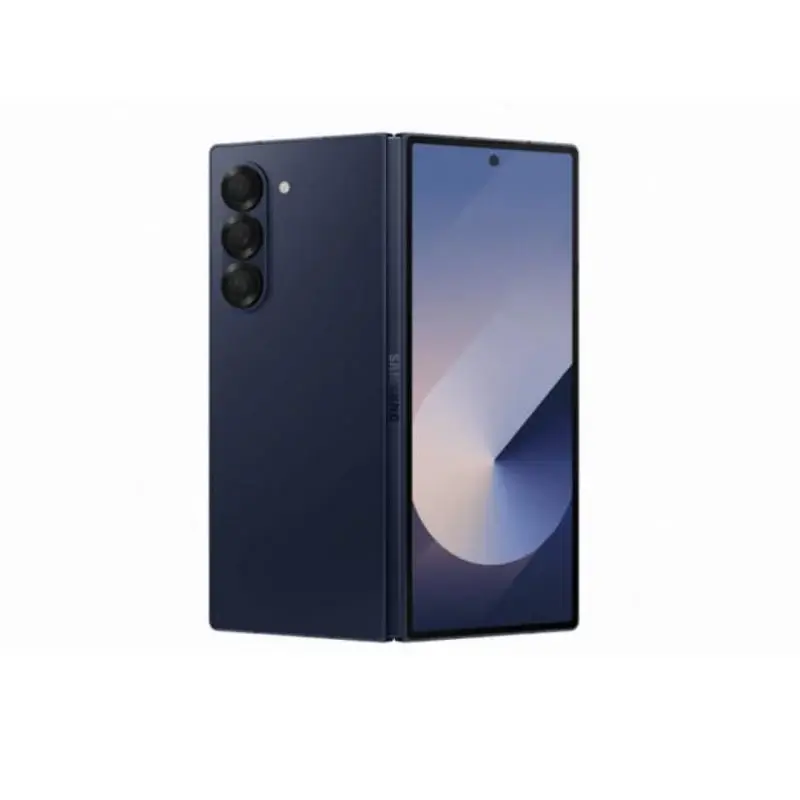
Samsung’s Galaxy Unpacked event in Paris is scheduled for tomorrow, with the Galaxy Z Fold 6 expected to take center stage. However, speculation has been rife about a thinner, potentially larger-screened version, the Z Fold 6 Ultra (or Z Fold 6 Slim). Today, a new leak indicates that the Fold 6 Ultra project may be on indefinite hold, dampening those expectations.
Details are limited, but the Ultra’s main attraction appeared to be its slimmer design compared to the standard Fold 6. This would have put Samsung in contention for the title of the world’s thinnest foldable phone, a title currently held by Honor’s Magic V2.
Competitive Landscape
Honor is gearing up to launch its Magic V3 foldable this month, which promises to be even thinner than the Magic V2. Likewise, Xiaomi is rumored to be developing the Mix Fold 4, which is also expected to have an exceptionally slim profile.
The absence of a Fold 6 Ultra launch might indicate that Samsung’s design for the device wasn’t thin enough to compete. Alternatively, the company may have chosen to allocate resources elsewhere. Regardless of the reason, this latest rumor suggests a missed opportunity for Samsung.
The forthcoming Z Fold 6 is rumored to feature only minor upgrades, which may not provide the level of innovation needed to retain market share.
Whether the Fold 6 Ultra’s delay is due to technical constraints or a strategic pivot by Samsung remains uncertain. But one thing is clear: the current wave of foldable phones seems to be driven by advancements from Chinese companies. This could serve as a wake-up call for Samsung, pushing them to enhance their foldable technology soon.
As anticipated, the Realme GT 6 smartphone has debuted in its native market. Succeeding last year’s GT 5, the new model in China differs from the global version introduced last month. It boasts high-end specifications and features. Let’s explore what it brings to the table.
Realme GT 6 Specifications and Features
The Realme GT 6 showcases a fresh design compared to its predecessor and the international version. It features a flat frame and a rectangular camera module on the back. The rear panel presents a dual-tone appearance with darker and lighter shades of the same color. The device is IP65-certified for dust and water resistance.
Regarding the display, the Realme GT 6 sports a BOE S1+ AMOLED screen measuring 6.78 inches with a resolution of 2,780 x 1,264 pixels. The display includes Pro XDR, a 120Hz LTPO refresh rate, 6,000 nits peak brightness, an in-display fingerprint scanner, and 2160Hz high-frequency PWM dimming. The screen is protected by Crystal Armor Glass.
On the camera front, the Realme GT 6 is equipped with a dual rear camera setup featuring a 50MP Sony IMX890 sensor with OIS and an 8MP ultra-wide-angle lens. For selfies, there is a 16MP front camera.
Under the Hood
The Realme GT 6 is driven by a Snapdragon 8 Gen 3 processor, paired with up to 16GB RAM and 1TB storage. It features a large 10,000-level dual VC system for heat dissipation, along with an aerospace-grade aluminum middle frame and thermal insulation to maintain low temperatures. The smartphone is powered by a 5,800mAh second-generation silicon-carbon anode battery, supporting 120W wired charging and compatibility with 33W UFCS and 55W PPS fast charging.
The Realme GT 6 runs on Realme UI 5 based on Android 14 OS and includes various AI features such as an AI portal, AI call summary, AIGC, and more. It also offers gesture controls for touchless interaction. Additional features include IR control, an X-Axis linear motor, and a sky communication system with 5.5GHz networks and WiFi-7 protocols.
Realme GT 6 Pricing and Availability
The Realme GT 6 is priced starting at CNY 2,799 ($385) for the base 12GB + 256GB model. The 16GB + 256GB and 16GB + 512GB variants are available at CNY 3,099 ($426) and CNY 3,399 ($467) respectively. The top-tier 16GB + 1TB configuration is priced at CNY 3,899 ($536). The smartphone is available in Storm Purple, Light Year White, and Dark Side of the Moon colors, with the latter featuring multiple gradient textures reminiscent of the moon’s surface. It will be available for purchase in China starting July 15.
Earlier today, Xiaomi introduced several new products to the Indian market, including the Redmi 13 5G smartphone. This new model follows the highly successful Redmi 12 5G and boasts numerous enhancements. Continue reading to learn more about the device.
Redmi 13 5G Specifications
The Redmi 13 5G features an elegant crystal glass design on the back, making it the first in its category to offer dual-sided glass. It is available in several finishes: Black Diamond, Hawaiian Blue, and Moonstone Silver.
On the front, the device sports a substantial 6.79-inch Full HD+ LCD screen with a 120Hz adaptive refresh rate. The display includes a center punch-hole design and is protected by Corning Gorilla Glass 3, ensuring durability against daily use.
Powered by the Snapdragon 4 Gen 2 AE (Accelerated Edition) SoC, the Redmi 13 5G comes with up to 8GB of RAM. The smartphone offers 128GB of internal storage, which can be expanded up to 1TB via microSD card.
Camera and Battery
For photography, the phone is equipped with a dual-camera system featuring a 108 MP Samsung ISOCELL HM6 primary sensor and a 2 MP macro camera. On the front, there’s a 13 MP camera for selfies and video calls.
The device runs on an Android 14-based HyperOS, with Xiaomi promising two years of OS updates and four years of security updates. It is powered by a 5030mAh battery that supports 33W fast charging. Connectivity options include 5G SA/NSA, dual 4G VoLTE, Wi-Fi 6, Bluetooth 5.1, GPS, and a USB Type-C port. The phone also features a 3.5mm audio jack and a bottom-firing loudspeaker. For biometrics, the Redmi 13 5G includes a side-mounted fingerprint sensor and boasts IP53 water and dust resistance.
Pricing and Availability
The Redmi 13 5G is attractively priced, starting at Rs. 13,999 for the 6GB + 128GB model and Rs. 15,499 for the 8GB + 128GB variant. The phone will be available for purchase from July 12th on Amazon.in, mi.com, and Xiaomi Retail stores.
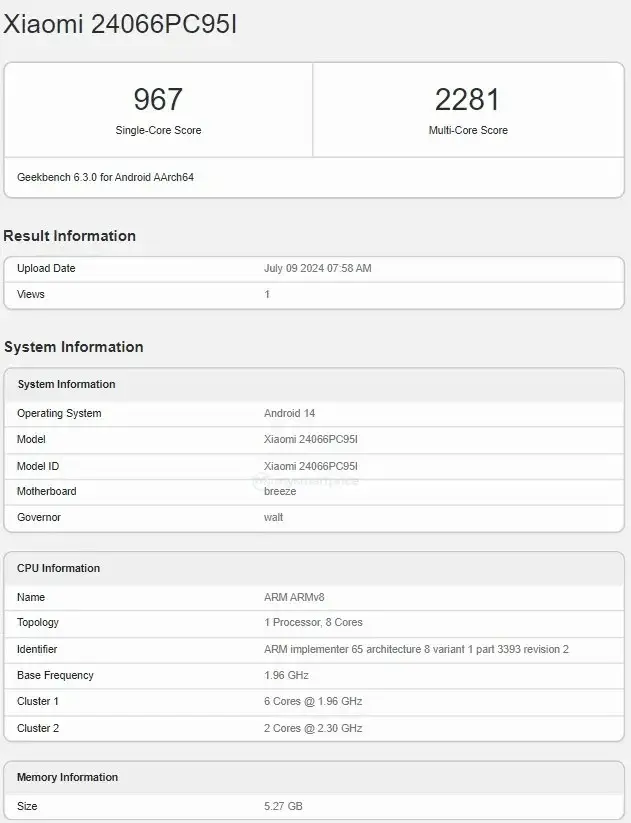
The upcoming POCO M6 Plus 5G has made an appearance on Geekbench, hinting that its launch could be imminent. This follows the recent release of the Redmi 13 5G in India. Given that both devices share similar specifications and the M6 Plus has just shown up on Geekbench, it’s likely that the POCO M6 Plus 5G will be unveiled soon.
Previously, the POCO M6 Plus 5G was also seen on the Google Play Certification list. We had earlier reported that the model number for this device is 24066PC95I. MySmartPrice has now discovered that a device with this exact model number has appeared on Geekbench, corroborating our earlier findings.
POCO M6 Plus 5G Geekbench Results
The POCO M6 Plus 5G will be powered by the Snapdragon 4 Gen 2 AE chipset and will feature 6GB of RAM, as per the Geekbench results. We had also shared details about the camera setup in an earlier report. The smartphone will come equipped with a 108 MP Samsung S5KHM6 sensor as the primary camera and a 13 MP ultra-wide-angle secondary camera.
Huawei is reportedly celebrating a milestone with the Mate 60 series, having sold over 10 million units by June 2024. This impressive figure includes sales from the standard Mate 60, Mate 60 Pro, and the high-end RS Porsche Design variant, as per an insider from Weibo known as Digital Chat Station.
Despite facing challenges in chip production, Huawei managed to achieve this sales target through aggressive marketing campaigns and temporary discounts. These efforts, coupled with a loyal customer base, have driven the Mate 60 series to this success. The Pro model, in particular, saw an initial surge in sales that maintained momentum, helping the series reach this new benchmark.
Huawei Mate 60 and Mate 60 Pro
The Huawei Mate 60 and Mate 60 Pro share many core specifications, with the main differences being in display size and battery capacity. Both models feature large LTPO OLED displays with a variable refresh rate ranging from 1Hz to 120Hz, optimizing battery life based on content.
The Mate 60 has a 6.69-inch display, while the Mate 60 Pro boasts a larger 6.82-inch screen. Both phones are powered by the Kirin 9000S chipset, built on a 7nm process, and come with 12GB of RAM for smooth multitasking. Storage options vary from 256GB to 1TB, sufficient for extensive photo, video, and app storage needs.
Camera capabilities include a 50MP main sensor with a variable aperture (f/1.4 to f/4.0), a 12MP periscope lens, and a 12MP ultrawide lens for the Mate 60. The Mate 60 Pro upgrades the periscope lens to 48MP while retaining the 12MP ultrawide lens. A 13MP front-facing camera is present on both models.
The Mate 60 Pro, despite its larger display, has a slightly smaller 4750mAh battery compared to the Mate 60’s 5000mAh battery. However, both support 88W wired charging and 50W wireless charging.
Huawei Mate 60 Pro+ and RS Ultimate Design
The Mate 60 Pro+ shares similar display specs with the Pro model and includes a 13MP front camera along with a 3D depth camera for secure face recognition. Its rear camera setup is more advanced, featuring a 48MP primary camera with a variable aperture (f/1.4 to f/4.0), a 40MP ultrawide camera, and a 48MP ultra-macro telephoto camera. The device runs on HarmonyOS 4.0 and is equipped with 16GB of RAM and up to 1TB of storage.
Unique features of the Mate 60 Pro+ include two-way satellite communication and 20W wireless reverse charging. Both the Mate 60 Pro and Pro+ support two-way text messaging over the Beiduo network.
The RS Ultimate Design model offers the same high-end specifications as the Mate 60 Pro+ but is distinguished by its luxurious ceramic body and unique design.
Xiaomi introduced a range of new products at an event in India today, including the Redmi 13 5G, Redmi Buds 5C, and more. Additionally, the company launched two new power banks after a long hiatus: the ultra-portable Xiaomi Pocket Power Bank and the Xiaomi Power Bank 4i. Both products are Made in India and share similar specifications and features, with a few differences. Here’s a closer look at the technical details of these accessories.
Xiaomi Pocket Power Bank & Xiaomi Power Bank 4i Specs
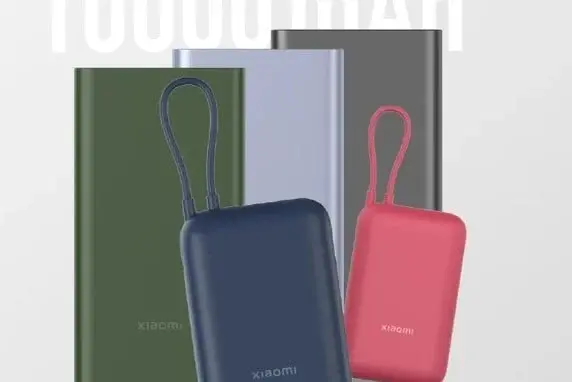
The Xiaomi Pocket Power Bank is a compact charging device comparable in size to a wallet, while the Power Bank 4i is slightly larger. Both sport a sleek, minimalistic design. The Pocket Power Bank includes a built-in USB-C cable with a locking mechanism for a tangle-free experience.
Both the Xiaomi Pocket Power Bank and the Power Bank 4i come with 10,000mAh high-density Lithium-ion battery cells and feature 12 layers of security protection against overheating, voltage fluctuations, and short circuits. They each have a USB-C port and two USB-A ports, supporting two-way fast charging at speeds up to 22.5W. The Power Bank 4i can charge three devices simultaneously. Both models also offer a low-power discharging mode, activated with a button, for charging smartwatches, TWS earphones, headphones, and similar devices.
Pricing and Availability
The Xiaomi Pocket Power Bank is priced at Rs 1,699, while the Power Bank 4i costs Rs 1,299. The Pocket Power Bank is available in Maroon and Blue, whereas the Power Bank 4i comes in Classic Black, Olive Green, and Coral Purple. Both products will be available for purchase starting July 15 on Amazon, Flipkart, Xiaomi’s website, and at retail stores.