Category: Phones

Stay updated with the latest phone news, reviews, and trends. Discover cutting-edge smartphones, features, and innovations in our Phones category at GizNewsDaily

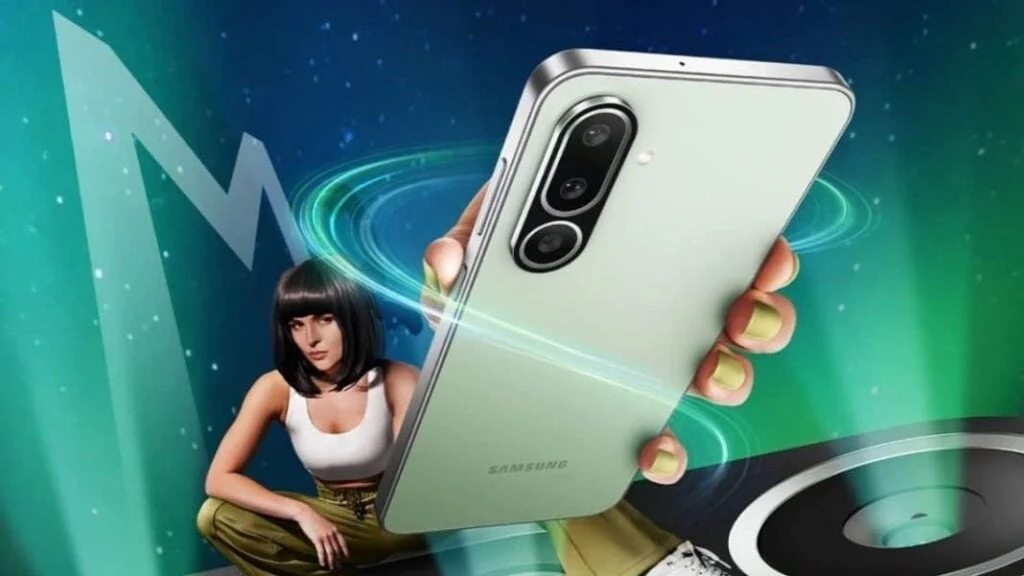
  • Samsung Galaxy M56: Slim 7.2mm, Big Battery, 6 Years OS Updates

    Samsung Galaxy M56: Slim 7.2mm, Big Battery, 6 Years OS Updates

    Key Takeaways

    1. The Galaxy M56 features a 6.7-inch Super AMOLED display with FHD+ resolution and a 120Hz refresh rate, protected by Corning Gorilla Glass Victus+.

    2. It is powered by the Exynos 1480 SoC, with 8GB of LPDDR5X RAM and 256GB of internal storage, along with a 5,000mAh battery supporting 45W fast charging.

    3. The smartphone has a slim design at 7.2mm thick and weighs 180 grams, featuring a triple rear camera setup (50MP main, 8MP ultra-wide, 2MP macro) and a 12MP front camera.

    4. Samsung promises 6 years of software updates, including operating system and security patches, for the Galaxy M56.

    5. The base price for the 8GB + 128GB model is 24,999 INR, with a launch offer of a 3,000 INR discount for HDFC card users, available from April 23, 2025.


    Samsung has just launched its new mid-range smartphone in India, and it comes packed with some impressive features. The Galaxy M56 boasts a substantial battery life while maintaining a sleek design, along with extended software support. Here’s all the essential information regarding its specifications, features, pricing, and more.

    Galaxy M56: Key Specifications

    The Galaxy M56 from the South Korean tech giant features a tall 6.7-inch Super AMOLED display, which offers FHD+ resolution and a 120Hz refresh rate. It’s also protected by Corning Gorilla Glass Victus+, and has 30 percent slimmer bezels. At its core, it runs on the Exynos 1480 SoC, coupled with 8GB of LPDDR5X RAM and 256GB of internal storage. This device is powered by a robust 5,000mAh battery that supports 45W wired fast charging.

    Design and Camera Setup

    Even with its large battery, the Galaxy M56 remains ultra-slim at just 7.2mm thick and weighs in at 180 grams. On the rear, it features a triple camera system that includes a 50MP main sensor, an 8MP ultra-wide angle lens, and a 2MP macro camera. For selfies and video calls, a 12MP front-facing camera is included. The device operates on Android 15 with Samsung’s One UI 7 custom skin pre-installed. Samsung has committed to providing an impressive 6 years of updates for both the operating system and Android security patches for the Galaxy M56.

    Pricing and Launch Details

    Samsung has released the Galaxy M56 in two color variants: Black and Light Green. The base price for the 8GB + 128GB model starts at 24,999 INR. This price comes with various offers, such as a 3,000 INR instant discount for HDFC debit and credit card users. The sale is set to commence on April 23, 2025, through the official Samsung website and Amazon India.

  • Android 16 Release Date, Eligible Devices, and Features Guide

    Android 16 Release Date, Eligible Devices, and Features Guide

    Key Takeaways

    1. Release Date: Android 16 is set to launch in the second quarter of 2025, likely by June, making it the earliest Android version release in recent years.

    2. Device Compatibility: The beta version of Android 16 is currently available for select Pixel and non-Pixel devices, with a wider range of devices expected to support it upon official release.

    3. Key Features: Notable features include progress-centric notifications, an enhanced photo picker, predictive back improvements, better adaptive refresh rate support, and richer haptic feedback.

    4. Camera and Video Enhancements: Android 16 offers improved camera controls, hybrid auto-exposure models, and the Advanced Professional Video (APV) codec for high-quality video recording.

    5. Privacy Improvements: The update includes enhancements to Health Connect and the Privacy Sandbox, focusing on user privacy and data protection in mobile advertising.


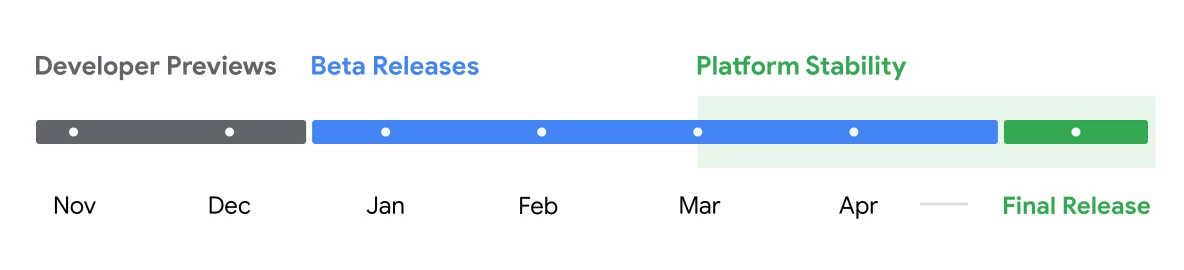
    Android 15 may still be coming for many Android smartphones, but Google is already hard at work on Android 16. The new operating system has now reached its platform stability stage, indicating that we are getting closer to its official launch.

    Developer Previews and Beta Versions

    Google has rolled out two developer previews of Android 16, along with a few beta versions. These beta releases provide us with a sneak peek at what Google has planned for Android 16 ahead of its public launch. Below is a summary of all the details we have about Android 16, which includes the release timeline, compatible devices, and exciting new features.

    Release Date of Android 16

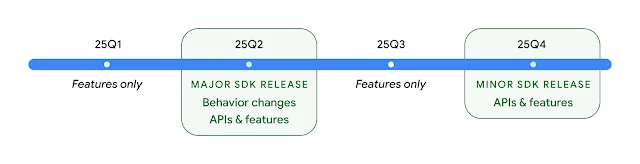
    Google has announced that Android 16 will be launched in the second quarter of 2025. Sameer Samat, President of the Android Ecosystem (via Android Police), noted that everything is proceeding as planned. This means Android 16 should be officially available by June 2025, although there are speculations about a possible earlier launch in May.

    This would make Android 16 the earliest Android version to be released in a while. Usually, Google unveils the latest Android version in August or later, but Android 16 is set to arrive at least a month earlier. Additionally, Google has indicated there will be a minor release in the fourth quarter of 2025, but it’s uncertain whether it will be called Android 16.1 or something different.

    Devices That Can Run Android 16

    Currently, the Android 16 beta can be accessed on several Pixel and non-Pixel devices. Here’s the complete list:

    – Pixel 9
    – Pixel 9 Pro
    – Pixel 9 Pro XL
    – Pixel 9 Pro Fold
    – Pixel 8
    – Pixel 8 Pro
    – Pixel 8a
    – Pixel 7
    – Pixel 7 Pro
    – Pixel 7a
    – Pixel 6
    – Pixel 6 Pro
    – Pixel 6a
    – Pixel Fold
    – Pixel Tablet
    – Xiaomi 15
    – Xiaomi 14T Pro
    – OnePlus 13

    If you possess any of these phones or tablets, you can experiment with Android 16 right now by downloading the beta version. Keep in mind that beta releases often have bugs and might not function perfectly.

    The list above is limited, but when the stable version launches, it will be available for a wider range of Android devices. We will update our website once manufacturers announce their official Android 16 upgrade lists.

    Exciting New Features in Android 16

    1. Progress-centric Notifications
    Android 16 brings a fresh type of notifications that allows users to keep track of important ongoing activities like rideshare, delivery, and navigation. This is somewhat similar to iOS’s Live Activities, but with some distinctions. Google prioritizes these notifications on the lock screen, making them more visible.

    The progress-centric notifications, also referred to as Live Updates, are also integrated with the status bar and always-on display. As reported by Android Authority, they appear as a chip in the status bar, and during that time, all other notifications are hidden. Tapping on the chip reveals detailed information in a pop-up.

    2. Enhanced Photo Picker
    The photo picker has been a valuable privacy feature in Android, allowing users to share specific photos and videos instead of their whole library. Android 16 improves this functionality by enabling searches across cloud media providers directly within the photo picker.

    Google has introduced new APIs that allow apps to incorporate the photo picker seamlessly into their interfaces, making media selection feel like an integral part of the app rather than a separate overlay.

    3. Predictive Back Improvements
    This feature gives users a glimpse of the screen they will return to before completing the back navigation. Android 16 adds predictive back support to three-button navigation, allowing users to long-press the back button for a screen preview.

    4. Better Adaptive Refresh Rate Support
    This feature lets the display refresh rate on compatible devices adjust according to the content being displayed. This helps to lower power consumption and eliminates the need for manual refresh rate adjustments. Although adaptive refresh rates were first introduced in Android 15, Android 16 simplifies their use for developers.

    5. Richer Haptics
    With Android 16, Google is providing app developers greater control over haptic feedback on Android devices. New haptic APIs enable apps to define the amplitude and frequency of haptic effects.

    More refined haptics can enhance gaming experiences with dynamic vibrations for actions like explosions and collisions. Phone manufacturers can also use this to create unique vibration patterns for different notifications (e.g., texts, calls, alarms), making it simpler for users to recognize alerts without looking at their screens.

    6. Camera Enhancements
    Android 16 introduces new hybrid auto-exposure models that give users manual control over certain exposure aspects while letting the auto-exposure algorithm manage the rest. This offers significantly more flexibility than the current system, which requires either full manual control or complete reliance on auto-exposure.

    The new OS also brings support for fine color temperature and tint adjustments, catering to professional video recording applications. Below are examples of how photos appear after applying various color temperature and tint modifications.

    ![image]

    With improved night mode scene detection, third-party apps can better identify low-light conditions and switch to night mode for better photo capture, assuming the device supports it. Android 16 also expands HDR capabilities by adding support for UltraHDR images in the HEIC file format, with Google also working on AVIF support for UltraHDR in the stable release.

    7. Advanced Professional Video
    Android 16 introduces the Advanced Professional Video (APV) codec tailored for high-quality professional video recording and post-production.

    Google states that the APV codec has several features, including:
    – Perceptually lossless video quality, which is close to raw video quality
    – Low complexity and high throughput intra-frame-only coding to better support editing
    – High bit-rate range support for 2K, 4K, and 8K content, enabled by a lightweight entropy coding method
    – Frame tiling for immersive content and allowing parallel encoding and decoding
    – Support for various chroma sampling formats and bit-depths
    – Capability for multiple decoding and re-encoding without significant visual quality loss
    – Support for multi-view video and auxiliary video like depth and alpha
    – Compatibility with HDR10/10+ and user-defined metadata

    8. Health Connect Updates
    Google is refreshing Health Connect with a new data type that adheres to WHO guidelines for moderate and vigorous activity. Each record will now include the start time, end time, and intensity of the activity.

    9. Privacy Sandbox Enhancements
    Android 16 features the updated version of Privacy Sandbox, fostering a more privacy-focused ecosystem for mobile advertisement and measurement. The aim is to safeguard user privacy by limiting intrusive tracking methods while still allowing businesses to display relevant ads and evaluate their effectiveness.

  • Realme GT 7T Appears on Geekbench, Likely Rebadged Neo 7 SE

    Realme GT 7T Appears on Geekbench, Likely Rebadged Neo 7 SE

    Key Takeaways

    1. Realme is set to launch the Realme GT 7 with Dimensity 9400 Plus in China on April 23, while a global variant may feature Dimensity 9300 Plus and be a rebranded Realme Neo 7.
    2. A Geekbench listing suggests the Realme GT 7T, possibly model RMX5085, will include the Dimensity 8400 chipset and 8GB of RAM, running on Android 15.
    3. The Realme GT 7T scored 1,132 in single-core and 5,668 in multi-core Geekbench tests, hinting at strong performance.
    4. Expected features of the Realme GT 7T include support for INT and NFC connectivity, a blue color option, and a 6.78-inch LTPO OLED display with 1.5K resolution and 120Hz refresh rate.
    5. The GT 7T may have a dual-camera setup with a 50MP main camera, a 16MP front camera, up to 12GB RAM, 512GB storage, a 7,000mAh battery, and IP68/69 rating, likely being a rebranded version of the Realme Neo 7 SE.


    Realme is gearing up to launch the Realme GT 7 featuring the Dimensity 9400 Plus on April 23 in China. However, there are indications that a different version of the GT 7 series is being prepared for international markets. A recent listing on Geekbench has shown that the global variant of the GT 7 will come equipped with the Dimensity 9300 Plus and may be a rebranded edition of China’s Realme Neo 7. Additionally, new information hints that the Realme GT 7T for global consumers could actually be a rebranded variant of China’s Realme Neo 7 SE, which was introduced in February this year.

    Geekbench Listing for Realme GT 7T

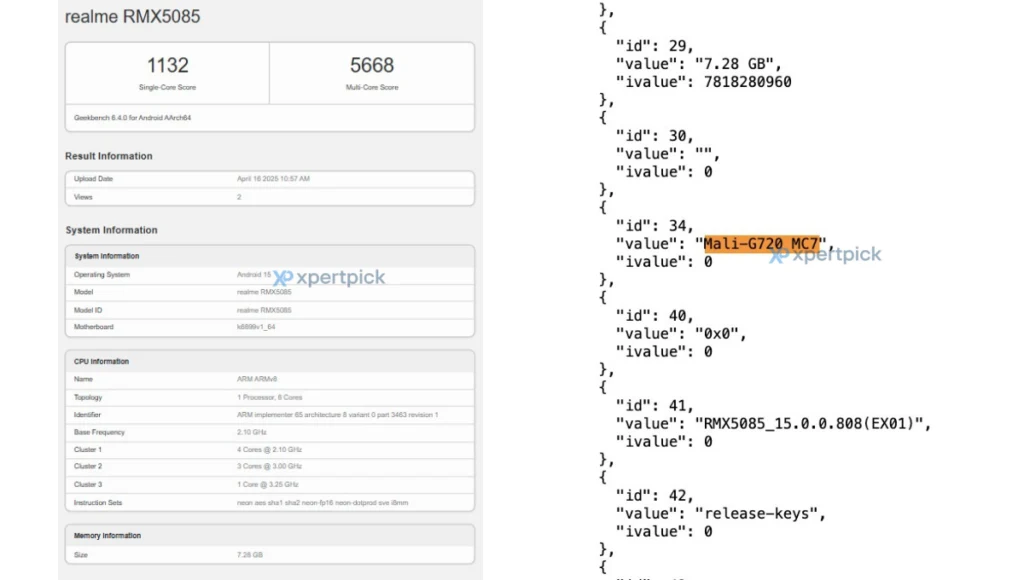
    The team at XpertPick has uncovered the Geekbench listing for the Realme GT 7T. While the listing does not explicitly mention the device’s name, rumors indicate that the model number RMX5085 mentioned there will ultimately be marketed as the Realme GT 7T. According to this listing, the Realme GT 7T is set to include the Dimensity 8400 chipset. Although the name of the chipset itself is not listed, the details about the CPU and GPU provided are enough to confirm its presence.

    Specifications of Realme GT 7T

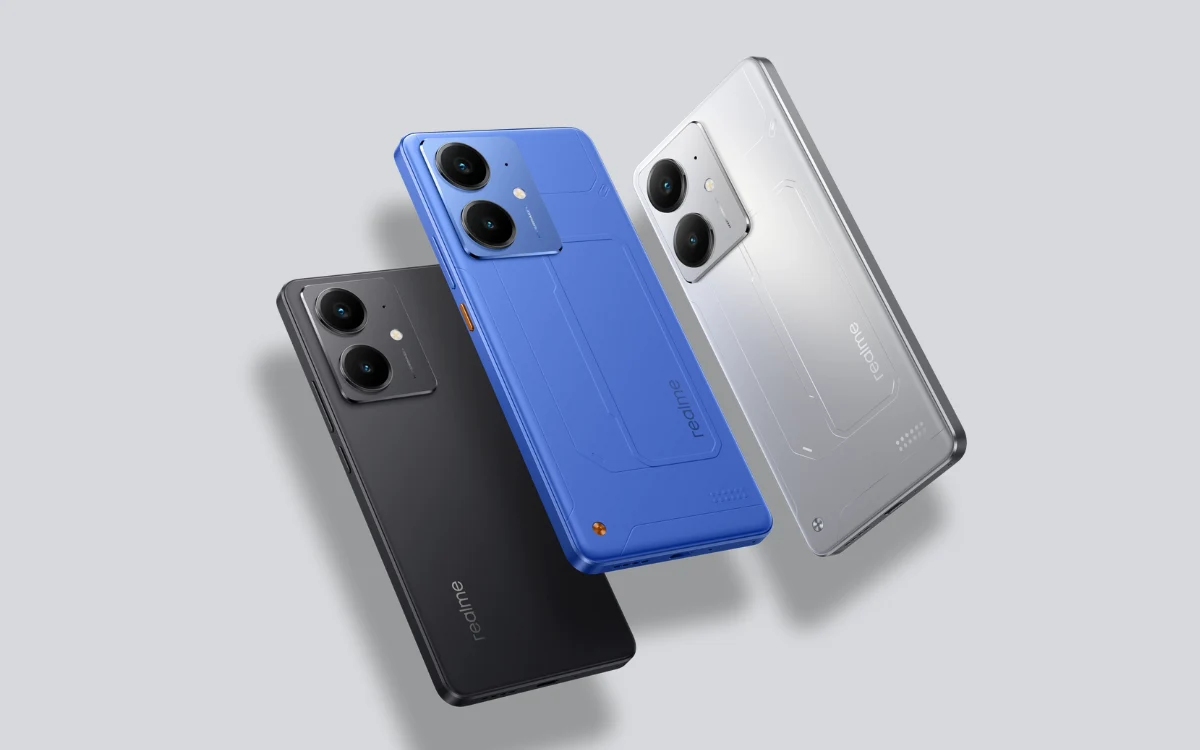
    The Geekbench listing indicates that the Realme GT 7T will have 8GB of RAM and run on Android 15. In the Geekbench 6 benchmarks, it achieved a score of 1,132 in the single-core test and 5,668 in the multi-core test. A previous report also mentioned that the Realme GT 7T would support INT (intercom) and NFC connectivity features. Additionally, it is expected to come in a blue color option among other choices.

    Realme Neo 7 SE Background

    Earlier this year, Realme launched the Neo 7 SE in China, powered by the Dimensity 8400-Max chipset. It seems likely that the GT 7T intended for the international market could be a rebranded version of the Neo 7 SE. Thus, it is expected to feature a 6.78-inch LTPO OLED display with a 1.5K resolution and a 120Hz refresh rate, a 16-megapixel front camera, and a dual-camera setup with a 50-megapixel main camera (with OIS) and an 8-megapixel ultra-wide camera. Additionally, it may have up to 12GB of LPDDR5x RAM, as well as up to 512GB of UFS 4.0 storage, a massive 7,000mAh battery with 80W fast charging, and an IP68/69-rated body.


  • Galaxy S23 One UI 7 Update Could Be Delayed Again

    Galaxy S23 One UI 7 Update Could Be Delayed Again

    Key Takeaways

    1. The One UI 7 update for Galaxy S23 series may be delayed beyond the originally expected date of April 22.
    2. Canadian telecom provider Telus has removed the April 22 rollout date from its website, signaling a possible postponement.
    3. Samsung has paused the update for the Galaxy S24 series due to a bug affecting phone unlocking, indicating a cautious approach for S23 updates.
    4. While the S23, S23+, and S23 Ultra may receive the update by the end of April, the S23 FE is expected to get it in May.
    5. S23 users should regularly check for Software Updates and be patient as Samsung works to ensure a smooth update experience.


    Samsung users anticipating the One UI 7 update for their Galaxy S23 series by April 22 may want to prepare for a little longer wait. Canadian telecom provider Telus originally announced this date for the Android 15 rollout, creating quite a buzz among users. However, they have since taken this date off their website, indicating that the update could be delayed, which means S23 owners will have to hold on for the new interface.

    Galaxy S23 Update Expectations

    The Galaxy S23 lineup—which includes the S23, S23+, S23 Ultra, and S23 FE—was thought to receive the One UI 7 update this month, with Telus having previously highlighted April 22 for the main models. That information has now vanished, which isn’t surprising considering the rocky road Samsung has had with the One UI 7 rollout.

    Samsung’s Cautious Approach

    Samsung has recently halted the update for the Galaxy S24 series due to a troublesome bug affecting phone unlocking, particularly on Exynos devices. It seems Samsung is being extra cautious to prevent the same issues from cropping up with the S23 series, which just joined the beta testing phase in March.

    While it’s disappointing to face a delay, this could ultimately lead to a better experience when the update does arrive. There’s still a possibility that the S23, S23+, and S23 Ultra will receive One UI 7 by the end of April, but the S23 FE is already set for May along with other FE models.

    What Lies Ahead for S23 Users

    If Samsung requires additional time to resolve any issues, it’s likely that all S23 models may not see the update until next month. For the time being, S23 users should regularly check their Software Update settings and remain patient—Samsung is ensuring this update will be worthwhile.

    Source:
    Link

  • Realme 14T 5G Launching April 25: 2100nits Display & 6000mAh Battery

    Realme 14T 5G Launching April 25: 2100nits Display & 6000mAh Battery

    Key Takeaways

    1. Realme 14T 5G will launch on April 25, featuring the Dimensity 6300 chip.
    2. The phone will have a peak brightness of 2,100 nits and support 111% DCI-P3 color gamut, certified by TÜV Rheinland.
    3. It will include a 6,000mAh battery with 45W charging and a sleek design of 7.97mm thickness.
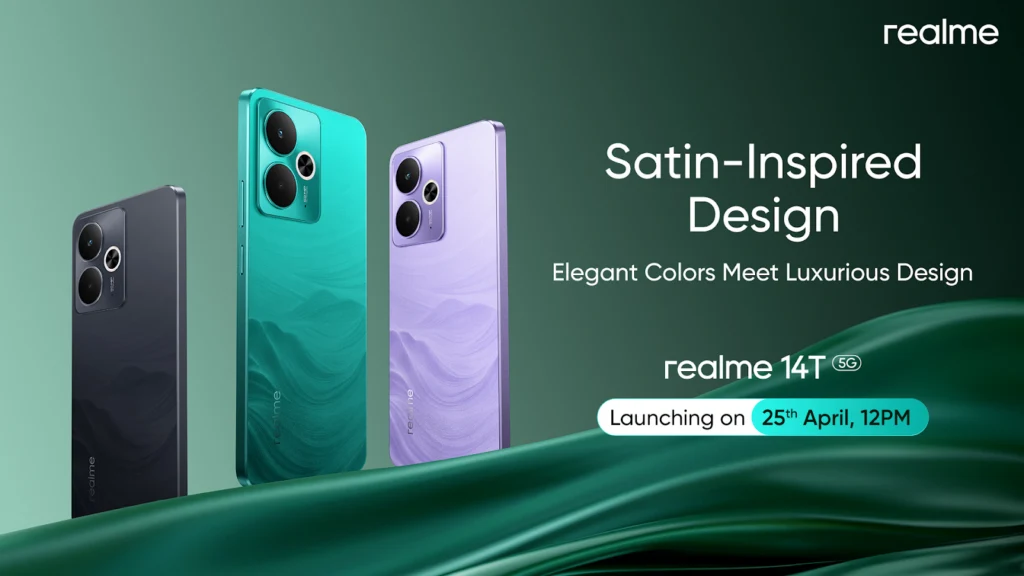
    4. The device will have an IP69 rating for dust and water resistance, with a luxurious satin-like finish in three colors.
    5. Pricing is expected to be below Rs 20,000, higher than Realme 14x’s starting price of Rs 14,999.


    In December 2024, Realme introduced the Realme 14x equipped with the Dimensity 6300 chip in India. Now, the brand has announced a launch event scheduled for April 25, where they will reveal the Realme 14T 5G in the country. They have also shared some important details about the phone’s specifications and design.

    Key Features of Realme 14T 5G

    Realme stated that the Realme 14T 5G will have the brightest AMOLED display in its class, achieving a peak brightness of 2,100 nits. The screen is expected to support an impressive 111 percent DCI-P3 color gamut. Additionally, it is TÜV Rheinland certified, which means it will help reduce eye fatigue during nighttime use.

    Battery and Camera Details

    The Realme 14T 5G will come with a substantial 6,000mAh battery and support 45W charging. Despite housing this large battery, the device will maintain a sleek design with a thickness of just 7.97mm. For photography, it will boast a high-quality 50-megapixel main camera. Moreover, it will have a 300 percent Ultra Volume Mode to provide a better audio experience.

    Build Quality and Pricing Expectations

    In terms of durability, the Realme 14T 5G will have an IP69 rating for dust and water resistance. Its design will feature a satin-like luxurious finish and will be available in three colors: Silken Green, Violet Grace, and Satin Ink. It is expected that the Realme 14T 5G will be priced higher than the Realme 14x, which started at Rs 14,999. There’s a chance that the 14T might be priced below Rs 20,000.

    Sources have suggested that the 14T will include a 6.7-inch AMOLED display, a 16-megapixel front camera, and a dual-camera setup with a 50-megapixel and a 2-megapixel lens, along with the Dimensity 6300 chipset.

  • Google’s Auto-Reboot Feature: Reboots Locked Android After 72 Hours

    Google’s Auto-Reboot Feature: Reboots Locked Android After 72 Hours

    Key Takeaways

    1. Automatic Restart Feature: Android devices will automatically restart after being locked for three consecutive days to enhance security.

    2. Before First Unlock (BFU) Mode: The reboot puts devices in BFU mode, encrypting data and making it harder to access until unlocked.

    3. Biometric Unlock Disabled: During the BFU mode, biometric unlock methods (like fingerprint or facial recognition) are not accepted, adding an extra layer of protection.

    4. Widespread Availability: This security feature will be available through Google Play Services, allowing many Android devices, even those no longer supported, to receive it without a full OS update.

    5. Optional for Flexibility: Users with specific needs, such as always-on tablets, can opt out of this feature to maintain their device’s usual functionality.


    Google is introducing a new security feature for Android devices through the latest update of Google Play Services. When your phone or tablet is locked for three consecutive days, it will automatically restart. This ensures your data remains secure, no matter where your device goes. This capability, included in version 25.14, focuses on keeping your personal information safe.

    Automatic Reboot After 72 Hours of Lock

    According to the security changelog, “With this feature, your device automaticly restarts if locked for 3 consecutive days.” This applies to both phones and tablets, but currently does not include devices like TVs or Wear OS gadgets.

    How It Enhances Security

    But what’s the actual advantage? A reboot puts your device into a Before First Unlock (BFU) mode, which means your data is encrypted and hard to access until you unlock it for the first time. This could also account for the slight delay you might feel as you unlock your device post-reboot.

    Extra Layer of Protection

    Your device won’t accept biometric unlock methods like fingerprint or facial recognition during this time, adding another level of security. Pixel users may see a lockscreen message: “Unlock for all features and data.” This is somewhat similar to the Inactivity Reboot seen in iOS 18.1 from Apple.

    The good news is that because this feature is delivered through Play Services, most Android devices will receive it without needing a full operating system update. This is especially helpful since many active Android devices are no longer supported. Even if your device is past its support period, it might still receive this new security enhancement through the Google Play Services update. However, this feature may disrupt certain situations, like with always-on tablets, so Google is making it optional for users who need that flexibility. The rollout has started, but it might take some time before it appears on your device.

    Source:
    Link

  • RedMagic 10 Air: Global Release Date and Pre-Launch Deals Revealed

    RedMagic 10 Air: Global Release Date and Pre-Launch Deals Revealed

    Key Takeaways

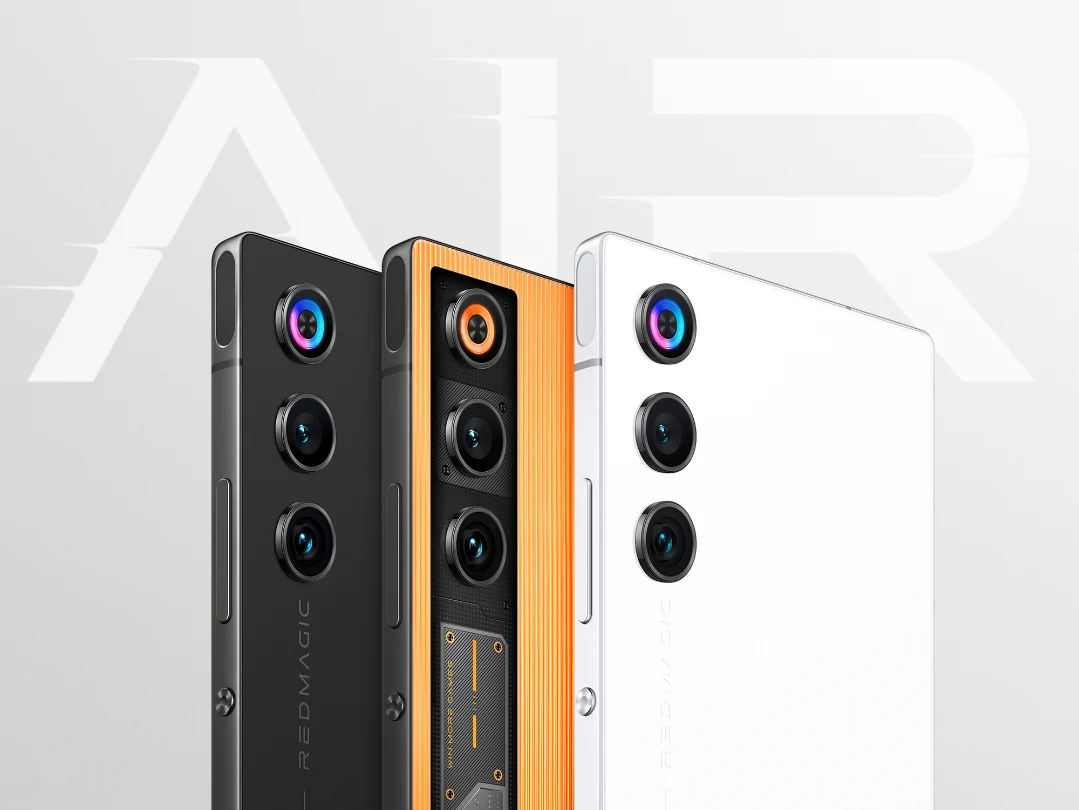
    1. RedMagic has launched the RedMagic 10 Air smartphone for gamers, currently available only in China.
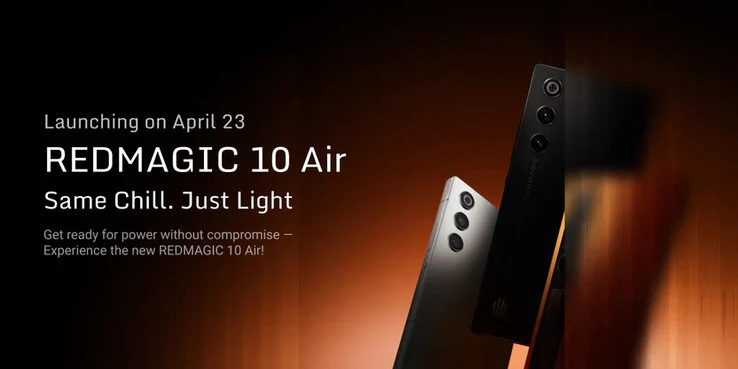
    2. The global release date for the RedMagic 10 Air is set for April 23, with launch discounts and prizes available.
    3. The smartphone features a Qualcomm Snapdragon 8 Gen 3 processor, a 6,000 mAh battery, 80 W wired charging, and a vapor chamber cooling system.
    4. It has a 6.8-inch display with a 120 Hz refresh rate and a 93.7% screen-to-body ratio.
    5. Pricing for the global version is not yet announced but is expected to be higher than the starting price of CNY 3,499 (around $479) in China.


    RedMagic has launched its newest smartphone designed specifically for gamers, but it’s currently available only in China. The company introduced the RedMagic 10 Air, while also teasing a forthcoming gaming tablet. Interestingly, there are new details about this tablet that suggest it will be more compact and powerful than the current RedMagic Nova, which is priced at $649 on Amazon.

    Global Availability

    Instead of waiting for the excitement to die down from the Chinese launch, RedMagic is moving quickly to announce the global release date for the RedMagic 10 Air. According to the teaser, it will be available outside of China starting April 23. The company has also promised various launch discounts and prizes, including a $10 coupon and a chance to win a free RedMagic 10 Air. To enter for these prizes, you will need to submit your email address on a special microsite.

    Specifications

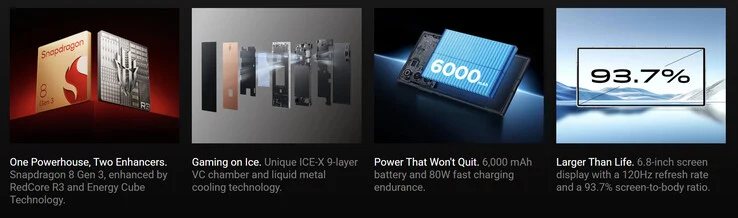
    It seems that the international version of the RedMagic 10 Air will feature the same hardware as its Chinese counterpart that was launched earlier today. RedMagic has stated that the global model will include a Qualcomm Snapdragon 8 Gen 3 processor, a 6,000 mAh battery, 80 W wired charging, and a comprehensive vapor chamber cooling system.

    Furthermore, the RedMagic 10 Air boasts a 6.8-inch display with a 120 Hz refresh rate and a 93.7% screen-to-body ratio. Although RedMagic has not disclosed the pricing for the global launch, it is anticipated that the RedMagic 10 Air will cost more than its starting price of CNY 3,499 (around $479) in China. For more information on the hardware, check out our article on the RedMagic 10 Air launch.

    Source:
    Link


  • Mudita Kompakt Unofficial App Store Upgrade Available Now

    Mudita Kompakt Unofficial App Store Upgrade Available Now

    Key Takeaways

    1. The Mudita Kompakt, a minimalist phone, will start shipping its global version in late April 2024.
    2. Guides for sideloading apps onto the Mudita Kompakt have emerged, enhancing the phone’s functionality.
    3. YouTuber Andrew Folts demonstrates a simple process for sideloading apps using adb-tools and developer options.
    4. The Aurora store, an open-source alternative to Google Play, can be sideloaded onto the device to access more apps.
    5. The Mudita Kompakt lacks Google Play Services, limiting certain app functionalities but allowing many others to work.


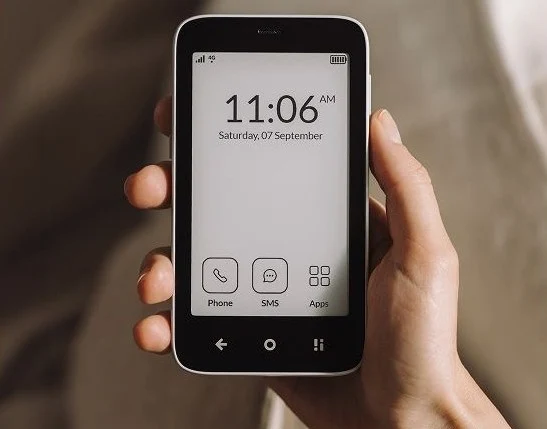
    The Mudita Kompakt, a minimalist phone that was funded through crowdfunding in October 2024, has recently declared that it will start shipping the global version in late April. In the meantime, guides for sideloading apps onto this intentionally limited device have already appeared, helping users enhance its functionality. The process for installing apps is quite simple, with YouTuber Andrew Folts demonstrating how to do it in a recent video.

    Sideloading Made Easy

    The tutorial uses popular tools from the Android hacking community, particularly adb-tools and Android developer options. Furthermore, Andrew obtains an Aurora store APK file to sideload onto the Kompakt, making it even simpler to install extra apps. For those who may not know, the Aurora store is an open-source substitute for the Google Play store that permits users to download apps from the Play store without needing a Google account or Google Play Services. It’s worth mentioning that the Mudita Kompakt doesn’t have Google Play Services, which means that certain applications like Google Maps and Uber won’t function on this device. Fortunately, many other apps will work, although they may be limited due to the e-ink display.

    Step-by-Step Process

    As shown by Andrew, the procedure consists of a few straightforward steps. The basic process includes installing Android Debug Bridge (adb-tools), turning on developer mode and USB debugging on the Mudita Kompakt, and utilizing adb-tools to install the Aurora APK onto the device. After this, users can delve into the Aurora store and discover the expanded capabilities of the Kompakt. Interested users can learn more about sideloading and how well apps perform by checking out Andrew’s video linked below.

    Source:
    Link

  • OnePlus 13s Launch Rumored for This Quarter

    OnePlus 13s Launch Rumored for This Quarter

    Key Takeaways

    1. The OnePlus 13T will be released later this month, joining the OnePlus 13 and OnePlus 13R models.
    2. A fourth model, the OnePlus 13s, is expected to launch in late Q2, starting in India before going global.
    3. The OnePlus 13s is rumored to feature a 1.5K AMOLED display with a 120Hz refresh rate and an in-display fingerprint scanner.
    4. Expected specifications include a Snapdragon 8 series chipset, up to 16GB of RAM, a 32MP front camera, and three rear cameras, with Sony sensors.
    5. The device may have a battery over 6,000mAh, support 80W fast wired and 50W fast wireless charging, and be priced around ₹55,000 (~$643/€565).


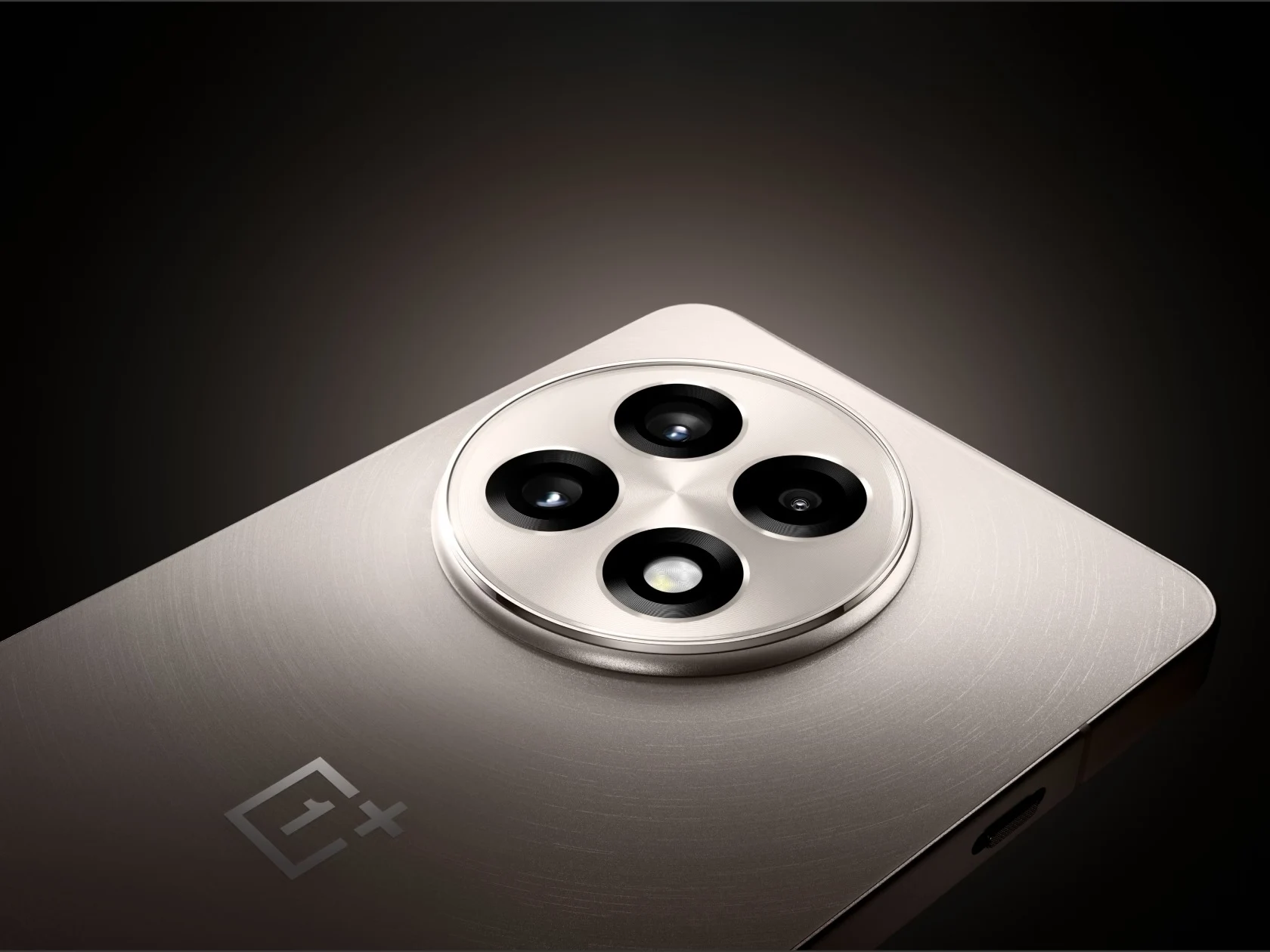
    When the OnePlus 13T comes out later this month, it’ll be the third device in the OnePlus 13 line, joining the already announced OnePlus 13 and OnePlus 13R models. Yet, OnePlus has more plans as new information suggests that a fourth model, the OnePlus 13s, is supposedly in the pipeline.

    Expected Launch Details

    Smartprix was the first to mention that the OnePlus 13s is expected to release in late Q2, with an initial launch in India before it likely goes global. According to unnamed sources in the industry, the OnePlus 13s will feature a 1.5K AMOLED display with a refresh rate of 120Hz. While the size of the screen hasn’t been disclosed, it is expected to include an in-display fingerprint scanner.

    Specifications and Features

    The device is likely to come equipped with a Snapdragon 8 series chipset, along with as much as 16GB of RAM and 512GB of storage. Although not explicitly stated, it’s probable that there won’t be a MicroSD card slot available for expanding storage. Rumors suggest that the OnePlus 13s will have a 32MP front camera and three rear cameras, though specifics about those haven’t been shared. The sensors are said to be supplied by Sony, and one of them might include a telephoto lens.

    Battery and Additional Features

    Reports indicate that the OnePlus 13s could boast a battery capacity exceeding 6,000mAh, supporting 80W fast wired charging and 50W fast wireless charging. Additional features mentioned include an IP68/IP69 rating for dust and water resistance, OxygenOS 15 based on Android 15, and it will be available in two colors: Obsidian Black and Pearly White.

    The expected price for the OnePlus 13s at launch is around ₹55,000 (~$643/€565), making it pricier than the OnePlus 13R but less expensive than the OnePlus 13.

    Final Thoughts

    Since there’s no concrete evidence of the OnePlus 13s being real yet, it’s wise to treat the information above with some skepticism.

    Source:
    Link

  • CMF Phone 2 Pro: 120 FPS for Popular Battle Royale Games

    CMF Phone 2 Pro: 120 FPS for Popular Battle Royale Games

    Key Takeaways

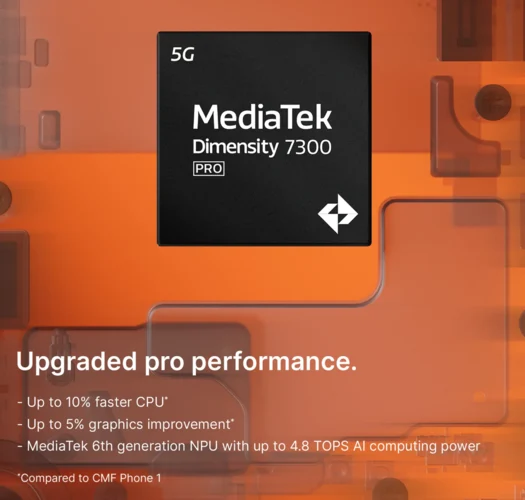
    1. The CMF Phone 2 Pro features a MediaTek Dimensity 7300 Pro SoC, claimed to be faster than the Dimensity 7300 in the CMF Phone 1.
    2. The new processor offers a 10% increase in CPU speed and a 5% boost in GPU performance.
    3. BGMI (Battlegrounds Mobile India) can run at a stable 120 FPS on the CMF Phone 2 Pro, potentially requiring lower graphical settings.
    4. The device includes a touch sampling rate of 1,000 Hz and boasts a 53% improvement in network performance.
    5. The official launch is set for April 28, with more details expected at that time.


    Yesterday, Nothing made it known that the CMF Phone 2 Pro would come equipped with a MediaTek Dimensity 7300 Pro SoC. A listing on Geekbench showed that it would be the same as the Dimensity 7300 that’s in the CMF Phone 1. However, new advertising material suggests otherwise.

    Features Highlighted

    A special page on the Indian e-commerce site Flipkart showcases some key features of the CMF Phone 2 Pro. The Dimensity 7300 Pro is claimed to provide a CPU that’s 10% faster and a GPU that’s 5% quicker. BGMI (Battlegrounds Mobile India), which is a local edition of PUBG Mobile, is reported to run on the CMF Phone 2 Pro at a consistent 120 FPS, although you may need to lower the graphical quality to achieve that.

    Screen and Network Improvements

    Nothing also indicates that the CMF Phone 2 Pro will feature a touch sampling rate of 1,000 Hz. Additionally, there’s mention of a 53% improvement in network performance, but it’s unclear what exactly that entails. We’ll have to be patient until its launch on April 28 to learn more. Finally, at the bottom of the page, there appears to be an image of the CMF Phone 2 Pro showcasing two camera lenses.

    Source:
    Link