Category: Phones

Stay updated with the latest phone news, reviews, and trends. Discover cutting-edge smartphones, features, and innovations in our Phones category at GizNewsDaily

  • OnePlus 15 May Be First Phone Without Hasselblad Camera Branding

    OnePlus 15 May Be First Phone Without Hasselblad Camera Branding

    Key Takeaways

    1. OnePlus may end its partnership with Hasselblad for the upcoming OnePlus 15, shifting towards a new camera system.
    2. A Chinese leaker suggested that the OnePlus 15 could feature an independent imaging setup, possibly the new Lumo system.
    3. The Lumo imaging system, recently introduced by Oppo, is designed for advanced mobile photography, particularly for portraits.
    4. The OnePlus 15 is expected to have a triple camera layout, including a 50MP sensor and a periscope lens, moving away from the round camera island design.
    5. The information is based on leaks and has not been officially confirmed by OnePlus, which had a three-year collaboration with Hasselblad starting in March 2021.


    OnePlus has partnered with Hasselblad for its cameras since the launch of the OnePlus 9. However, it seems the next flagship might take a different direction. A recent leak suggests that OnePlus is moving away from its collaboration with Hasselblad. The specifics aren’t very clear, but it appears that the OnePlus 15 could be equipped with a new camera system that utilizes an “independent” imaging setup.

    New Developments in Camera Technology

    The information comes from a reputable Chinese leaker, Digital Chat Station, who shared the details on Weibo. They revealed some specs about the SoC and display, hinting at a potentially new imaging system that might have been developed internally. Since the information was translated through a machine, some errors might exist. Nevertheless, Digital Chat Station stated, “the first time to carry the independent imaging brand,” which could refer to the new Lumo system.

    Introduction of the Lumo System

    Oppo recently unveiled the Lumo imaging system with its Find X8s and Find X8 Ultra smartphones. It is marketed as the “most advanced mobile imaging system for portraits, crafted with precision-engineered optics and modern computational imaging.” Given that Oppo and OnePlus share a significant amount of technology, this could be what the leaker is indicating for the OnePlus 15.

    Changes in Camera Design

    Furthermore, the leaker mentioned that this time, OnePlus won’t be utilizing a round camera island. Instead, it is expected to have a triple camera arrangement, featuring a 50MP sensor along with a periscope lens. The OnePlus 13 (available on Amazon) and OnePlus 13R (available on Amazon) both sport round camera islands, while the OnePlus 13T has a more rectangular island with rounded edges.

    It’s important to keep in mind that the company hasn’t confirmed any of this information, so it may not be accurate. Still, OnePlus had announced a three-year collaboration with Hasselblad back in March 2021, and by November 2024, they will have released five flagship devices (from OnePlus 9 to OnePlus 13) that included Hasselblad branding on their camera systems.

    Source:
    Link

  • Huawei Mate XT 2 Set to Launch with Advanced UFG Glass Technology

    Huawei Mate XT 2 Set to Launch with Advanced UFG Glass Technology

    Key Takeaways

    1. The Samsung W25 is a premium version of the Galaxy Z Fold6, priced over $1,000, featuring advanced ultra-flexible glass (UFG).
    2. UFG offers better display protection for foldable smartphones compared to previous materials like CPI plastic and ultra-thin glass (UTG).
    3. Samsung sources its UFG from the glass manufacturer Schott, while a Chinese competitor is also developing UFG.
    4. The Chinese supplier may provide Huawei with UFG by 2026 for the next generation of the Mate XT.
    5. The potential introduction of UFG in the Mate XT 2 (or 3) could lead to higher prices and impact competition with devices like the Galaxy G Fold.


    The Samsung W25 is a high-end variant of the Galaxy Z Fold6, a device that still goes for more than $1,000 on Amazon. Currently, it holds the title of the only mobile device worldwide that features advanced ultra-flexible glass (UFG).

    UFG’s Advantages

    This cutting-edge material is seen as a potentially improved option for display protection in foldable smartphones, especially when compared to the CPI plastic or even the ultra-thin glass (UTG) found in earlier models.

    Furthermore, UFG is believed to come in different thicknesses, which could be beneficial for devices with displays that show traditional smartphone-sized sections at all times—like the original Huawei Mate XT.

    Samsung’s Collaboration

    Samsung has acquired its UFG from the well-known glass manufacturer Schott. However, rumors suggest that a competing Chinese company is also working on this material.

    This Chinese supplier might be ready to provide Huawei with UFG by 2026 at the earliest, which could allow the Mate XT to start using it in its expected upcoming second generation.

    Future Implications

    If this happens, the “Mate XT 2” (or “3”) could end up being pricier than its first-generation tri-folding predecessor. This situation does not look promising for its expected competitor, the “Galaxy G Fold,” which might also feature the same advanced cover glass from Samsung in the not-so-distant future.

    Source:
    Link

  • Keysight and NTT Set New 6G Speed Record at 280 Gbps

    Keysight and NTT Set New 6G Speed Record at 280 Gbps

    Key Takeaways

    1. The trial achieved a record data speed of 280 Gbps in the 300 GHz band, showcasing the potential of sub-terahertz spectrum for future technologies.
    2. Keysight’s Vector Component Analyzer and advanced N524XB series PNA-X Microwave Network Analyzers played a crucial role in enhancing signal quality through digital predistortion.
    3. This achievement surpassed the previous record of 240 Gbps set by Osaka University, reaching speeds 28 times faster than the theoretical limit of 5G.
    4. The milestone will be presented at the International Microwave Symposium (IMS) 2025 in San Francisco, CA.
    5. While 6G technology is still a few years away, consumers currently rely on 5G devices, with the Samsung Galaxy S25 Ultra being a notable option.


    The recent trial, which took place in the 300 GHz band, marks a significant advancement in demonstrating that the sub-terahertz spectrum can provide the extremely high speeds necessary for future technologies such as real-time holographic communication, communication for autonomous vehicles, and AI on a city-wide scale.

    Unprecedented Speed Achieved

    This remarkable data speed was achieved through the use of an exceptionally clean signal. Keysight’s Vector Component Analyzer was crucial in this process — utilizing the advanced N524XB series PNA-X Microwave Network Analyzers, it allowed for spectral digital predistortion (DPD) to reduce distortion and enhance signal quality, resulting in a record-setting 280 Gbps. The experiment employed NTT’s indium phosphide-based J-band power amplifier, reaching 35 GBaud with 256-QAM modulation at 0 dBm output and +9.1 dBm saturated power.

    Record Broken

    The trial surpassed the previous record of 240 Gbps set by Osaka University’s team, headed by Professor Tadao Nagatsuma, in 2024. This achievement takes wireless speeds significantly beyond the theoretical 10 Gbps limit of 5G, achieving speeds that are 28 times faster. To put it in perspective, 280 Gbps can download a 50 GB file in around 1.4 seconds, which is comparable to a 2-hour Blu-Ray quality 4K movie.

    Future Presentations

    This milestone will be showcased at the International Microwave Symposium (IMS) 2025, scheduled for June 19, 2025, at the Moscone Center in San Francisco, CA, USA.

    While consumer devices featuring 6G technology are still 3 to 4 years away, the world will have to rely on 5G devices for the time being. The Samsung Galaxy S25 Ultra, currently priced at $1,119 on Amazon.com, stands out as one of the top 5G-enabled options available on the market.

    Source:
    Link

  • Armor 34 Pro: 6.95-Inch Smartphone with Projector & 16GB RAM

    Armor 34 Pro: 6.95-Inch Smartphone with Projector & 16GB RAM

    Key Takeaways

    1. The Ulefone Armor 34 Pro is priced starting at $569 and can be purchased from AliExpress, with delivery expected in early July.
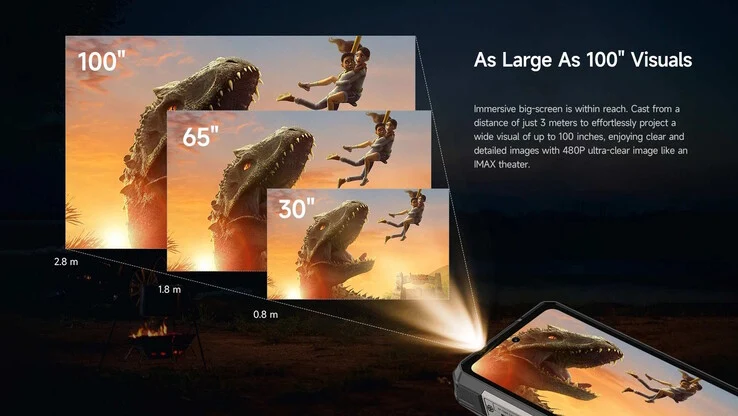
    2. It features a built-in projector with 150 lumens brightness and a resolution of 854 x 480 pixels, capable of projecting images between 30 to 100 inches.
    3. The phone has a rugged design, conforming to IP69K and IP68 standards, with a 25,500mAh battery supporting a flashlight and projector.
    4. Its camera setup includes a 64MP night vision camera and two 50MP cameras, along with 16GB of RAM and 512GB of storage powered by the MediaTek Dimensity 7300 chipset.
    5. The Armor 34 Pro can function as a power bank, charging other devices at up to 10 watts, and supports fast charging at rates of up to 66 watts.


    The Ulefone Armor 34 Pro is now available for purchase. You can order it directly from China via AliExpress, with starting prices of $569, not including any possible import taxes. Expected delivery is set for early July, however, potential buyers should keep in mind that customer support may be lacking, which could pose problems if there are defects or returns.

    Unique Features of the Armor 34 Pro

    Examining the specifications, the standout characteristic of the Armor 34 Pro is its integrated projector. It boasts a brightness of only 150 lumens and a resolution of 854 x 480 pixels, which are quite low. Nevertheless, it can project images ranging from 30 to 100 inches. Additionally, this Ulefone device supports Widevine L1 certification, essential for streaming HD content from popular services. The projector is equipped with autofocus, but it lacks automatic keystone correction.

    Rugged Design and Performance

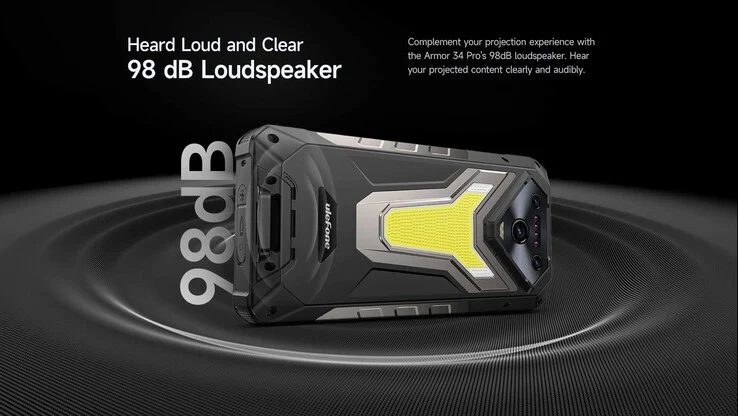
    In terms of audio, this sturdy phone is fitted with a speaker that can reach up to 98dB. The battery is impressive, with a 25,500mAh capacity to power both the demanding projector and flashlight, the latter reaching a brightness of 1,100 lumens. The Armor 34 Pro conforms to IP69K, IP68, and partially meets the MIL-STD-810H standards for durability. The screen measures 6.95 inches and has a resolution of 1080 x 2460 pixels, a refresh rate of 120Hz, and can achieve brightness levels of up to 600 nits.

    Camera and Specs Overview

    Also included is a 64MP night vision camera, alongside main and ultra-wide-angle cameras, both rated at 50 megapixels. Other specifications include 16GB of RAM, 512GB of internal storage, and the MediaTek Dimensity 7300 chipset. The dimensions of the Ulefone Armor 34 Pro are 7.2 x 3.4 x 1.3 inches, with a weight of 1.8 lbs, and it supports charging at rates of up to 66 watts. Lastly, it can serve as a power bank, enabling the charging of other devices at up to 10 watts.

    Source:
    Link


  • Fujitsu Arrows Alpha F-51F: Midrange Phone with 144Hz OLED Display

    Fujitsu Arrows Alpha F-51F: Midrange Phone with 144Hz OLED Display

    Key Takeaways

    1. Fujitsu’s Arrows Alpha F-51F is a midrange smartphone designed exclusively for the Japanese market, set to launch via NTT Docomo later this summer.
    2. The device features a MediaTek Dimensity 8350 chipset, 12 GB of RAM, and 512 GB of expandable storage (up to 2 TB).
    3. It has a 6.4-inch OLED display with a resolution of 2670 x 1200 pixels and a refresh rate of 144 Hz.
    4. The smartphone includes a dual rear camera system with two 50 MP cameras and a 50 MP front camera, along with a 5,000 mAh battery.
    5. Additional features include IP68/IP69 water and dust resistance, 90 W wired charging, stereo speakers with Dolby Atmos, and color options in black and white.


    Lenovo’s subsidiary, Fujitsu Connected Technologies Limited (FCNT), continues to create smartphones solely for the Japanese audience. Their newest offering is the Fujitsu Arrows Alpha F-51F, a midrange device that is set to be sold exclusively in Japan. It will be available through NTT Docomo later this summer, although Fujitsu hasn’t disclosed any information regarding pricing or when exactly it will hit the shelves.

    Impressive Specifications

    This upper-midrange smartphone comes packed with some attractive features. At its core, the Arrows Alpha F-51F is powered by a MediaTek Dimensity 8350 chipset, combined with a sizable 12 GB of RAM and 512 GB of internal storage, which can be expanded to a whopping 2 TB with a microSD card. For display, it boasts a 6.4-inch OLED screen, offering a resolution of 2670 x 1200 pixels and a smooth refresh rate of 144 Hz.

    Camera and Battery Details

    When it comes to photography, Fujitsu has included a dual rear camera arrangement. There’s a 50 MP primary camera with a 1/1.56-inch LYT-700C sensor, along with a 50 MP ultrawide camera. For those who enjoy selfies and video calls, there is also a 50 MP front camera. This 5G-ready smartphone is equipped with a 5,000 mAh battery housed in a body measuring 156 x 72 x 8.8 mm (6.14 x 2.83 x 0.34 inches), weighing in at 188 grams (0.41 lbs).

    Additional Features

    Among the other features, the device boasts IP68/IP69 ratings for water and dust resistance, a unique action key reminiscent of the iPhone 16 Pro (currently priced at $819.95 on Amazon), a vital sensor, and 90 W wired charging capability. It also has stereo speakers enhanced with Dolby Atmos sound and supports DisplayPort 1.4 output. Color options include both black and white. For more details, check out Fujitsu’s official website.

    Source:
    Link


  • Xiaomi MIX Flip 2: Competing with Galaxy Z Flip 7 and Razr 60 Ultra

    Xiaomi MIX Flip 2: Competing with Galaxy Z Flip 7 and Razr 60 Ultra

    Key Takeaways

    1. The MIX Flip 2 is expected to launch alongside the Pad 7S Pro, Redmi K80 Extreme Edition, and a new Redmi gaming tablet.
    2. Xiaomi has begun promoting other devices but has not yet highlighted the MIX Flip 2 on social media.
    3. A teaser for the MIX Flip 2 was discovered on Xiaomi’s Chinese website, showing its packaging.
    4. The MIX Flip 2 is anticipated to be released later this month, along with the other devices.
    5. Speculation suggests the MIX Flip 2 may feature Leica camera technology and a Snapdragon 8 Elite chipset.


    It appears that the speculation about a new MIX Flip release was indeed accurate. To summarize, Digital Chat Station reported at the beginning of this month that the MIX Flip 2 would be launched alongside the Pad 7S Pro, the Redmi K80 Extreme Edition, and a new Redmi gaming tablet as part of a busy summer lineup.

    Promotion on Social Media

    Since then, Xiaomi has started to promote all these devices except for the MIX Flip 2 on various Chinese social media platforms. Although the exact release date remains uncertain, it’s clear that the Pad 7S Pro, Redmi K80 Extreme Edition, and Redmi K Pad will be unveiled later this month. Now, it seems the MIX Flip 2 will also be included in that lineup, though one might not realize this by just looking at Xiaomi’s social media.

    Discovery of the Teaser

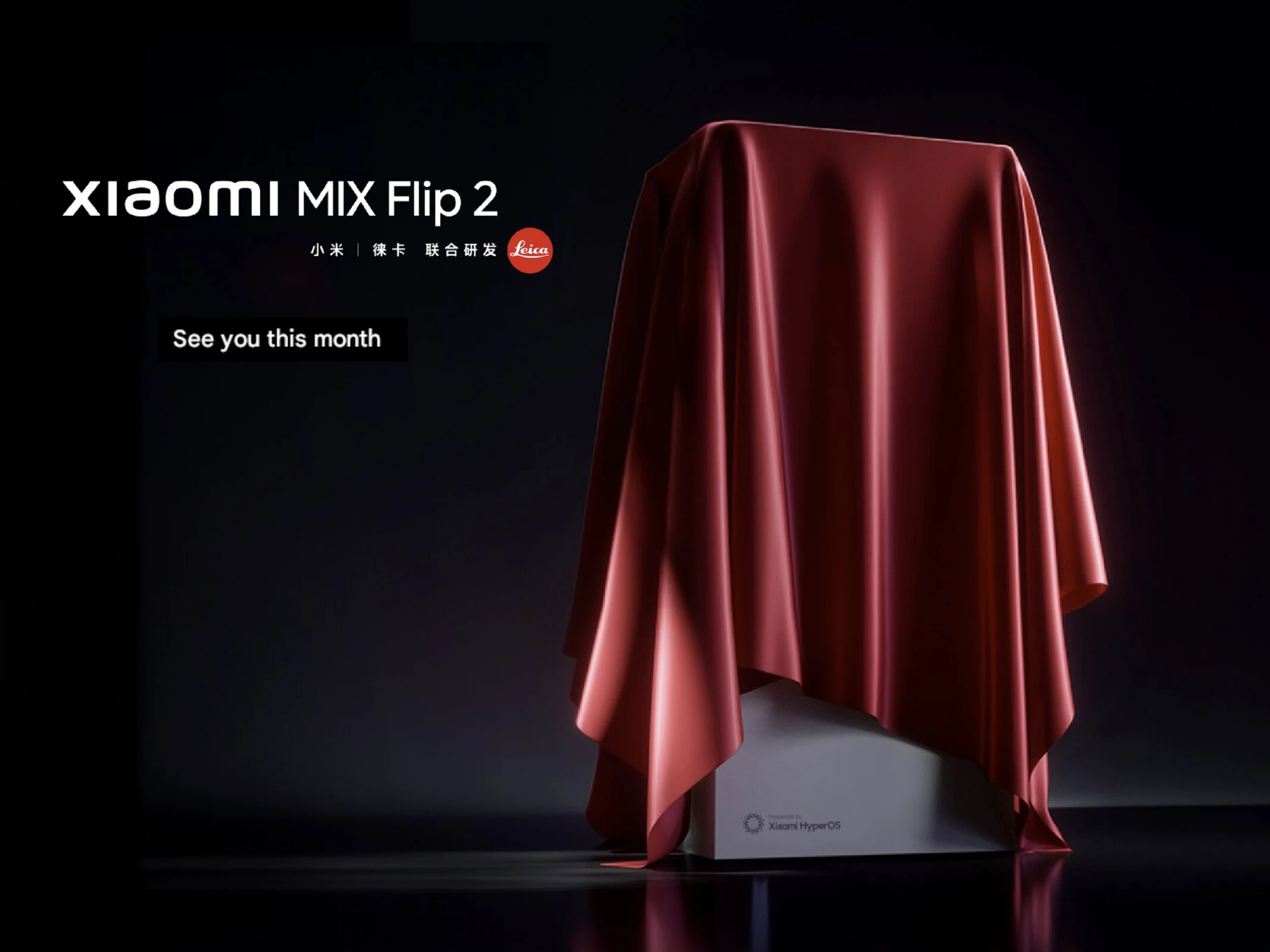
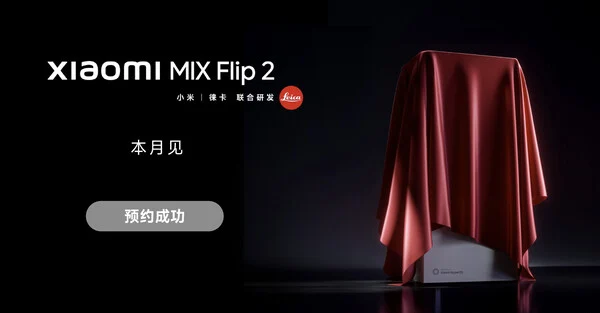
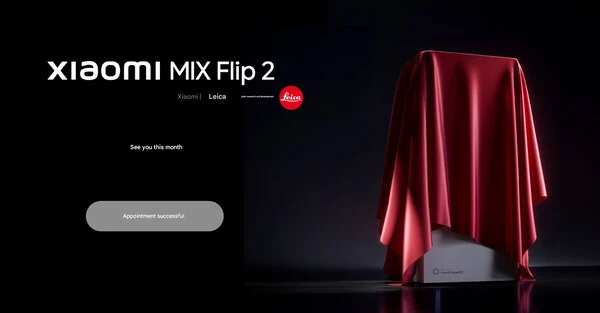
    Instead, Xiaomi Adictos has uncovered a page on Xiaomi’s Chinese website that features a teaser for the MIX Flip 2. Currently, Xiaomi has only shown a sneak peek of the device’s packaging, which is similar to those for the Redmi K80 Extreme Edition and the Redmi K Pad. Additionally, Xiaomi has hinted that the MIX Flip 2 will also be available later this month.

    Speculation on Specifications

    At this point, it remains uncertain how Xiaomi plans to set the MIX Flip 2 apart from its previous version, especially since the new model will include some elements of Leica camera technology. The inclusion of a Snapdragon 8 Gen 3 chipset in last year’s model indicates that the MIX Flip 2 could compete with the Razr 60 Ultra (currently priced at $899.99 on Amazon) by using Qualcomm’s latest Snapdragon 8 Elite chipset. It’s likely that Xiaomi will share more information about the MIX Flip 2 in the coming days.

    Source:
    Link


  • Vivo X Fold5: First Foldable with Configurable Side Button

    Vivo X Fold5: First Foldable with Configurable Side Button

    Key Takeaways

    1. Vivo will launch the X Fold5 worldwide, following the release pattern of its predecessor, the X Fold3 Pro.
    2. The device features Atomic Workbench, allowing users to view up to four background apps alongside a main app, inspired by Apple’s Stage Manager.
    3. The X Fold5 will not have an alert slider but will include a customizable side button with multiple options.
    4. The launch date for the X Fold5 is June 25 in China, just after Xiaomi’s Poco F7 global launch.
    5. Vivo aims to compete with rivals like Oppo, Samsung, and Google in the foldable smartphone market.


    Vivo is set to launch its latest foldable device worldwide this year, similarly to how it released the X Fold3 Pro. Although the company hasn’t provided detailed information yet, it keeps teasing the X Fold5 on social media platforms in China. Recently, Vivo shared a new promotional video that showcases features meant to set it apart from competitors like the Oppo Find N5, Galaxy Z Fold6, and Pixel 9 Pro Fold (currently priced at $1,799 on Amazon).

    Innovative User Interface

    In the video, Vivo introduced something it calls Atomic Workbench. This feature serves as an alternative to what Oppo and OnePlus refer to as Boundless View and Open Canvas. Atomic Workbench draws inspiration from Apple’s Stage Manager, allowing users to see up to four background apps displayed as cards alongside a main app in the foreground. It seems that Atomic Workbench can change its layout based on whether the screen is in landscape or portrait mode, adding versatility to the user experience.

    Design Changes and Features

    Furthermore, the video confirms that the X Fold series will come back without an alert slider. Following a trend similar to OnePlus, Vivo has opted for a customizable side button that offers nearly a dozen different options, as illustrated in the video. The X Fold5 will be the first foldable device to include this feature, which has become more popular among flagship smartphones since Apple introduced the Action Button with the iPhone 15 series. The launch of the X Fold5 is set for June 25 in China, just a day after Xiaomi unveils the Poco F7 on a global scale.

    Source:
    Link

  • Nothing Phone 3 vs Xiaomi Poco F7: Glyph Interface Revealed

    Nothing Phone 3 vs Xiaomi Poco F7: Glyph Interface Revealed

    Key Takeaways

    1. The Nothing Phone (3) will launch in North America without previous ‘Beta Programs’ used in earlier models.
    2. It features Qualcomm’s Snapdragon 8s Gen 4 processor, providing over a 30% boost in CPU performance and a 49% increase in GPU performance compared to the Snapdragon 8s Gen 3.
    3. The Phone (3) shares its processor with the upcoming Poco F7, and initial benchmarks suggest it performs similarly to the Snapdragon 8 Gen 3.
    4. Pricing for the Nothing Phone (3) is speculated to start at around $799.
    5. The device will retain the popular Glyph interface, despite rumors of potential changes.


    The Nothing Phone (3) is set to debut in just a few weeks, but the company is already sharing some insights about it. Recently, they announced that the Phone (3) will be available in North America without the previous ‘Beta Programs’ that were used with earlier models.

    Advanced Processor Details

    The Phone (3) will come equipped with Qualcomm’s Snapdragon 8s Gen 4, which was introduced in April. Unlike earlier versions, this chip does not feature Qualcomm’s Oryon CPU cores. Instead, the Snapdragon 8s Gen 4 utilizes ARM Cortex-X4 and Cortex-A720 CPU cores, promising more than a 30% boost in CPU performance compared to the Snapdragon 8s Gen 3. Additionally, Qualcomm has claimed that it will offer a 49% increase in GPU performance. Carl Pei has made comparisons to the Snapdragon 8 Plus Gen 1 used in the Phone (2), stating that the new chip will provide a 36% faster CPU speed, an impressive 88% increase in GPU power, and a 60% enhancement in NPU performance.

    Similarities to Other Devices

    Interestingly, the decision to use the Snapdragon 8s Gen 4 means that the Phone (3) will share its processor with the upcoming Poco F7. While there hasn’t been a review of the Snapdragon 8s Gen 4 yet, initial benchmarks suggest it performs comparably to the Snapdragon 8 Gen 3, which is found in devices like the Galaxy S24 Ultra and the newer Poco F7 Pro, currently priced at $599.99 on Amazon.

    Pricing and Release Information

    There are speculations that the Nothing Phone (3) could start at around $799, making it a bit pricey for those looking to get their hands on a Snapdragon 8s Gen 4. Nonetheless, it appears that the device will retain the popular Glyph interface, despite some recent rumors that implied changes. The full reveal of the Phone (3) is set for July 1.

    Source:
    Link

  • Xiaomi Poco F7 Surpasses Poco F7 Pro in New Benchmark Test

    Xiaomi Poco F7 Surpasses Poco F7 Pro in New Benchmark Test

    Key Takeaways

    1. The Poco F7 will launch globally on June 24, with a special event for Indian fans.
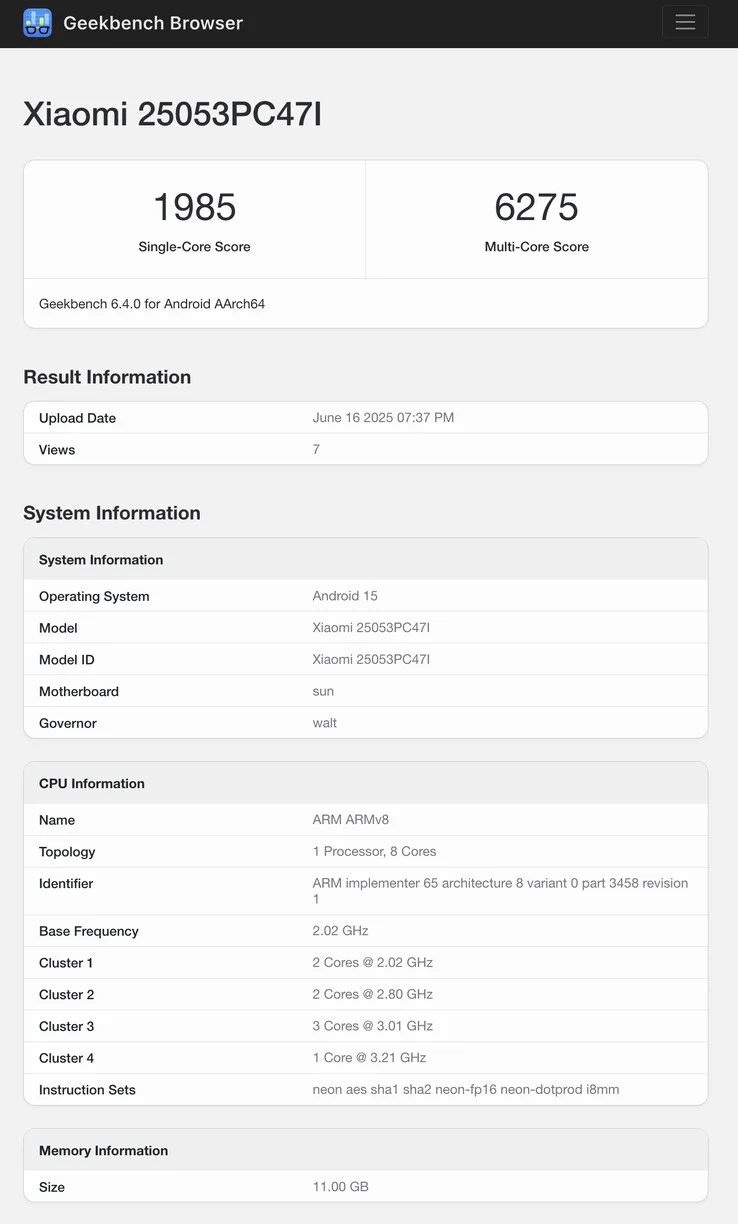
    2. An exclusive Indian model, identified by the model number 25053PC47I, has been confirmed by Geekbench.
    3. The Indian variant will feature a Qualcomm Snapdragon 8s Gen 4 chipset and 12 GB of RAM.
    4. The Indian Poco F7 will have a larger battery compared to the global versions.
    5. The Poco F7 competes closely with the Poco F7 Pro in performance scores.


    Xiaomi has officially announced that the Poco F7 will be launching before this month ends. As previously mentioned, the third version in the Poco F7 lineup will make its debut on June 24 during a global launch event. Additionally, Xiaomi will be organizing a special event for its Indian fans.

    Indian Exclusive Model

    In line with this, Geekbench has confirmed the development of a model variant exclusive to India. While the benchmarking site doesn’t specifically name the Poco F7, it does indicate the model number 25053PC47I. The ‘I’ at the end suggests that this device will be available only in India.

    Specifications and Performance

    Interestingly, this Indian model shares the same base model number as the 25053PC47G, which has been associated with the global version of the Poco F7. From what we can gather on Geekbench, the 25053PC47I will be equipped with a Qualcomm Snapdragon 8s Gen 4 chipset along with 12 GB of RAM. Xiaomi has also confirmed that the Poco F7 will feature an impressive battery capacity for the Indian market.

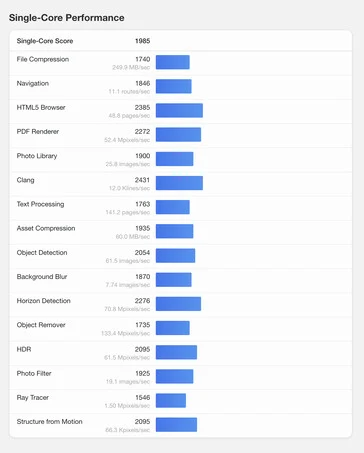
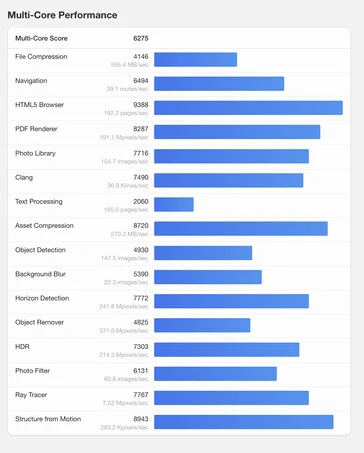
    Sadly, it seems that the global versions will come with a noticeably smaller battery. Nonetheless, the Poco F7 competes closely with the Poco F7 Pro (currently priced at $599.99 on Amazon), showcasing single-core and multi-core scores of 1,985 and 6,275, respectively. In comparison, the Poco F7 Pro achieved scores of 2,071 and 6,127 during our testing in April. As expected, the Poco F7 Ultra surpasses both models significantly due to its more advanced Snapdragon 8 Elite chipset.

    Source:
    Link


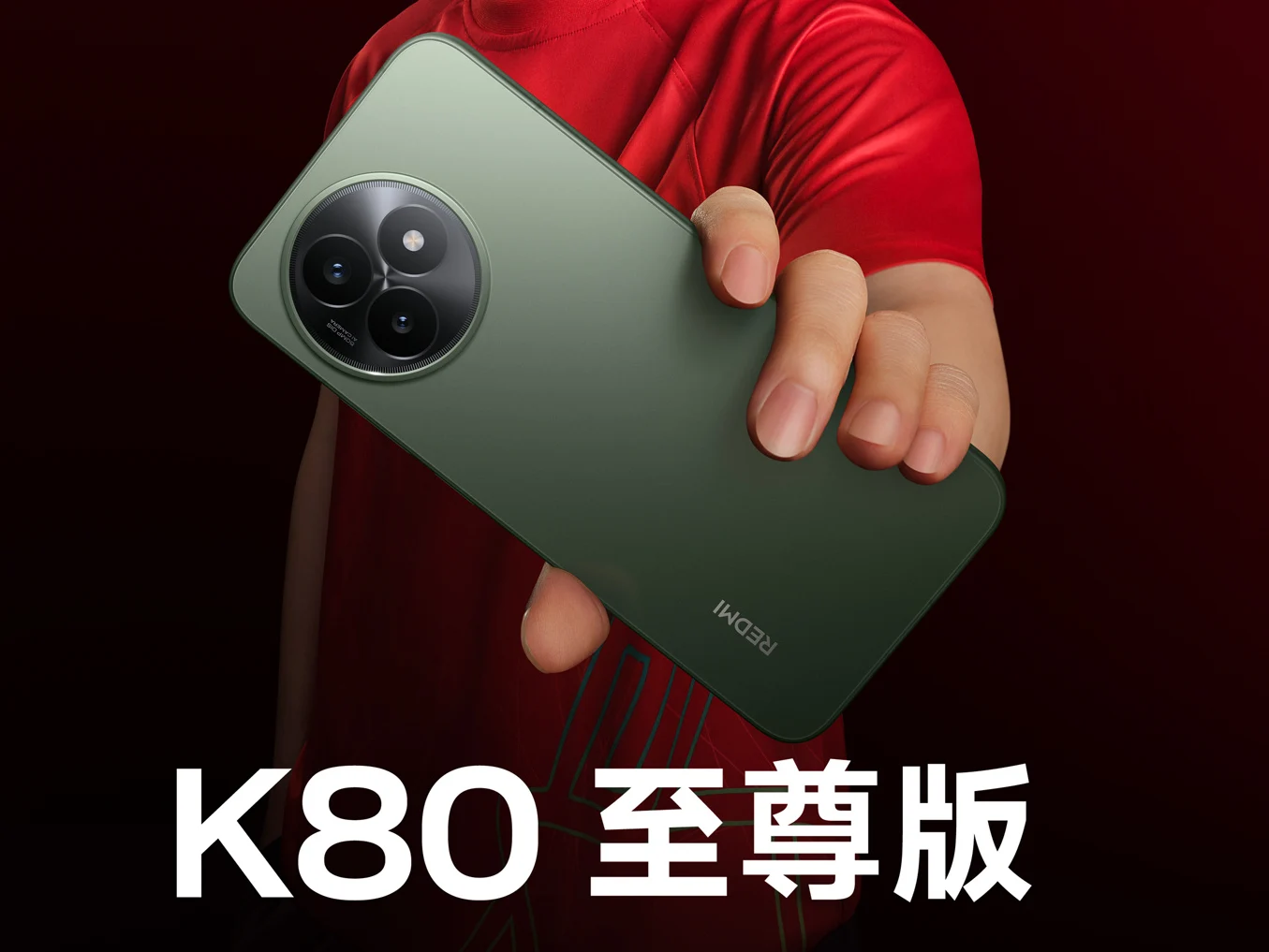
  • Redmi K80 Extreme Edition: Xiaomi Promises 35% Battery Boost

    Redmi K80 Extreme Edition: Xiaomi Promises 35% Battery Boost

    Key Takeaways

    1. Xiaomi is set to launch the Redmi K80 Extreme Edition this month, featuring MediaTek’s Dimensity 9400+ chipset and a specialized display chip for enhanced performance.
    2. The Redmi K80 Extreme Edition will have a battery capacity of 7,410 mAh, a 35% increase from its predecessor’s 5,500 mAh.
    3. The new device will support 100 W wired charging and utilize ‘Bypass Charging Plus’ technology to reduce battery degradation.
    4. It’s unclear if the battery enhancements will be available in a global version of the device.
    5. Xiaomi aims to stay competitive with the Redmi K80 Extreme Edition, especially against models like the Redmi Turbo 4 Pro.


    Xiaomi is actively stirring excitement about an upcoming addition to the Redmi K80 series on social media platforms in China. As mentioned earlier, the company has already announced that the Redmi K80 Extreme Edition is set to debut this month, featuring MediaTek’s newest Dimensity 9400+ chipset. What’s more, a specialized display chip is expected to enhance overall performance compared to similar devices.

    Battery Life Expectations

    In terms of battery life, Xiaomi has assured that the Redmi K80 Extreme Edition won’t be outdone by its rivals. To give some background, its predecessor came out last year with a capacity of 5,500 mAh. Although this was an impressive battery size, newer models like the Redmi Turbo 4 Pro have surpassed the 7,000 mAh threshold.

    Xiaomi has disclosed that the Redmi K80 Extreme Edition will boast a larger battery capacity of 7,410 mAh, which reflects a nearly 35% increase from the previous year’s model. While this is 140 mAh less than what the Redmi Turbo 4 Pro offers, Xiaomi plans to make up for this by introducing faster wired charging capabilities.

    Fast Charging Features

    The device will support 100 W wired charging and will also implement ‘Bypass Charging Plus’ technology, aimed at reducing battery degradation over time. However, it remains uncertain if these battery enhancements will be available in a global version. Considering that the Xiaomi 14T Pro includes a smaller battery compared to the Redmi K70 Extreme Edition (currently priced at $625 on Amazon), it’s plausible that we might see a similar scenario with the Xiaomi 15T Pro later this year.

    Source:
    Link