Category: Home

  • Anker Reveals New Power Bank and 100W Charger Before Launch

    Anker Reveals New Power Bank and 100W Charger Before Launch

    Key Takeaways

    1. Anker is set to release a new compact charger with a display and high power output, identified as product number A121B.
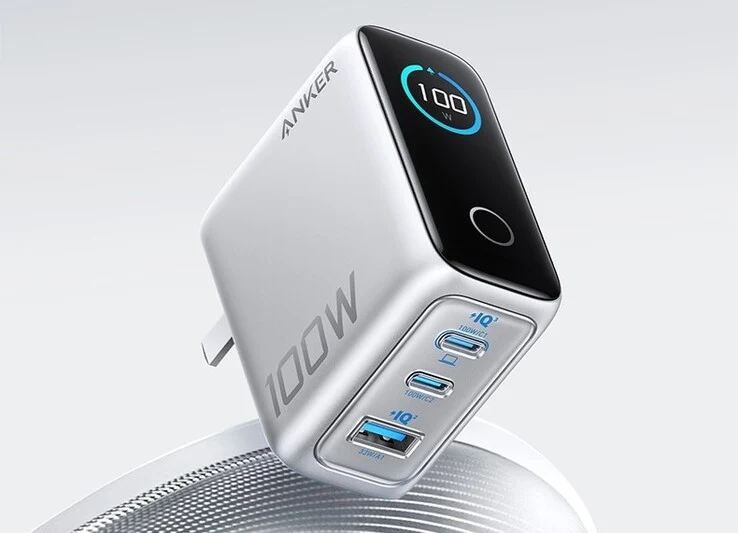
    2. The charger will have dimensions of 2.7 x 2.2 x 1.3 inches, weigh 7.2 oz, and include two USB Type-C ports and one USB Type-A port.
    3. The maximum output for the charger will be 100 watts through USB-C, and 33 watts through USB-A, with a folding plug design.
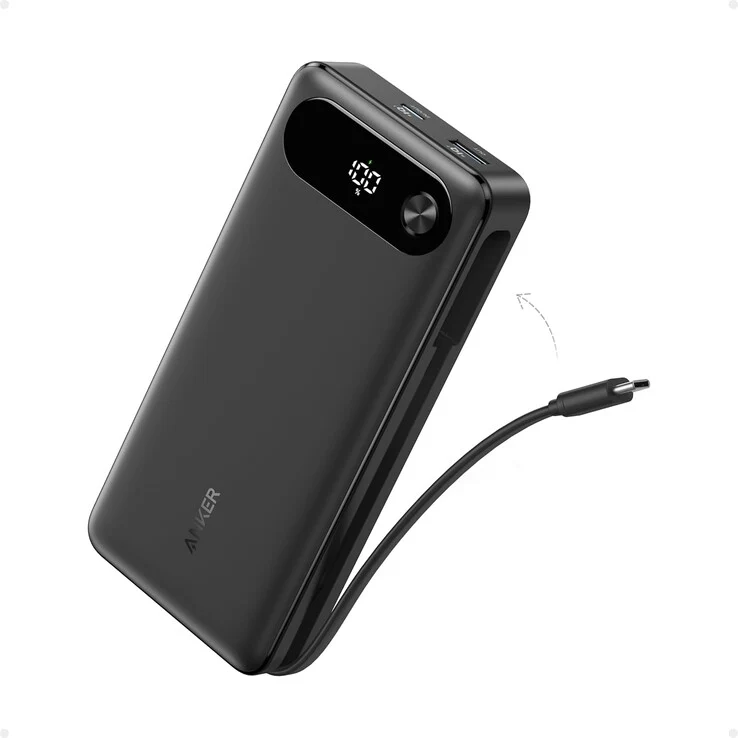
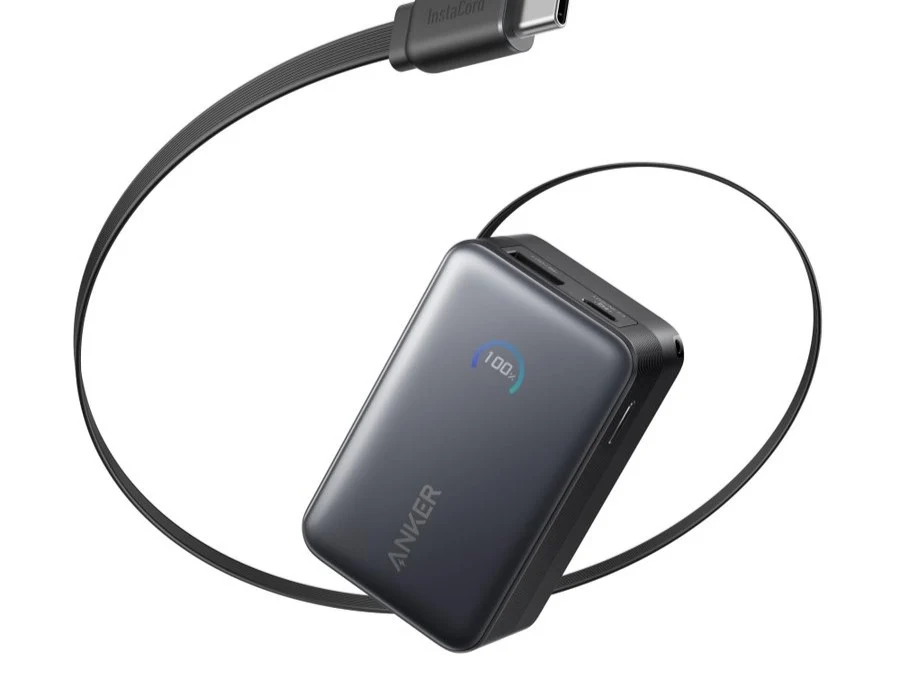
    4. A new power bank, the Anker Nano 45W Power Bank 10K, is expected to launch, featuring a retractable USB-C cable and a capacity of 36Wh.
    5. The power bank will have dimensions of 3.2 x 2.0 x 1.4 inches, weigh 8.1 oz, and also include an integrated display.


    Anker is said to be releasing some new accessories pretty soon, according to info from AnkerInsider. The reliable source has mentioned a new compact charger that has a display and should pack a lot of power. Also, it looks like the Chinese company is working on a new power bank that is likely to be priced at $60. Yet, we still don’t know when these two products will actually launch.

    Charger Details

    As per these unofficial reports, the new Anker charger is identified by the product number A121B. It will measure 2.7 x 2.2 x 1.3 inches and has a weight of 7.2 oz. This charger includes a built-in screen that shows the current power output. It comes with two USB Type-C ports and one USB Type-A port, capable of delivering a maximum output of 100 watts through USB-C. The USB-A port can go up to 33 watts. When using both USB-C ports, it can provide up to 100 watts, or 99.5 watts if all three ports are in use. The plug also has a handy folding mechanism.

    Power Bank Features

    Moreover, the leaker claims that the Anker Nano 45W Power Bank 10K, which was first announced last year and includes a retractable USB-C cable, will finally be available for purchase. This power bank has a capacity of 36Wh and can charge at a maximum of 30 watts. In terms of output, it can give up to 45 watts via USB-C and 22.5 watts via USB-A. When all three ports are utilized, each one can deliver up to 7.5 watts. In addition, the upcoming power bank measures 3.2 x 2.0 x 1.4 inches, weighs 8.1 ounces, and also features an integrated display, just like the previously mentioned charger.

    Source:
    Link

  • New Homes in England to Mandate Solar Panels under Future Homes Standard

    New Homes in England to Mandate Solar Panels under Future Homes Standard

    Key Takeaways

    1. New regulations will mandate solar panels on new homes in England, unless impractical, to reduce energy bills and greenhouse gas emissions.
    2. The previous government’s approach focused on a percentage of roof space for solar panels, while the new strategy requires at least some installation even if the target can’t be fully met.
    3. The cost of new homes may rise by up to £4,000 due to the solar panel requirement, but homeowners could save around £1,000 annually on energy bills.
    4. The Future Homes Standard, effective autumn 2025, will introduce stricter energy efficiency standards and low-carbon heating solutions.
    5. These initiatives aim to promote energy independence and reduce strain on the energy grid.


    Millions of new houses in England will come with solar panels already installed, as announced by Energy Secretary Ed Miliband. This initiative is part of the revisions to the Future Homes Standard.

    Mandatory Solar Panels

    The new rules will require solar panels on rooftops unless it is impractical. This move aims to help homeowners decrease their energy bills while also cutting down on greenhouse gas emissions.

    Previous Government’s Approach

    The former Conservative government considered a requirement for 40 percent of roof space to be occupied by PV panels. Miliband’s strategy differs by insisting on some solar panel installations, even if developers can’t meet the 40 percent goal. He noted, “The issue with the past system was that it said you would had to have a certain percentage of coverage of solar panels, but if you couldn’t achieve that percentage, you didn’t have to do anything at all. Under our plans, we are not going to say that. We are going to say even if you can’t hit 40%, you will still have to have some solar panels, except in rare, exceptional cases.”

    Cost Implications

    Reports suggest that the requirement for solar panels may increase the cost of a new home by up to £4,000. However, this installation could allow residents to save around £1,000 on their yearly energy expenses.

    In addition to solar panels, the forthcoming Future Homes Standard, which will be implemented in autumn 2025, will include stricter energy efficiency standards and the addition of low-carbon heating solutions, including heat pumps and heat networks. These changes aim to enhance energy independence and lessen the burden on the energy grid.

    Source:
    Link

  • Starlink Universal Power Supply Now Supports DC Input for Solar & Batteries

    Starlink Universal Power Supply Now Supports DC Input for Solar & Batteries

    Key Takeaways

    1. High Cost and Rugged Design: The Starlink Performance Kit, including the new power supply unit, is priced at $1,999 and features a durable dish designed to withstand rocket vibrations.

    2. Flexible Power Options: The new power supply accepts both DC and AC inputs, allowing for direct power from batteries or solar panels, enhancing versatility.

    3. Standalone Purchase Available: The Starlink Advanced Power Supply can be bought separately for $200 and is compatible with the $349 Standard Kit, while the Mini Kit has its own power supply.

    4. Added Features Justify Price: The power supply includes advanced features like a microcontroller for monitoring power metrics, moisture detection, and a LAN port for connectivity.

    5. Weight and Performance Caution: The power supply weighs 4.6 pounds and is recommended to use DC voltages over 20V to avoid reduced performance, especially for high-power tasks.


    Buried in the buzz surrounding the launch of the first Starlink satellite internet dish capable of gigabit speeds was the simultaneous introduction of Starlink’s inaugural universal power supply as well.

    Pricey But Rugged

    The power supply unit (PSU) is included in the costly new Starlink Performance Kit, which is priced at $1,999. This kit features the most durable dish ever made by SpaceX, designed to endure the intense vibrations from a rocket landing.

    Flexibility in Power Options

    For the first time, this power supply can accept DC input along with the standard AC power typically found in home outlets. This means it can directly power the dish using electricity from batteries or solar panels.

    In addition to being part of the Performance Kit, the new Starlink Advanced Power Supply can also be purchased on its own. It is compatible with the $349 Starlink Standard Kit as well.

    Lightweight Mini Kit Exempt

    It goes without saying that the portable Starlink Mini Kit does not require the power supply since it has its own built-in DC power supply, although its input range is narrower at 12-48V DC.

    The universal Starlink AC/DC power supply is listed at $200, which isn’t exactly cheap. However, it eliminates the necessity for the $110 DC-to-DC adapter sold by Starlink or any alternative solutions from third parties.

    Added Features Justify Price

    SpaceX has also added several features to the Starlink Advanced Power Supply to warrant its relatively high cost. The PSU includes a microcontroller capable of showing power and Ethernet metrics, detecting grid brownouts, and identifying moisture in connectors. It also has a LAN port for connecting third-party routers or for linking directly to Starlink and network switches.

    The AC input has been validated for compatibility with 90-264V inputs, accommodating global single-phase grid voltages within the 47-64Hz frequency range, including a tolerance of ± 5%.

    Caution on DC Input

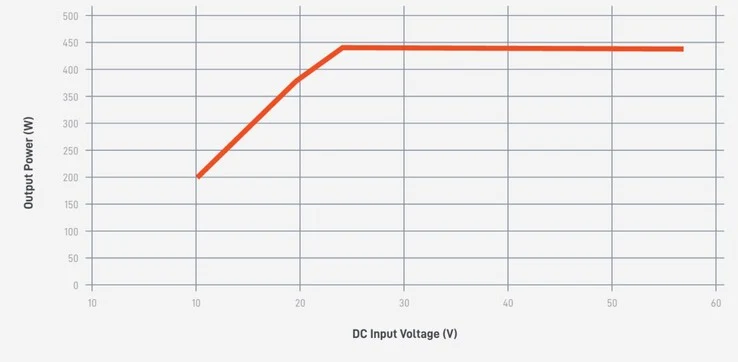
    While the Starlink Advanced Power Supply has been certified for DC input ranging from 10.5V to 57V, Starlink recommends using DC voltages exceeding 20V when possible. “Using lower input voltages will reduce output power to keep the total amperage from the power supply below 20 amps,” Starlink cautions. This could impact dishes that require high power for tasks like melting snow and maintaining high throughput, potentially limiting their performance.

    A Heavyweight in the Lineup

    The only less-than-exciting aspect of the new Starlink universal power supply, aside from its steep price, is its weight. It weighs in at a substantial 4.6 pounds, which is over three times heavier than Starlink’s standard AC power supply unit.

    Source:
    Link


  • Waveshare Launches New Smart Home Displays with WiFi and Bluetooth

    Waveshare Launches New Smart Home Displays with WiFi and Bluetooth

    Key Takeaways

    1. Waveshare introduced two new smart displays: ESP32-P4-WIFI6-Touch-LCD-4C (4 inches, 800 x 800 pixels) and ESP32-P4-WIFI6-Touch-LCD-3.4C (3.4 inches, 720 x 720 pixels).
    2. Both models feature touch interaction and brightness levels of 300 nits (4C) and 350 nits (3.4C).
    3. They are powered by ESP32-P4 core and ESP32-C6-Mini-1 module, supporting WiFi 6 and Bluetooth 5 LE connections.
    4. Users can connect external speakers, sensors, and actuators via a 40-pin header, and they include a microSD card slot for media storage.
    5. The displays can be used in various projects, including smart home interfaces, vehicle metrics, and PC monitoring, with prices ranging from $65 to $75.


    Waveshare has introduced two fresh smart displays that do not come with pre-installed software. The models are named ESP32-P4-WIFI6-Touch-LCD-4C and ESP32-P4-WIFI6-Touch-LCD-3.4C. They vary in size, featuring round screens with diagonals of 4 inches and 3.4 inches, respectively. The resolutions are 800 x 800 pixels for the larger model and 720 x 720 pixels for the smaller one, while the brightness levels are noted to be 300 nits and 350 nits. Both of these displays also allow for touch interaction.

    Specifications and Features

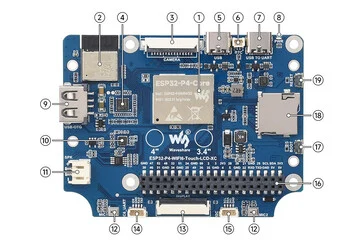
    Moreover, these circuit boards come with an ESP32-P4 core alongside an ESP32-C6-Mini-1 module, enabling wireless connections through WiFi 6 and Bluetooth 5 LE. As is common with Waveshare’s smart home displays, they are powered and programmed through a USB Type-C connection. Users can attach a battery to the device’s real-time clock via a header, and a microSD card slot is available for storing images or other media to display on the screen.

    Connectivity Options

    You can connect external speakers, but the Waveshare ESP32 already has built-in microphones with echo reduction. Additionally, you can connect external sensors and actuators using a 40-pin header. These displays are incredibly flexible and can serve various project needs. For instance, they can function as customizable smart home interfaces, but Waveshare has also shown how they can be utilized in vehicles to display speed and additional metrics. Furthermore, they can be linked to a gaming PC to monitor system load and other parameters. The official pricing for these models ranges from $65 to $75.

    Source:
    Link


  • Energy Storage Systems Boost Battery Safety Significantly

    Energy Storage Systems Boost Battery Safety Significantly

    Key Takeaways

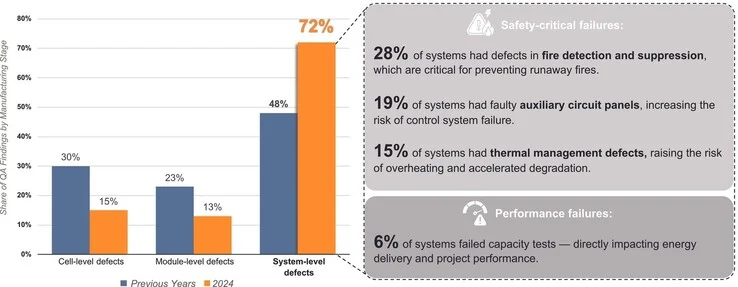
    1. Most failures in energy storage systems (ESS) are due to auxiliary systems, not battery defects, with battery cells accounting for only 15% of defects.
    2. Battery safety ratings have improved significantly, with a doubling of safety ratings in the past year.
    3. By 2024, 72% of failures will stem from secondary systems rather than battery cells, indicating a shift in failure sources.
    4. Safer battery chemistries, like sodium-ion and lithium iron phosphate, are contributing to improved safety in ESS.
    5. Mandatory large-scale fire tests for ESS will be implemented by 2026 to enhance safety standards in North America.


    As energy storage systems (ESS) increase in capacity to levels that can supply energy to a home for more than five years, the safety record of these batteries is also improving.

    Battery Defects Decline

    A recent study reveals that most failures in ESS are not caused by defects in the batteries themselves but rather by problems in their auxiliary systems. Currently, battery cells and modules account for only about 15% of all defects in energy storage systems, showing a significant decline in failure rates.

    Research from Clean Energy Associates (CEA), which included random testing of over 65 GWh in energy storage projects, found that battery safety ratings have doubled in the past year. In 2023, battery cells were responsible for 30% of ESS failures, while auxiliary systems, including fire suppression and thermal management systems, made up 48% of all defects.

    Shift in Failure Sources

    By 2024, the situation had shifted dramatically, with 72% of manufacturing, installation, or operational failures arising from secondary systems of the ESS rather than the battery cells themselves.

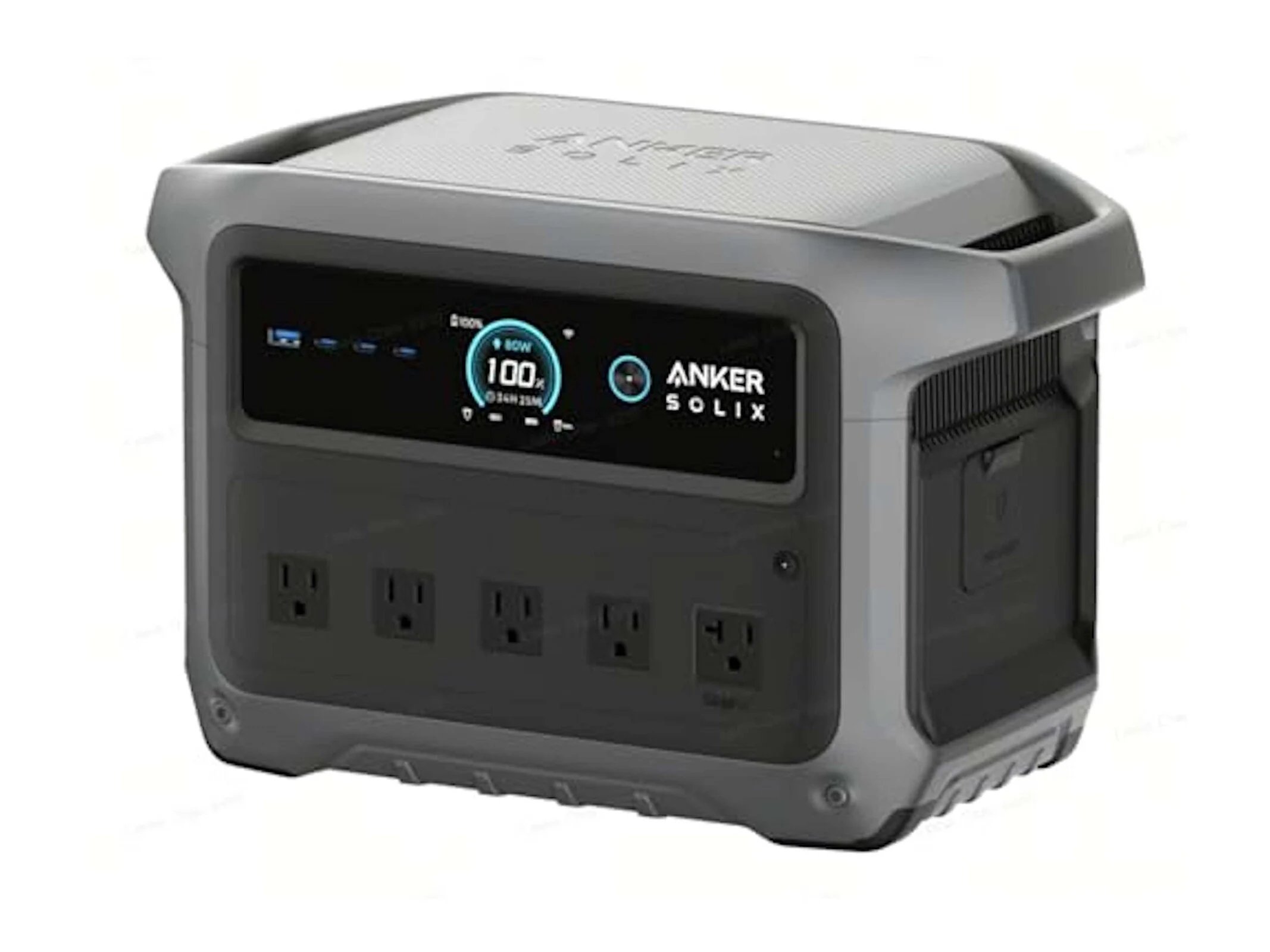
    This change may be attributed to the rise of safer battery chemistries, like sodium-ion and lithium iron phosphate (LFP), which are commonly found in popular portable power stations such as the Anker Solix C1000.

    Additionally, the implementation of new safety standards and certification tests has also played a role in ensuring that batteries in energy storage systems are no longer the primary safety concern.

    Future Safety Standards

    Looking ahead to 2026, the ESS industry in North America will face mandatory large-scale fire tests designed to simulate thermal runaway scenarios. According to the CEA, “Product certification, third-party quality assurance, and direct communication with communities are essential to build trust.”

    CEA via The Elec

    Source:
    Link


  • Anker Solix C100 Gen 2: New Design, Durable Batteries, USB Function

    Anker Solix C100 Gen 2: New Design, Durable Batteries, USB Function

    Key Takeaways

    1. Anker is set to launch a new edition of the Solix C1000 power station, likely in spring or summer, with a price range between $400 and $800.
    2. The Solix Gen 2 (Model A1763) features a redesigned look, with USB ports next to a prominent display and includes handles for easy transport.
    3. The power station has a capacity of 1,024 Wh and can retain at least 80% capacity after 4,000 cycles.
    4. It includes five sockets capable of delivering up to 1,800 watts, with a maximum total load of 2,000 watts (2,400 watts in SurgePad mode).
    5. The device supports solar charging up to 600 watts and is compatible with the Anker app, functioning as an uninterruptible power supply (UPS).


    Anker has various options for storing and distributing electricity. They offer not only power banks but also power stations like the Anker Solix C1000. In this regard, AnkerInsider has reported that this model is about to get a new edition or version, which is anticipated to launch in either spring or summer, starting in the USA. AnkerInsider guesses that the price will range between $400 and $800.

    Design Changes

    A photo has already been shared, revealing significant changes to the visual look of the Solix Gen 2 (Model A1763): the USB ports are now positioned beside the display, which occupies the upper half of the front. The measurements are listed as 38.4 x 24.4 x 20.3 centimeters, with a weight of 11.3 kilograms. With two handles included, this model should be quite easy to carry and transport anywhere.

    Specifications and Performance

    The stated capacity is 1,024 Wh, and it’s said that the battery cells will maintain at least 80% of their original capacity after 4,000 cycles. There are five sockets, each capable of delivering up to 1,800 watts; the maximum total load is noted as 2,000 watts, or 2,400 watts in SurgePad mode. In bypass mode, the output can reach up to 1,440 watts. Solar charging is feasible up to 600 watts, while mains charging can go up to 1,200 watts. It features two USB-C ports with a maximum output of 140 watts each, along with a USB-A port. The power station is compatible with the Anker app and can function as an uninterruptible power supply (UPS).

    Source:
    Link

  • New Hisense M2 Pro Laser Mini Projector Launching Soon

    New Hisense M2 Pro Laser Mini Projector Launching Soon

    Key Takeaways

    1. The Hisense M2 Pro Laser Mini Projector is designed for home cinema but is portable, making it suitable for various locations, including outdoor use.
    2. It features a compact Pure Triple Color Laser light source and AI tools, marking a significant innovation in portable home cinema.
    3. The projector has 4K resolution, can project images up to 200 inches, and includes automatic keystone correction and auto focus.
    4. It operates on the Vidaa Smart OS, supports popular streaming platforms, and features Dolby Vision and Dolby Audio.
    5. Pricing and full specifications are not yet confirmed, but it is expected to launch soon in markets like the US, Germany, and Australia.


    The Hisense M2 Pro Laser Mini Projector is set to launch in several markets, including the US, Germany, and Australia. Although it is promoted as a laser TV perfect for home cinema, its portable design with an adjustable angle stand hints that it can be utilized in different rooms or even outdoors.

    New Technology Features

    Hisense claims that the compact Pure Triple Color Laser light source, paired with various AI tools, marks a “paradigm shift in portable home cinema.” The M2 Pro is touted as the smallest and lightest laser projector from the company so far; however, specifics about its weight and dimensions remain undisclosed. Additionally, the maximum brightness level has not been specified.

    Impressive Projecting Capabilities

    This DLP projector boasts a 4K resolution and can project images as large as 200 inches (~508 cm) wide with a throw ratio ranging from 1.0 to 1.3. It includes image-perfecting features like automatic keystone correction and auto focus. Furthermore, there are seven settings for wall color adaptation that enhance color accuracy when projecting onto backgrounds that aren’t white. Other AI-driven image enhancement tools mentioned are 4K Clarity, 4K Upscaler, and HDR Upscaler.

    Smart Features and Compatibility

    The M2 Pro runs on the Vidaa Smart OS, providing access to streaming platforms like YouTube, Netflix, and Disney+. It supports Dolby Vision, various HDR formats, Dolby Audio, and DTS: Virtual X. A voice remote also comes with the projector. The complete specifications for this mini projector are still pending confirmation.

    Hisense has not yet revealed the price for the M2 Pro Laser Mini Projector; for reference, the Hisense C2 4K Triple Laser Portable Mini Projector is priced at $1,999.99 in the US (currently $1,799.99 on Amazon). While an exact release date has not been provided, the product is expected to be “coming soon.”

    Source:
    Link

  • New Anker 10K Power Bank with Built-in USB-C Cable Launches

    New Anker 10K Power Bank with Built-in USB-C Cable Launches

    Key Takeaways

    1. Multi-device Charging: The Anker Zolo 22.5W Power Bank 10K can charge three devices simultaneously with a built-in USB-C cable.

    2. Power Output: It features a bi-directional USB-C port providing 22.5W output and 20W input, along with an additional USB-A port.

    3. Battery Capacity: The power bank has a capacity of 10,000mAh (37 Wh) and can fully recharge in three hours via USB-C.

    4. Output Sharing: When multiple ports are used, the total output will be shared at 15W.

    5. Pending Information: Details on size, weight, color options, launch date, and retail price are still unknown.


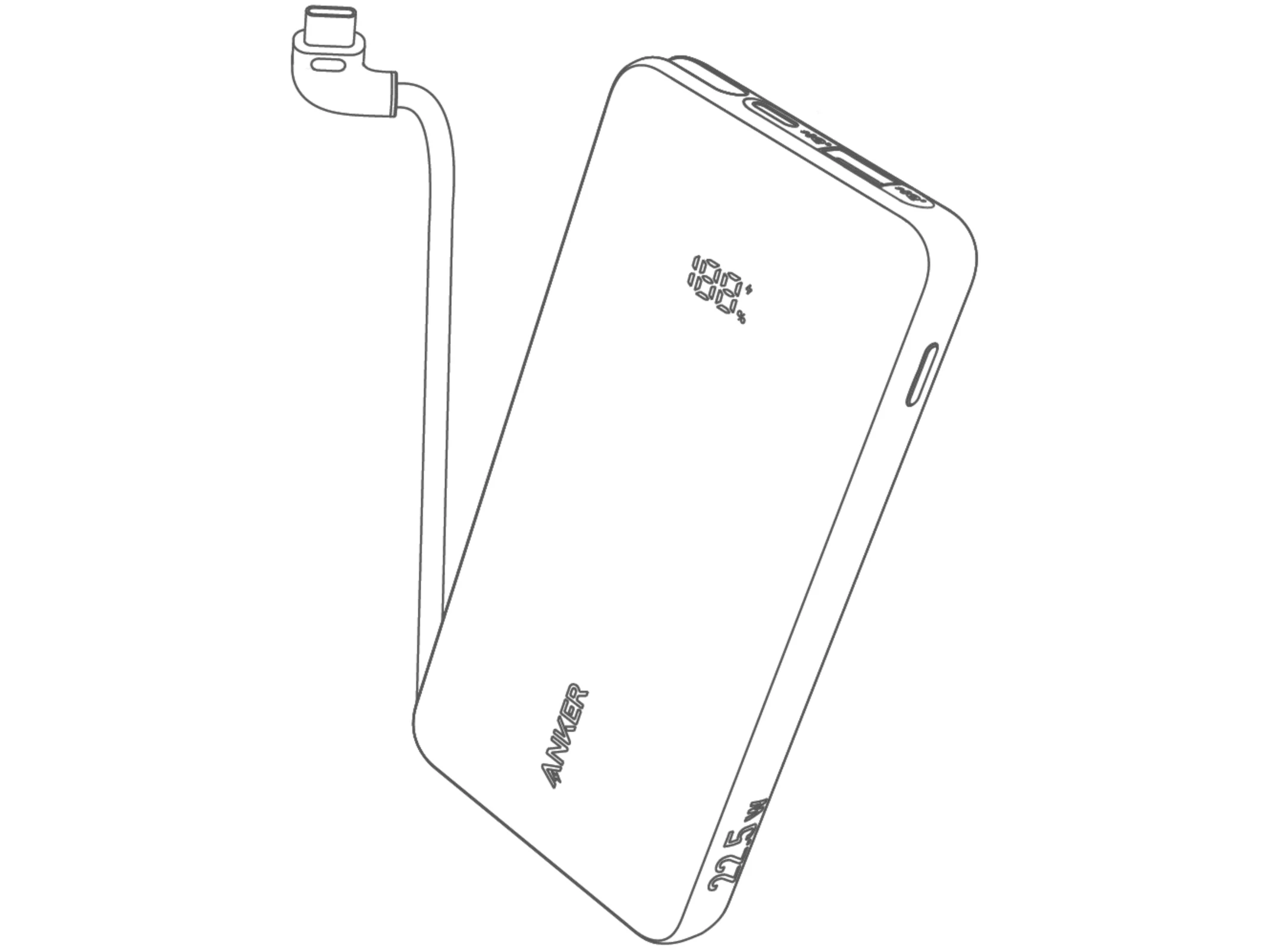
    A new power bank from Anker has been spotted in a leaked design. It’s called the Anker Zolo 22.5W Power Bank 10K with Built-In USB-C Cable, and its model number is A110D.

    Charging Multiple Devices

    As per a recent report from AnkerInsider, this upcoming power bank will let users charge three devices at once. The sketch reveals that it features a built-in USB-C cable, which is bi-directional and offers up to a 22.5W output or 20W input. The cable is conveniently stored on one side of the power bank, similar to how the cable is integrated in the Anker Power Bank (20K, 87W, Built-In USB-C Cable), which is currently priced at $47.99 on Amazon.

    Power and Capacity

    The Anker Zolo Power Bank is equipped with a bi-directional USB-C port that provides the same maximum input and output capabilities, along with an additional USB-A port. According to an X post, when multiple ports are utilized, they will share a total output of 15W. The device comes with a battery capacity of 10,000mAh or 37 Wh, and it is expected to fully recharge in three hours using a USB-C input. It also includes a digital display to show the remaining battery percentage, along with a trickle charging mode.

    Awaiting Further Details

    Information regarding the size, weight, and color(s) of the Anker Zolo 22.5W Power Bank 10K with Built-In USB-C Cable is still unknown. It remains uncertain when this product will officially launch or what the retail price will be.

    Source:
    Link


  • Wyze Bulb Cam: Smart Bulb and Security Camera in One Device

    Wyze Bulb Cam: Smart Bulb and Security Camera in One Device

    Key Takeaways

    1. The Bulb Cam combines a smart light bulb with a 2K security camera and connects to standard E26 light fixtures for easy installation.
    2. It features an 800 lumen dimmable LED light, motion activation, and scheduling options via the Wyze app.
    3. The camera offers a 160° field of view, IR and color night vision, and digital zoom but requires manual adjustment for positioning.
    4. Advanced features include motion detection, AI notifications with a subscription, 2-way audio, and the ability to flash lights and sound a siren during alerts.
    5. The Bulb Cam is priced at $49.98, with Accessory Bulbs available for $16.98 each, and bundle deals offered for savings.


    Wyze has introduced a new product that many people have been waiting for, the Bulb Cam. This innovative device blends a smart light bulb with a security camera, making it the first of its kind from a well-known brand. It connects easily to standard light fixtures (E26), making it convenient for users to install.

    Brightness and Features

    The Bulb Cam boasts an 800 lumen LED light that can be dimmed through the Wyze app. With a color temperature set at 3000K, users can also schedule when the light turns on. Additionally, it includes motion-activation capabilities, enhancing its functionality as both a light and a security device.

    Camera Specifications

    Equipped with a 2K (2304 x 1296) HD camera, the Bulb Cam offers a wide 160° field of view. Although it lacks automatic panning or tilting features, users can manually adjust the camera’s position to achieve the best angle. It also includes IR night vision, color night vision, and digital zoom features, making it versatile for various lighting conditions.

    Advanced Features

    The Bulb Cam is designed with motion detection features, and by subscribing to Wyze’s Cam Unlimited Pro, users can receive AI notifications and detailed alerts. In case of an intruder, the Bulb Cam can flash its light and activate its built-in siren. Additionally, it includes 2-way audio, enabling communication with guests or visitors.

    Accessory Bulbs

    Wyze has also introduced Accessory Bulbs that are specifically made to work with the Bulb Cam. Users can connect up to five Accessory Bulbs to a single Bulb Cam unit, allowing them to be controlled collectively. Features such as brightness, scheduling, and motion activation are synchronized with the Bulb Cam to create a cohesive lighting setup.

    Storage and Specifications

    For local storage, the Bulb Cam supports a MicroSD card. Users can insert a card with a capacity of up to 32GB (which can be found on Amazon for $11.96) in FAT32 format, or a card up to 256GB in exFAT format. Other specifications include an IP65 rating for dust and water resistance, Wi-Fi 6 connectivity, Bluetooth 4.2, and Bluetooth LE. It can operate in temperatures ranging from -20°C to 50°C.

    Pricing Details

    Currently, Wyze is offering the Bulb Cam at a price of $49.98, while the Accessory Bulb is priced at $16.98. A bundle deal that includes both a Bulb Cam and an Accessory Bulb is available for $64.98, a savings from the usual $66.96. Furthermore, customers can purchase Accessory Bulbs in packs of two for $29.98 (down from $33.96) or packs of three for $36.99 (instead of $50.94).

    Source:
    Link

  • Dreame Aqua 10 Pro Track Robot Vacuum with Roller Mop Launches

    Dreame Aqua 10 Pro Track Robot Vacuum with Roller Mop Launches

    Key Takeaways

    1. Innovative Mopping Technology: The Aqua 10 Pro Track features a track-type roller mop that sprays hot water at 45°C and extracts dirty water to prevent spreading grime.

    2. Unique Climbing Feature: It includes the ProLeap system, allowing the robot to climb over obstacles up to 6 cm high, surpassing competitors’ capabilities.

    3. Effective Hair Collection: The Detangling DuoBrush has a special design that helps gather hair and debris without tangling.

    4. Powerful Cleaning Performance: Offers up to 25,000Pa suction power combined with advanced camera and navigation technologies for effective cleaning.

    5. Smart Docking Station: The docking station has dual tanks for cleaning solutions, automatic hot air drying for dust bags and mop pads, and addresses pet odors.


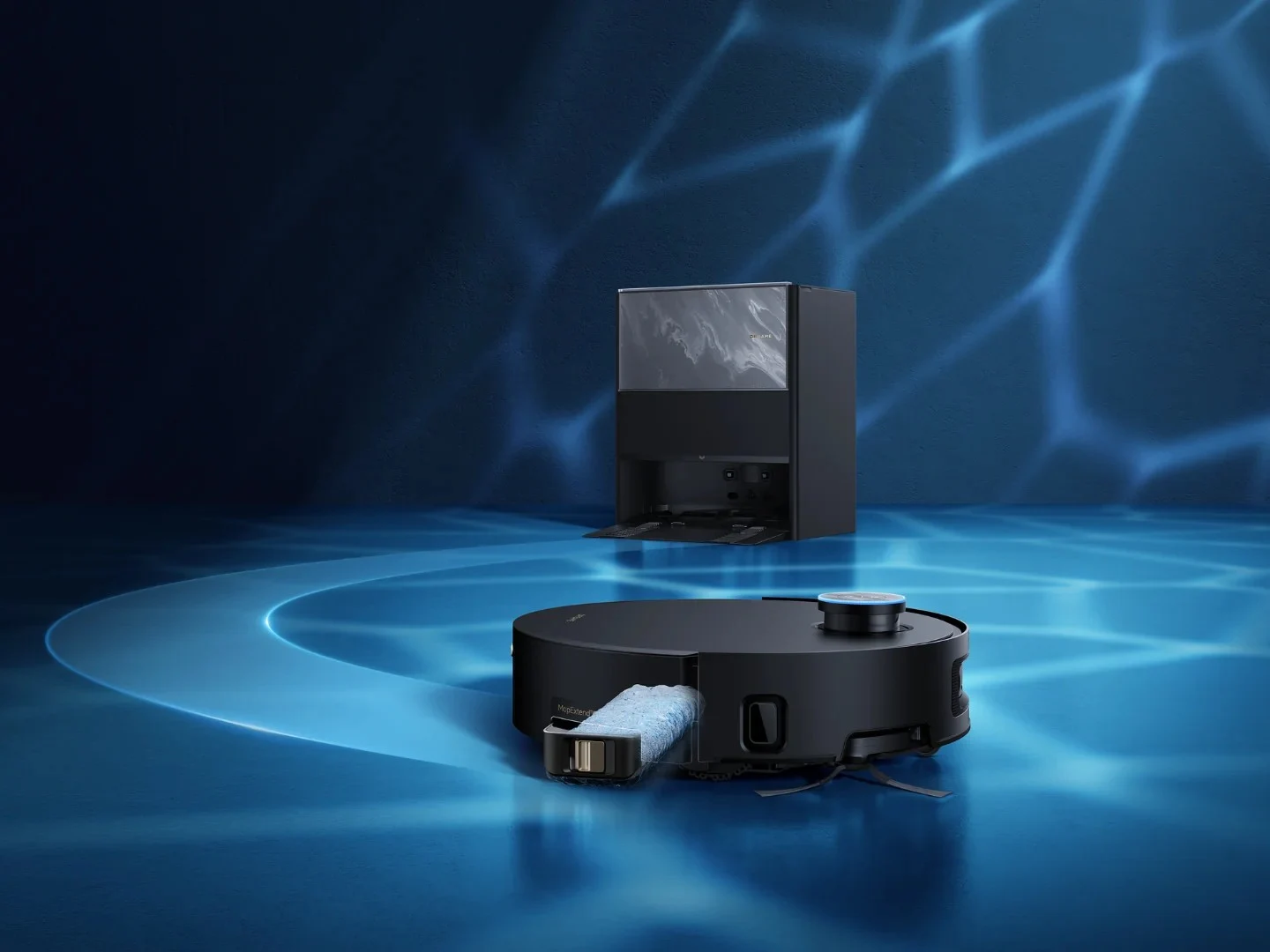
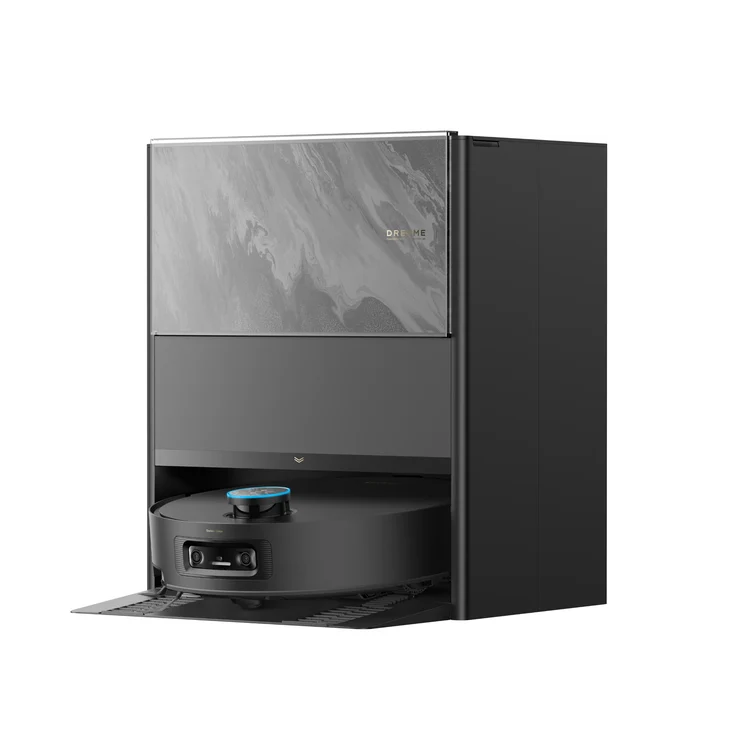
    The Dreame Aqua 10 Pro Track robot vacuum and mop has officially been released in Singapore. This device seems to be the global variant of the X50 Pro Roller, which recently made its debut in China.

    Innovative Mopping Technology

    According to Dreame, the Aqua 10 Pro Track is the first robot vacuum equipped with a track-type roller mop that sprays hot water at 45°C (~113°F) in real-time. Within the robot, dirty water is extracted from the mop to avoid spreading grime on your floors. The mop is designed to cover a wide area, although it can only clean within 5 mm (~0.2 inches) from corners or room edges. Another impressive feature is the ability to clean the mop at 100°C (~212°F) when it’s at the docking station.

    Unique Climbing Feature

    Dreame also touts its ProLeap system as a first in the industry. This allows the robot to overcome obstacles up to 6 cm (~2.4 inches) high, surpassing the height capability of Roborock’s AdaptiLift Chassis. Additionally, the Detangling DuoBrush boasts a “special double brush & air duct design” along with an anti-tangle extending side brush to effectively gather hair and other debris.

    Powerful Cleaning Performance

    The Dreame robot vacuum is capable of delivering up to 25,000Pa of suction power, utilizing a mix of camera and structured light navigation technologies. Furthermore, its smart docking station includes dual tanks for cleaning solutions that not only clean floors but also tackle pet odors, while both the dust bag and mop pad benefit from automatic hot air drying.

    The Dreame Aqua 10 Pro Track robot vacuum and mop is available for purchase in Singapore at SGD 2,699 (~$2,099). Unfortunately, there are no details yet regarding a global release.

    Source:
    Link