Category: Gaming

  • Meta Quest 3S Xbox Edition Sale at $399 While Supplies Last

    Meta Quest 3S Xbox Edition Sale at $399 While Supplies Last

    Key Takeaways

    1. The Meta Quest 3S Xbox Limited Edition headset is priced at $399 and features a unique black and green color scheme.
    2. The bundle includes the headset, Meta Quest Elite head strap, optional glass spacer, limited edition Xbox Controller, Meta’s Touch Plus controllers, and a universal power adapter.
    3. Buyers receive a three-month trial of Meta’s Horizon+ service and a three-month subscription to GamePass Ultimate.
    4. The headset has an OLED display with a resolution of 1832 x 1920 per eye, a 60Hz refresh rate, and a maximum field of view of 186 degrees.
    5. This limited edition product is available while stocks last at Meta’s store, Best Buy (USA), Argos (UK), and EE (UK).


    Following the recent leaks of the retail packaging, the Meta Quest 3S Xbox Limited Edition headset is now priced at $399 while supplies last. This model features the same specifications as the Meta Quest 3S 128GB but comes in a unique black and green color scheme that is exclusive to this edition.

    What’s Included in the Bundle

    For the price of $399, you receive the headset, a Meta Quest Elite head strap, and an optional glass spacer, all packaged together. Additionally, the box contains a limited edition Xbox Controller, Meta’s Touch Plus controllers, and a universal power adapter.

    Subscription Benefits

    You will also get a complimentary three-month trial of Meta’s Horizon+ service, granting you access to games, monthly updates, discounts, and more. Plus, there’s a three-month subscription to GamePass Ultimate included. You can start playing games immediately without needing extra hardware, but if you own an Xbox console, you can stream your entire game library for remote play.

    Hardware Details

    In terms of hardware specs, the headset is equipped with an OLED display that offers a resolution of 1832 x 1920 per eye, with a refresh rate of 60Hz and a maximum field of view (FOV) of 186 degrees. It operates on Qualcomm’s Snapdragon XR2 Gen 2 processor with 8GB of system RAM and features 128GB of internal storage. Expect a battery life that lasts up to 2.5 hours. It currently supports over 100 games from Microsoft’s Xbox library.

    Given that this is a limited edition product, it will only be available while stocks last. For more details, you can visit Meta’s official store page. Besides Meta’s online store, the headset can also be found at Best Buy (USA), Argos (UK), and EE (UK).

    Source:
    Link

  • Mangmi Air X: New Android 14 Gaming Handheld with Snapdragon Chipset

    Mangmi Air X: New Android 14 Gaming Handheld with Snapdragon Chipset

    Key Takeaways

    1. The market for Android gaming handhelds is growing, with key players like Anbernic, Ayaneo, and Retroid.
    2. The Mangmi Air X is a new competitor aiming to provide a lower-cost option compared to devices like the Ayn Odin2.
    3. The Air X is powered by the Snapdragon 662 chipset, which, despite being six years old, competes well with other basic gaming chipsets.
    4. It features a 5.5-inch IPS screen with 1080p resolution, 450 nits brightness, and includes an active cooling system.
    5. The device is designed with 4 GB of RAM, 64 GB of storage, and a 5,000 mAh battery, but pricing and availability are still unknown.


    The market for Android gaming handhelds has really taken off recently. Mainly led by companies like Anbernic, Ayaneo, and Retroid, the Ayn Odin2 (currently priced at $399 on Amazon) continues to be the preferred choice due to its solid price-to-performance ratio. Now, a new competitor seems to be getting ready to join the scene, known as Mangmi.

    Introducing the Air X

    Mangmi has unveiled the Air X, which aims to offer a lower price than the Odin 2 and newer devices such as the RG557, RG Slide, and the Pocket Ace or Pocket S2. To keep costs down, the Air X is built around the Snapdragon 662, an 11 nm chipset that includes four ARM Cortex-A73 and four Cortex-A53 CPU cores along with an Adreno 610 GPU.

    Performance Comparison

    Even though the Snapdragon 662 is six years old, it performs comparably to other basic gaming handheld chipsets like the MediaTek Helio G85 and the Unisoc T610. In certain situations, Qualcomm’s GPU drivers might provide a slight performance advantage for the Snapdragon 662. For context, the Mangmi Air X is expected to come with 4 GB of LPDDR4X RAM, 64 GB of eMMC flash storage, and a 5,000 mAh battery that supports 15 W charging.

    Display and Features

    Additionally, the Air X will come with a 5.5-inch IPS screen that offers a 1080p resolution in a 16:9 aspect ratio, boasting a peak brightness of 450 nits. Mangmi also includes an active cooling system to avoid thermal throttling, along with features like a 6-axis gyroscope, Hall effect joysticks, and Hall effect triggers, all housed in a design that weighs 286 g and measures around 203 x 87 x 17 mm. As for pricing and when it will be available, those details are still unknown; you can check Mangmi’s website for more information.

    Source:
    Link


  • Subnautica 2 Leak: Leviathans, Gene Modding, and VR Features

    Subnautica 2 Leak: Leviathans, Gene Modding, and VR Features

    Key Takeaways

    1. Game Engine and Performance: Subnautica 2 runs on Unreal Engine 5.5.4 and supports VR with reported 90 FPS performance on a Quest Pro headset.

    2. Unique Starting Point: The game begins at a deep ocean depth, offering a different experience compared to previous titles, before players are propelled to the surface.

    3. Gene Modification Mechanics: Players can alter their genes to adapt to harsh environments, which plays a key role in the storyline.

    4. The Collector Creature: A new terrifying Leviathan-class enemy called the “Collector” has been revealed, showcasing a chilling animation.

    5. Caution Advised: The information shared by the anonymous user has not been officially verified, and readers should take it with caution.


    An anonymous Reddit user, who claims to have access to a playtest version of Subnautica 2, has shared their early gameplay thoughts in several Subnautica-related subreddits. This user, who is now partially shadowbanned, has disclosed some intriguing information about the much-anticipated sequel from Unknown Worlds. Highlights from their post include a new, frightening enemy, gene modification features, and compatibility with virtual reality.

    Game Engine and Performance

    The user states that Subnautica 2 runs on Unreal Engine 5.5.4 and works with UEVR, a tool that converts standard games for VR. They reported achieving 90 FPS on a Quest Pro headset using Virtual Desktop while playing with high settings and unspecified top-tier AMD hardware.

    It’s important to mention that during a recent Q&A video, a developer indicated they weren’t actively developing VR support at this time but might think about it down the line.

    Unique Starting Point

    In a twist from the first two games, Subnautica 2 is said to begin at a considerable depth in the ocean. “You begin really deep instead of high up, which is pretty fascinating and frightening,” the user explained. “But don’t worry, this doesn’t last long as you soon get shot to the surface,” they added.

    The game supposedly unfolds on a new planet, while still featuring many nods to Subnautica and Below Zero. The user noted that there are various references to characters like Ryley and Marguerit, along with lore snippets found in the PDA and other interactive spots.

    Gene Modification Mechanics

    As previously mentioned, the user claims Subnautica 2 introduces a mechanic allowing players to alter their genes for better adaptation to harsh environments. “There’s a section in the PDA that displays your adaptations,” the user pointed out. “This is crucial for starting so deep and is a significant part of the storyline.”

    This assertion somewhat aligns with comments made by a developer in the latest developer vlog, who said, “This is a realm where alien DNA infiltrates your bones… where you might be the last human or the first of something entirely new,” as noted by the Senior Narrative Designer.

    The Collector Creature

    The most daring claim made in the post is about a fearsome new Leviathan-class creature called the “Collector.” The user reportedly managed to circumvent the playtest access restrictions to scan the creature, revealing its name and a spine-chilling animation. “A playtest barrier is in place preventing further exploration; however, I can confirm that the ‘Collector’ is genuinely terrifying in person,” the user described.

    Despite the attention the post has received for its detailed impressions, the user is currently under a shadowban, likely due to the newness of their Reddit account or worries about violating an NDA. They stressed they’re trying to avoid revealing major plot details and are open to providing proof of their access to moderators if required.

    Source:
    Link


  • Exciting New Stalker 2 Update for Hardcore Players Coming Soon

    Exciting New Stalker 2 Update for Hardcore Players Coming Soon

    Key Takeaways

    1. Introduction of a partial reloading system for weapons, allowing players to retain reload progress.
    2. Improved ammunition balance for machine guns and sniper rifles, enhancing survival gameplay.
    3. Enhancements to hiding places, interactive objects, and auto-detection for graphics settings.
    4. Launch of the first version of the Zone Kit modding tool for community-created mods.
    5. Ongoing story expansion with new narratives and viewpoints about the Zone.


    Stalker 2: Heart of Chornobyl is about to receive a significant 1.5 update from GSC Game World. The developers are focusing on making the gameplay more challenging and realistic.

    New Reloading System

    According to Videogamer, a key highlight of the upcoming update is the introduction of a partial reloading system for weapons. In the current version, players must reload every time they switch weapons, even if they are in the middle of a reload. The new patch addresses this issue by enabling the weapon to retain its reload progress, which adds realism and elevates the dynamics of combat.

    Improved Gameplay Mechanics

    This update also fine-tunes the ammunition balance for machine guns and sniper rifles, making it more appealing for hardcore survival enthusiasts in the Zone. Furthermore, it enhances the performance around hiding places and interactive objects, adds an auto-detection feature for graphics settings, and fixes problems with ultra-wide monitors.

    Modding Tool Launch

    In addition, the first version of the Zone Kit modding tool, a full SDK for creating mods, will be released. Development is ongoing with input from the community, and update 1.5 is expected to arrive in late June.

    Meanwhile, the team is also working on expanding the story. They plan to present new viewpoints on the Zone, including narratives that have not been covered in the series previously.

    Source:
    Link


  • GeForce RTX 5050 Laptop Launches with DLSS 4 and Nvidia Drivers

    GeForce RTX 5050 Laptop Launches with DLSS 4 and Nvidia Drivers

    Key Takeaways

    1. Nvidia has launched the GeForce RTX 5050 for laptops, available for pre-order in some regions, while the desktop version will be released next month.
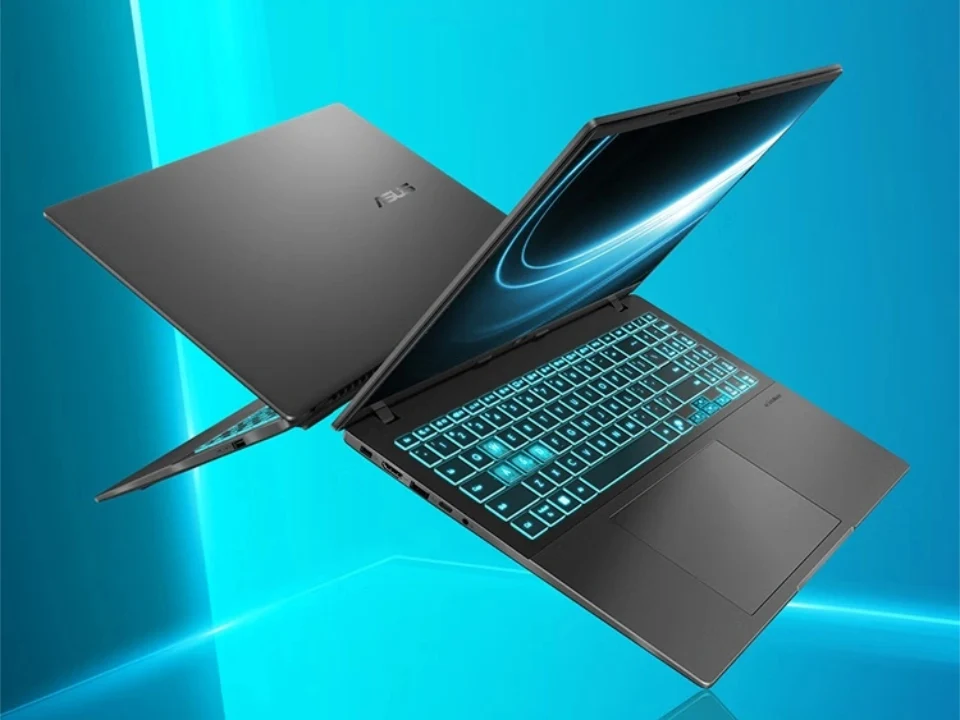
    2. Asus is the first manufacturer to officially launch a laptop with the RTX 5050, previously listing the ROG Strix G16 with the GPU.
    3. The Vivobook Pro 16 is available for pre-order in China, featuring an Intel Core 5 210H processor, but expected to have lower CPU performance than earlier models.
    4. The GeForce RTX 5050 may perform similarly to the RTX 4060, despite having 20% fewer CUDA cores and a maximum power output of 115 W.
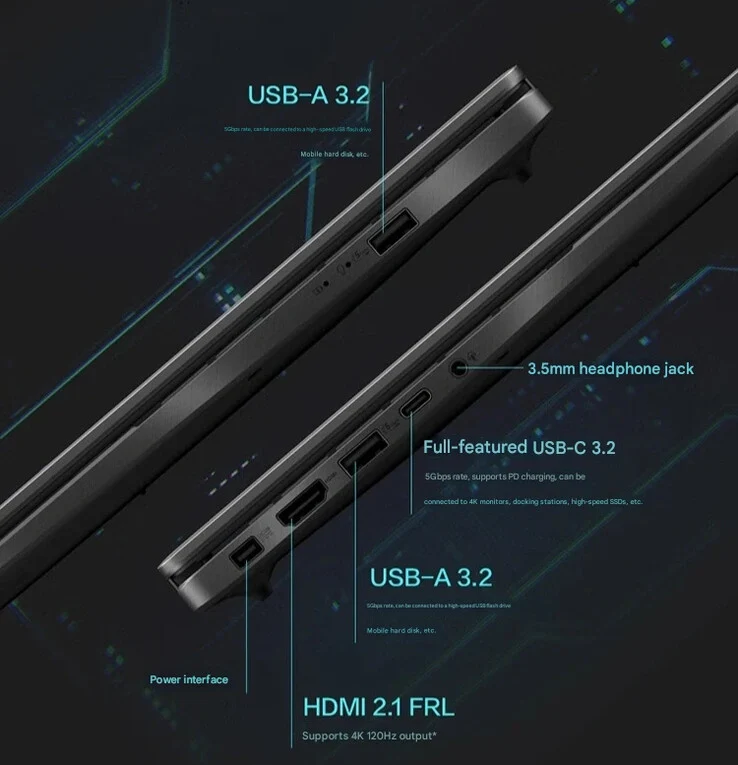
    5. The Vivobook Pro 16 with RTX 5050 includes options for 1 TB PCIe 4.0 storage, 16 GB DDR5-5200 RAM, and a 144 Hz display, priced at approximately $836.


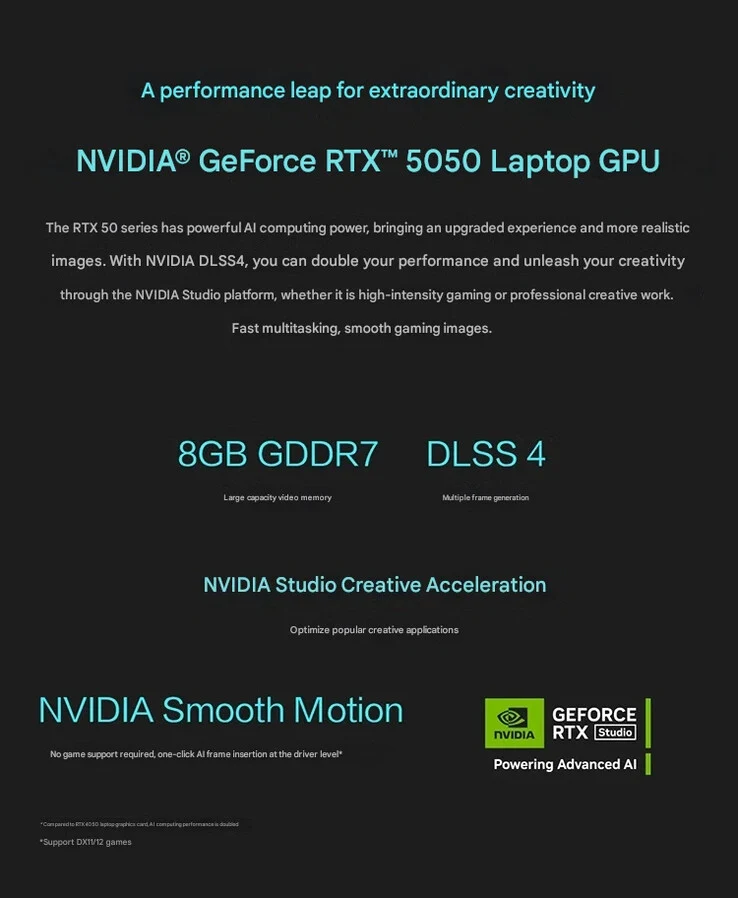
    Nvidia has just revealed the GeForce RTX 5050 designed for laptops. To give some background, the company also launched a desktop variant, which comes with just 8 GB of GDDR6 VRAM. While the desktop version won’t be available until next month, the laptop model is already available for pre-order in some regions.

    Asus Takes the Lead

    Asus appears to be the first laptop manufacturer to officially launch a laptop featuring the RTX 5050. Interestingly, this same company had previously been seen listing the ROG Strix G16 equipped with Nvidia’s newest laptop GPU almost two weeks ago. However, that listing has since been removed from the website.

    Vivobook Pro 16 Availability

    On the other hand, the Vivobook Pro 16 is available for pre-order starting today in China, and it comes with an Intel Core 5 210H processor from the Raptor Lake-H family. In real-world usage, this processor is expected to provide lower CPU performance compared to the options available in the Vivobook Pro 16 that we reviewed a year and a half ago (currently priced at $1,199.99 on Amazon).

    Surprisingly, the GeForce RTX 5050 might match the performance of the GeForce RTX 4060, even though it has 20% fewer CUDA cores. For comparison, the GeForce RTX 5050 has a maximum power output of 115 W; however, Asus has not disclosed the Total Graphics Power (TGP) for the Vivobook Pro 16 yet. Currently, you can get the GeForce RTX 5050 with up to 1 TB of PCIe 4.0 storage, 16 GB of DDR5-5200 RAM, and a 144 Hz display for CNY 5,999 (approximately $836). There’s still no information on when it will be released internationally.

    Source:
    Link


  • MagicX Zero 40 Launch: Pre-Orders Start at $75 for Nintendo DS Handheld

    MagicX Zero 40 Launch: Pre-Orders Start at $75 for Nintendo DS Handheld

    Key Takeaways

    1. MagicX has launched the Zero 40 handheld gaming device, following the Mini Zero 28.
    2. The Zero 40 is available for pre-order, with an official release date set for June 28.
    3. Customers can choose between black and white color options, and select 64 GB or 128 GB microSD cards.
    4. The device features a 4-inch IPS display with a resolution of 480 x 800 pixels and is powered by an Allwinner A133P chipset with 2 GB of RAM.
    5. The Zero 40 has a 4,300 mAh battery, providing up to 7 hours of gameplay on less intensive titles.


    The Zero 40 marks MagicX’s second gaming handheld launch this year, following the Mini Zero 28 (currently priced at $79.99 on Amazon) which debuted a few months ago. Although it was originally set to release last week, there were rumors suggesting that MagicX postponed the Zero 40 until June 28 for final ‘optimizations.’ However, in a surprising move, MagicX has now begun accepting pre-orders for this highly anticipated gaming device.

    Color Options and Pricing

    The MagicX Zero 40 comes in black and white color choices, and customers can opt for either 64 GB or 128 GB microSD cards. The starting price is $75 for the base model, which increases to $83 when choosing the 128 GB microSD card. It’s worth noting that the initial units will include SanDisk-branded cards, but MagicX has the option to switch to Kioxia-produced cards in the future.

    Specifications and Features

    All versions of the device share the same dimensions of 136 x 105 x 17 mm and a weight of 182 g, featuring a unique 3:5 aspect ratio screen. The 4-inch diagonal IPS display offers a resolution of 480 x 800 pixels, which is designed to mimic the dual screens of a Nintendo DS stacked vertically. The device is powered by an Allwinner A133P chipset alongside 2 GB of DDR4 RAM, and it includes a 4,300 mAh battery that can provide up to 7 hours of gameplay with less intensive titles. For more information, visit MagicX’s official website.

    Source:
    Link


  • MSI Desktop Gaming PC with RTX 5070 and Toy Story Design

    MSI Desktop Gaming PC with RTX 5070 and Toy Story Design

    Key Takeaways

    1. MSI has created a Toy Story-themed gaming tower with a vibrant design and fun decorations.
    2. The gaming PC features an MSI Gaming X Trio GeForce RTX 5070 graphics card with a Buzz Lightyear theme.
    3. It is a mid-range machine equipped with an Intel Core Ultra 5 245K processor, 32GB DDR5 RAM, and a 1TB SSD.
    4. The gaming PC includes a strong cooling setup with four fans and an all-in-one CPU cooler.
    5. The Toy Story gaming PC is only available in Taiwan, priced at NT$79,900 (about US$2,700), with no international release planned.


    MSI has created a unique gaming tower that features components inspired by Toy Story. The case is vibrant, showcasing a modern design with a glass front and a clear side panel, all built on an eye-catching red and yellow base. It even includes fun decorations like a joystick. To keep everything cool, there are four fans installed.

    Cooling and Design

    This cooling setup is probably crucial since the gaming PC is equipped with an MSI Gaming X Trio GeForce RTX 5070, which has a special Buzz Lightyear theme. The graphics card is white, adorned with green and purple highlights, and when paired with black fans, it distinctly resembles the toy astronaut. Additionally, the all-in-one cooler for the CPU, the 850-watt power supply, and the MSI Z890 Gaming Plus motherboard all feature matching Toy Story designs.

    Performance Specs

    Regarding performance, this Toy Story-themed gaming PC is classified as a mid-range machine, running on an Intel Core Ultra 5 245K (priced from $289 on Amazon). MSI combines the Intel chip with 32GB DDR5-6400 RAM and a 1TB PCIe 4.0 SSD. It provides a variety of connectivity options, such as USB-C 4.0 (40 Gbps) and 5 Gbps Ethernet. The dimensions of the case are approximately 16.5 x 8.9 x 19.1 inches.

    Availability

    MSI’s Toy Story gaming PC and its themed components are only available in Taiwan, with no plans for an international release. This means that the RTX 5070 gaming PC will have to be imported for purchase in other countries. According to MSI, the Toy Story PC is priced at NT$79,900, which translates to about US$2,700. More information about this visually appealing computer can be found on the official product page.

    Source:
    Link


  • RTX 5050 Laptop GPU Launches with GDDR7 VRAM and Wider Bus

    RTX 5050 Laptop GPU Launches with GDDR7 VRAM and Wider Bus

    Key Takeaways

    1. The RTX 5050 laptop GPU has the same number of CUDA cores as the RTX 4050 but features 2 GB more VRAM and a 33.33% wider memory bus.
    2. The GPU maintains the same thermal design power (TDP) of 115 W as the RTX 4050.
    3. Performance benchmarks show the RTX 5050 is around 18% slower than the RTX 5060 and 33% slower than the RTX 5070.
    4. The RTX 5050 could compete with the RTX 4060 laptop despite the latter having 20% more CUDA cores.
    5. Laptops with the RTX 5050 will launch in China at prices just under $800, with US pricing possibly under $1,000 for budget models.


    After a long period of rumors, the RTX 5050 laptop GPU has been officially announced. This new GPU has the same number of CUDA cores as the RTX 4050 laptop but brings added benefits including more VRAM, quicker memory, and a wider memory bus. Interestingly, the RTX 5050 laptop GPU maintains the same thermal design power (TDP) as its predecessor, the RTX 4050.

    Specifications Overview

    When you compare it to the RTX 4050 laptop, the RTX 5050 laptop GPU boasts an additional 2 GB of VRAM and a memory bus that is 33.33% wider. Although the exact speed of the GDDR7 VRAM in the RTX 5050 is still unclear, it’s likely to match the 28 Gbps found in the RTX 5060 (which is available on Amazon).

    Performance Insights

    Nvidia provided official stats (shared by VideoCardz), showing that the RTX 5050 laptop GPU, which operates within a 115 W power budget, achieves scores around the following:

    According to Port Royal benchmarks, the RTX 5050 laptop GPU is said to be about 18% slower than the RTX 5060 and 33% slower than the RTX 5070, both running at the same 115 W power level.

    Pricing Expectations

    This means the RTX 5050 could potentially rival the performance of the RTX 4060 laptop, despite the latter having 20% more CUDA cores.

    In addition, VideoCardz has indicated that laptops equipped with the RTX 5050 GPUs will launch in China, priced at just under $800 excluding VAT. While the pricing for RTX 5050 gaming laptops in the US is still unknown, there is a chance that they could be available for under $1,000 for budget gaming models. However, higher-tier options featuring better displays and faster processors are likely to exceed $1,000, especially during the initial months after their release.

    Source:
    Link


  • RTX 5050 Desktop GPU Revealed: 8 GB GDDR6 VRAM Specs

    RTX 5050 Desktop GPU Revealed: 8 GB GDDR6 VRAM Specs

    Key Takeaways

    1. The Nvidia GeForce RTX 5050 features 2,506 CUDA cores and 8 GB of GDDR6 VRAM on a 128-bit bus.
    2. It has a base clock of 2.31 GHz, a boost clock of 2.57 GHz, and a total graphics power of 130 Watts, with a recommended PSU of 550 Watts.
    3. Benchmark results show the RTX 5050 outperforms the two-generation-old RTX 3050, but underperforms compared to the RTX 4060.
    4. Performance improvements are mainly due to DLSS and frame generation technology rather than raw performance gains.
    5. The RTX 5050 launches at a starting price of $249, only $50 less than the RTX 5060, with no Founder’s Edition available.


    Nvidia has quietly revealed its latest budget graphics card after some time: the GeForce RTX 5050. We previously saw its laptop version, and now we are finally getting a glimpse of the desktop model. Its launch wasn’t exactly a surprise, as various leaks had already spilled the beans well before the official announcement.

    Specs and Performance

    The RTX 5050 desktop features a modest 2,506 CUDA cores. While Nvidia’s official specifications don’t disclose the exact GPU model, it’s probably a GB206 or GB207. In a twist from earlier rumors, it comes equipped with 8 GB of GDDR6 (not GDDR7 as some had speculated) VRAM on a 128-bit bus, resulting in a total memory bandwidth of 320 GB/s. Additional specs for the RTX 5050 include a base clock of 2.31 GHz and a boost clock of 2.57 GHz, with a total graphics power (TGP) of 130 Watts. Nvidia suggests using a 550 Watt PSU, but a 450 Watt unit should suffice for this card.

    Benchmark Results

    Nvidia has also shared some benchmark results that demonstrate how the GPU performs compared to the two-generation-old RTX 3050. As expected, the Blackwell GPU shows an advantage due to its newer architecture and superior TSMC N4P manufacturing process, especially when compared to the Samsung N8 used for the RX 3050.

    Interestingly, Nvidia’s own graphs indicate that the RTX 5050 underperforms compared to the previous RTX 4060 in terms of raw performance. Most of its improvements are attributed to DLSS and frame generation technology. To make matters worse, the RTX 5050 will be launched at a starting price of $249, which is only $50 less than the RTX 5060. It’s also unlikely to see a Founder’s Edition, meaning buyers will have to settle for AIB variants that will probably cost more.

    Source:
    Link


  • Sony PlayStation Sued in Netherlands for Game Prices and Monopoly

    Sony PlayStation Sued in Netherlands for Game Prices and Monopoly

    Key Takeaways

    1. A Dutch consumer group has filed a class-action lawsuit against Sony PlayStation, alleging exploitation of customers through high digital game prices.
    2. The lawsuit highlights the limitations of the PlayStation Store, which restricts competition and prevents lower pricing for digital games.
    3. The Fair PlayStation campaign, initiated in February, has gained support from gamers and is making progress in the legal process.
    4. Similar to the Epic Games lawsuit against Apple, the case raises concerns about the broader implications of digital game pricing and market control.
    5. Consumers are seeking changes, such as the ability to sell or lend digital games, which are currently tied to individual PSN accounts.


    A Dutch group advocating for consumers has launched a class-action lawsuit against Sony PlayStation, claiming they are taking advantage of customers. The Stichting Massaschade & Consument Foundation points out that Sony is leveraging its strong market position. The lawsuit primarily focuses on the limiting nature of the PlayStation Store, which compels consumers to pay higher prices for digital versions. While some believe the lawsuit may not succeed, it could lead to alterations in the way Sony markets PS5 games.

    Origins of the Lawsuit

    The PlayStation lawsuit began in February, when the consumer advocacy group initiated the Fair PlayStation campaign. With backing from gamers, the case has now made significant progress.

    Pricing Concerns

    Many consumers are unhappy about paying much more for digital games on PlayStation compared to physical copies. Although the PlayStation Store does have sales, they often do not match the deals offered by retail stores. The foundation accuses Sony of preventing third-party marketplaces from operating on its consoles. Increased competition could result in lower prices at the PlayStation Store. This situation is similar to the Epic Games lawsuit against Apple in the EU over its unfavorable App Store practices.

    Broader Implications

    Sony isn’t the only company that may be profiting from the rise in digital gaming. Xbox users have discovered that acquiring physical games is becoming more challenging. Even some discs only contain minimal data, relying heavily on downloads for full installation. However, Microsoft’s reduced focus on the Series X and S makes the PS5 even more prominent in the market. The Stichting Massaschade & Consument Foundation estimates that over 80% of gamers in the Netherlands with home consoles have a PlayStation.

    Possible Solutions

    Some consumers have proposed that a simpler method to sell or lend their digital PlayStation games could be a remedy. Presently, purchases made in the store are tied to PSN accounts and cannot be transferred. If the lawsuit moves forward, a court hearing could be arranged sometime in 2025.

    Source:
    Link