Key Takeaways
1. Sony and AMD are collaborating on hardware for upcoming PlayStation consoles, with significant performance improvements expected for the PS6.
2. Leaks suggest the PS6 may offer up to three times the rasterization performance and twelve times the ray tracing performance of the PS5.
3. AMD’s new ‘Radiance Cores’ will enhance ray tracing capabilities by offloading tasks from the CPU and GPU, leading to improved performance.
4. The introduction of Radiance Cores aims to refine the ray tracing pipeline and provide a significant speed boost for graphics processing.
5. Universal Compression technology will enhance data management for memory bandwidth, potentially benefiting various gaming platforms with AMD System on a Chip (SoC) solutions.
Sony and AMD are teaming up to create the hardware for the upcoming PlayStation consoles. There have been many leaks about the PS6’s specifications, predicting it could offer up to three times the rasterization performance and twelve times the ray tracing performance compared to the PS5. Recently, Sony and AMD disclosed details about their collaboration, shedding light on the anticipated performance enhancements.
Insights from AMD
AMD released a video on its YouTube channel that outlined its collaboration with Sony and what we can expect in the future. In the video, Jack Huynh, AMD’s SVP and GM of the Computing and Graphics Group, was joined by Mark Cerny, the lead architect of the PS5 and PS5 Pro, to discuss the innovative technology set to debut in “a future console.” A major highlight was the introduction of ‘Radiance Cores,’ which are specialized cores designed specifically for ray traversal tasks.
Advancements in Ray Tracing
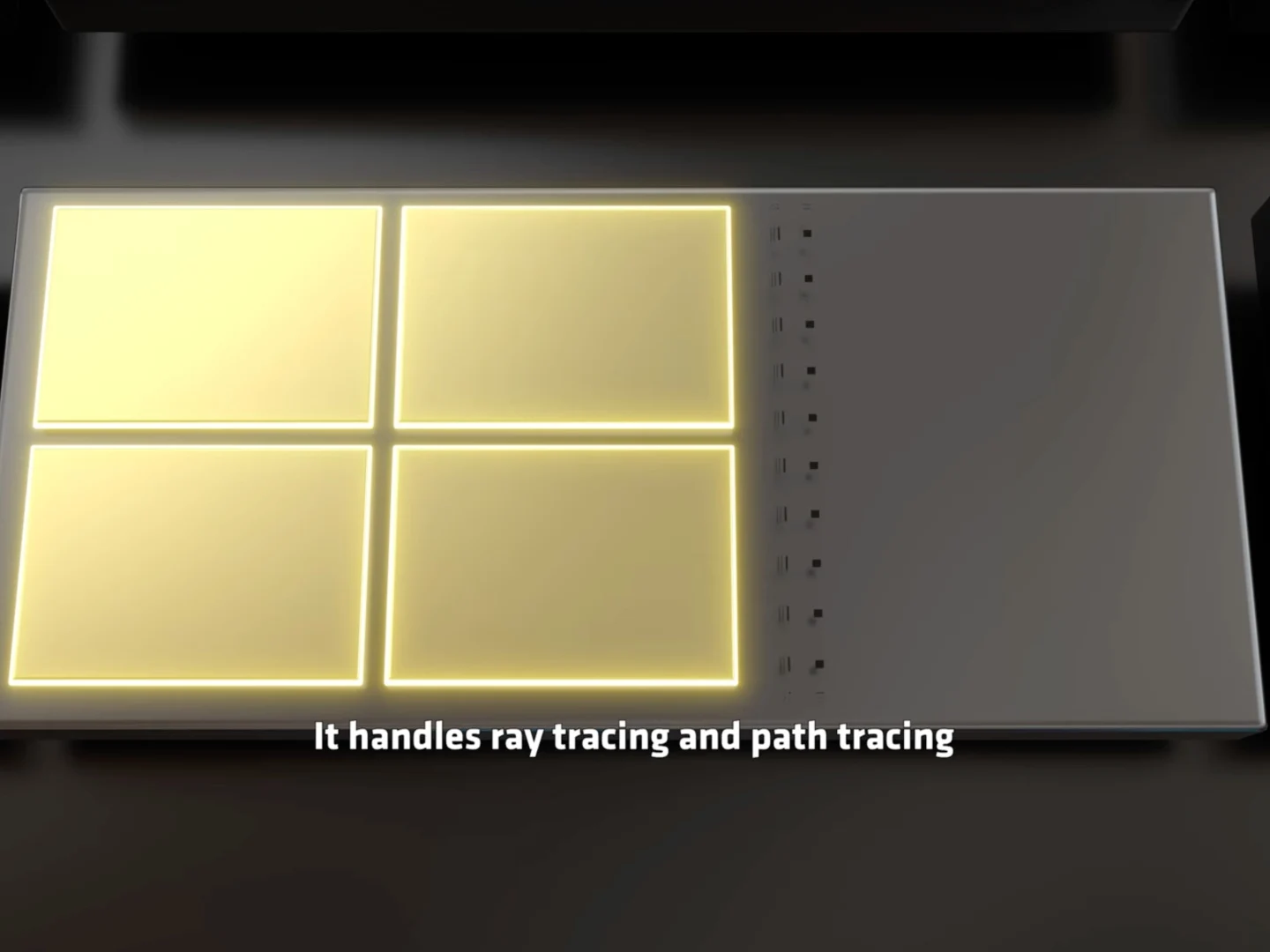
The new Radiance Cores build on the Neural Radiance Caching system for FSR Redstone, acting as a dedicated hardware unit that performs ray tracing and path tracing calculations in real-time. This innovation reduces the workload typically managed by the CPU and GPU shader cores. With Radiance Cores, the CPU can focus more on geometry and simulation tasks, while the GPU can dedicate additional resources to shading and lighting effects.
Cerny noted that refining the ray tracing pipeline and implementing traversal logic in hardware would result in a “significant speed boost,” along with an extra advantage from having this hardware function independently from the shader cores.
Universal Compression Technology
Additionally, Huynh introduced another technological advancement called Universal Compression, which effectively compresses data being sent to memory. This development aims to address GPU memory bandwidth issues that currently affect systems like the PS5 and PS5 Pro. While these consoles utilize Delta Color Compression (DCC) to compress data, it primarily impacts textures and render targets. Universal Compression, however, will conduct a more comprehensive analysis of all data types.
Although Cerny didn’t specifically confirm that this technology will be integrated into the PS6, he did mention that it will appear in a future console within a few years. This technology won’t be limited to Sony’s consoles; it will be accessible across various gaming platforms that feature an AMD SoC.