Key Takeaways
1. New Game Engine: Tiernan Watson has developed TombForge, a custom game engine designed to refresh creative tools for classic Tomb Raider games, using C++ and OpenGL.
2. Modern Features: TombForge includes advanced features like PBR rendering, TRA animations, and a GMX importer, focusing on enhancing visual quality while maintaining the original game’s design logic.
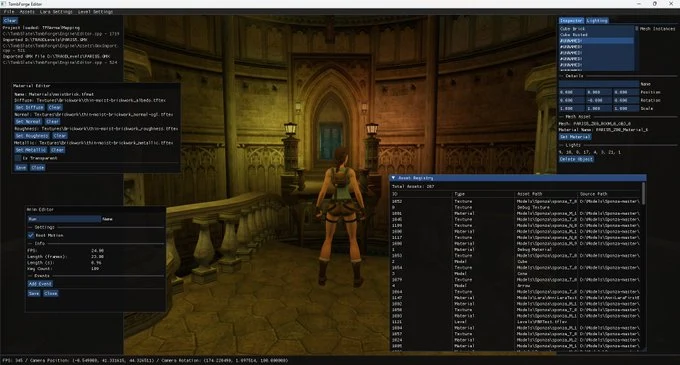
3. Custom Editor Interface: The engine’s editor boasts a sleek interface with tools for lighting, animation, and audio, allowing level designers to work efficiently with dynamic shadows and material properties.
4. Community and Independence: TombForge represents a shift towards independent game development, as smaller developers explore custom engines in response to changing licensing policies of larger frameworks.
5. Preservation and Legacy Support: The project aims to support legacy file formats, enabling the use of assets from older games, which could benefit archivists, modders, and students in understanding early 3D design.
A solo developer has crafted a new game engine aimed at refreshing the creative tools behind the classic Tomb Raider games. This engine, called TombForge, reinterprets the design style of 1990s 3D exploration titles by utilizing modern rendering and physics methods, all while steering clear of popular frameworks like Unity or Unreal.
Developer Insights
Tiernan Watson, who was previously known for the URaider framework, has created TombForge entirely in C++ and uses OpenGL. It incorporates the Jolt Physics SDK to ensure solid collision detection and interaction, along with serialization and advanced animation capabilities.
On October 9, 2025, Watson introduced TombForge on X (formerly Twitter) with a brief video showing the engine’s editor in action:
“Meet TombForge – a custom game engine for Tomb Raider made from the ground up to help develop modern Tomb Raider levels! It includes PBR rendering, TRA animations, a TRAOD GMX importer, and much more on the way!”
Features and Functionality
According to reports from 80.lv and TimeExtension, the engine’s editor already includes advanced tools for lighting, animation, and audio. It features a physically based rendering pipeline (PBR), which enhances the visual quality of environments and character models while keeping the grid-based logic of the original Tomb Raider level design.
Instead of recreating the original games, TombForge focuses on revitalizing their workflow. Watson refers to the project as a “spiritual successor” to the tools that Core Design may have developed had they continued their work into the 2000s. By building every element from the ground up, Watson retains complete control over the way materials interact with light, the physics of puzzles, and how camera angles adjust in intricate environments.
Editor Interface and Community Feedback
A screenshot from the current version reveals a sleek editor interface with tabs for models, lighting, and collision geometry. Level designers can see dynamic shadows, modify fog layers, and set material properties right within the viewport. Early users have remarked on the quickness of asset updates, a significant perk of a custom-built engine free from large commercial codebases.
Although it is still in the early stages, TombForge’s technical framework highlights a rising interest in independent, specialized engines. Many smaller developers are reconsidering large commercial toolchains following recent changes in licensing policies and engine costs. In contrast, TombForge illustrates how one developer can create a stable, physics-based editing platform tailored to a specific creative legacy.
Preservation and Future Plans
The project also has significance for preservation and education. Watson has mentioned future plans to support legacy Angel of Darkness file formats, which could enable fans to bring in assets from older games into a modern toolchain. This compatibility might assist archivists, modders, and students in exploring early 3D design within a secure, legal context—an area where independent developers are increasingly at the forefront of innovation.
While no release date or licensing details have been disclosed, both 80.lv and TimeExtension have noted that the project has generated substantial community excitement. On Reddit (r/TombRaider), one user commented, “TombForge promise a new Level Editor engine with modern textures, graphics and, most probably, modern controls as well…” reflecting a wider enthusiasm for a fan-driven revival of creative possibilities. For many developers, it signifies a type of independence that has become harder to achieve in mainstream game development.
With its mix of modern rendering, open physics, and a nostalgia-infused purpose, TombForge makes a quiet statement about what individual developers can achieve. If it becomes publicly available, it could become part of a small but powerful movement showing that the future of creative tools may not rely on size but rather on precision and intent.