Category: Audio

  • Nothing X App Revamp: Improved Design & Device Support

    Nothing X App Revamp: Improved Design & Device Support

    Key Takeaways

    1. The refreshed Nothing X app is now available for download on Android and iOS, featuring a significant redesign.
    2. The app simplifies device management and allows users to easily monitor their health data.
    3. It now supports CMF smartwatches, enhancing GPS tracking and connectivity.
    4. CMF audio devices, like the CMF Buds Pro 2, remain compatible with the Nothing X app without changes.
    5. There are rumors of a potential Nothing-branded smartwatch following the integration of the CMF Watch app.


    Nothing has launched a refreshed version of the Nothing X app, which is now ready for download for users on both Android and iOS platforms. This app, which acts as a companion for Nothing’s audio devices and wearables, has undergone a significant redesign and includes several new features.

    New Interface and Features

    According to Nothing, the updated Nothing X app presents a new design that simplifies device management and allows users to easily check their health data. Additionally, the app now supports CMF smartwatches. This follows the announcement made in June regarding the integration of the CMF Watch app into the Nothing X app. The company claims that the latest update offers a more reliable connection and improved GPS tracking for models of the CMF Watch.

    Compatibility and Future Plans

    CMF audio devices, like the CMF Buds Pro 2 (currently priced at $59 on Amazon), are already compatible with the Nothing X app and remain unaffected by this update. Nonetheless, there are rumors suggesting that merging the CMF watch app with the Nothing X app might hint at the potential release of a Nothing-branded smartwatch in the near future.

    The Nothing X app is also designed for use with non-Nothing smartphones, as its features are integrated into the Settings app on Nothing devices.

    Source:
    Link

  • Audio-Technica Launches Mimio Brand with Two New Hearing Products

    Audio-Technica Launches Mimio Brand with Two New Hearing Products

    Key Takeaways

    1. Audio-Technica launched a new brand called Mimio, offering products aimed at individuals with hearing loss: Mimio Assist One earbuds and Mimio Sound Move speakers.
    2. The Mimio products are personal sound amplification devices that do not require a prescription, making them accessible to users who do not need traditional hearing aids.
    3. The Mimio Assist One earbuds feature three hearing modes (TV, conversation, outdoors), customizable settings via a smartphone app, and an IP55 rating for water and dust resistance.
    4. The Mimio Sound Move speakers are wireless, battery-powered, and enhance speech clarity with two Clear Sound settings, featuring an IPX2 rating for water resistance.
    5. The Assist One earbuds are priced at approximately $340 and will be available on August 1, while the Sound Move speakers will cost around $150 and launch on August 8, with rental options available.


    Audio-Technica has introduced a new brand called Mimio, featuring two innovative products aimed at individuals with some level of hearing loss: the Mimio Assist One earbuds and the Mimio Sound Move speakers.

    Understanding Hearing Loss

    Hearing loss is a widespread issue, especially among older adults, with a notable decline in sensitivity to higher frequencies. People experiencing this challenge often struggle to comprehend conversations, and there’s a concerning link between hearing loss and a heightened risk of dementia.

    Innovative Solutions for Hearing Needs

    The Mimio products are designed for individuals who don’t require medically-prescribed hearing aids. They can be classified as personal sound amplification devices as per FDA guidelines, meaning no prescription is necessary for their purchase or usage.

    Features of the Mimio Assist One Earbuds

    The Mimio Assist One earbuds (model ATMM-SHD1) are wireless and share a design resemblance with Audio-Technica’s traditional models (like the ATH-CKS50TW available on Amazon). These earbuds can also function normally for users without hearing problems when connected to any Bluetooth audio device.

    For those with hearing difficulties, the hearing mode activates immediately upon removing the earbuds from their case, even without pairing to an audio source. Users can choose from three different modes: TV, conversation, and outdoors, which helps to minimize the sound of their own voice for clearer understanding of others. A smartphone app allows users to customize the earbuds to meet their specific hearing requirements. They also have an IP55 rating, protecting them from dust and water jets.

    Details About the Mimio Sound Move Speakers

    The Mimio Sound Move speakers (model ATMM-SP780TV) are wireless and run on battery power, allowing placement up to 30 meters (98 feet) from the television. The transmitter and recharging dock connect to the TV and require AC power. Two Clear Sound settings enhance speech clarity. The Sound Move can be used in the kitchen and has an IPX2 rating, making it resistant to water droplets.

    Availability and Pricing

    The Assist One earbuds will be available for purchase starting August 1 in Japan, while the Sound Move speakers will launch on August 8. The earbuds are priced at 49,500 yen (approximately $340), and the speakers cost 21,780 yen (around $150). A rental option is also available, allowing customers to try the products for 20 nights and 21 days for 3,980 yen (about $27), or for three months at 13,440 yen (approximately $92), before deciding to buy.

    Source:
    Link

  • Spotify Unveils AI Songs by Deceased Artists Without Approval

    Spotify Unveils AI Songs by Deceased Artists Without Approval

    Key Takeaways

    1. AI-created songs are increasingly appearing on Spotify, including on the profiles of deceased artists, raising concerns about authenticity.
    2. A recent AI-generated song titled “Together” was released on Blaze Foley’s page, but it did not resemble his style and was criticized as “AI schlock.”
    3. Music labels, like Lost Art Records, are concerned about the impact of AI content on the reputation of deceased artists.
    4. Spotify blames the issue on SoundOn, a TikTok service, and stated that the controversial content has been removed for violating their policies.
    5. There is frustration among music industry professionals about Spotify’s inability to prevent unauthorized AI-generated content from being attributed to artists.


    Since Spotify began, it has become very popular, giving listeners access to a vast selection of music. However, recently, AI-created songs have started to fill the platform, with some even showing up on the profiles of artists who have passed away, raising a lot of questions and controversies about this practice.

    Controversial AI Releases

    A notable case involves Blaze Foley, a singer-songwriter known as Deputy Dawg, who was tragically murdered in 1989 at just 39 years old, having been active since 1975. According to Spotify, a new song titled “Together” was released on his official page last week. However, upon closer look, the song features a country singer that does not resemble Foley at all, even though the music style is similar to slow country.

    Concerns from Music Labels

    Craig McDonald, the owner of Lost Art Records, which handles the distribution of Foley’s music, commented that this new track is unrelated to the late artist: “It’s kind of an AI schlock bot, if you will. It has nothing to do with the Blaze you know, that whole posting has the authenticity of an algorithm.”

    Spotify’s Response

    In reaction to this issue, Spotify reportedly blamed SoundOn, a service from TikTok that allows users to share their music directly: “We’ve flagged the issue to SoundOn, the distributor of the content in question, and it has been removed for violating our Deceptive Content policy.”

    But there’s more: a copyright notice at the bottom of the page mentions a production company called Syntax Error. This is similar to what happened with Guy Clark, an artist who passed away in 2016 due to lymphoma. An AI-generated song titled “Happened To You” was released on his Spotify page last week, also under the same copyright.

    The Challenge of AI Content

    Consequently, Spotify appears to be struggling to manage its platform effectively, especially with the growing use of AI that allows unscrupulous individuals to attribute songs to deceased artists without their consent. Craig McDonald expressed his frustration to 404media: “It’s harmful to Blaze’s standing that this happened. It’s kind of surprising that Spotify doesn’t have a security fix for this type of action, and I think the responsibility is all on Spotify. They could fix this problem. One of their talented software engineers could stop this fraudulent practice in its tracks, if they had the will to do so. And I think they should take that responsibility and do something quickly.”

    Source:
    Link

  • Affordable WeariQ Smart Audio Glasses Now Available at Walmart

    Affordable WeariQ Smart Audio Glasses Now Available at Walmart

    Key Takeaways

    1. WeariQ’s smart audio glasses are priced at $24.88 and are available exclusively at Walmart across the U.S.
    2. They use Bluetooth 5.0 for wireless connectivity with a range of up to 50 feet and include open-ear speakers and a microphone for hands-free calls.
    3. The glasses offer a battery life of up to 10 hours of music playback and a standby time of 200 hours.
    4. They come in various styles with options for polarized lenses, blocking 100% of UVA and UVB rays, and are sweat and splash resistant (IPX4 standard).
    5. Each pair includes a hard case, anti-slip silicone nose pads, and a microfiber cleaning cloth; Ray-Ban Meta glasses on Amazon provide additional features like image and video capture.


    WeariQ has introduced a new series of smart audio glasses, which are available exclusively at Walmart locations across the United States, priced at $24.88. These glasses come in different styles to suit various tastes.

    Wireless Connectivity

    The smart audio glasses utilize Bluetooth 5.0 technology to connect wirelessly to devices like computers, tablets, and smartphones, with a range of up to 50 feet (15 m), as stated by the company. They feature integrated open-ear speakers and a microphone, allowing users to make hands-free calls and utilize voice commands with smart assistants such as Siri.

    Impressive Battery Life

    According to the manufacturer, users can enjoy listening to music for as long as 10 hours continuously before needing to recharge them with a USB-C power supply. Additionally, these glasses offer a remarkable standby time of 200 hours.

    Stylish and Functional Design

    These glasses can be purchased with polarized lenses in several options, including clear, blue light blocking, and sunglasses. They effectively block 100% of UVA and UVB rays and are designed to be sweat and splash resistant, meeting the IPX4 standard. Each pair comes with a hard case, anti-slip silicone nose pads, and a microfiber cleaning cloth for maintenance.

    For those seeking additional features, the Ray-Ban Meta glasses available on Amazon offer the ability to capture images and videos, providing a different experience for users.

    Source:
    Link

  • Windows 11 Now Lets You Share Audio with Multiple Devices

    Windows 11 Now Lets You Share Audio with Multiple Devices

    Key Takeaways

    1. New Feature: Windows has introduced a “Shared Audio” feature in the quick settings menu, allowing users to stream audio to multiple devices simultaneously.

    2. Device Selection: Users can choose one or more audio devices, such as Bluetooth headphones or wired speakers, for simultaneous audio playback.

    3. Enhanced Usability: This feature addresses a limitation of Windows, which previously required third-party apps for multi-device audio support.

    4. Compatibility Questions: There are uncertainties about the feature’s compatibility with Auracast and its ability to connect different types of devices at once.

    5. Future Updates: Microsoft has not officially announced the feature, but it may be included in upcoming stable releases of Windows 11 if testing is successful.


    As mentioned by the X user @phantomofearth, there’s a fresh feature called “Shared Audio” that has shown up in the quick settings menu right next to the “Project” button.

    Selecting Audio Devices

    When users turn this on, they are asked to choose one or more audio devices—like Bluetooth headphones or wired speakers—and start streaming audio to them all at the same time.

    So far, Windows has not allowed playing audio on multiple devices at the same time without the help of third-party applications, such as OBS. This new feature seems to be aimed at making it easier for users since its rivals already provide this kind of capability.

    Compatibility Concerns

    It’s still unclear if the Shared Audio feature will work with Auracast or if it will let users connect different types of devices at once, like Bluetooth earbuds, hearing aids, and wired headphones. The present stable version of Windows 11 does support Bluetooth LE audio, which allows for two compatible devices to be connected at the same time, although there are some limitations. Users usually have to download specific drivers, and the Settings menu currently only permits sequential connection of devices. The new Shared Audio feature is expected to make it easier to select multiple devices at once.

    Future Releases

    It’s quite interesting that Microsoft hasn’t made any official statement about this new option—not even in their Insider blogs. If the testing phase goes well, the Shared Audio feature will probably show up in future stable versions of Windows 11.

    Source:
    Link

  • Xiaomi Unveils Waterproof Headphones Perfect for Swimmers

    Xiaomi Unveils Waterproof Headphones Perfect for Swimmers

    Key Takeaways

    1. Bone Conduction Technology: The earphones use bone conduction to transmit sound directly to the inner ear, bypassing traditional air vibration methods.

    2. Waterproof Design: Their unique technology makes them highly waterproof, suitable for swimming and other water activities.

    3. Swimming Mode: They feature a special swimming mode that enhances audio quality while underwater.

    4. Internal Storage: The earphones come with internal storage, allowing users to listen to music without needing to connect to a smartphone while swimming.

    5. Pricing and Availability: Currently available in China for about $97 in black and white, with no details on international release yet.


    Xiaomi has recently introduced a unique set of earphones, the Xiaomi Bone Conduction Earphones 2. Unlike standard earphones that rely on drivers to create sound by vibrating the air, these earphones utilize bone conduction technology. This method allows sound to travel through the bones of the skull directly to the inner ear. Consequently, this technology enables them to be highly waterproof, making them suitable for swimming or other water-related activities.

    Innovative Swimming Mode

    One of the standout features of the Xiaomi Bone Conduction Headphones 2 is the addition of a swimming mode. This mode aims to improve the audio experience while submerged, promising clearer sound quality even underwater. Moreover, these earphones are designed with internal storage, as connecting them to a smartphone during swimming is not very feasible. They come equipped with a 165 mAh battery, which reportedly provides a battery life of up to 12 hours.

    Availability and Pricing

    Currently, the Xiaomi Bone Conduction Earphones 2 are on sale in China in two color options: white and black, with an introductory price set at about $97. However, details regarding an international release are still awaited.

    Source:
    Link

  • Affordable X5 Evo Wireless Earbuds with AI Translation for 21 Languages

    Affordable X5 Evo Wireless Earbuds with AI Translation for 21 Languages

    Key Takeaways

    1. Price and Availability: The Edifier X5 Evo earbuds are available for pre-order at $36 on Banggood, but buyers should be aware of potential warranty issues due to direct import.
    2. Active Noise Cancellation: These earbuds feature active noise cancellation that can reduce ambient noise by up to 48 dB.
    3. Sound Quality and Connectivity: Equipped with 10-inch dual composite magnetic drivers and Bluetooth 6.0, they provide good sound quality, but lack LDAC support for lossless audio.
    4. Durability and Features: With an IP55 rating, the earbuds are resistant to water and dust, and they offer simultaneous translation through an app.
    5. Battery Life and Modes: They have a battery life of up to 43 hours, or 10.5 hours with active noise cancellation, and include a low-latency mode and various equalizer settings for an immersive audio experience.


    The X5 Evo are fresh wireless earbuds from the German brand Edifier. They are currently available for pre-order on Banggood at a price of $36. Since it’s a direct import, buyers should be aware of the potential quirks, such as the lack of warranty options if an issue arises. Given the earbuds’ affordable price, this might not concern everyone.

    Features and Specs

    These earbuds boast active noise cancellation, which is claimed to diminish unwanted ambient noise by as much as 48 dB. They feature 10-inch dual composite magnetic drivers for sound quality, while Bluetooth 6.0 ensures a wireless link. However, it’s important to note that LDAC for lossless or low-loss audio is not included.

    Additional Functionality

    The earbuds come with an IP55 rating, making them resistant to water and dust. They also have the ability to support simultaneous translation through an app, which could be quite useful for travelers. The claimed battery life is up to 43 hours, but when using active noise cancellation, the expected runtime is around 10.5 hours per charge. There’s also a low-latency mode with just 60 milliseconds of delay. Users can select from various equalizer settings, and there’s a mode that aims to create an immersive spatial audio experience.

    Source:
    Link


  • NASA’s Supersonic Jet Starts Taxiing Tests for Quiet Flight

    NASA’s Supersonic Jet Starts Taxiing Tests for Quiet Flight

    Key Takeaways

    1. NASA is testing the X-59 supersonic demonstrator on runways and taxiways to ensure safe ground operations.
    2. The main goal of the X-59 project is to reduce sonic boom noise to a level that sounds like a soft thud.
    3. The sonic boom has previously limited supersonic flight over land, affecting aircraft like the Concorde.
    4. Initial flights of the X-59 are expected to focus on airworthiness evaluations rather than high-speed performance.
    5. NASA plans to share test data with international regulators to help set noise limits for future commercial supersonic flights.


    NASA has started testing its X-59 supersonic demonstrator on runways and taxiways. These initial low-speed tests are designed to show that the aircraft can be safely braked, taxied, and maneuvered on the ground. Although these tests may not seem exciting, they are a crucial starting point in the development of any aircraft. The main aim of this project is to enable the X-59 to fly at supersonic speeds while producing minimal noise, especially focusing on reducing the sonic boom.

    Sonic Boom Challenges

    The sonic boom is extremely loud, which was one of the reasons the Concorde couldn’t fly at full speed everywhere. If the Overture supersonic passenger plane is developed successfully, it will also be limited to flying at full speed over land only during specific time periods. The next generation is expected to incorporate quieter technology. With the X-59, NASA’s goal is to prove that the sonic boom can be toned down to a sound that resembles a mere thump, perceived as a soft thud. Achieving this would pave the way for quieter supersonic travel.

    Test Details and Future Plans

    The taxi test occurred on July 10, 2025, but NASA did not release this information until July 17. It is still uncertain when the aircraft will conduct its first supersonic flight, but the initial flights are expected to be fairly unremarkable since the systems needed for overall airworthiness must be evaluated first. NASA plans to share the data collected with international regulatory bodies to help establish noise limits for commercial supersonic flights over land.

    Source:
    Link

  • FiiO QX13: Magnetic Smartphone Accessory with Dual Headphone Jacks

    FiiO QX13: Magnetic Smartphone Accessory with Dual Headphone Jacks

    Key Takeaways

    1. The FiiO QX13 is a compact headphone amplifier designed to attach magnetically to smartphones, addressing the lack of headphone jacks.
    2. It is compatible with MagSafe and Qi2, allowing easy connection to various devices, including Apple iPhones and modern Android smartphones.
    3. The QX13 features an ESS Sabre Pro DAC chip, supporting high-quality audio decoding up to 32-bit at 768 kHz or DSD512.
    4. The amplifier can output up to 570 mW per channel in mobile mode and up to 900 mW in desktop mode.
    5. The device is priced at $219 / £219 / €239 and will soon be available in select stores.


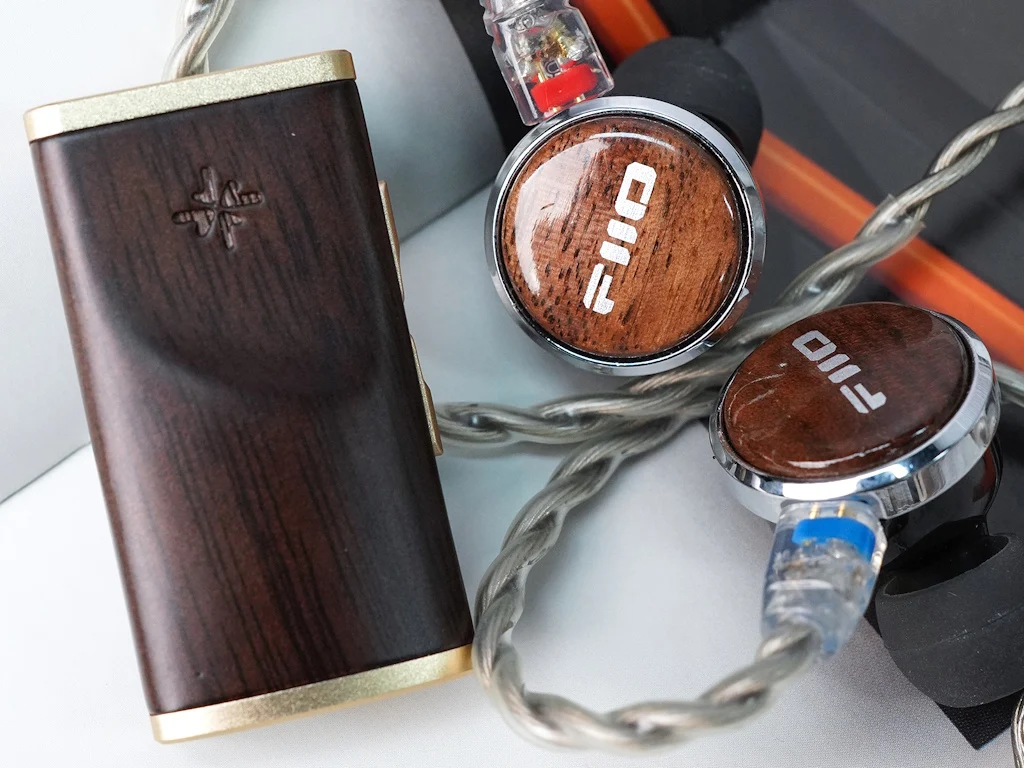
    FiiO has introduced a new device to adapt to the trend of smartphones lacking headphone jacks. The QX13 is a small, high-quality headphone amplifier designed to attach magnetically to the back of smartphones. Users can either use wireless Bluetooth headphones or opt for a dongle, but this new device aims to provide a more compact solution.

    Compatibility and Connection

    The QX13 is compatible with MagSafe and Qi2, allowing it to connect easily to Apple iPhones, the HMD Skyline, Qi2 cases, as well as many modern Android devices. With a simple USB-C cable connection to a smartphone, users can plug in wired headphones through a 3.5 mm or a balanced 4.4 mm headphone jack. In mobile mode, the amplifier can output up to 570 mW per channel, while in desktop mode, it can reach an impressive 900 mW.

    Design and Specifications

    Featuring an ESS Sabre Pro (ES9027PRO) DAC chip, the QX13 is engineered for exceptional audio performance, supporting music decoding up to 32-bit at 768 kHz or DSD512. The device has a compact size of 6.4 x 3 x 1.3 centimeters and is made from either carbon or aluminum, depending on the chosen color. It weighs between 33 and 39 grams, making it lightweight and portable. The front boasts a 1.99-inch IPS display that shows the current volume and music quality.

    The FiiO QX13 headphone amplifier and DAC will be hitting select stores soon, priced at $219 / £219 / €239. To learn more about its features, visit the FiiO website for additional information.

    Source:
    Link


  • Tribit Launches Stormbox Mini Plus: 12-Hour Playtime & Lights

    Tribit Launches Stormbox Mini Plus: 12-Hour Playtime & Lights

    Key Takeaways

    1. Compact and Durable Design: The Stormbox Mini Plus measures 119 x 91 x 91 mm and weighs 545 grams, featuring an IPX7 rating for water resistance.

    2. Stylish Features: It includes interactive multi-color LED lights that sync with music, enhancing the visual experience alongside sound.

    3. Superior Sound Quality: Equipped with two 48 mm drivers and a passive radiator, it delivers 12 W output power and offers 360° stereo sound with dynamic range control.

    4. Extended Battery Life: The speaker provides up to 12 hours of battery life on a single charge and supports quick charging.

    5. Versatile Connectivity: It pairs with Android and iOS devices via Bluetooth 5.4, includes a 3.5 mm AUX input, and supports voice assistants through an integrated microphone.


    Tribit has launched its new Stormbox Mini Plus portable speaker in markets worldwide. This Bluetooth speaker is crafted to provide clear stereo sound and comes in a compact but tough design. To be more specific, it measures 119 x 91 x 91 mm (4.6 x 3.5 x 3.5 inches) and weighs about 545 grams (1.2 lbs). Additionally, the speaker is rated with an IPX7 standard, meaning it is resistant to water damage.

    Stylish Design

    When it comes to looks, the portable speaker holds its own against competitors. Tribit has added interactive multi-color LED lights to the Stormbox Mini Plus that sync with the music’s beat. In terms of sound features, this next-gen speaker is equipped with two strong 48 mm full-range drivers, a passive radiator, and delivers 12 W of output power.

    Enhanced Sound Quality

    Moreover, it comes with built-in 2+1 band dynamic range control (DRC) to improve clarity and balance. Tribit claims that the Stormbox Mini Plus offers immersive 360° stereo sound thanks to its left-right acoustic layout. The speaker’s battery life can last up to 12 hours on a single charge, and it supports quick charging.

    Connectivity and Features

    Users can also control the speaker through the Tribit companion app, which allows for sound adjustment and setting tweaks. Regarding connectivity, the small speaker pairs with both Android and iOS devices using Bluetooth 5.4. It also includes a 3.5 mm AUX input, an integrated microphone, physical controls, and support for voice assistants.

    The Tribit Stormbox Mini Plus portable speaker comes in black, blue, and green colors, priced at $39.99 (black) and $41.99 (green and blue). It is currently available for purchase on Tribit’s official website and on Amazon.

    Source:
    link