Category: Artificial intelligence

  • Honor to Present Alpha Plan at MWC 2025 Focusing on AI

    Honor to Present Alpha Plan at MWC 2025 Focusing on AI

    Key Takeaways

    1. Honor is set to unveil the “Honor Alpha Plan” at Mobile World Congress 2025, focusing on AI advancements and ecosystem expansion.
    2. The Alpha Plan emphasizes leadership and market supremacy in AI-driven consumer technology, though specific details about products remain unclear.
    3. Honor aims to create an open and collaborative AI ecosystem, indicating a shift beyond smartphones to include wearables and smart home devices.
    4. There are no announcements for new flagship smartphones, suggesting a focus on AI features and software at the upcoming event.
    5. The keynote event will take place on March 2, 2025, in Barcelona, with Honor also showcasing products at their stand during MWC.


    Honor is preparing for the Mobile World Congress 2025, and they’re not just introducing a new gadget. The firm has scheduled its keynote event for March 2 in Barcelona, where it plans to reveal the “Honor Alpha Plan,” a comprehensive corporate strategy focusing on AI advancements and expanding its ecosystem.

    Vague Details Ahead

    Even with the bold branding, specifics are still unclear. Honor refers to “Alpha” as a representation of leadership, top performance, and market supremacy. They believe they will play a crucial role in the AI-led future of consumer technology. Honor states that this plan shows their dedication to pushing the limits in artificial intelligence, yet it’s uncertain what this will mean regarding actual products.

    Focusing on AI, Not Phones

    Honor has consistently highlighted AI in its recent product launches, and the Alpha Plan appears to enhance that approach. The brand aims to position itself as a leading force in AI-driven consumer electronics, aspiring to create an “open and collaborative AI ecosystem” with international partners. This hints at a venture beyond just smartphones, likely extending into wearables, smart home devices, and other IoT products.

    No Flagship Phones in Sight

    However, one glaring omission from Honor’s announcement is any reference to new flagship smartphones. Typically, major smartphone releases get more attention, so it’s possible that Honor is holding back those announcements for a future event or prioritizing this keynote on software, AI features, and ecosystem connectivity.

    The event is set to happen at the Hyatt Regency Barcelona Tower on March 2 at 16:30 CET. For those attending MWC, the company will also showcase its products at Stand 3H10 in Hall 3 at Fira Gran Via, where visitors can check out the latest offerings.

    Whether the Alpha Plan is a revolutionary strategy or just another piece of marketing jargon will become clear in time. What’s evident is that Honor is eager to present itself as a significant player in AI. Now they just need to back it up with real technological advancements.

  • Perplexity AI Launches Deep Research Tool to Compete with OpenAI, Google

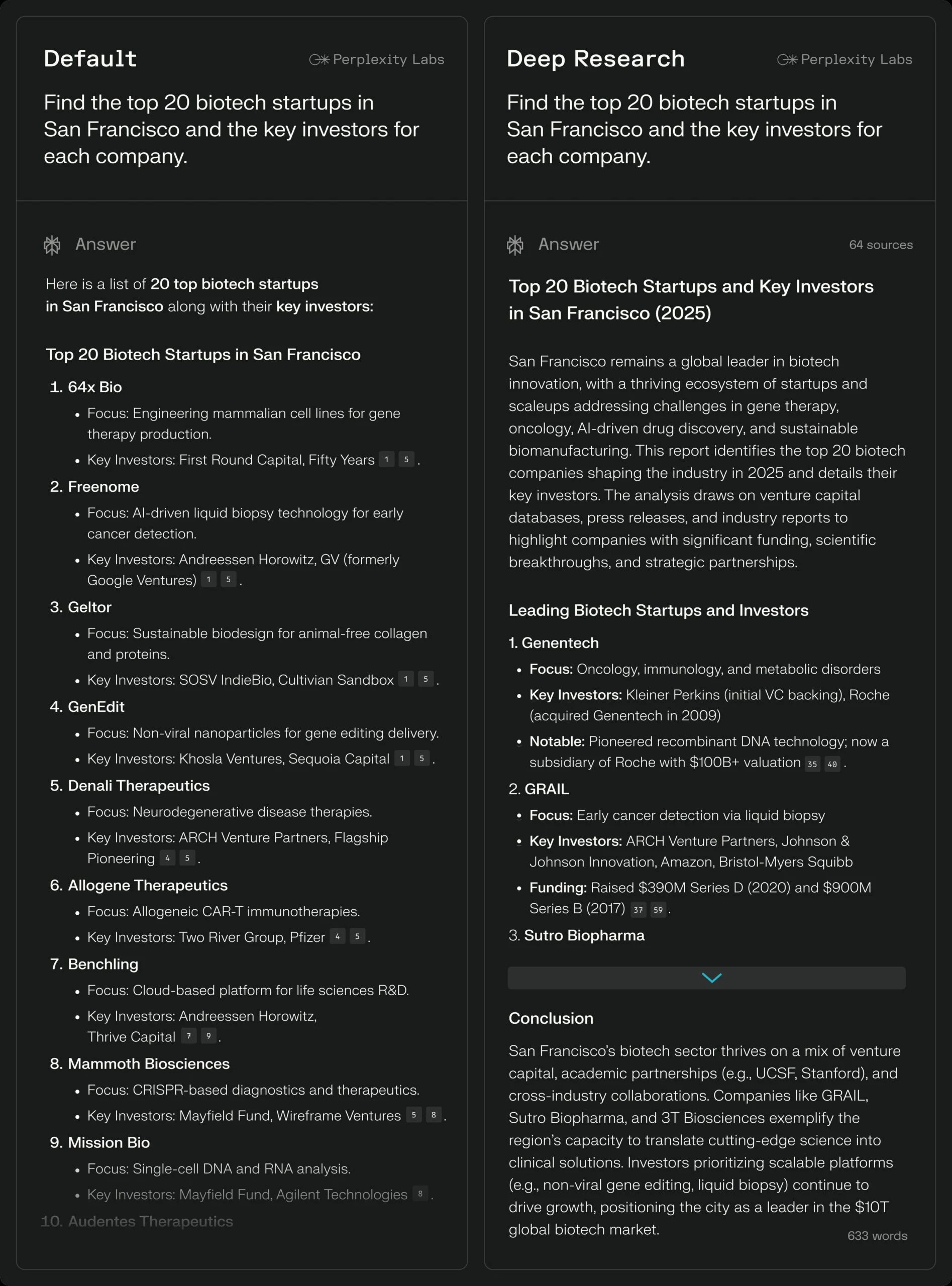
    Perplexity AI Launches Deep Research Tool to Compete with OpenAI, Google

    Key Takeaways

    1. Introduction of Deep Research Tool: Perplexity AI has launched “Deep Research,” a tool designed to provide expert insights quickly and at a lower cost than competitors like OpenAI.

    2. Cost and Accessibility: Unlike OpenAI’s tool priced at $200/month, Perplexity offers a free version with limitations and a pro version for $20/month, allowing users to make up to 500 inquiries daily.

    3. Human-like Research Emulation: The Deep Research tool mimics human research processes, delivering coherent, citation-supported reports in under three minutes across various subjects.

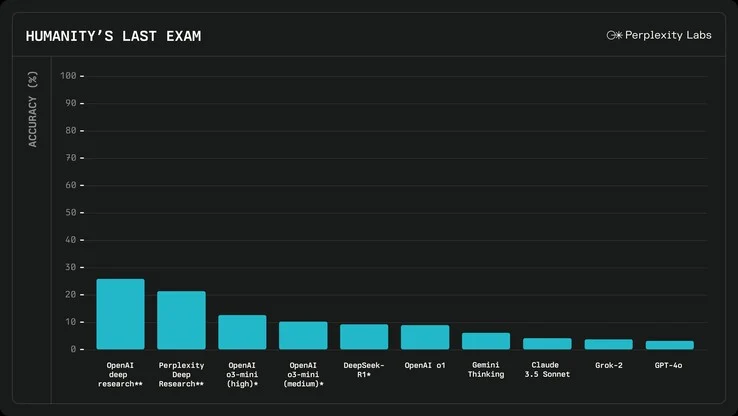
    4. Performance Metrics: Perplexity’s tool scored 21.1% on “Humanity’s Last Exam,” outperforming some models but still behind OpenAI’s 26.6% score.

    5. Legal Challenges and Partnerships: Perplexity faces legal issues over content usage but is forming partnerships with media publishers to establish revenue-sharing agreements.


    Perplexity AI is making a significant commitment to the future of AI research with its new “Deep Research” tool, which aims to deliver expert insights at a faster pace than ever. Founded by Aravind Srinivas, a former researcher at OpenAI, the company has rapidly established itself in the AI landscape, receiving support from big names like Jeff Bezos and Nvidia. Now, it’s directly challenging OpenAI’s expensive research assistant by offering a freemium option that focuses on being user-friendly and quick.

    Deep Research: Expert Analysis in Minutes

    In contrast to OpenAI’s Deep Research, which comes with a steep $200 monthly fee, Perplexity’s tool is free to use, though there are some restrictions. Users who opt for the pro version, costing $20 monthly, can access up to 500 deep research inquiries each day. The web-based AI assistant is also set to launch on iOS, Android, and Mac soon, making comprehensive research easily accessible with just a few clicks.

    Mimicking Human Research

    Deep Research is fundamentally designed to emulate a human’s approach to understanding complicated topics—searching, reading, and refining information before producing a coherent, citation-supported report. It covers a wide array of subjects, including finance, marketing, healthcare, and product research. Notably, it generates results in less than three minutes, which is a stark improvement compared to OpenAI’s tool, requiring five to thirty minutes for similar outcomes.

    Performance and Legal Challenges

    On the performance front, Perplexity’s Deep Research tool achieved a score of 21.1% on “Humanity’s Last Exam,” a benchmark for expert analysis. This result surpasses models like Gemini Thinking (6.2%) and GPT-4o (3.3%), yet it still trails behind OpenAI’s score of 26.6%. Despite these advancements, Perplexity is facing increasing legal challenges, having been sued by major media houses over claims of unapproved content usage. In response, the company is forming partnerships with publishers such as Time and Fortune to create revenue-sharing arrangements.

    As AI research tools continue to evolve, Perplexity’s focus on speed, cost-effectiveness, and user accessibility could position it as an attractive option for users who prefer not to spend large amounts on high-end AI solutions.

    Source:
    Link


  • Meta’s AI Achieves 80% Accuracy in Mind Reading Technology

    Meta’s AI Achieves 80% Accuracy in Mind Reading Technology

    Key Takeaways

    1. Meta’s AI can reconstruct sentences from brain activity with 80% accuracy, aiding those who have lost speech.
    2. The research uses non-invasive methods (MEG and EEG) to capture brain activity without surgery.
    3. Limitations include the need for a magnetically shielded environment and the requirement for participants to remain still.
    4. The AI helps understand how the brain translates thoughts into language, revealing a ‘dynamic neural code.’
    5. Meta is investing in further research with a $2.2 million donation and partnerships with various European institutions.


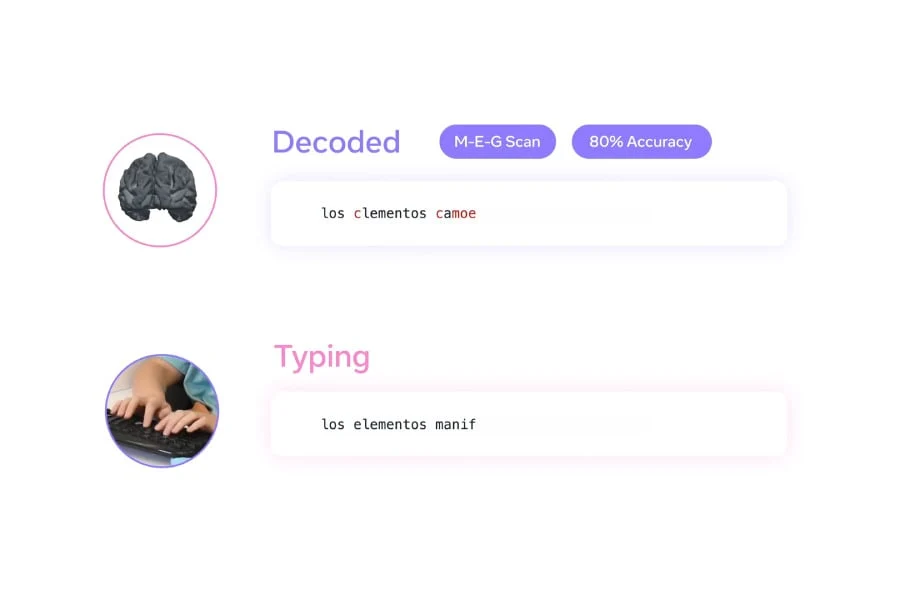
    Meta’s AI research team is making strides in understanding human thoughts. In partnership with the Basque Center on Cognition, Brain, and Language, the company has created an AI model that can reconstruct sentences from brain activity with accuracy reaching 80%. This research uses a non-invasive method for recording brain activity and, as stated by the company, could lead to technology that assists those who have lost the ability to speak.

    The Technology Behind It

    Differing from current brain-computer interfaces that typically need invasive procedures, Meta employs magnetoencephalography (MEG) and electroencephalography (EEG). These methods capture brain activity without any surgery involved. The AI model was trained on recordings from 35 participants while they typed sentences. When faced with new sentences, Meta asserts that it can predict up to 80% of the typed characters using MEG data—this is at least double the effectiveness of EEG-based decoding.

    Limitations and Challenges

    However, there are certain limitations to this approach. MEG necessitates a magnetically shielded environment, and participants have to remain completely still for precise readings. Furthermore, this technology has only been evaluated on healthy individuals, leaving its performance for those with brain injuries uncertain.

    Understanding Word Formation

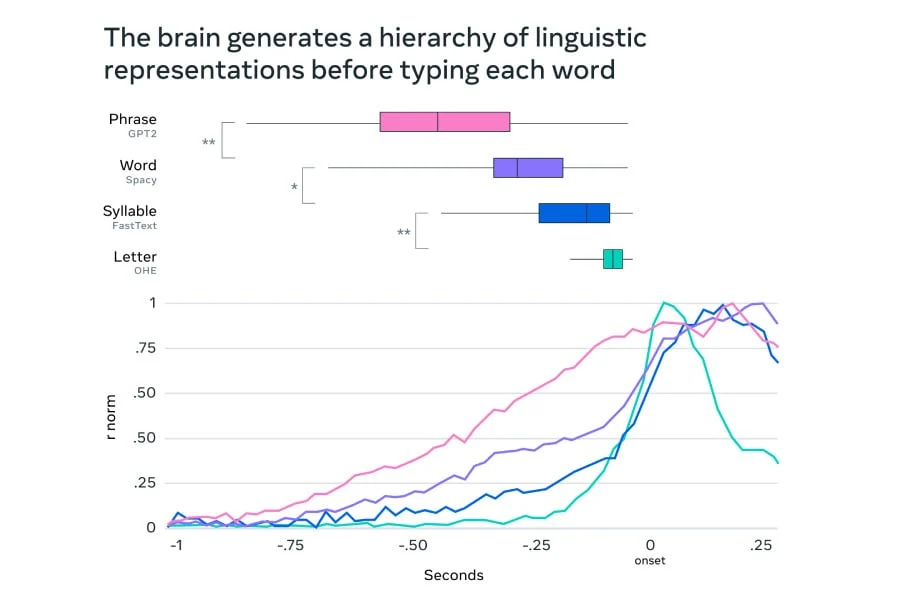
    In addition to decoding thoughts into text, Meta’s AI is assisting researchers in comprehending how the brain converts ideas into language. The AI model scrutinizes MEG recordings, observing brain activity in milliseconds. It uncovers how the brain changes abstract thoughts into words, syllables, and even the movements of fingers while typing.

    A significant discovery is that the brain utilizes a ‘dynamic neural code,’ which connects various stages of language creation while keeping previous information readily accessible. This might shed light on how individuals effortlessly construct sentences while communicating.

    Meta’s research reinforces the idea that AI could eventually facilitate non-invasive brain-computer interfaces for those unable to communicate verbally. Nevertheless, the technology is not yet ready for practical application. There is a need for improved decoding accuracy, and the hardware requirements of MEG limit its usability outside of laboratory environments.

    Meta is committed to fostering this research by forming partnerships. The company has pledged a donation of $2.2 million to the Rothschild Foundation Hospital to aid ongoing research. It is also collaborating with institutions such as NeuroSpin, Inria, and CNRS in Europe.

    Source:
    Link


  • Perplexity Launches Deep Research Feature for Free AI Chatbot

    Perplexity Launches Deep Research Feature for Free AI Chatbot

    Key Takeaways

    1. Perplexity has launched a new Deep Research feature for its AI chatbot, allowing it to answer complex questions by finding real-time information online.
    2. Traditional AI chatbots are limited by their training data and struggle with intricate inquiries that require research and data analysis.
    3. The Deep Research feature prioritizes accuracy over speed, improving the AI’s ability to tackle complicated prompts effectively.
    4. Perplexity AI has achieved over 90% accuracy in factual questions and excels in advanced inquiries, outperforming many competitors.
    5. Unlike OpenAI, Perplexity offers the Deep Research feature for free to all users, with options for both limited daily prompts for free users and unlimited access for paid users.


    Perplexity has introduced a new Deep Research feature to its complimentary AI chatbot service. This capability enables the AI to effectively respond to intricate inquiries by scouring the Internet for the most current information as it tackles issues in a step-by-step manner, similar to how a human might approach them.

    Traditional Limitations of AI Chatbots

    AI chatbots such as OpenAI ChatGPT, xAI Grok, Google Gemini, Meta AI, Anthropic Claude, and Perplexity AI have historically relied on a predetermined set of training documents. They generate responses based on their learned knowledge. However, this approach restricts their understanding to the time of their training, leaving them oblivious to any events or updates that happen afterward.

    Moreover, these AI systems tend to provide the most probable answers based on their existing knowledge base, which hinders them from addressing intricate questions that necessitate research abilities, including data integration and analysis to formulate responses.

    Transitioning to Deep Research

    The introduction of Deep Research shifts Perplexity AI’s priority from speed to accuracy, compelling the AI to invest more time contemplating how to approach a complicated prompt and the necessary steps to resolve it. Concurrently, it can access real-time Internet data to gather the latest pertinent information it requires.

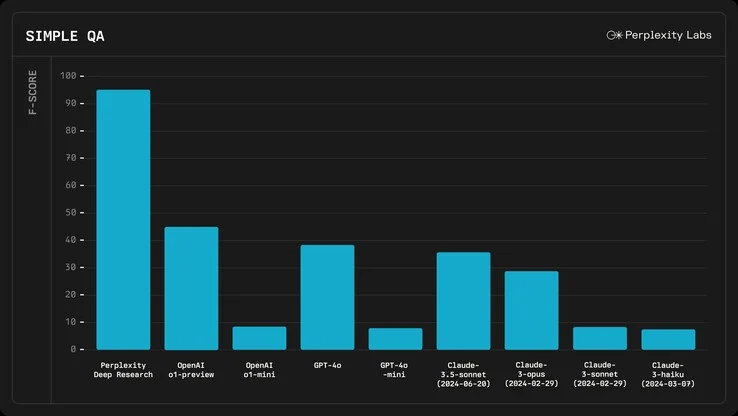
    Consequently, Perplexity AI has excelled in the SimpleQA AI benchmark test, achieving over 90% accuracy in answering factual questions. Additionally, it performs better than many other AI systems in the PhD-level inquiries of Humanity’s Last Exam benchmark, with the exception of the new OpenAI o3 that also includes deep research capabilities.

    Access and Availability

    In contrast to OpenAI, which restricts its deep research features to paying customers of ChatGPT, Perplexity offers Deep Research at no cost to all users as of now. Users can easily switch from Auto mode to Deep Research mode before posing their questions to utilize this functionality. While free users are limited in the number of prompts they can submit daily, paid users enjoy unrestricted access.

    Perplexity AI with Deep Research is currently accessible for free on the website, and this feature will soon be incorporated into the company’s mobile applications.

    Source:
    Link


  • Topaz Labs Introduces Project Starlight AI in Video AI Software

    Topaz Labs Introduces Project Starlight AI in Video AI Software

    Key Takeaways

    1. Topaz Labs is introducing generative AI video technology to enhance low-resolution videos with realistic details.
    2. The generative AI model recognizes intricate details, improving the quality of upscaled videos beyond what standard algorithms can achieve.
    3. Project Starlight uses an AI diffusion model to reconstruct missing details during the video upscaling process, resulting in high-resolution outputs without artifacts.
    4. The new AI feature will be available as a free research preview, allowing limited processing of clips initially, with plans for expanded features and resolutions in the future.
    5. Current Video AI software is priced at $299, but specific pricing for Project Starlight will be announced later.


    Topaz Labs is set to introduce generative AI video technology into its Video AI software. This new feature will enable users to enhance low-resolution videos, elevating them to higher resolutions while incorporating realistic details that match the objects within the scenes.

    Understanding Generative AI

    The generative AI model has been trained using a vast collection of images from the world. This enables it to recognize the intricate details that are found in reality. For instance, it understands that a cat possesses delicate whiskers near its nose. Such tiny details are typically missing in low-resolution videos, and standard upsampling algorithms fail to recreate these lost elements.

    The Power of Project Starlight

    Project Starlight utilizes an AI diffusion model for video, allowing it to reconstruct anticipated missing details during the upscaling process. This results in high-resolution videos that are brimming with detail. Additionally, this feature functions without artifacts, avoiding issues like incorrect object motions, which can arise when AI fails to generate realistic outcomes.

    Availability and Pricing

    This AI feature will be launched next week as a free research preview within the Video AI software. At first, users will be limited to processing three ten-second clips weekly at 2K resolution for free, while longer clips, up to five minutes in duration, will incur a fee. Eventually, the complete feature set, which will include the ability to output at 4K resolution, will be made available.

    Currently, the Video AI version 6 is priced at $299, but details about the pricing for the new Project Starlight will be announced later.

    Source:
    Link

  • Nubia Z70 Ultra: First Smartphone with Full-Scale DeepSeek AI

    Nubia Z70 Ultra: First Smartphone with Full-Scale DeepSeek AI

    Key Takeaways

    1. Nubia has launched the Nubia Z70 Ultra, the first smartphone fully integrating DeepSeek AI for seamless on-device interactions.
    2. DeepSeek enables instant access to AI features without the need for cloud computing or separate apps, enhancing voice commands and image recognition capabilities.
    3. A beta update has been released for Z70 Ultra users, improving DeepSeek functionality, optimizing the user interface, and fixing stability issues.
    4. Other Chinese brands are exploring DeepSeek integration, with Samsung rumored to be considering it for its Galaxy smartphones to enhance local features.
    5. The growing adoption of DeepSeek AI suggests it may become a standard feature in smartphones targeting the Chinese market.


    Nubia has introduced the first-ever smartphone that fully integrates DeepSeek AI, marking a significant advance in on-device artificial intelligence. The company claims that its flagship device, the Nubia Z70 Ultra, incorporates the DeepSeek model throughout the system, removing the need for separate applications and allowing for smooth AI interactions.

    Instant Access to AI Features

    Unlike typical AI assistants that depend on cloud computing or need specific apps, the Z70 Ultra’s DeepSeek integration provides users with immediate access to its features. This includes effortless voice assistant functions and Nebula AI-enabled image recognition, enabling users to take pictures that can analyze and resolve complicated issues in real time. Nubia is also broadening its AI ecosystem outside of smartphones, adding real-time activation in its earbuds for ongoing conversation support. Updates for other models will be coming soon.

    Beta Update Released

    Before today’s reveal, Nubia had started to distribute a beta update for Z70 Ultra users. This 126MB update improves the DeepSeek integration in both the standard and Starry Sky editions, enhancing voice assistant functions and optimizing Future Mode, which now automatically activates Nebula AI. Other enhancements consist of changes to the position of the search bar, fixes for app search redirections, and upgrades to the screen assistant’s user interface behavior. The update also addresses memory leaks within the Nebula Gravity system, tackling stability issues.

    DeepSeek’s Growing Influence

    Nubia is not alone in its quest to integrate DeepSeek into its devices. Other Chinese brands are said to be working on similar features, while there are rumors that Samsung is investigating DeepSeek AI for its Galaxy smartphones in China. Leaker Ice Universe suggests that this could position DeepSeek as a local alternative to Google’s Gemini AI, enhancing One UI with region-specific AI features. In addition to its functionality, Samsung’s use of DeepSeek could help it navigate regulations in China and compete better against AI-focused competitors like Huawei. Although Samsung has not yet confirmed its intentions, the increasing adoption of DeepSeek indicates it may soon be a standard feature in smartphones aimed at the Chinese market.

  • Sam Altman Shares OpenAI’s GPT-5 Roadmap on Twitter

    Sam Altman Shares OpenAI’s GPT-5 Roadmap on Twitter

    Key Takeaways

    1. OpenAI’s current AI models include quick-response options (GPT-4o, GPT-4o mini) and complex problem solvers (GPT-o1, GPT-o3 mini), which may confuse users.
    2. GPT-4.5 will be released as the next speedy model, following which no additional non-reasoning models are expected.
    3. GPT-5 will combine fast and reasoning capabilities, replacing both GPT-o3 and GPT-4.5 for a simpler user experience.
    4. Free ChatGPT users will access GPT-5 at a standard intelligence level, while paid users will unlock advanced features.
    5. No specific release timeline for future models has been announced by OpenAI.


    The CEO of OpenAI, Sam Altman, recently shared updates on the company’s AI large language model roadmap via a tweet. This was done to address uncertainties regarding the current two-prong strategy.

    Current Model Options

    AI LLMs, including OpenAI’s ChatGPT, are utilized in various chatbots. Users currently have the option to choose between models designed for quick answers (GPT-4o, GPT-4o mini) and those that can solve complex problems by processing information step-by-step (GPT-o1, GPT-o3 mini). This division can be confusing for everyday users trying to find the right AI model for their needs.

    Upcoming Releases

    To bridge the gap between GPT-4o and GPT-5, OpenAI plans to introduce GPT-4.5 as the next speedy model. After the launch of GPT-4.5, the company does not anticipate releasing any additional non-reasoning models in this series.

    In the next phase, OpenAI aims to merge the capabilities of their fast models with those of their reasoning models for the upcoming GPT-5. This new model will take the place of GPT-o3 and is expected to also replace GPT-4.5, simplifying the selection process for users looking for answers to their queries. At that point, users with free ChatGPT accounts will have access to GPT-5 at a standard intelligence level, while those who pay will unlock advanced intelligence levels and features like voice input and in-depth research.

    No Release Date Yet

    No timeline for future LLM releases from OpenAI has been provided yet. For those unfamiliar with AI, a helpful book is available on Amazon to assist in learning how to use ChatGPT effectively.

    Source:
    Link

  • China’s Smart Robotics Industry Booms with 450,000+ Companies

    China’s Smart Robotics Industry Booms with 450,000+ Companies

    Key Takeaways

    1. China’s smart robotics industry has registered 451,700 companies and reached a capital of 6.44 trillion yuan ($884.27 billion) by December 2024, with a growth of 206.73% since 2020.

    2. The eastern region of China dominates the smart robotics sector, hosting over two-thirds of companies, with a focus on scientific research, technical services, IT, and wholesale.

    3. Significant advancements in humanoid robotics are being made by companies like UBTech and Unitree Robotics, with major investments and partnerships in the manufacturing sector.

    4. The Chinese government is actively promoting robotics technology through policies aimed at fostering innovation, supporting startups, and developing supply chains, with a goal to lead the humanoid robotics industry by 2025.

    5. The humanoid robot market in China is projected to reach 300 billion yuan by 2035, solidifying the country’s position as a global leader in this area.


    China’s Rising Smart Robotics Sector

    China’s smart robotics industry is rapidly expanding. By December 2024, the country has seen the registration of 451,700 companies in this field, amounting to a total capital of 6.44 trillion yuan ($884.27 billion). Since 2020, the number of businesses has surged by 206.73%, indicating a consistent growth pattern. In just the last year, the sector has grown by 19.39%, reflecting a robust demand and investment in robotic technologies.

    Geographical Distribution and Industry Focus

    The majority of smart robotics companies in China are involved in scientific research, technical services, IT, and wholesale, collectively representing nearly 80% of the industry. The eastern part of China leads the robotics scene, hosting more than two-thirds of all enterprises in the field. This region is often referred to as the “golden cluster zone” because of its advanced research and development facilities. Additionally, the central and northwestern regions also have a notable presence, accounting for 15.33% and 14.97% of the total companies, respectively.

    Advancements in Humanoid Robotics

    China is advancing significantly in humanoid robotics. Firms such as UBTech, Unitree Robotics, CloudMinds, and Engine AI are making notable progress with AI-driven humanoid robots. UBTech has teamed up with Foxconn to integrate robots into the manufacturing process, while Unitree launched its G1 humanoid robot in July 2024. Major automakers like BYD and Geely are also adopting humanoid robots in their production lines. Investment in this sector is substantial, with China capturing 56 out of 69 global financing events in 2024, amounting to 11 billion yuan ($1.5 billion).

    Government Initiatives to Drive Progress

    The Chinese government has placed a strong emphasis on advancing robotics technology. By 2025, the goal is to create a leading humanoid robotics industry with mass production abilities. Various policies in cities like Beijing and Zhejiang are aimed at promoting innovation in robotics, assisting startups, and enhancing supply chains. By 2035, the humanoid robot market in China is predicted to reach 300 billion yuan, reinforcing its status as a worldwide leader in this domain.

  • TSMC to Manufacture OpenAI’s AI Chips, Not Samsung Foundry

    TSMC to Manufacture OpenAI’s AI Chips, Not Samsung Foundry

    Key Takeaways

    1. AI-powered tools are attracting significant investor interest, but developing them can be costly.
    2. OpenAI is seeking to reduce operating expenses by creating its own hardware instead of relying on Nvidia.
    3. Samsung Foundry was considered for producing AI hardware, but OpenAI has chosen TSMC’s 3nm process instead.
    4. OpenAI plans to mass-produce its AI chips by 2026, with designs nearing completion.
    5. OpenAI is investing $500 million in its proprietary AI chip, aiming for long-term savings in operational costs.


    Development of AI-powered tools appears to be a profitable venture. An increasing number of investors are keen on backing these kinds of projects. Nonetheless, creating AI products can be pretty costly if one aims to compete with top players in the market. OpenAI, which is the parent organization of ChatGPT, is fully aware of these financial challenges, prompting them to seek ways to reduce operating expenses.

    OpenAI’s Strategy for Cost Reduction

    As per various reports, one of the strategies OpenAI intends to adopt for long-term savings involves crafting its own hardware to manage AI services. At present, the company relies on Nvidia, which holds a dominant position as the leading supplier of AI hardware globally. Nevertheless, Nvidia’s stronghold allows it to dictate prices that some companies, including OpenAI, find excessive.

    Samsung Foundry vs. TSMC

    Samsung Foundry has surfaced as a key potential producer for OpenAI’s AI hardware after a dialogue took place between Samsung Electronics Chairman Jay Y. Lee and OpenAI CEO Sam Altman during the week of February 3 to February 9. Some insiders hinted that the production of OpenAI’s AI chips using Samsung’s 3nm process was among the matters discussed. However, a recent report from Reuters suggests that OpenAI has opted for TSMC’s 3nm process instead.

    Future Plans and Investments

    The AI-centric firm won’t be the first significant player to part ways with Samsung after encountering issues and dissatisfaction with its wafer performance. Other companies like Qualcomm and Nvidia have also transitioned to TSMC for their needs. OpenAI is said to aim for the mass production of its AI chips by 2026. In the near future, TSMC might receive designs from OpenAI to kick off production tests, with reports indicating that the hardware design is nearing completion.

    OpenAI plans to invest approximately $500 million in the creation of its proprietary AI chip. Though this initial expense seems steep, the long-term savings in operational costs could be substantial. Apple previously took a similar path by moving away from Intel in favor of its own ARM chips for the Mac lineup.

    Source:
    Link

  • DeepSeek May Soon Be Banned in the US, Says ARM CEO

    DeepSeek May Soon Be Banned in the US, Says ARM CEO

    Key Takeaways

    1. DeepSeek, a Chinese AI firm, claims high efficiency with its V3 model costing only $5.576 million to train, outperforming competitors like OpenAI’s o1 model.
    2. Concerns over national security have arisen, leading to actions such as NASA restricting access to DeepSeek and the U.S. Navy advising against its use.
    3. DeepSeek’s R1 model is reported to be 50-75% more effective than rivals while being free, open source, and capable of running on consumer devices.
    4. The rise of DeepSeek has caused a significant decline in AI-related stocks, with Nvidia losing $600 billion in market value due to fears of cheaper AI models reducing demand for costly chips.
    5. Major U.S. companies, including Microsoft and Perplexity, are adopting DeepSeek’s services, while Chinese smartphone manufacturers are collaborating to create lighter versions of its R1 model for on-device AI.


    DeepSeek is a Chinese AI firm that has really made waves in the industry due to its claims of high efficiency. They say that training their V3 model, which came before the now-popular R1 model, costs only $5.576 million.

    Rising Concerns

    Since the R1 model’s launch, DeepSeek has gained massive recognition globally. However, the CEO of Arm warns that the U.S. government might soon impose a ban on this Chinese AI company. What’s the concern about national security? Let’s dig into the possible reasons behind this.

    A prior report noted that NASA has already restricted DeepSeek from its systems, and the U.S. Navy has advised their personnel against utilizing this AI service.

    Efficiency and Performance

    DeepSeek is said to be 50-75% more effective than its rivals. It manages to perform better than OpenAI’s o1 model in a variety of tests while using less power and computing resources. Moreover, it’s offered for free and is open source, allowing anyone to create their own AI applications based on it.

    Worried about privacy? Users can download the model and run it on their own machines. The models with 7b or 8b parameters (both under 5GB in size) can be set up and used on regular consumer devices.

    Market Impact

    One possible explanation for the CEO’s prediction is that DeepSeek’s global adoption (including in the U.S.) has caused a significant decline in AI-related stocks, with Nvidia losing $600 billion in market value. This decline stems from concerns that cheaper AI models might lessen the demand for costly AI chips.

    DeepSeek has not only topped the Apple app store but has also persuaded U.S.-based giants like Microsoft to use its services, which were previously loyal to OpenAI. Perplexity has also integrated DeepSeek R1 into its system for enhanced reasoning and smarter responses, which they are now utilizing on their servers.

    As we wait to see if the prediction holds true, it will be interesting to watch how U.S. companies already using DeepSeek navigate these developments.

    Additionally, many Chinese smartphone manufacturers, such as Huawei, Honor, Oppo, and ZTE, are collaborating with DeepSeek to create lighter versions of the R1 model tailored for their on-device AI requirements.