Author: GizNews

  • Apple Might Reuse iPhone 17 Pro Design for iPhone 18 Pro

    Apple Might Reuse iPhone 17 Pro Design for iPhone 18 Pro

    Key Takeaways

    1. The iPhone 18 Pro and Pro Max will have a design mostly similar to the iPhone 17 Pro, using the same molds.
    2. The Dynamic Island feature will remain unchanged in size and shape, contrary to earlier rumors of a smaller design.
    3. Speculations about a hole-punch design and hidden Face ID sensor have been postponed to the iPhone 19 Pro.
    4. Anticipated upgrades for the iPhone 18 Pro include the A20 Pro chip with 2nm technology, improved camera, and a battery over 5,000 mAh for the Pro Max model.
    5. All information regarding the iPhone 18 Pro series is speculative, with no official details from Apple.


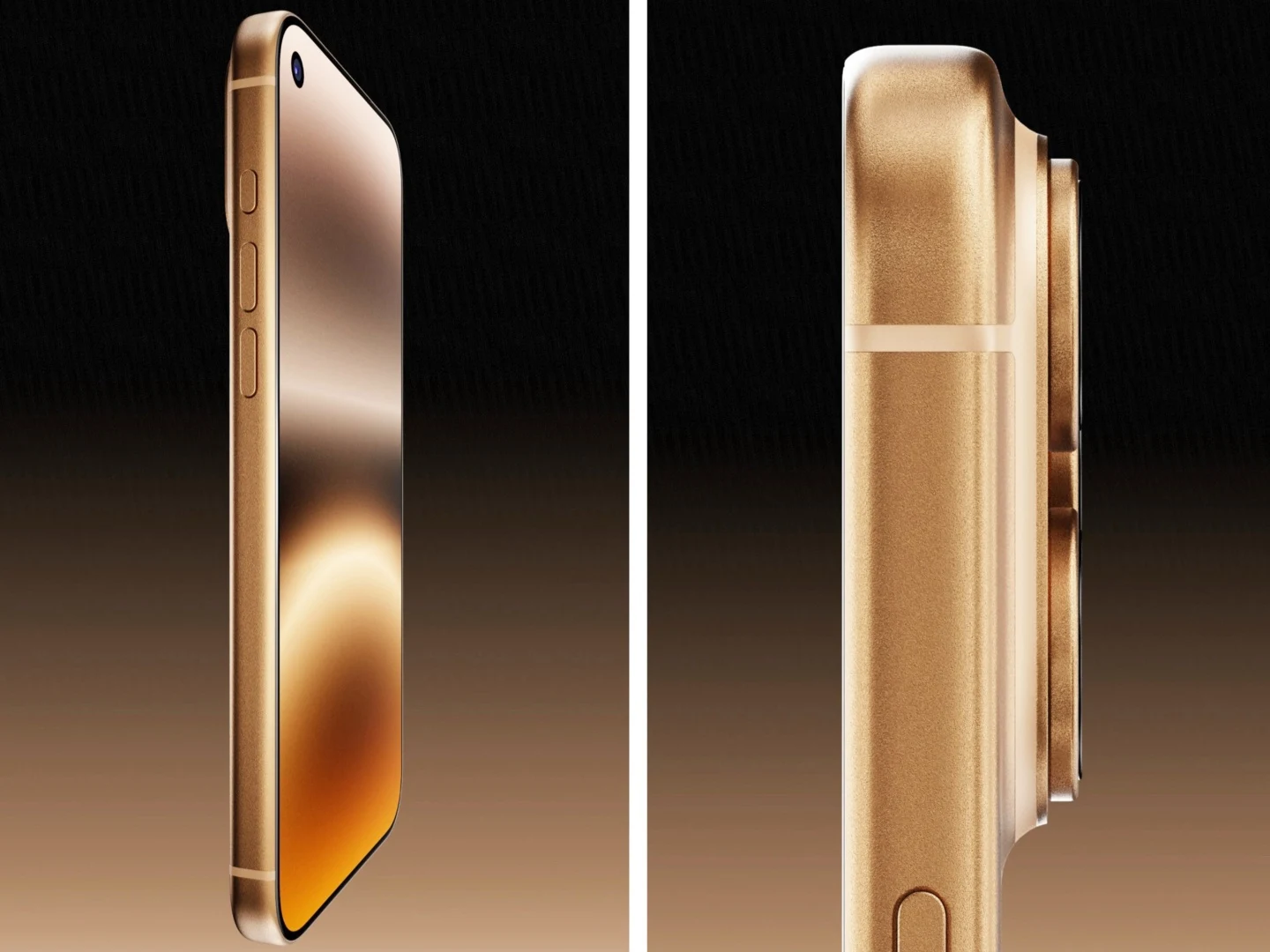
    There have been numerous rumors circulating about the next iPhone 18 Pro and Pro Max, especially concerning their look. Some reports suggested that these new models would feature a fresh design after several years of the same style. However, it appears now that the design of the iPhone 18 Pro series will be “mostly similar” to the previous models.

    Design Insights

    The freshest details come from Digital Chat Station, which indicates that Apple is going to use the same molds from the previous iPhone 17 Pro to create the iPhone 18 Pro. This implies that the Dynamic Island will stay “mostly similar,” as the source points out. Sadly, for those who were wishing for a smaller pill shape, both the size and shape are expected to remain unchanged.

    Rumored Features

    There were recent speculations that Apple might be moving toward a hole-punch design for the iPhone 18 Pro and Pro Max, which would be positioned at the upper left side. Additionally, it was rumored that an infrared sensor for Face ID could be concealed underneath, meaning the Dynamic Island would be eliminated. Another rumor suggested an invisible infrared sensor in the upper left corner of the display, alongside a smaller version of the Dynamic Island. Digital Chat Station has pointed out that this feature has now been postponed to the next generation, which would be the iPhone 19 Pro.

    Anticipated Upgrades

    The source further mentioned that there will be several enhancements in the iPhone 18 Pro, such as the A20 Pro chip utilizing 2nm technology, an improved camera with a larger aperture, and a battery exceeding 5,000 mAh, which will likely be exclusive to the iPhone 18 Pro Max.

    It’s important to highlight that all of this information remains speculative at this stage, no matter how reliable the source may be. As always, Apple has not disclosed any details regarding the forthcoming devices.

    Digital Chat Station on Weibo.

    Source:
    Link



  • Valve Jokes About Memory Shortage and Steam Machine Release Doubts

    Valve Jokes About Memory Shortage and Steam Machine Release Doubts

    Key Takeaways

    1. Valve humorously addressed the memory shortage and its impact on the Steam Machine during GDC 2026, seeking RAM supply.
    2. The memory cost surge has delayed the Steam Machine’s launch and increased affordability issues for consumers building or buying PCs.
    3. The release timeline for new devices, including the Steam Machine, has been pushed to the first half of 2026 due to rising component costs.
    4. Pricing concerns are significant, with predictions that the Steam Machine’s MSRP could range from $800 to $1000, making it potentially more expensive than the PS5.
    5. There are discussions about offering a barebones version of the SteamOS cube to make it more budget-friendly, amid challenges in finding affordable DDR5 RAM and NVMe SSDs.


    Many consumers are eager to discover how the memory shortage will affect the launch date and pricing of the Steam Machine. Despite this, Valve decided to make a light-hearted comment about the situation during GDC 2026. Journalist and gamer Hayden Dingman shared some humorous remarks made by the company at the event:

    “If you have a line on a bunch of RAM, we are in the market and would like to buy it.”

    Fans React to Humor

    Some fans aren’t amused by the joke regarding the soaring memory costs. This situation has not only delayed the Steam Machine’s launch but has also made it tough for many to either build or buy PCs affordably. In fact, the price of the DDR5 RAM that Valve’s mini PC will depend on has surged four times since late 2025.

    Updates on Hardware Release

    In early February, the company gave an update about its upcoming devices. Fans were hoping for the new controller, Steam Frame VR headset, and Steam Machine to be released in early 2026. However, Valve clarified that due to rising costs of components, this timeline has now been pushed back to the first half of the year.

    More recently, changes in listings at SteamDB indicated that the release window for these products is now “coming soon.” Unfortunately, this did not hint at a forthcoming announcement, as a new official blog post only referred to a vague estimate for 2026. This date coincides with a slide presented at GDC.

    Pricing Concerns

    Another worry for potential buyers is that the price of the Steam Machine was already expected to exceed that of the PS5. The ongoing memory shortage might drive its MSRP even higher, with some insiders predicting a price range of $800-1000. Given that it will likely have just 8GB of GDDR6 VRAM on its RDNA 3 GPU, it may struggle to run some games at 4K, which could limit its attractiveness.

    YouTuber and leaker MLID previously suggested that Valve consider selling a barebones version of the SteamOS cube. This strategy could make the tiny PC much more budget-friendly. Conversely, it’s becoming harder for consumers to find DDR5 RAM at reasonable prices. Storage costs are also a concern, with NVMe SSDs putting a strain on budgets.

    While some followers thought this idea was unrealistic at the time, it seems the manufacturer may now be open to any feasible solutions.

    Hayden Dingman’s Bluesky account.

    Source:
    Link


  • Casio Edifice Chronograph with Tachymeter Bezel Launches in US

    Casio Edifice Chronograph with Tachymeter Bezel Launches in US

    Key Takeaways

    1. The Casio Edifice EFR574DE-7AV is priced at $220 and is now available in the US market.
    2. The watch features a stainless-steel case measuring 47.5 × 42.3 × 11.4 mm and weighs 148 g, making it one of the heavier quartz chronographs.
    3. It has a blue ion-plated tachymeter bezel, a white dial, blue-accented markers, and a traditional three-subdial chronograph layout with a day and date display.
    4. The watch is powered by a standard quartz movement accurate to ±20 seconds per month, with a battery life of about five years.
    5. The EFR574DE-7AV is positioned as a classic sport chronograph, distinct from more advanced Edifice models with features like Bluetooth or solar capabilities.


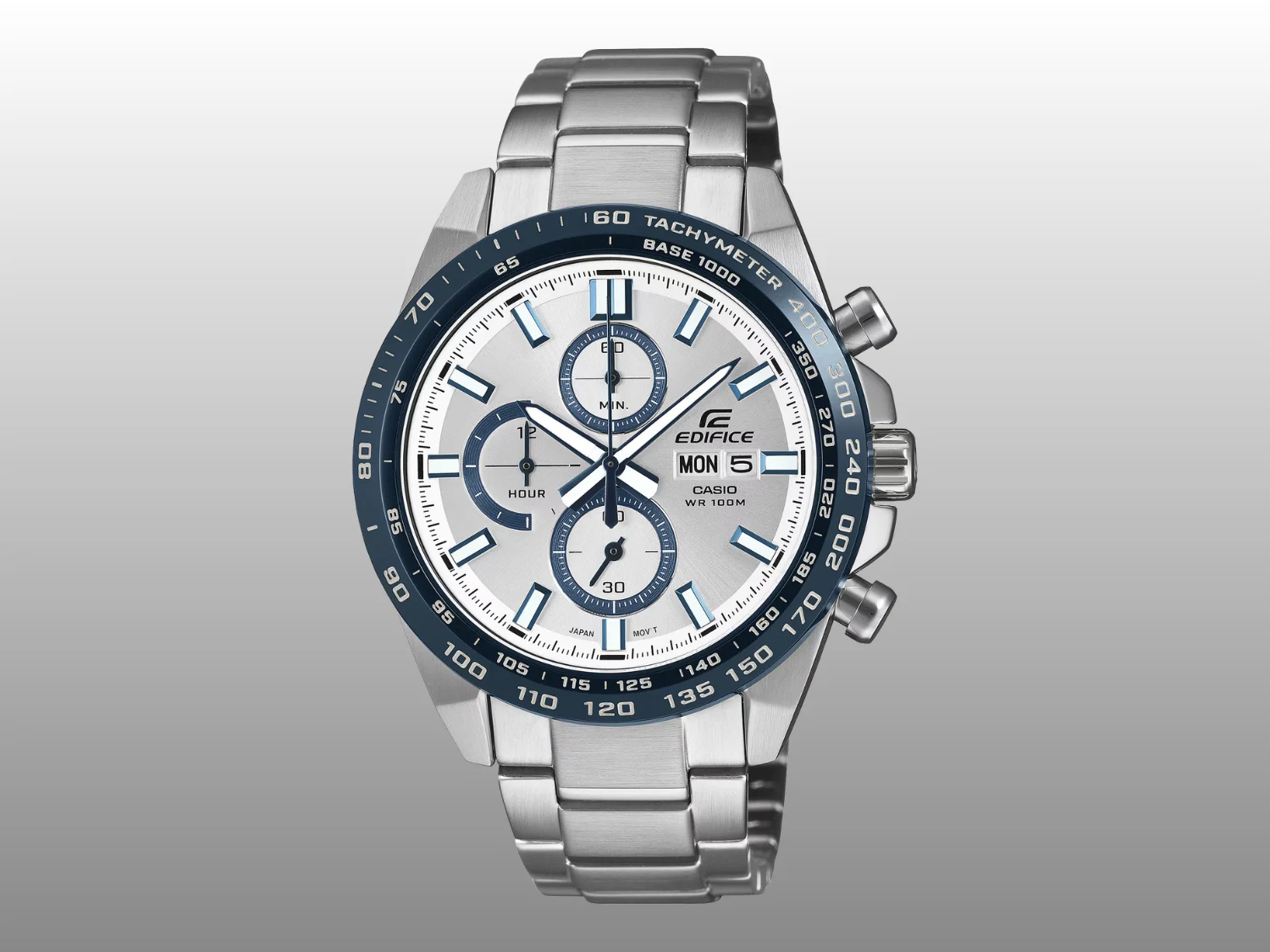
    Casio has introduced a fresh Edifice chronograph to the US market – the EFR574DE-7AV. This watch, previously released, is now available on the company’s official website priced at $220. It represents the latest addition to the brand’s standard Edifice chronograph collection and features a sporty aesthetic, complete with a tachymeter bezel and a layout consisting of multiple subdials.

    Specifications and Design

    The watch boasts a stainless-steel case that measures 47.5 × 42.3 × 11.4 mm, and it comes with a sturdy stainless-steel bracelet that is fastened with a one-touch three-fold clasp. Weighing in at 148 g, it is regarded as one of the heavier quartz chronographs in its category.

    Visual Appeal

    One of the most noticeable features is the blue ion-plated tachymeter bezel, which contrasts beautifully with the white dial and blue-accented markers. The dial showcases a traditional three-subdial chronograph setup, incorporating a day and date display. Instead of sapphire crystal, the case is safeguarded by mineral glass, and it features a screw-lock caseback for added durability.

    Movement and Features

    The EFR574DE-7AV is powered by a standard quartz movement that is accurate to ±20 seconds per month, with an estimated battery life of about five years. The tachymeter bezel adds a motorsport-inspired flair, aligning with the signature style of the Edifice series. When paired with the steel bracelet and dial arrangement, this watch can be classified as a classic sport chronograph, distinct from more advanced Edifice models like the EQW-T660DB-1BJF (currently priced at $344 on Amazon), which include Bluetooth or solar capabilities.

    As of now, the EFR574DE-7AV can be found on Casio’s US store, but stock is limited at the moment of this writing.

    Source:
    Link


  • Amazfit Smartwatches Update: New App and Activities Added

    Amazfit Smartwatches Update: New App and Activities Added

    Key Takeaways

    1. Zepp Health is releasing software update version 3.4.0.3 for the Amazfit Active Max smartwatch.
    2. The update includes a new Podcast app and two new activity modes: Hybrid Training and Rucking.
    3. Improvements in GPS performance and user experience for activities are part of the update.
    4. Battery life optimization is included, specifically for low battery situations.
    5. The update enhances scrolling sensitivity on the smartwatch and is rolling out gradually to users.


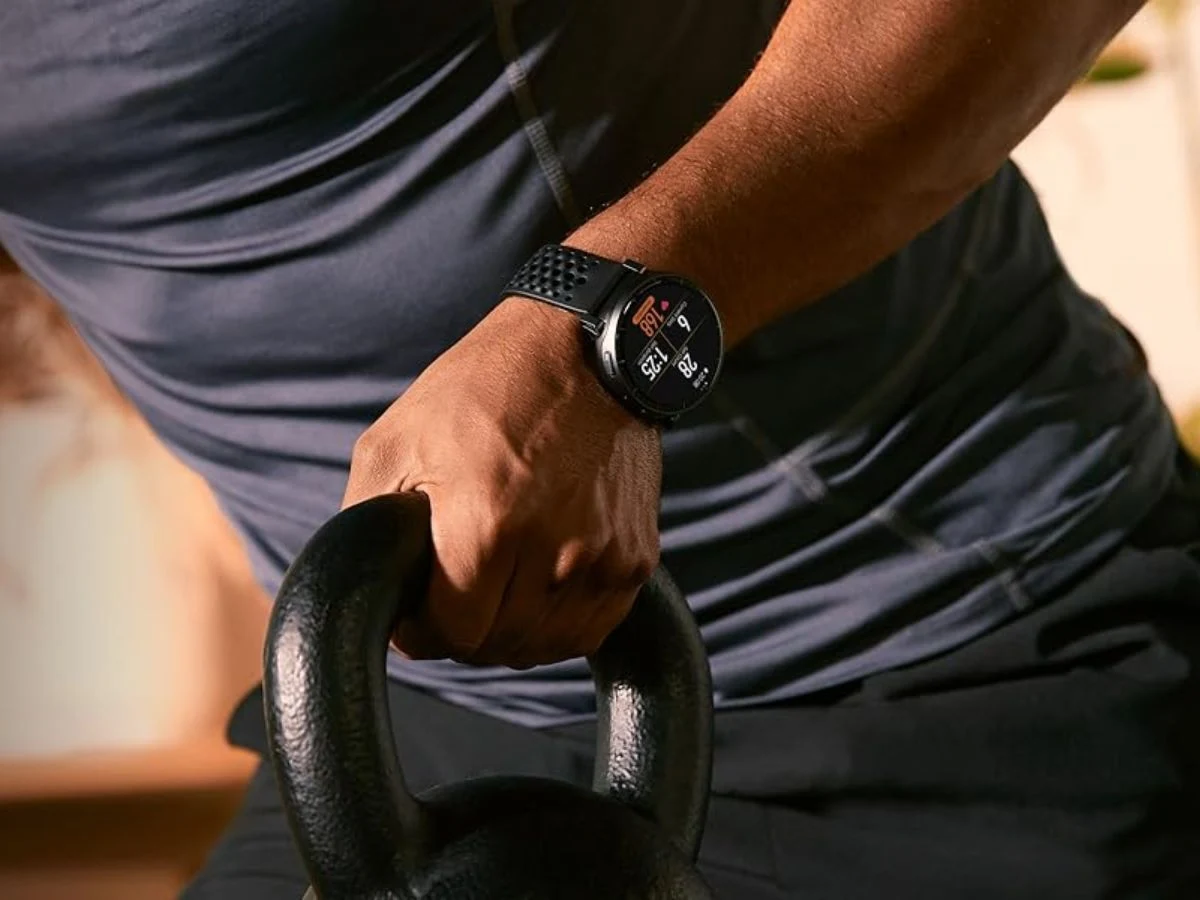
    Zepp Health is beginning to distribute an update for the Amazfit Active Max smartwatch. This device debuted in December 2025 and comes with features such as a 1.5-inch AMOLED screen, BioCharge energy level tracking, and 4GB of storage for music and offline maps.

    Update Details

    According to a user on Reddit, the Amazfit Active Max is now getting software version 3.4.0.3. The size of this update is 15.01MB and it introduces several new features. One notable addition is a dedicated Podcast app, which has also recently been added to the Amazfit T-Rex 3 smartwatch. Additionally, two new activity modes have been included: Hybrid Training and Rucking (which involves walking with a weighted backpack).

    Performance Improvements

    Furthermore, the release notes indicate that there are improvements to the Active Max’s GPS performance in certain situations, and enhancements to the user experience for Activities. There is also an improvement related to battery life, with the “PHN experience” optimized for when the battery is running low. Lastly, the update enhances the scrolling sensitivity of the smartwatch.

    Software version 3.4.0.3 seems to be rolling out gradually to Amazfit Active Max smartwatch users (currently priced at $169.99 on Amazon). Once it becomes available in your area, you can download and install the update using the Zepp app on your mobile device.

    u/Elder980 via Reddit

    Source:
    Link


  • Google’s $3 USB Drive Revives Old Laptops Easily

    Google’s $3 USB Drive Revives Old Laptops Easily

    Key Takeaways

    1. Google and Back Market have launched a $3 USB drive to install ChromeOS Flex on old Windows and Intel-based Mac computers.
    2. ChromeOS Flex is a lightweight operating system that enhances the performance of older hardware.
    3. The operating system focuses on cloud functionality, relying on web applications and services instead of intensive local processing.
    4. The initiative is timely as Windows 10 will stop receiving security updates by late 2025, making ChromeOS Flex a viable alternative for older devices.
    5. A pilot program will release 3,000 ChromeOS Flex USB drives on March 30, 2026, with future availability dependent on user feedback.


    Google has teamed up with the online platform Back Market to revitalize old laptops that are no longer in use. They have launched a $3 USB drive, which is designed to facilitate the installation of ChromeOS Flex on compatible Windows and Intel-based Mac computers.

    Lightweight Operating System

    ChromeOS Flex is significantly lighter than both Mac and Windows operating systems, allowing older hardware to function effectively once again. Google and Back Market emphasize that this USB installer aims to make it easier for users to switch operating systems, particularly for those who may not be familiar with creating their own bootable drives.

    Cloud-Focused Functionality

    The ChromeOS Flex operating system is tailored for cloud usage. Its main features operate through web applications and cloud services, meaning that the hardware doesn’t need to perform intensive tasks at the user side. As a result, the performance on older machines is often superior compared to Windows and MacOS.

    It is essential to understand that ChromeOS on Chromebooks is different from the Flex version (Acer Chromebook Plus 515 currently priced at $379.99 on Amazon). There are key distinctions, including the absence of Android app support on the Flex variant.

    Timely Initiative

    This collaboration between Google and Back Market happens to be timely. Windows 10 will stop receiving security updates by late 2025, and many operational laptops and PCs are not compatible with the minimum requirements for Windows 11. These devices risk being discarded too soon, and both companies suggest that installing ChromeOS Flex offers a more economical solution than purchasing new systems.

    Initially, about 3,000 units of the ChromeOS Flex USB drive will be released as part of a pilot program set to kick off on March 30, 2026. Back Market and Google will assess the interest through this limited project and will provide more information about future availability based on the feedback received.

    Source:
    Link


  • Microsoft March 2026 Patch Tuesday: Fixes for 2 Zero-Day Vulnerabilities

    Microsoft March 2026 Patch Tuesday: Fixes for 2 Zero-Day Vulnerabilities

    Key Takeaways

    1. Microsoft’s March 2026 Patch Tuesday addresses 79 vulnerabilities, including two zero-days and three critical issues.
    2. Updates KB5079473 and KB5078883 for Windows 11 improve security and reliability, while KB5078885 for Windows 10 also combines security fixes with quality improvements.
    3. Security vulnerabilities in Microsoft Office, particularly related to remote code execution, have been patched this month.
    4. The updates enhance features like Secure Boot certificate targeting and File Explorer reliability, with no known issues reported.
    5. Windows 10 users are especially impacted, as this update is crucial following the end of mainstream support on October 14, 2025.


    Microsoft’s Patch Tuesday on March 10, 2026, brings important fixes for a total of 79 vulnerabilities. This includes two zero-days that were made public and three Critical weaknesses. As per BleepingComputer’s summary, the zero-days include CVE-2026-21262 in SQL Server and CVE-2026-26127 in .NET. Additionally, this month’s update also resolves two remote-code-execution issues in Microsoft Office that can be activated through the preview pane.

    Windows Update Details

    On the Windows front, Microsoft has released KB5079473 for Windows 11 versions 25H2 and 24H2, updating those builds to OS Builds 26200.8037 and 26100.8037, respectively. For Windows 11 version 23H2, KB5078883 is now available, bringing it to OS Build 22631.6783. Windows 10’s versions 22H2 and 21H2 have also received KB5078885, which updates them to OS Builds 19045.7058 and 19044.7058.

    Microsoft states that KB5079473 for Windows 11 versions 25H2 and 24H2 contains the latest security fixes along with non-security updates from the previous month’s preview release. The support documentation mentions enhanced Secure Boot certificate targeting, improved reliability in File Explorer search across multiple drives or “This PC,” better handling of COM allowlisting policies in Windows Defender Application Control, and a clearer trust warning in Windows System Image Manager. The company also indicates that no issues have been reported with this update.

    Specifics for Windows 11 and 10

    For Windows 11 version 23H2, KB5078883 addresses security vulnerabilities and includes quality fixes from February. These enhancements feature broader targeting for new Secure Boot certificates, two new PowerShell options related to Secure Boot, improved File History reliability for certain character sets, enhanced GPU stability during shutdowns and heavy graphics tasks, and the same trusted-catalog warning dialog in Windows System Image Manager. According to Microsoft’s support page, they are not aware of any problems associated with KB5078883.

    Similarly, Windows 10’s KB5078885 combines March’s security fixes with some quality improvements. Microsoft emphasizes a trusted-source warning for catalog file selection in Windows System Image Manager, fixes for File History backups concerning specific Chinese and Private Use Area character names, better GPU stability, and broader targeting for devices that can automatically receive new Secure Boot certificates. Microsoft claims there are no known issues with this update as well.

    Focus on Vulnerabilities

    The main focus remains on the vulnerabilities rather than the feature updates. In addition to the two public zero-days, BleepingComputer reveals that Microsoft has also patched two flaws in Office that could be exploited through the preview pane, and an Excel issue that could be used to extract data via Copilot Agent mode. This makes March’s Patch Tuesday more significant than a typical cumulative update, even if Microsoft’s release notes are somewhat sparse in terms of user-facing changes.

    For Windows 10 users, this update comes after the end of mainstream support for Windows 10 on October 14, 2025. Microsoft has stated that PCs can continue to operate, but standard technical support, feature updates, and security updates will not be available outside of the Extended Security Updates path. This is why March’s Windows 10 security package is especially important for systems that are still being maintained under that post-EOS route.

    Source:
    Link


  • Find N6: Sneak Peek at Ultra-Premium Foldable with Hidden Crease

    Find N6: Sneak Peek at Ultra-Premium Foldable with Hidden Crease

    Key Takeaways

    1. Oppo will launch the Find N6 alongside the Find X9 Ultra and Watch X3 on March 17.
    2. The global edition of the Find N6 will include an Aramid Fibre case and an 80 W three-pin charger.
    3. The new AI Pen Kit for the Find N6 charges the pen inside its case and comes with extra pen tips.
    4. The Find N6 features a nearly invisible display crease due to advanced glass and hinge technology.
    5. The unboxing experience and reviews are sponsored by Oppo, so independent opinions should be awaited.


    Oppo is set to unveil the Find N6 in just a few days. To give you some context, the new foldable device will make its debut alongside the Find X9 Ultra and the Watch X3 on March 17. In the meantime, Oppo is keeping the buzz alive by sharing more information about the Find N6, both directly and through social media influencers.

    Unboxing Experience

    For example, the company has partnered with YouTubers like Dave2D and TechNick to showcase an unboxing experience. In the video, TechNick reveals that the global edition will come with an Aramid Fibre case and a matching faceplate. Additionally, an 80 W three-pin charger will be included in the package.

    AI Pen Kit

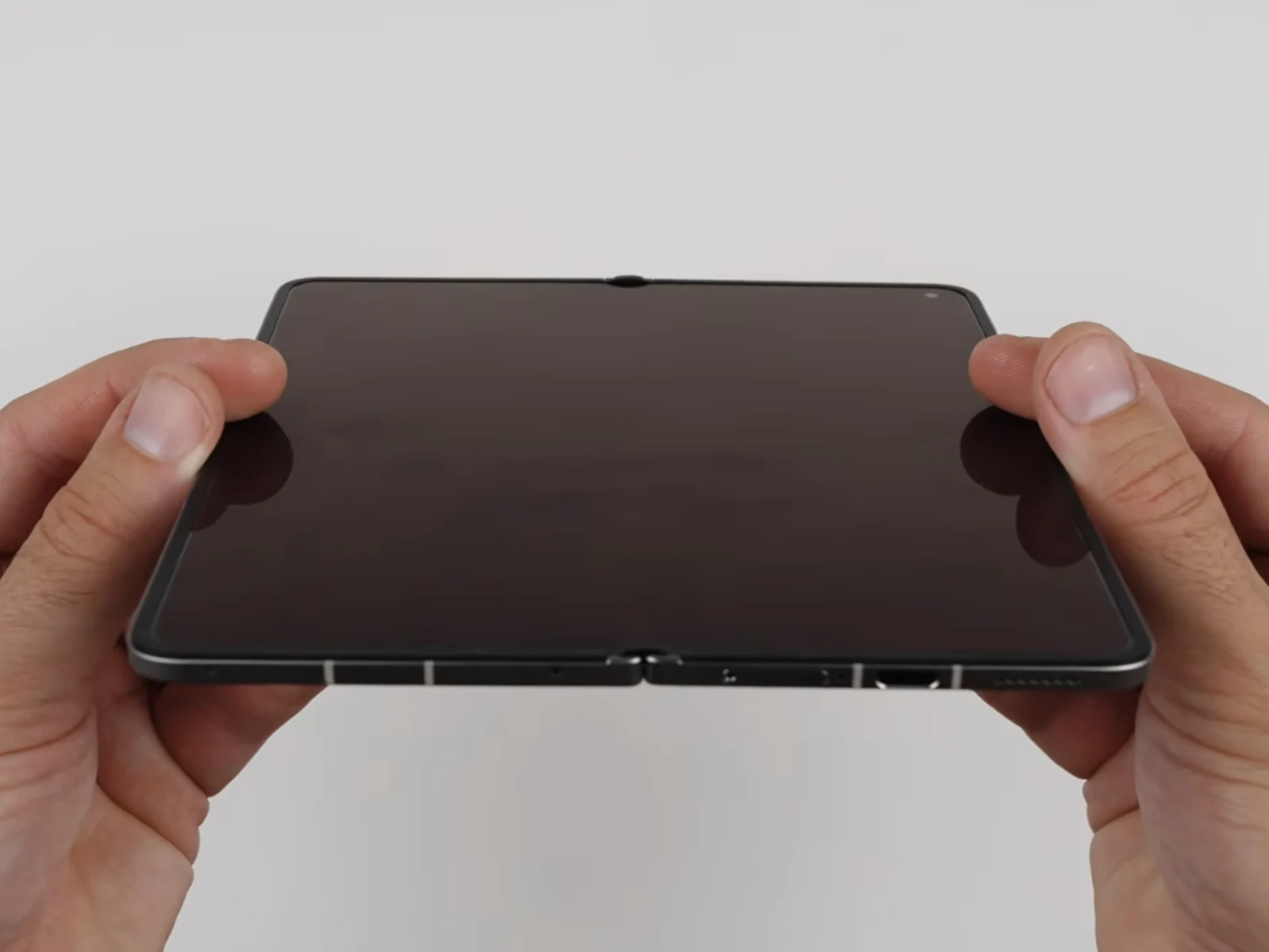
    Furthermore, TechNick has pointed out Oppo’s AI Pen Kit. This kit includes its own case that charges the pen when it is placed inside. It also comes with extra pen tips. Both YouTubers have taken the time to demonstrate the display crease of the Find N6.

    Impressive Design

    Reports suggest that the crease is nearly invisible due to Oppo’s advancements in glass and hinge technology. However, it should be noted that both videos are sponsored by Oppo, so it might be wise to hold off on forming an opinion until we see independent reviews. Still, it appears the Find N6 has a less noticeable display crease compared to the Pixel 10 Pro Fold and the Galaxy Z Fold7 (currently priced at $1,035 – refurbished on Amazon).

    Source:
    Link


  • Sapphire Unveils AMD Strix Halo Mini PC with Radeon 8060s iGPU

    Sapphire Unveils AMD Strix Halo Mini PC with Radeon 8060s iGPU

    Key Takeaways

    1. Sapphire introduced the Edge AI Max+ 395, featuring the advanced AMD Ryzen AI Max+ 395 “Strix Halo” APU with 16 Zen 5 cores and 32 threads.
    2. The integrated Radeon 8060S GPU offers graphics performance comparable to the Nvidia GeForce RTX 4070 Laptop GPU.
    3. The mini PC can be upgraded with up to 128 GB of LPDDR5X RAM, enhancing the ability to run large language models locally.
    4. Users can connect multiple mini PCs through USB-C for resource sharing, although network daisy chaining is limited due to a single Ethernet port.
    5. Pricing and availability are not yet confirmed, but the launch is expected at Computex 2026, with a likely cost around $2,700.


    About a year ago, Sapphire introduced its Edge AI range of compact PCs, which were equipped with the powerful AMD Ryzen AI 9 HX 370 “Strix Point” APU. Now, they have announced a new addition to this lineup, featuring a more advanced Zen 5-based APU.

    Powerful New Addition

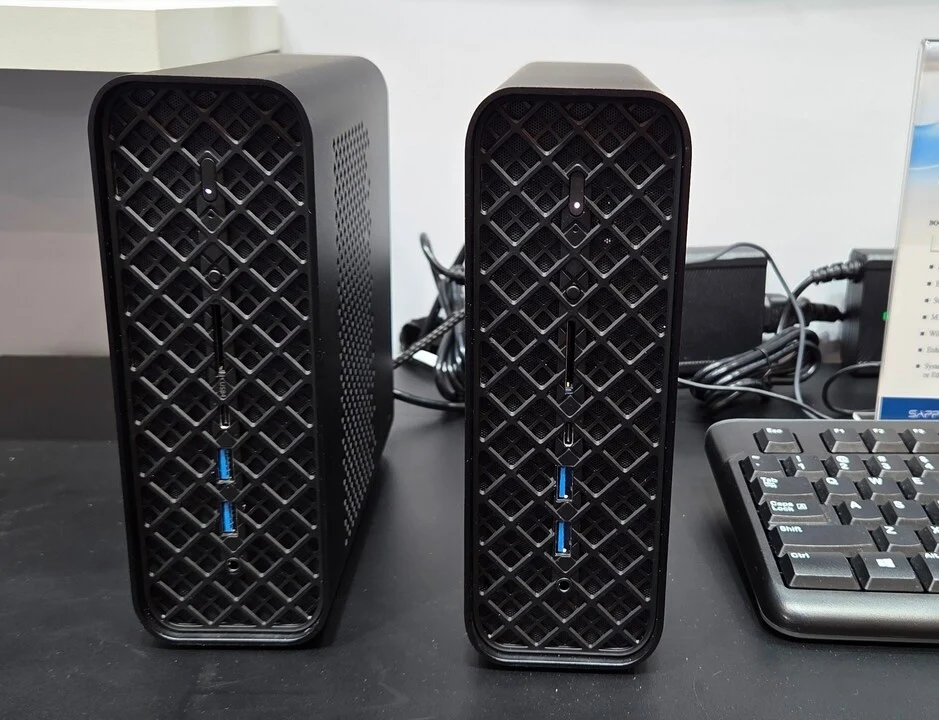
    Named the Sapphire Edge AI Max+ 395, this high-performance gaming mini PC is driven by the impressive AMD Ryzen AI Max+ 395 “Strix Halo” APU, boasting an astonishing 16 full Zen 5 cores and 32 threads. When adequately cooled, this APU can stand toe-to-toe with other top-tier CPUs, like the 24-core Intel Core Ultra 9 285HX CPU.

    Graphics Performance

    The standout feature of the Strix Halo series is its robust integrated GPU, making it an excellent option for gaming mini PCs. The Ryzen AI Max+ 395 APU includes the remarkable Radeon 8060S iGPU with 40 computational units based on RDNA 3.5, offering performance levels comparable to an Nvidia GeForce RTX 4070 Laptop GPU.

    Memory and Connectivity

    Users can upgrade the Sapphire Edge mini PC with up to 128 GB of LPDDR5X RAM, which can also be used by the integrated GPU. This setup enables the system to run large language models (LLMs) locally, something that other consumer GPUs with less VRAM would struggle with.

    Sapphire even showcased two of these mini PCs working together through a USB-C connection. This configuration allows for resource sharing, making it possible to handle larger LLMs for local use. While the specific details about the USB-C port weren’t disclosed, it’s worth noting that other Strix Halo systems have been equipped with 80 Gbps USB 4 v2 ports. As noted by Computerbase, since the mini PC only has a single Ethernet port, network-based daisy chaining isn’t the best option.

    For those who want to push the limits, it’s possible to daisy chain multiple units, enabling even more ambitious local LLM setups. While pricing and availability remain uncertain at this time, Sapphire plans to officially reveal the Strix Halo-powered gaming mini PC at Computex 2026. Given that the GMKtec Evo-X2 mini PC is priced around $2,700, the Sapphire Edge AI Max+ 395 will likely have a similar cost.

    Computerbase

    Source:
    Link


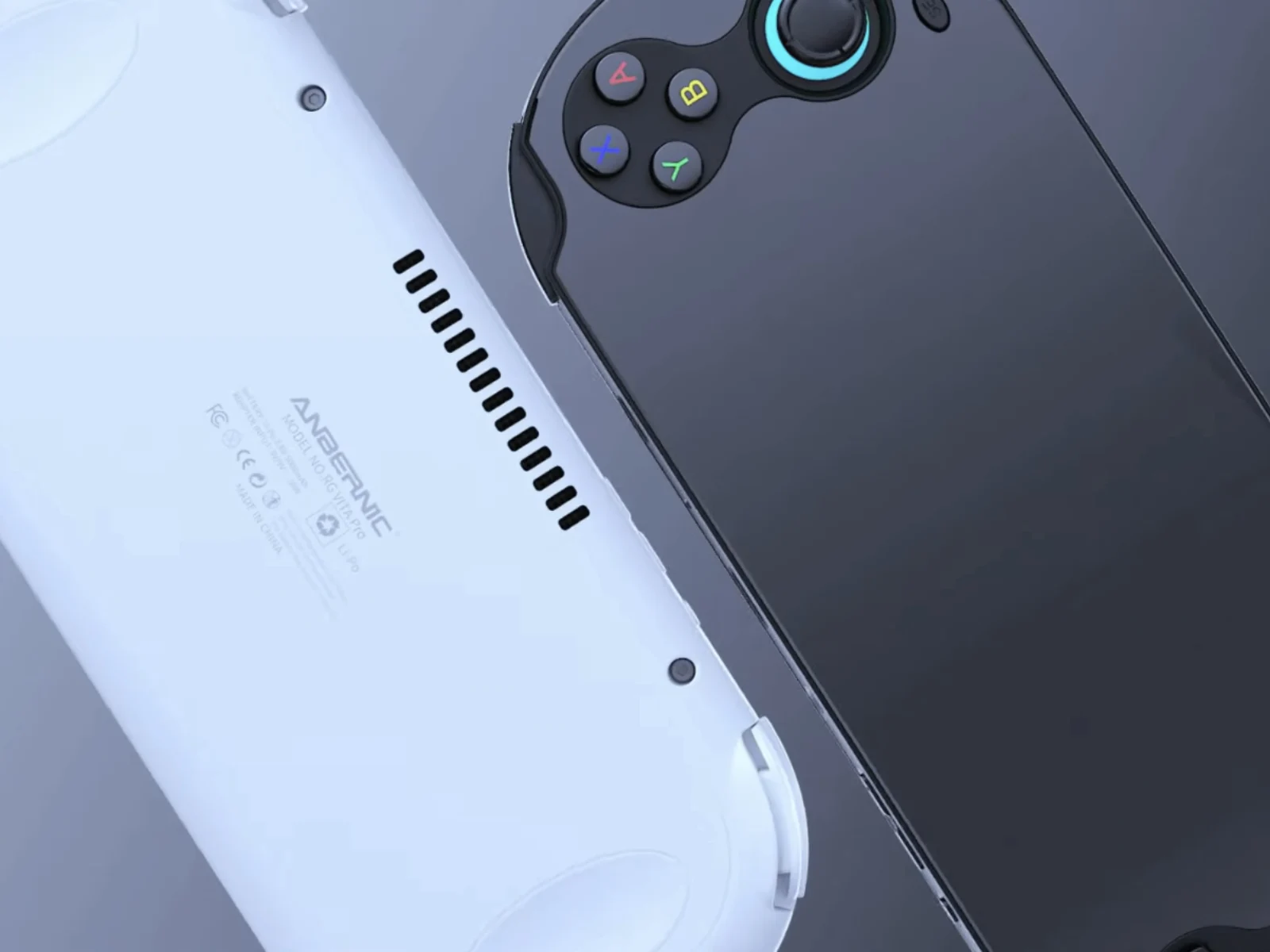
  • Anbernic RG Vita Pro: Exciting PS Vita Emulation Revealed

    Anbernic RG Vita Pro: Exciting PS Vita Emulation Revealed

    Key Takeaways

    1. Anbernic announced the RG Vita Pro specs, priced at $69.99, one month after the previous model’s launch.
    2. A new video showcases the RG Vita Pro’s expected performance improvements over the original RG Vita.
    3. The RG Vita has struggled with PS Vita game emulation, being compared to the RG PSP due to its limited CPU and GPU.
    4. The RG Vita Pro’s ability to emulate PS Vita games at 1080p resolution remains uncertain.
    5. The RG Vita Pro features a Mali-G52 MC3 GPU, 4 GB of RAM, a 5,000 mAh battery, and Hall effect joysticks.


    Anbernic has made an announcement about the RG Vita Pro specs this week, more than a month after its previous launch (currently priced at $69.99 on Amazon). The company has released a new video demonstrating the capabilities of this handheld device. The video below shows that the RG Vita Pro is expected to be more powerful than the current RG Vita model.

    Insight on Performance

    At this point, we can only rely on the information provided by Anbernic. It’s important to note that independent evaluations have shown that the RG Vita struggles to emulate PS Vita games. Retro Game Corps described the handheld as being more akin to an RG PSP due to its weak CPU and GPU. According to the latest video from Anbernic, the RG Vita Pro aims to fix the limitations seen in its non-Pro version.

    Emulation Capabilities Uncertain

    Currently, it’s not clear if the RG Vita Pro is capable of emulating PS Vita games at its native 1080p resolution. Achieving this would mean around 4x scaling, which seems improbable given the device’s Mali-G52 MC3 GPU. For context, this GPU is part of the Rockchip RK3576 chipset, which Anbernic has paired with 4 GB of RAM, a 5,000 mAh battery, and Hall effect joysticks. For additional information, please check out the video below.

    Source:
    Link


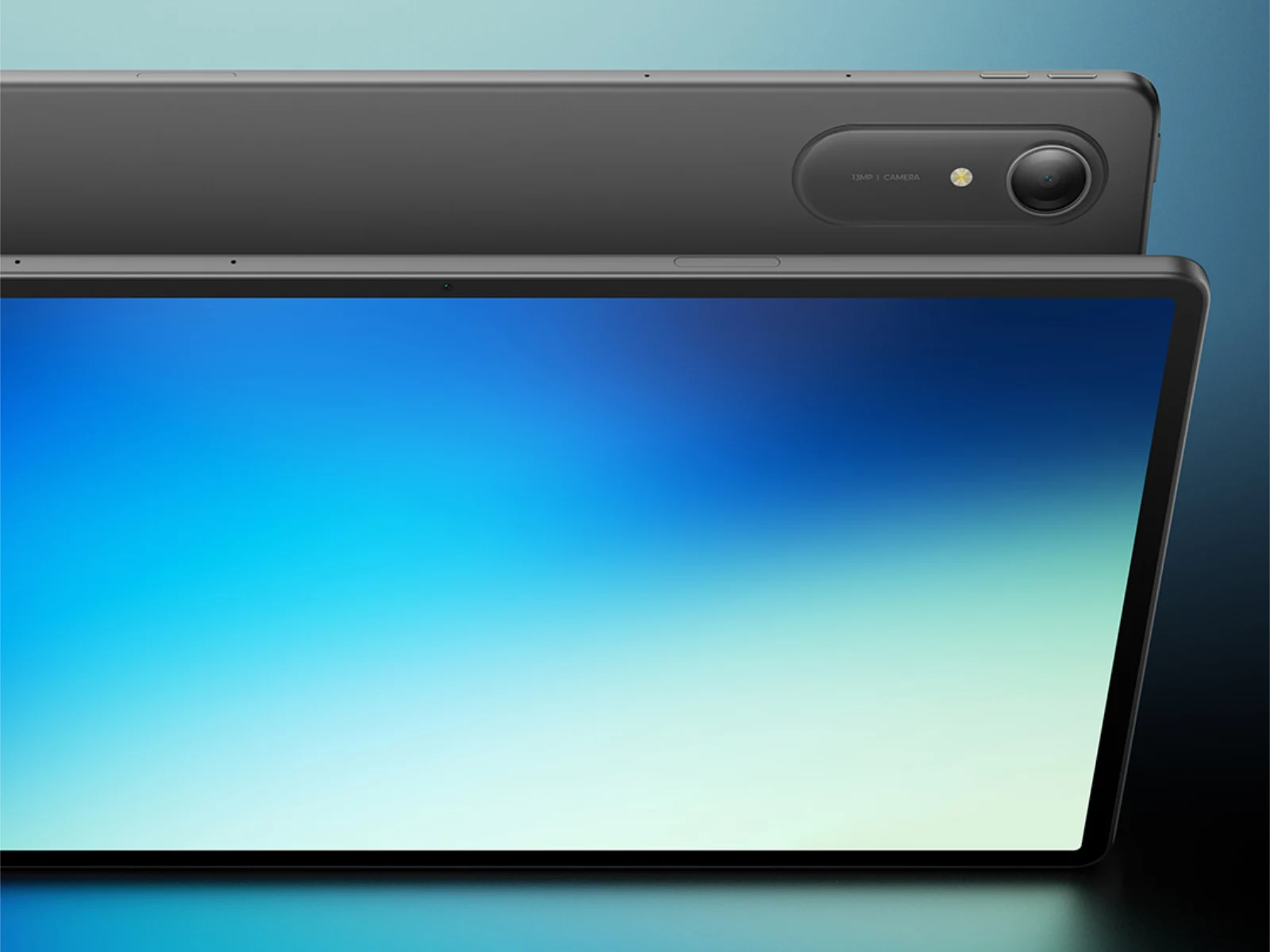
  • Lenovo Unveils Battery Life Ahead of New High-End Android Tablet

    Lenovo Unveils Battery Life Ahead of New High-End Android Tablet

    Key Takeaways

    1. Lenovo will launch the Xiaoxin Pro 13 tablet on March 18, alongside other models like the Legion Y700 Gen 5 and Xiaoxin Pro GT13.
    2. The Xiaoxin Pro 13 features a 10,200 mAh battery, providing up to 15 hours of video playback and around two days of online meetings.
    3. It supports 45 W wired charging for quick battery boosts.
    4. The tablet is equipped with a Qualcomm Snapdragon 8s Gen 4 chipset, aimed at competing with the Xiaomi Pad 8.
    5. It includes a 144 Hz IPS display, possibly making it a variant of the Idea Tab Pro Gen 2, although this is not yet confirmed by Lenovo.


    Lenovo has unveiled an important detail about one of its upcoming tablets. To give some background, the company has already announced that the Xiaoxin Pro 13 will be launched on March 18. Recent teasers suggest that this new 13-inch tablet will also be accompanied by the Legion Y700 Gen 5 and the more powerful Xiaoxin Pro GT13.

    Battery Performance

    In addition, Lenovo has stated that the Xiaoxin Pro 13 will feature a 10,200 mAh battery. This is the same capacity seen in last year’s Xiaoxin Tablet 12.1, and it is a step up from the 8,860 mAh silicon carbon battery used in the Xiaoxin Tablet Pro GT. According to reports, this battery is expected to allow the Xiaoxin Pro 13 to provide up to 15 hours of uninterrupted video playback and around two days of continuous online meetings.

    Charging and Specs

    To support charging, 45 W wired charging capabilities will be available for the Xiaoxin Pro 13 when it needs a boost. Moreover, Lenovo will pair this battery and charging setup with a Qualcomm Snapdragon 8s Gen 4 chipset, which aims to compete with the Xiaomi Pad 8 while offering better performance than the Samsung Galaxy Tab S11 (currently priced at $799 on Amazon). The Xiaoxin Pro 13 also boasts a 144 Hz IPS display, indicating it might be a Chinese variant of the recently launched Idea Tab Pro Gen 2. However, Lenovo has yet to officially confirm this detail.

    Source:
    Link