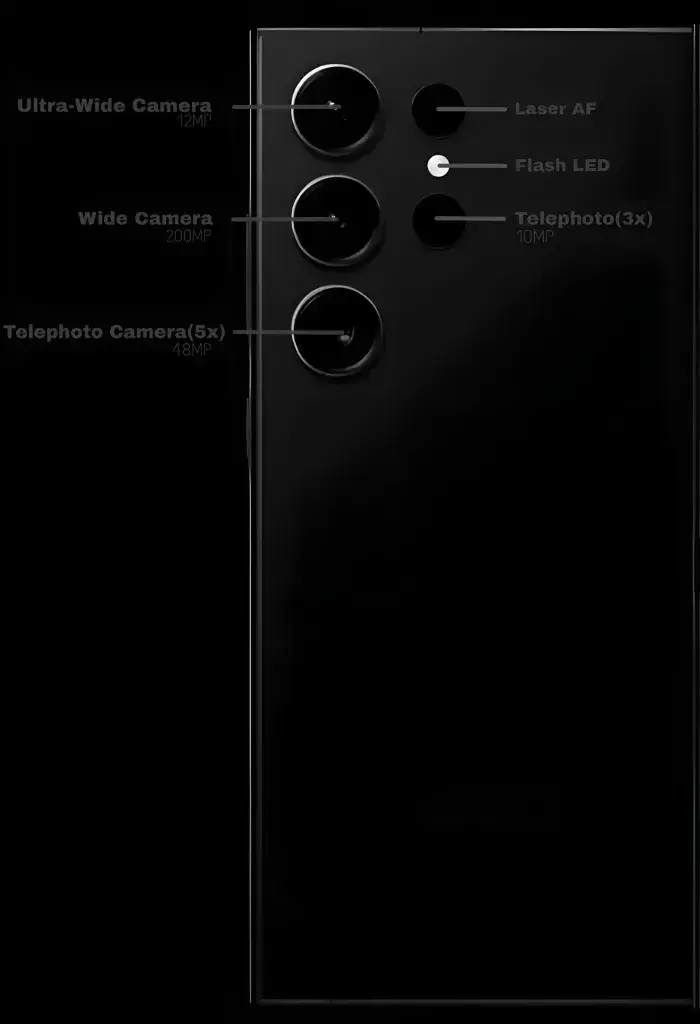
The impending launch of the Samsung Galaxy S24 Ultra is buzzing in the tech realm, primarily for its rumored remarkable camera setup. The buzz centers around a 200MP primary camera complemented by three other lenses, promising a photography experience like no other.
A Look at the Camera Specifications
The Galaxy S24 Ultra reportedly features a robust quad-camera setup:
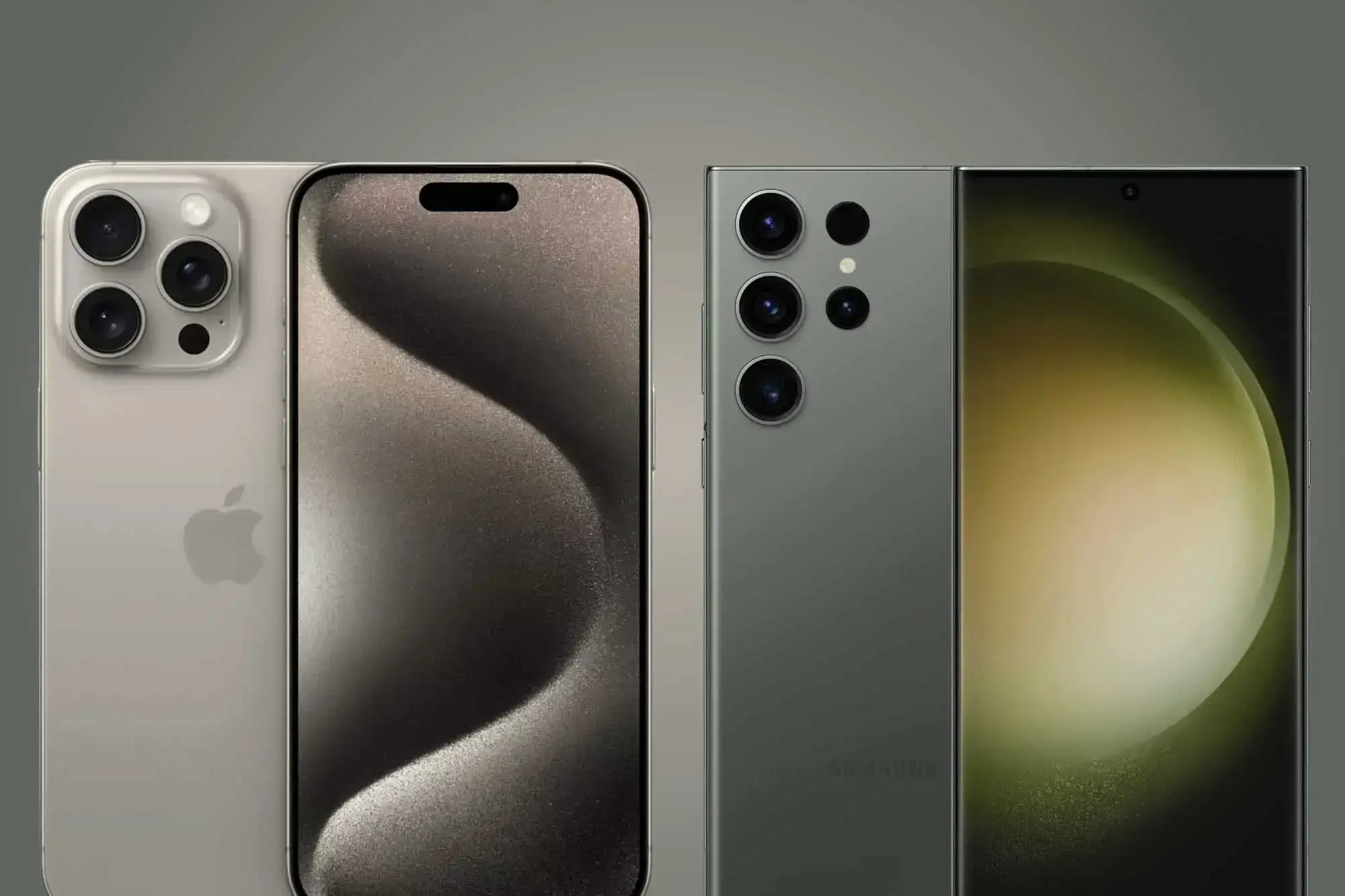
Samsung Galaxy S24 Ultra Coming With Same Back Design Like S23 Ultra;
These specifications if proven true, signify a gigantic leap in smartphone photography, especially with a 200MP sensor at the helm. The 100x zoom capability, despite a 5x optical zoom, hints at a powerful digital zooming technology infused in the device. The Galaxy S24 Ultra is potentially a photographer’s dream, blending high-resolution photography with versatility across different shooting scenarios.
The Selfie Camera
The front camera is speculated to remain at 12MP, a consistency carried over from the S23 Ultra. This spec might not be a giant leap, but it’s a tested and trusted configuration that ensures quality selfies and video calls.
Future Expectations
Leaks also touch on the Galaxy S25 Ultra, hinting at further camera enhancements like 4x and 6x telephoto lenses and a new Vizion sensor replacing the laser autofocus, indicating Samsung’s forward-thinking in smartphone camera technology.
In conclusion, if the rumors hold, the Samsung Galaxy S24 Ultra is set to redefine smartphone photography standards. Its quad-camera setup led by a 200MP sensor is nothing short of revolutionary, setting a high bar for competitors. As the tech community awaits official confirmation, the anticipation continues to build, hinting at a promising photographic powerhouse in the Samsung Galaxy S24 Ultra.
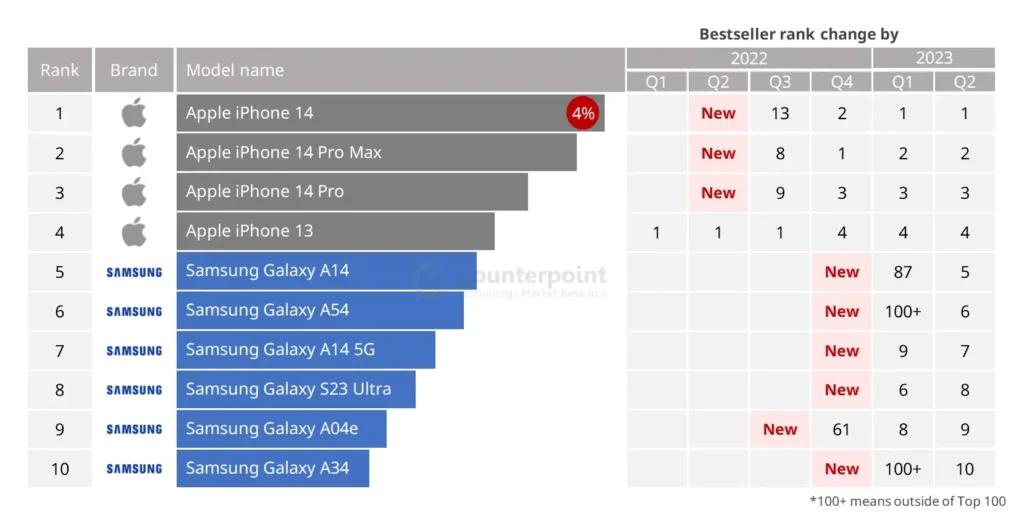
The smartphone market in 2023 continues to be dominated by Apple and Samsung, reflecting a blend of premium and budget-friendly models. This article delves into the specifications and pricing of the top-selling smartphones from these tech giants, providing a comprehensive guide for potential buyers.
Apple’s Eminent Offerings
Apple‘s iPhone models continue to occupy a significant portion of the global market share. The iPhone 14 Pro Max, a premium model, boasts a 6.7-inch OLED display with a resolution of 2796-by-1290 pixels, powered by the Apple A16 Bionic chipset. It comes with a maximum storage capacity of 1024 GB and 6 GB RAM, encapsulated within a Ceramic Shield glass body. The Pro Max model also introduces a pro camera system with a 48MP primary sensor, catering to professional photography needs.
On the pricing frontier, the iPhone 14 Pro Max is a high-end model priced around $1,600, while its counterpart, the iPhone 14 Pro, is slightly cheaper at $1,500. These models represent Apple’s dedication to delivering top-notch performance and cutting-edge features to its user base.
Samsung’s Diverse Range
Samsung, on the other hand, offers a diverse range of models catering to both premium and budget segments. The Samsung Galaxy A14 is a budget-friendly choice with a 6.6-inch display, powered by an Octa-core processor (MT6769 Helio G80 chipset). It offers a 50MP main camera, 128 GB storage, and 6 GB RAM, making it a competent model for everyday use. The Galaxy A14 is priced under $200, and its 5G variant is around $300, providing an affordable gateway to 5G connectivity.
For those seeking high-end features, the Samsung Galaxy S23 Ultra is a compelling option. It flaunts a 6.8-inch Dynamic AMOLED display with a resolution of 3088 x 1440 pixels, powered by the Qualcomm Snapdragon 8 Gen 2 chipset. With up to 1TB of storage, 12GB of RAM, and a quad-camera setup with a 200 MP main sensor, the S23 Ultra is a powerhouse of performance. Its pricing starts at $950, reflecting its premium status in Samsung’s lineup.
Concluding Thoughts
The smartphone market in 2023 exemplifies a widening gap between premium and budget-friendly models, predominantly from Apple and Samsung. Whether consumers are swayed by the allure of high-end features or the practicality of budget-friendly models, the choices are abundant and cater to a wide spectrum of preferences and needs.
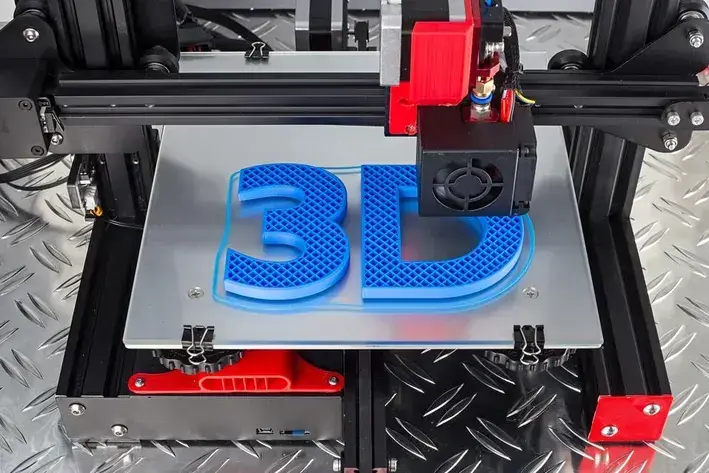
The landscape of 3D printing remains in a constant state of flux as key players continuously vie for dominance. The current month ushers in another shift among major competitors, underscoring the dynamic and unpredictable essence of the industry.
The Weekly Assessment of Worth
Market capitalization, a critical metric obtained by multiplying a company’s stock price by its outstanding shares, serves as a key indicator of a company’s present value. This figure plays a pivotal role in asset acquisition and can also be utilized as collateral for financial transactions. Monitoring these valuations on a weekly basis provides valuable insights into the financial stability and growth trajectories of 3D printing firms.
The Reshuffling of the Top Players
In the latest evaluation, Xometry has reclaimed its leading position from Stratasys, boasting a valuation of $821 million. Stratasys now trails closely in second place with $787 million, followed by Nano Dimension at $676 million. This change reflects the cutthroat and adaptable nature of the sector. Noteworthy is 3D Systems, previously valued at close to $5 billion, now finding itself in fifth place with a valuation edging towards $500 million, a significant decline attributed to a drop in stock value.
Ranking of Key 3D Printing Companies
RANK
COMPANY
CAP
CHG
1
Xometry
821
-28
2
Stratasys
787
-66
3
Nano Dimension
676
-30
4
Protolabs
668
-11
5
3D Systems
517
-48
6
Desktop Metal
388
-26
7
Materialise
297
-26
8
Velo3D
273
-39
9
Markforged
243
-20
10
Massivit
31
-4
11
FATHOM
26
-5
12
Shapeways
19
+0
13
Steakholder Foods
17
-2
14
Freemelt
12
-5
15
AML3D
11
-2
16
voxeljet
10
+1
17
Titomic
7
+1
18
Sygnis
5
+0
19
Sigma Additive Solutions
4
-7
20
Aurora Labs
3
-0
TOTAL
4,816
-344
Future Market Contenders
While Essentium had initially planned a SPAC merger to enter the public domain, those intentions have been put on hold. ICON, a 3D printer manufacturer in the construction domain based in Texas, has secured substantial funding, hinting at a potential shift in market dynamics. Vulcan Forms, boasting a private valuation exceeding $1 billion, may also create ripples in the ranking.
Final Thoughts
The world of 3D printing continues to mesmerize with technological advancements reflected in its market standings. As companies vie for higher positions, this industry remains an enticing space for investors and technology aficionados alike.
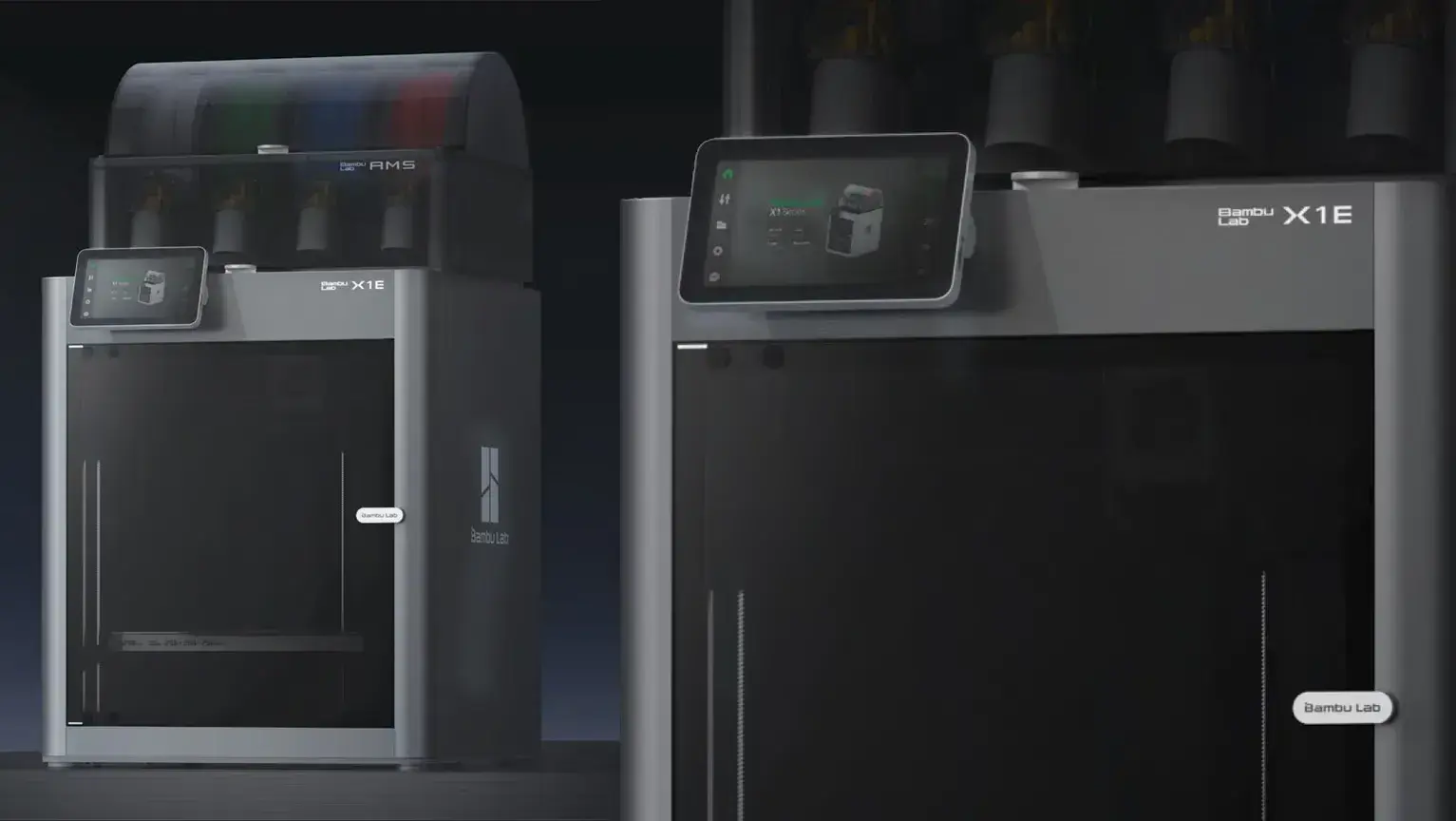
In the fast-evolving domain of 3D printing, staying updated with the latest technology is crucial for professionals aiming for the pinnacle of design and production efficiency. Bambu Lab’s latest offering, the X1E 3D Printer, is a testament to this relentless pursuit of innovation, catering precisely to the professional and engineering domains.
A Gaze at Speed and Precision
The X1E 3D Printer distinguishes itself with an impressive print speed, which is a vital factor for professionals who are always racing against time. With a maximum tool head speed of 500 mm/s, it’s pegged as a swift performer among desktop 3D printers. This speed is facilitated by a rigid CoreXY gantry constructed with carbon-fiber-reinforced rods, which significantly reduces vibration, ensuring high-quality prints.
Connectivity and Material Handling
In an era where seamless connectivity is a boon, the X1E doesn’t fall short. It introduces an optional Ethernet interface ensuring reliable network connectivity, even in complex setups, alongside supporting advanced WLAN security standards. This feature is a nod to the growing necessity for secure and robust networking solutions in professional settings.
Furthermore, the X1E is capable of operating entirely offline without a cloud connection, providing an added layer of operational flexibility.
Material handling is another forte of the X1E. It can reach temperatures of up to 320°C, thus capable of processing higher-grade materials like PPA-CF or PPS. The heated pressure chamber, with temperatures up to 60°C, minimizes warpage and enhances layer adhesion, making it a suitable choice for intricate and demanding projects.
Bambu Lab X1E
Bambu Lab X1E
Bambu Lab X1E
Bambu Lab X1E
Filament Management and Clean Operation
With an integrated filament management system, the X1E can connect up to 16 filament spools, enabling multi-material printing with automatic filament change. This feature underscores the printer’s capability to handle complex projects requiring varied materials.
Moreover, the clean operation of the X1E is ensured by a HEPA filter and activated carbon filter, making it apt for poorly ventilated rooms.
Bambu StudioSupport third party slicers which export standard G-code such as SuperSlicer, PrusaSlicer and Cura, but certain advanced features may not be supported.
Slicer Supported OS
MacOS, Windows
Ethernet Socket
RJ45
Ethernet Speed
100 Mbps / Full Duplex
Pricing and Availability
The professional-grade features of the X1E come with a price tag of $2499, making it a valuable addition for serious professionals. Bambu Lab has scheduled the shipping of the X1E to commence in November, available for purchase directly or via resellers.
With the X1E, Bambu Lab has indeed pushed the boundaries, setting a new benchmark for what professional and engineering-grade 3D printers can achieve. The blend of speed, connectivity, material handling, and clean operation, all at a competitive price point, makes the X1E a noteworthy contender in the professional 3D printing market.
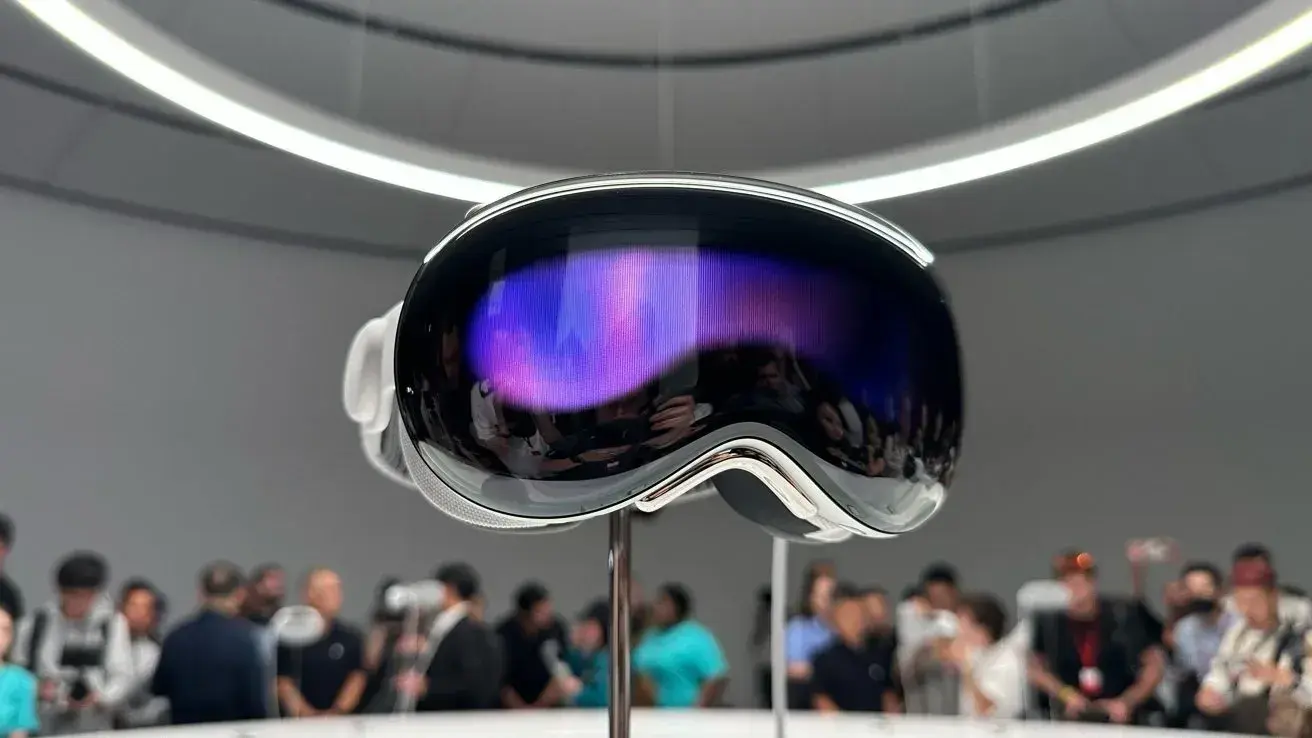
In a bid to reach a wider consumer base, Apple is reportedly working on a cost-effective variant of its high-end mixed reality headset, the Apple Vision Pro. The original device, priced at a steep $3,500, is beyond the reach of many consumers, prompting Apple to explore a more budget-friendly version123.
Lowering the Price Tag
The prime focus in developing this economical variant is to significantly lower the price to a range of $1,500 to $2,500. The strategy to achieve this price cut involves removing certain features and downgrading the chip used in the device45.
Sacrificing the EyeSight Feature
One of the notable features to be axed in this cost-cutting endeavor is the EyeSight feature. The EyeSight technology in the original Vision Pro uses an external OLED display to project a three-dimensional rendering of the user’s facial expressions to others in the room. While this feature enhances the interactive experience, it doesn’t offer substantial benefits to the wearer of the device. By eliminating this feature, Apple can significantly reduce the bill of materials, thus lowering the price point of the device6.
Reduced Camera and Sensor Array
Additionally, the number of cameras and sensors will be trimmed down in the budget-friendly variant. This move is another step towards reducing the production costs while maintaining the core functionality of the mixed reality headset6.
Future Expectations
Although Apple is heading towards a more affordable Vision Pro, there are speculations that the low-cost version might have been shelved for now7. On the brighter side, along with the low-cost model, Apple is purportedly also working on a second-generation high-end Vision Pro, focusing on making it lighter, more comfortable, and equipped with a chip spec bump6.
The development of a low-cost Apple Vision Pro is a testament to Apple’s initiative to make mixed reality technology more accessible. While the reduction in price comes with a trade-off in features, it opens the door for a broader consumer base to experience Apple’s mixed reality technology.
In a market saturated with high-end smartphones, the OPPO A2X emerges as a breath of fresh air for budget-conscious consumers. Officially announced on October 14, 2023, and making its debut in the Chinese market, the OPPO A2X is a showcase of how affordability and decent specifications can go hand in hand.
Aesthetics and Build
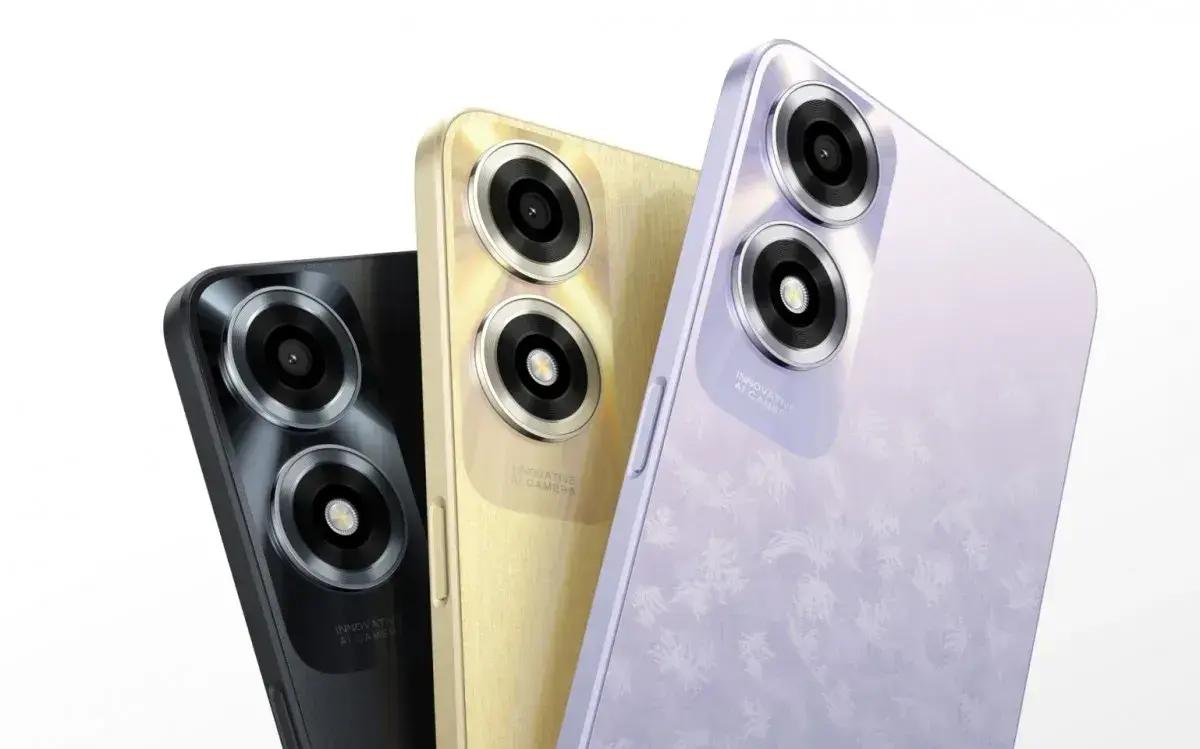
Offered in three distinct colors – Black, Yellow, and Purple, the OPPO A2X brings a subtle elegance to the budget smartphone segment. The Yellow and Purple variants feature a textured finish on the back, lending a unique look and a comfortable grip1.
Core Specifications
At the heart of the OPPO A2X lies the MediaTek Dimensity 6020 chipset, a reliable performer that ensures smooth multitasking and decent gaming performance. The smartphone comes in two memory configurations; a 6GB RAM with 128GB storage and an 8GB RAM with 256GB storage variant. This provides ample space and memory for regular usage and some more23.
The display is a 6.56-inch LCD panel with HD+ resolution, supporting a 90Hz refresh rate for smoother scrolling and a better visual experience. The maximum brightness of 720 nits makes it usable even under bright sunlight. The device also offers a modest photography experience with a 13-megapixel rear camera and a 5-megapixel front camera for selfies and video calls3.
Battery and Software
Packing a 5000mAh battery, the OPPO A2X ensures that you get through a full day of moderate usage without reaching for the charger. On the software front, it comes with Android 13 overlaid with OPPO’s ColorOS 13.1, providing a smooth and intuitive user interface3.
Connectivity and Additional Features
The phone supports 5G connectivity, alongside other standard connectivity options like WiFi 5, Bluetooth 5.1 LE, GPS, Glonass, and Beidou. A side-mounted fingerprint sensor, a 3.5mm headphone jack, and IP54 certification for dust and water resistance are some of the additional features that come along with the phone, making it a well-rounded option for its price point3.
Pricing
The pricing is one of the major attractions of the OPPO A2X. The 6/128 GB variant is priced at CNY1,099 ($150/€142) while the 8/256 GB variant comes at a slightly higher price, making it an attractive option for those looking for budget-friendly yet capable smartphones13.
In conclusion, the OPPO A2X is a noteworthy entrant in the budget smartphone category, offering a good balance of performance, features, and pricing.
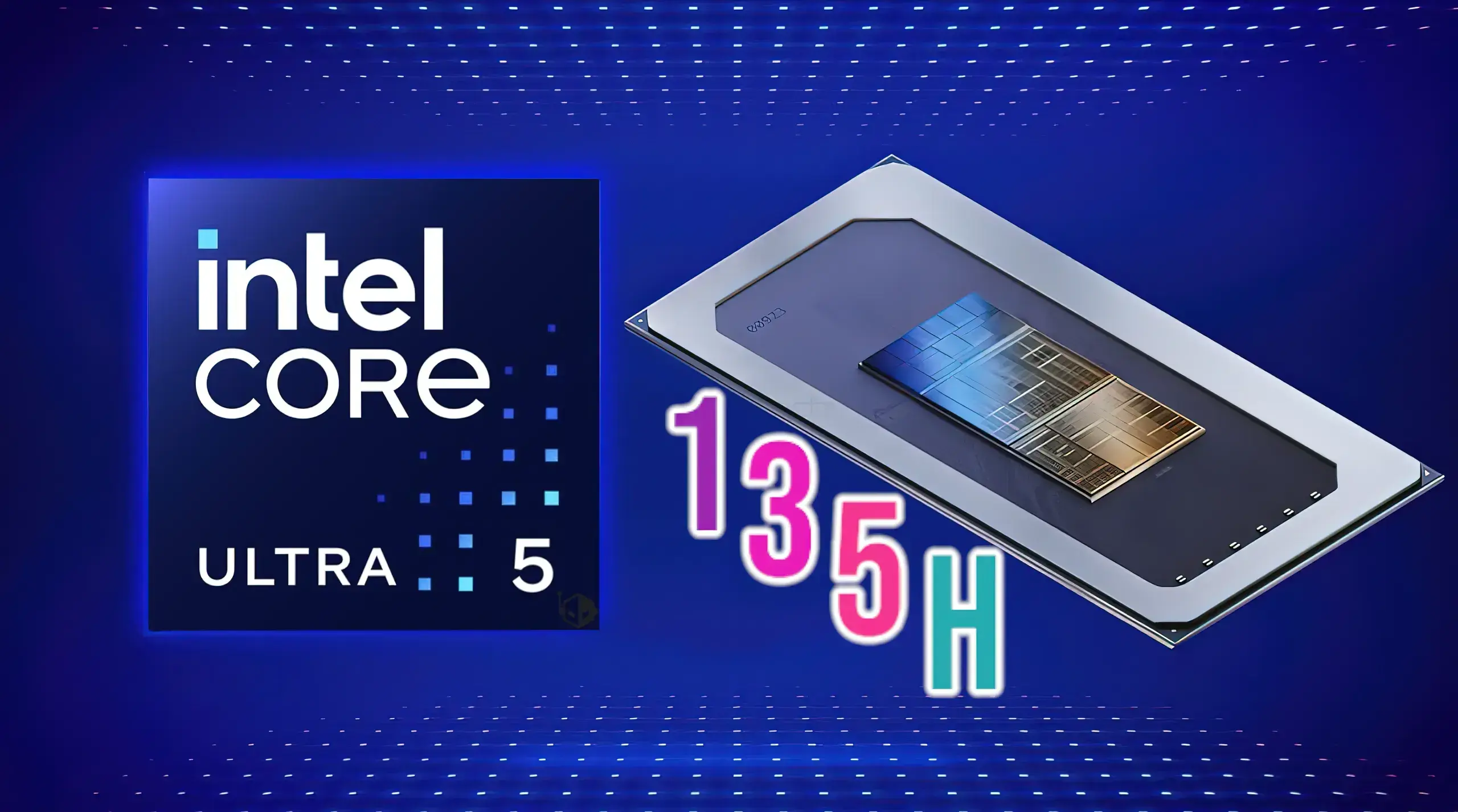
In the arena of laptop computing, the Intel Meteor Lake Core Ultra 5-135H CPU has emerged as a potential game-changer, promising to bring robust performance to mainstream laptops. The recently unveiled benchmarks further bolster this claim, showcasing a glimpse of what this new chip is capable of.
Core Configuration and Performance
The Intel Core Ultra 5-135H is a part of the new Meteor Lake series and exhibits a 14-core configuration, incorporating 4 Performance-cores (P-cores), 8 Efficiency-cores (E-cores), and 2 additional cores. This configuration has been revealed through the Geekbench 5 database, indicating a promising blend of performance and efficiency tailored for mainstream laptop users1.
Comparative Performance Insights
Although specific benchmark scores for the Core Ultra 5-135H are yet to be disclosed, a look at other models in the Meteor Lake “Core Ultra” lineup provides a performance panorama. For instance, the Core Ultra 7 155H scored 2346 points in single-core and an impressive 12,853 points in multi-core tests, suggesting a high-performance bar set by the series2. Furthermore, the Core Ultra 5 125H CPU’s benchmarks indicate a base clock of 3.60 GHz and a boost clock around the 4.5 GHz range, hinting at the performance metrics we might expect from the 5-135H model3.
CPU NAME
PROCESS NODE
CORE CONFIGURATION
THREADS (TOTAL)
BASE / BOOST CLOCK
L3 CACHE
TDP
Intel Core Ultra 9 185H
Intel 4
6+8+2 (16)
22
3.8 GHz / 5.1 GHz
24 MB
15-28W
Intel Core Ultra 7 165H
Intel 4
6+8+2 (16)
22
3.8 GHz / 5.0 GHz
24 MB
15-28W
Intel Core Ultra 7 155H
Intel 4
6+8+2 (16)
22
3.8 GHz / 4.8 GHz
24 MB
15-28W
Intel Core Ultra 5 135H
Intel 4
4+8+2 (14)
18
3.6 GHz / TBD
20 MB
15-28W
Intel Core Ultra 5 125H
Intel 4
4+8+2 (14)
18
3.6 GHz / 4.5 GHz
20 MB
15-28W
Anticipated Impact on Laptop Market
With the unveiling of the Meteor Lake Core Ultra CPUs, Intel is poised to refresh the mainstream laptop market. Initial releases are expected to feature both Core Ultra 7 and Core Ultra 5 CPUs, bringing a new level of computing power to a broader range of laptops. The performance prospects of these chips, as reflected in the leaked benchmarks, could potentially reshape the market dynamics, offering more power to users without a hefty price tag4.
Conclusion
The Intel Meteor Lake Core Ultra 5-135H CPU, with its 14-core configuration, heralds a significant leap towards equipping mainstream laptops with higher computing power. While the full extent of its performance is yet to be unveiled, the leaked benchmarks of its siblings in the Meteor Lake series offer a promising glimpse into what’s on the horizon.
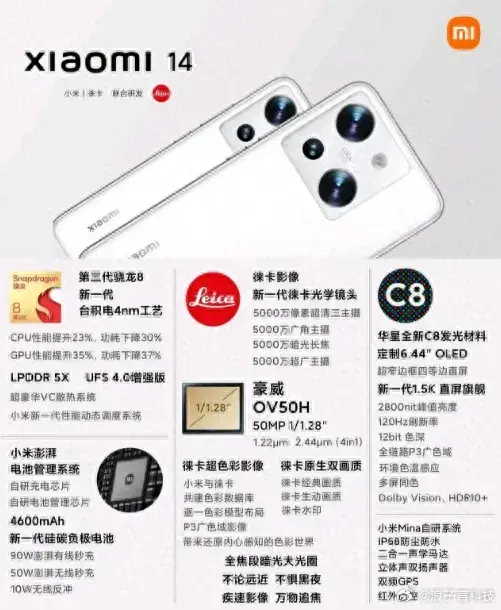
The anticipation surrounding the release of Xiaomi 14 is burgeoning, especially with the recent leaks shedding light on its full specifications. The smartphone, expected to debut on October 27, is brimming with features that hold the promise of an enhanced user experience.
Display and Design
One of the significant highlights of Xiaomi 14 is its 6.44-inch C8 OLED display with a resolution of 1.5K, providing a crisp and vibrant visual experience. The display is further enhanced with a 120Hz refresh rate, making the user interface exceptionally smooth. With a peak brightness of 2,800 nits, Dolby Vision, and HDR10+ support, the Xiaomi 14’s display is engineered for stunning visual clarity under varied lighting conditions1234.
Performance and Storage
Under the hood, Xiaomi 14 is powered by the Qualcomm Snapdragon 8 Gen 3 processor, coupled with LPDDR5x RAM, ensuring a fluid performance even during intensive multitasking. The smartphone offers substantial storage options with UFS 4.0, available in variants of up to 1TB. This ample storage alongside a high-speed processor ensures that the Xiaomi 14 stands tall in terms of performance and storage capacity12.
Camera Capabilities
The Xiaomi 14 houses a remarkable camera setup comprising three Leica-branded sensors. Each sensor carries a 50MP capacity, with one serving as the main lens, another as an ultra-wide lens, and the third as a telephoto lens. This robust camera setup ensures that users can capture high-resolution images and videos in a variety of settings, making Xiaomi 14 a compelling choice for photography enthusiasts12.
Battery and Connectivity
The smartphone is backed by a 4,600mAh battery, supporting 90W wired, 50W wireless, and 10W reverse wireless charging. This robust battery and diverse charging options ensure that the Xiaomi 14 keeps running through the day, catering to the users’ connectivity and usage needs seamlessly. Moreover, with 5G network support, Xiaomi 14 is ready to provide fast internet connectivity, ensuring that users remain connected in this fast-paced digital world15.
Software
On the software front, there is speculation that Xiaomi 14 might feature MiOS as its operating system, although it might still retain Android 14 running under MIUI 15. This showcases Xiaomi’s continuous efforts in providing a smooth and intuitive user interface, which is a critical aspect of user satisfaction1.
The Xiaomi 14, with its high-end specifications, is set to make a significant impact on the smartphone market. It’s a blend of superior display, powerful performance, exceptional camera setup, and robust battery life, all of which are encased in a sleek and modern design.
Samsung has introduced a vivid yellow color variant for its Galaxy Z Flip 5 in India, expanding the color palette for its customers. The fresh hue not only makes a vibrant statement but comes just in time for the festive season, alongside some enticing offers.
Availability and Pricing
The Samsung Galaxy Z Flip 5 Yellow color variant is now available for purchase through Samsung’s official online store, and selected retail outlets. The smartphone comes in two storage configurations: an 8GB + 256GB variant priced at Rs 99,999, and an 8GB + 512GB variant, although the price for the latter was incorrectly listed as Rs 99,999 in one source1. The top-end variant with 8GB RAM + 512GB storage is priced at Rs. 1,09,9992. Additionally, customers can avail bank cashback and an upgrade bonus amounting up to Rs 14,000 in benefits, further sweetening the deal1.
Specifications
The Samsung Galaxy Z Flip 5 runs on Android 13 with OneUI 5.1.1 on top. The heart of the phone is powered by a custom Snapdragon 8 Gen 2 Mobile Platform for Galaxy, which boasts overclocked CPU and GPU cores. It flaunts a 6.7-inch full-HD+ (1,080×2,640 pixels) Dynamic AMOLED 2X Infinity Flex inner display with a 120Hz adaptive refresh rate, alongside a 3.4-inch Super AMOLED folder-shaped cover display with a resolution of 720×748 pixels and a 60Hz refresh rate. The display and rear panel are well-protected by Corning Gorilla Glass Victus 2. The device is also backed by a 3,700mAh battery, ensuring it keeps up with the demands of daily usage2.
Color Options and Offers
The new Yellow color variant joins the existing color options of Cream, Graphite, Mint, and Lavender, providing a more extensive choice for customers looking for a unique look. This addition is part of Samsung’s efforts to provide a diverse range of color options to suit different preferences. The Yellow color variant, along with other color options, is a part of the special deals announced for the upcoming festive season, making it a great time to consider grabbing a Galaxy Z Flip 51.
The Samsung Galaxy Z Flip 5 in Yellow is not only a fresh look but a smart choice for those looking to upgrade, especially with the exciting offers at hand.
Garmin has recently rolled out a significant update, version 14.68, enhancing the functionality of various smartwatches including Fenix 7, Fenix 7 Pro, Epix 2, and Epix 2 Pro. This update, once exclusive to Beta Program members, is now accessible to all users, marking a noteworthy upgrade from the previous version 13.22.
New Additions and Enhancements
The highlight of this update is the introduction of a Gaming App, improvements to Golf features, and the ability to view weather forecasts for multiple locations directly on your smartwatch. Additionally, an array of sports activities like American Football, Ice Hockey, Soccer, and more have been added to non-pro models, enriching the user experience significantly.
Garmin also introduced a Device Settings Backup and Restore feature, allowing a seamless transition between old and new devices. A revamped Virtual Caddie interface is among the optimizations made to Golf features, ensuring a more intuitive and enjoyable experience for golf enthusiasts.
User Feedback and Future Updates
Some users have reported crashes post-update, an issue Garmin is yet to address. However, the company encourages users to share any issues on their forum for a better resolution. With update 14.68, the 14.xx Beta cycle concludes, hinting at the initiation of the 15.xx period in the near future.
Garmin continues to evolve its software capabilities, ensuring an enhanced user experience with each update. The latest update is a testimony to Garmin’s commitment to delivering robust and feature-rich smartwatches to cater to a variety of user needs.