
Key Takeaways
1. Artemis has delivered three EF-24 hydrofoil electric ferries to Belfast, known for their high-speed capabilities.
2. The EF-24 ferry design accommodates around 150 passengers, offering a fresh approach compared to existing models like the Boeing 929.
3. Three planned routes for the EF-24 in the UK include Belfast to Bangor, around the Orkney Islands, and from Southampton to Cowes.
4. The ferries can cruise at speeds of 34 knots (63 km/h) with a range of 70 nautical miles, potentially reducing environmental impact.
5. The project has faced delays due to challenges in new propulsion technologies, with operations expected to start by 2026 if test runs are successful.
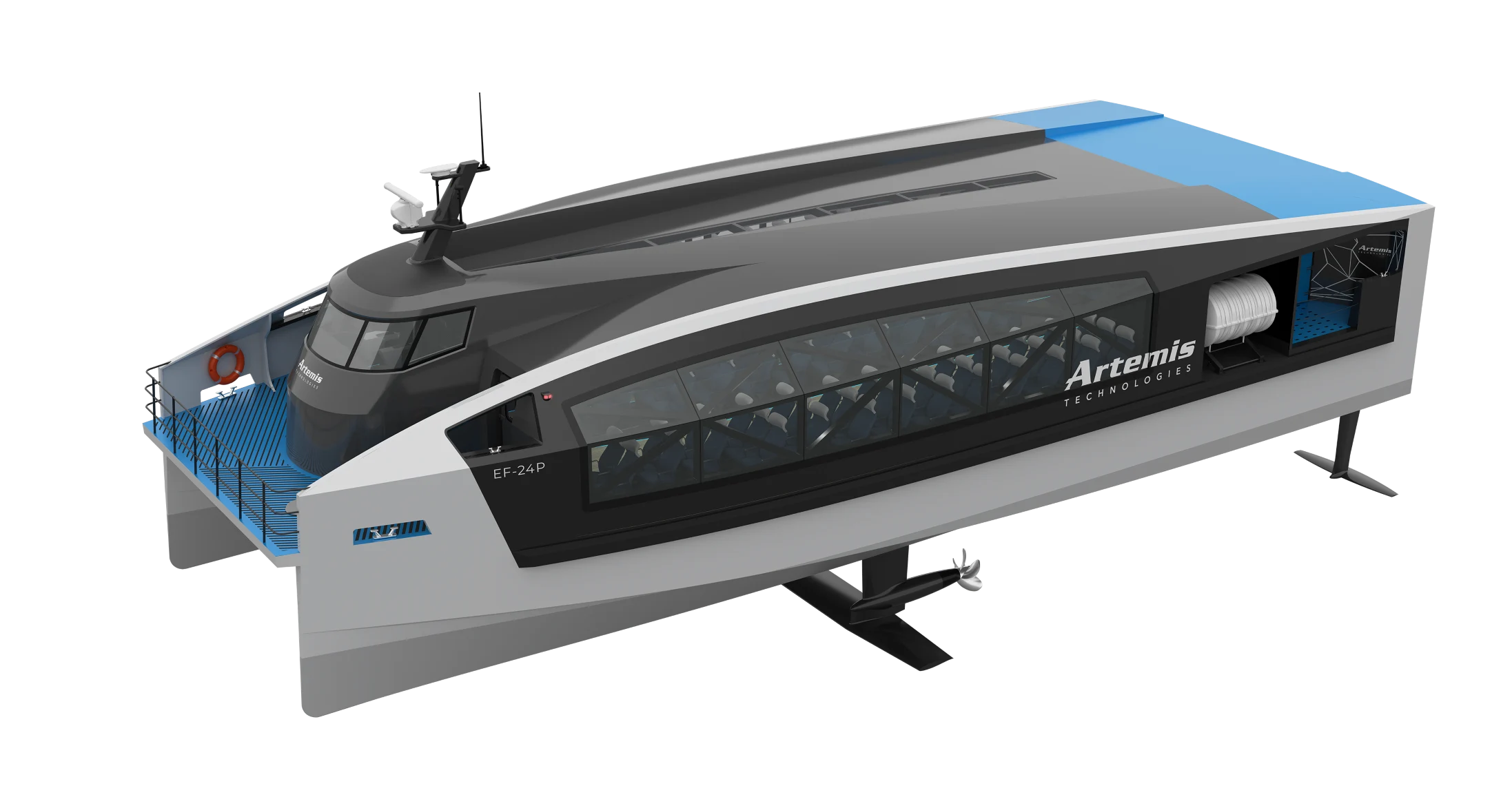
Artemis has recently shared the good news of delivering three EF-24 hydrofoil electric ferries to Beflast. The Artemis EF-24 Passenger ferry is recognized for its high-speed capabilities, utilizing hydrofoils to glide mainly above the water. This method is somewhat similar to how the Boeing 929 (jetfoil) operates, which is predominantly used in East Asia, but the EF-24 is much larger in size.
New Hydrofoil Design
The EF-24 represents a fresh approach to hydrofoil design, providing seating for about 150 passengers. In comparison, the Boeing model can accommodate nearly double that number and is driven by an aircraft engine. A few years back, Kawasaki constructed a prototype using leftover parts under license, but since then, advancements in hydrofoil and jetfoil technology have been scarce. Although these boats have the capability to potentially replace or complement air travel, maintenance has proven to be quite demanding.
Opening Up Waterways
Now, the EF-24 is poised to revolutionize the waterways with its high-speed electric capabilities. There are three planned routes in the UK: from Belfast in Northern Ireland to Bangor in Wales, around the Orkney Islands in Scotland, and from Southampton in England to Cowes on the Isle of Wight.
However, the entire project has faced delays, as Artemis concedes in its press announcement, due to unexpected challenges in rolling out new propulsion technologies. The company has not yet revealed when the electric ferries, which are currently being equipped in Belfast, will start operations. If the test runs are successful, there is a solid chance that they could be operational by 2026.
Speed and Efficiency
The ferries are designed to cruise at 34 knots, which is approximately 63 km/h (39.15 mph), across the water. They have a claimed range of 70 nautical miles (about 130 km/80 mi), suitable for rapid hydrofoil travel. Typically, these vessels lift out of the water only at a distance from the port. According to Artemis, the ferries can achieve high speeds relatively quickly. This hull-lifting could lead to significantly less harm to coastlines due to reduced wave generation. However, such advancements might necessitate changes in shipping regulations.
Artemis Technologies’
Source:
Link
Leave a Reply