

Key Takeaways
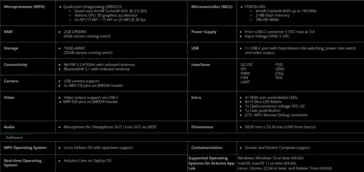
1. The Arduino UNO Q features a Qualcomm Dragonwing QRB2210 microprocessor with four Arm Cortex-A53 CPU cores and an unnamed Adreno GPU.
2. It offers various connectivity options, including Wi-Fi 5, Bluetooth 5.4, and USB-C, which can serve as both camera input and video output.
3. Initial models will have 2 GB of RAM and 32 GB of eMMC storage, with a higher variant of 4 GB RAM and 64 GB storage expected soon.
4. The device runs on Zephyr OS and connects to its Memory Protection Unit via Debian, with new Arduino App Lab software for all major operating systems.
5. Pricing and availability details for the Arduino UNO Q will be announced at a later date.
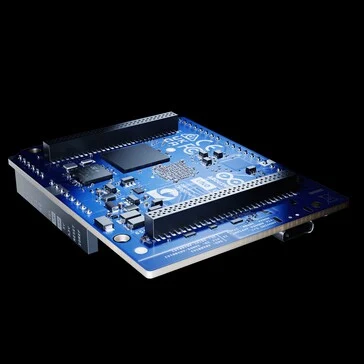
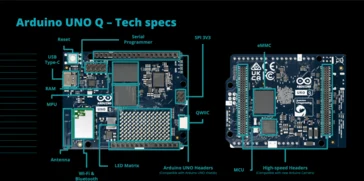
Arduino has introduced a new single-board computer known as the Arduino UNO Q. This device is packed with various connectivity options like Wi-Fi 5, Bluetooth 5.4, and USB-C. At its core, it features a Qualcomm Dragonwing QRB2210 microprocessor that includes four Arm Cortex-A53 CPU cores, along with an unnamed Adreno GPU. Additionally, it is paired with an STMicroelectronics STM32U585 microcontroller that has one Arm Cortex-M33 core.
Specifications and Variants
The Arduino UNO Q will initially be available with 2 GB of RAM and 32 GB of eMMC storage. A version featuring 4 GB of RAM and 64 GB of storage is expected to be released shortly. The USB-C port has the ability to function as both a camera input and video output by default, however, users can also utilize dedicated pins to keep the port free for other uses. It’s important to note that microphones will always require a pin for connection.
Software and Pricing
On the software side, the Arduino UNO Q operates using Zephyr OS and connects with its Memory Protection Unit through Debian. The company has also launched its new Arduino App Lab software, which is compatible with all major operating systems. Details regarding pricing and availability will be revealed at a future date.

Leave a Reply