
Key Takeaways
1. Zepp Health’s T-Rex 3 Pro competes with Garmin’s Fenix series, offering offline map navigation at a lower price.
2. Zepp Health expanded its product range in 2025 with budget-friendly options like the Active 2, which was named “Price-Performance King.”
3. The wearable industry saw new formats in 2025, with devices like Garmin’s Index Sleep Monitor and Zepp Health’s Amazfit Helio Strap lacking screens.
4. Zepp Health faced user complaints about limited software support (two years) but made significant improvements through free updates.
5. Amazfit currently lacks smartwatches with LTE or satellite capabilities, creating a gap in their product lineup compared to competitors like Apple and Garmin.
In a recently released article, we discussed Garmin’s advancements in 2025, especially focusing on its own wearable technology. Many readers might already know about Zepp Health, which manages the Amazfit brand and provides a variety of wearables that deliver great value. Unlike Garmin, Zepp Health is still a newcomer in the wearable market, experiencing rapid growth.
Key Launches of 2025
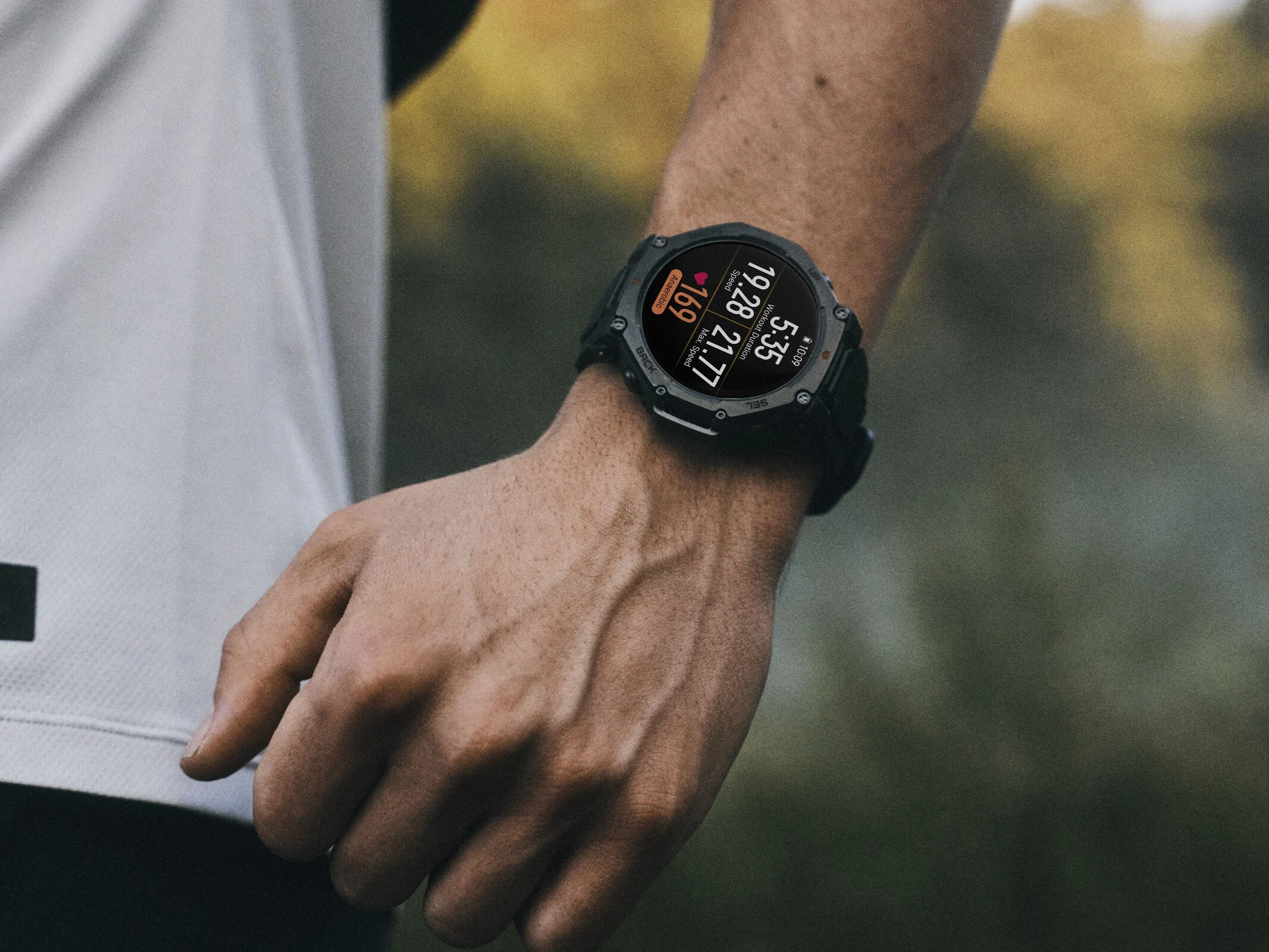
The standout product for Zepp Health in 2025 was likely the T-Rex 3 Pro, a clear competitor to Garmin’s Fenix series, but at a lower price point. The T-Rex 3 Pro features a groundbreaking addition with offline map navigation on the device itself. Zepp Health has also upgraded the navigation capabilities for the T-Rex 3, which we’ve previously tested and reviewed. The T-Rex smartwatches are built to last, featuring AMOLED screens that can reach brightness levels of up to 3,000 cd/m².
Expanding Product Range
In 2025, Zepp Health introduced new devices not only in the premium market but also in the budget-friendly sector, including the Active 2, Amazfit Balance 2, and Amazfit Bip 6. The Active 2 stands out as it represents a growing trend in wearables, offering an impressive range of features at an accessible price. In May 2025, we named the Amazfit Active 2 the “Price-Performance King.” For under $100, customers can acquire a smartwatch equipped with offline navigation, a vibrant display, and a partially stainless steel frame, making it ideal for serious athletes.
Innovations in Wearable Formats
Last year, we continued to see a trend in the wearable industry with the emergence of new formats. While smart rings gained popularity in 2024, 2025 introduced various wearables lacking their own screens, each catering to different needs. For instance, Garmin unveiled the Index Sleep Monitor, a device designed for sleep analysis, while Zepp Health introduced the Amazfit Helio Strap, a sports tracking wearable without a display.
Zepp Health has managed to evade major controversies but has faced some user complaints. The official software support duration is fairly brief at two years, and the support experience can be inconsistent. On a positive note, several important enhancements were made in 2025 through free software updates, including the BioCharge feature, Jet Lag Manager, and third-party training control integrations. Amazfit wearables now have the capability to estimate running efficiency. A fresh release at the start of the year is the Active Max, noted for its exceptional battery life. There are no specific details or leaks concerning the 2026 product lineup yet, but a noticeable gap exists in their offerings. Unlike Apple and Garmin, Amazfit currently does not provide any smartwatches with LTE or satellite capabilities.
Source:
Link

Leave a Reply