Key Takeaways
1. Pricing Advantage: Vivo aims to offer a more affordable mixed-reality headset compared to Apple’s high-priced products, with competitors like Meta’s Quest headsets priced lower for gamers.
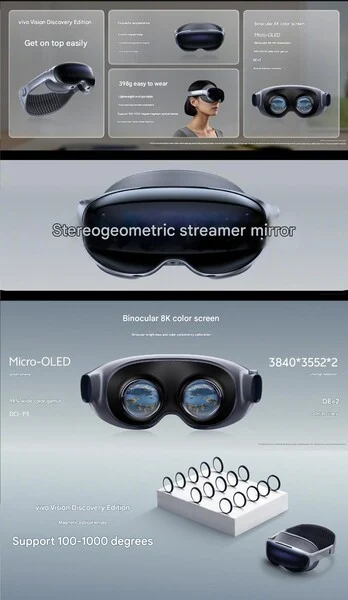
2. Technical Features: Vivo’s headset boasts impressive specifications, including dual micro-OLEDs with 8K resolution, surpassing Apple’s pixel count and offering high color accuracy.
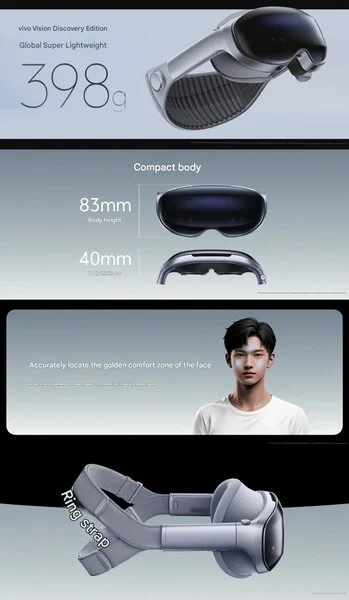
3. Lightweight Design: Vivo’s headset is significantly lighter (14 oz) than Apple’s (21+ oz) and the Meta Quest 3 series, enhancing comfort for users during extended use.
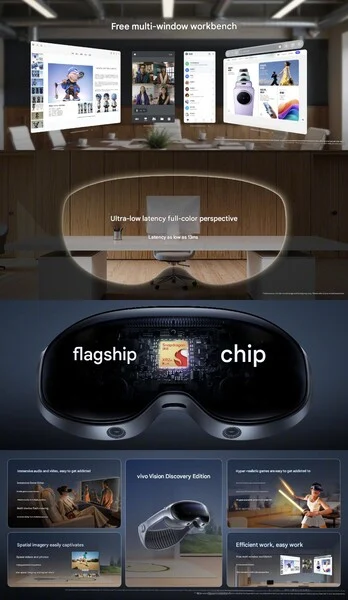
4. Virtual Experience Capabilities: Vivo’s headset supports immersive experiences like virtual movie viewing and 3D gaming, with features such as a large virtual display and low latency for productive applications.
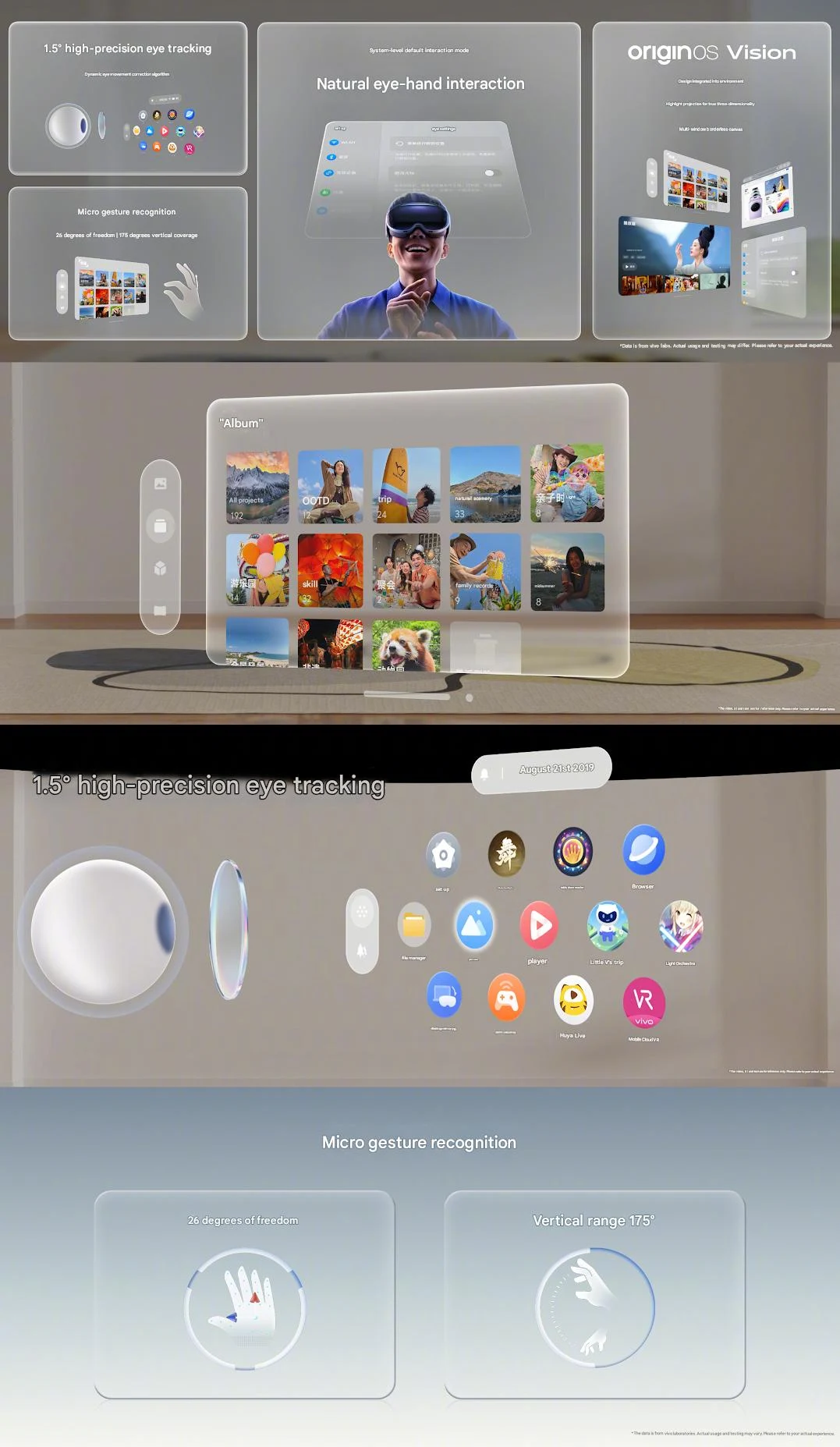
5. User-Friendly Features: The headset includes advanced tracking technology and multiple cameras for gesture control, while also providing options for glasses wearers and physical volume controls, making it accessible and convenient.
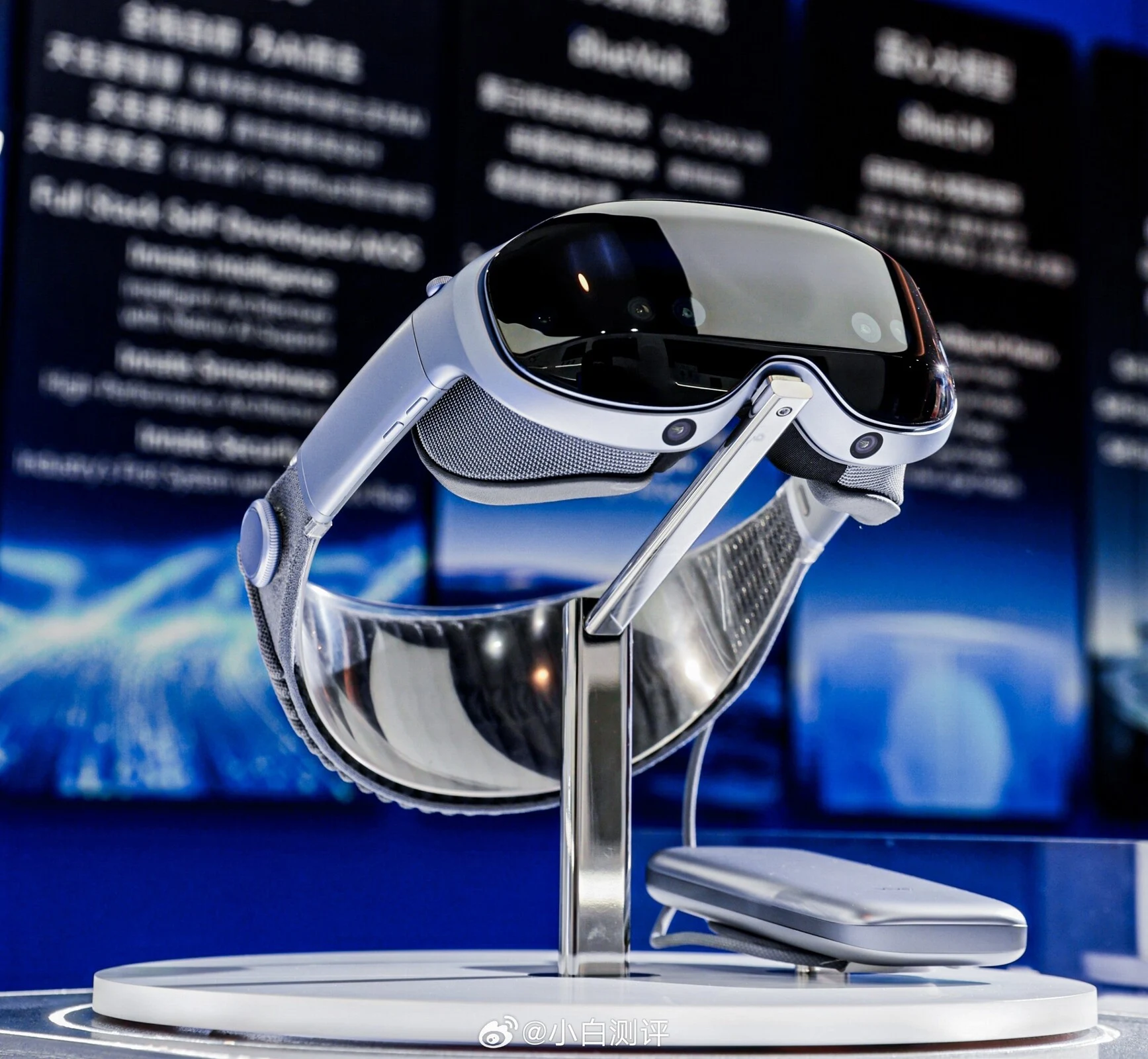
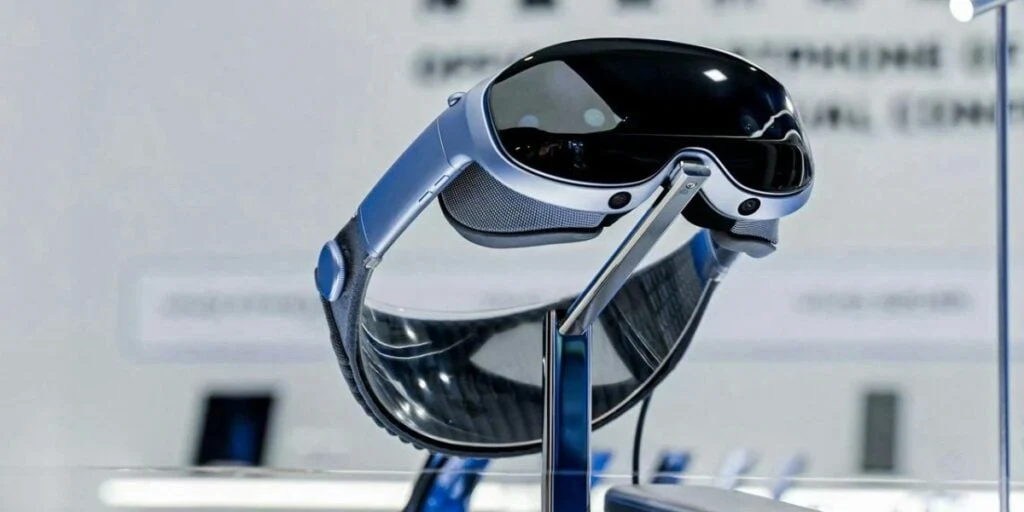
Despite Apple’s venture into the mixed-reality arena, concepts like virtual reality, augmented reality, or what Apple dubs Spatial Computing, have yet to penetrate the mainstream market. This might be attributed to the steep starting price of Apple’s products, while Meta’s Quest headsets from Facebook are designed specifically for gamers, coming at much lower price points. Currently, the Meta Quest 3S is available for $290 on Amazon. Meanwhile, Vivo has just launched its Vivo Vision headset, which clearly draws inspiration from Apple’s design, but the Chinese firm hasn’t shared any final retail prices yet.
Pricing and Technical Features
Nevertheless, it’s evident that Vivo is aiming for a much lower entry price. They haven’t revealed all the technical specifications yet, but it is known that the dual micro-OLEDs provide an impressive combined 8K resolution, with 3840 x 3552 pixels per eye, which slightly surpasses Apple’s 3660 x 3200 pixels. Vivo claims to offer 94% coverage of the DCI-P3 color space, with Delta E < 2 color accuracy. The headset also features precise lens alignment designed to reduce discomfort. It operates on the Qualcomm Snapdragon XR2+ Gen 2 chipset.
Weight and Design
A particularly notable aspect is its lighter weight when compared to the most recognizable competitors. Vivo’s headset weighs in at 14 oz, in contrast to Apple’s 21+ oz device, making it genuinely lightweight. Additionally, the Vivo headset is about 20% lighter than the Meta Quest 3 series. Vivo also highlights its compact dimensions of 3.27 x 1.57 inches and a ring strap at the back, designed to enhance comfort. With 1.5 degrees of eye-tracking precision and a vertical tracking range of 175 degrees, it promises natural gesture control relying on OriginOS Vision.
Virtual Experience
The virtual “IMAX display” that appears before the user’s eyes can be as large as 118 ft or around 1400 inches. Alongside entertainment options like virtual movie viewing or immersive 3D gaming, there are also claims of support for productive applications, with low latency at 13ms. OriginOS Vision features a virtual workspace with multiple adjustable windows, akin to what Apple offers. It also accommodates Spatial Videos and Photos. At present, the headset is not available to the general public but can be tested in Vivo’s official stores in China as part of a Discovery Edition for selected reviewers.
Several hands-on reviews of this intriguing competitor to Apple’s Vision Pro are circulating on platforms like Weibo and Bilibili. Similar to the US version, users must have their face measured to select the correct eye mask size. The battery is external, mirroring Apple’s design. Reviewers noted that the lighter weight is a significant advantage for the Vivo Vision, partly due to the different materials used. However, the audio quality reportedly falls short compared to Apple’s product. For glasses wearers, magnetic lenses can be utilized if they are aware of their prescription.
The reviews further indicate that Apple’s mixed-reality offering is more advantageous for those with interpupillary distances that stray significantly from the average. Apple accommodates distances from 51 to 75 mm, whereas Vivo supports 57 to 71 mm. The Vivo headset is outfitted with eleven cameras—seven on the front, two beneath, and two internally. The camera quality is said to be comparable to that of Apple’s, though it tends to become noisier in darker settings. The video shows that finger gestures and the ability to configure the virtual space are largely in line with what is expected from Apple. Differences were noted in the system and volume controls, with Vivo employing two physical buttons for volume adjustment.
Display and Gaming Capabilities
The initial review concludes that the 90Hz display, offering a peak brightness of 100 nits, is of high quality and nearly reaches Dolby Vision cinematic standards. Following this, the hands-on video explores various mixed-reality capabilities, such as enjoying movies in a virtual IMAX theater, using Spatial Videos and Photos, or engaging in 3D gaming. Despite potentially less robust chipset performance, Vivo appears to hold an edge over Apple, especially in gaming scenarios. The tester commended the seamless integration of real-world elements, physical space, virtual objects, and hand movements experienced during gameplay. A specialized VR game controller is also supported, allowing users to stream VR games through Steam. In discussions with Vivo, it was revealed that the Vivo Vision headset aims to be more affordable and user-friendly compared to Apple’s initial mixed-reality offering in the near future.
Source:
Link