
Tag: Visa

  • Revolut Unveils Numberless Visa & Mastercard for Better Security

    Revolut Unveils Numberless Visa & Mastercard for Better Security

    Key Takeaway

    – Revolut now offers numberless debit cards by default, with an option to keep the number printed if preferred.
    – Numberless cards prevent visual theft of card details in public (e.g., by cameras or copying).
    – Numberless cards may cause issues at hotels or airlines that require the physical card number for reservations or payment guarantees.
    – Card numbers and security details remain accessible in the app if needed.
    – Users can maintain multiple Revolut cards and toggle them on/off individually to manage different use cases.


    New Security Update

    The neobank Revolut has rolled out a new security feature in its app. According to an in-app announcement, users ordering a new debit card—whether Visa or Mastercard—will no longer have the card number printed on the physical card. However, it will still be possible to opt for a card with the number printed on it if desired.

    Communication Gaps in the App

    In the app, however, this new feature is not yet clearly communicated. For some cards, it remains unclear whether approving the shipping costs might accidentally trigger an order. We did, however, find the feature immediately on the card that allows for a custom design. With a simple toggle, the number on the card can be opted out of.

    Public Payment Protection

    When paying with this card in public, users no longer risk someone copying the card number, security codes, and expiration date, or filming them with a security camera, smart glasses, or a smartphone. The numberless card thus catches up with Apple Pay and Google Wallet.

    Hotel and Travel Challenges

    The feature is also helpful in other ways. Some hotels, for instance, have developed a habit of writing down card numbers on slips of paper. Although this is not permitted, it still happens even at major chains like NH or Marriott, as we know from personal experience. Not everyone feels comfortable arguing with hotel staff. Especially when the staff is used to this practice, they feel they are in the right, which is when it becomes problematic.

    Potential Booking Issues

    However, this can also lead to issues if, for example, the card number needs to be entered directly into the reservation system. Some hotels use this specific number to secure a payment guarantee instead of simply blocking an amount. In such cases, Apple Pay or Google Pay is often not accepted as a payment guarantee. The hotel wants to see the physical card. Anyone traveling with a numberless Revolut card should therefore be prepared for discussions.

    Accessing Card Details via App

    If in doubt, however, Revolut states that the card number and other security details can still be accessed via the app. There are also occasionally still airlines that request to see the “credit card” used to pay for the flight ticket. One should be aware of such issues, even if they occur rarely. When in doubt, however, a Revolut card with a number can still be used. Revolut allows the use of multiple payment cards, which can be turned on and off individually.

    Final Considerations

    Travelers should know that using a card without a number might slow things down at check-in counters or rental desks. But the added security is a tradeoff many will appriciate. Its good that the app stores all the details though this requires your phone to be charged and accessible.

    Sources

    • DLsite Uses Digital Banking to Bypass Payment Censorship

      DLsite Uses Digital Banking to Bypass Payment Censorship

      Key Takeaways

      1. DLsite has introduced its own payment system, Minna no Ginko Payment, after facing censorship from payment processors like Visa and Mastercard.
      2. In 2024, DLsite abandoned Visa and Mastercard to continue selling adult content, limiting payment options for users in Japan and complicating access for international buyers.
      3. Steam and itch.io are also experiencing pressure from payment processors, leading to the removal of certain games and changes in payment methods.
      4. An activist group, Collective Shout, is accused of influencing credit card companies to censor mature content, with some critics questioning their true motivations.
      5. Valve discontinued support for Bitcoin in 2017 due to concerns about fraud and instability, and has not yet announced new payment processor options following recent changes.


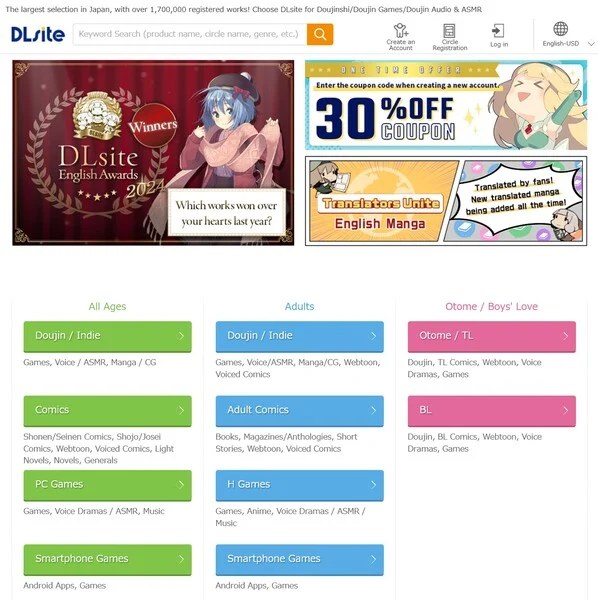
      Much attention has been directed at platforms like Steam that are banning NSFW games. In contrast, Japanese websites have already faced censorship from payment processors. DLsite, which sells independent games and manga—some containing adult material—has introduced its own payment system after turning down limitations from Visa and Mastercard.

      New Payment Method Introduced

      According to reports from Automaton, the new payment system, Minna no Ginko Payment, links to Minna no Ginko, a local digital bank. Buyers can connect their bank accounts to viviON IDs, a service set up by the parent company of the store. Sadly, while the site is well-known globally, this option is not accessible outside of Japan.

      Changes in Payment Options

      In 2024, DLsite decided to abandon Visa and Mastercard instead of removing digital games, comics, and videos that contain adult content. This left users in Japan with limited payment choices, and those from other countries had to seek even more complex solutions. Subsequently, Steam and itch.io have had to deal with similar challenges after payment processors pressured them, leading to the removal of certain games.

      The issue intensified in August when Steam stopped allowing PayPal in various countries. Valve clarified that the banks associated with PayPal asked for its discontinuation. Consequently, gamers found themselves unable to use numerous currencies for transactions. Valve stated it was looking into other payment processors but hasn’t shared any updates since.

      Activist Group’s Influence

      Critics hold Collective Shout responsible for pushing credit card companies to censor games aimed at mature audiences. This activist group claims to target works that depict the abuse of women. However, some argue that their opposition to the game Detroit: Become Human reflects a more political agenda rather than a genuine concern for illegal content.

      It’s uncertain if Steam and itch.io will take the same direction as DLsite. Valve stopped supporting Bitcoin back in 2017 due to worries about fraud, high transaction fees, and the currency’s instability. Visa and Mastercard are major players in the e-commerce space and have been accused of anti-competitive behavior against rivals that might be more lenient towards censorship.

      Source:
      Link


    • Petition Against Steam Game Ban Hits Over 205,000 Signatures

      Petition Against Steam Game Ban Hits Over 205,000 Signatures

      Key Takeaways

      1. The petition initiated by Zero Ryoko rapidly gained over 205,000 signatures due to support from Elon Musk and increased media attention.
      2. Valve’s removal of adult games from Steam, citing payment processor rules, sparked outrage and led to similar censorship on Itch.io.
      3. The petition criticizes Visa and Mastercard for their perceived hypocrisy and their influence on online content regulation, highlighting their role in deplatforming non-illegal content.
      4. The petition includes demands against age-verification measures that raise privacy concerns by requiring government-issued IDs.
      5. The involvement of activist groups, like Collective Shout, in pressuring payment processors has come under scrutiny, emphasizing the hidden forces that shape online expression.


      The petition started by a user named Zero Ryoko has experienced remarkable growth in the last few days, jumping from 70,000 to more than 205,000 signatures in just 5 days. This surge was notably boosted on July 21 when Elon Musk shared a post about the campaign on X, drawing significant mainstream attention to the matter.

      Valve’s Actions Spark Outrage

      The situation flared up after Valve, which owns the Steam platform, decided to take down a number of adult games, claiming it was following the rules set by its payment processors. This trend has now spread to Itch.io, leading to censorship of NSFW games there too.

      The petition takes direct aim at Visa and Mastercard, calling them out for “blatant hypocrisy” in their self-assumed roles as global censors. The petition reads, “Whole genres of books, games, films, and art are being demonetized or deplatformed — not because they’re illegal, but because they upset the personal values of executives or activist groups.” It points out that while these companies are quick to target fictional content, they are slow to respond to platforms where real illegal activities have been reported.

      Key Demands from the Petition

      The petitioner outlined four main demands:

      While many of the initial games banned on Steam were not of high quality, supporters of the petition are worried about what might happen next. The games that were taken down were primarily those that were seen to promote or endorse sexual violence or manipulation.

      This controversy has sparked a renewed discussion about the significant, but often hidden, influence that a few financial companies have on online expression. Consumer advocates have long claimed that Visa and Mastercard have a virtual monopoly over digital payments, which gives them the power to act as unofficial regulators.

      Privacy Concerns and Age Verification

      The petition has also been modified to include opposition to age-verification measures implemented by platforms like YouTube, raising privacy issues since these verifications necessitate government-issued IDs and photos.

      The role of third-party activist groups has also gained media attention, as mentioned in our previous updates. A past report by Vice Media journalist Ana Valens underscored the influence of the Australian group Collective Shout in pressuring payment processors.

      The success of this petition, which has gathered over 205,000 signatures, has certainly highlighted the often-invisible forces that dictate what content is permitted in the digital landscape. It remains uncertain whether the growing pressure will compel these self-appointed regulators to change their actions.

      The effect of third-party activist groups has also come into focus in the media, as noted in our earlier update. A previous report from Vice Media journalist Ana Valens brought attention to the Australian group Collective Shout and its efforts to influence payment processors.

      The petition’s achievement in rallying more than 205,000 supporters has undeniably spotlighted the hidden dynamics that control what content is accepted in the online space. Whether this pressure will lead these self-declared regulators to alter their behavior is still to be determined.

      Source:
      Link


    • Petition Against Payment Processors for Steam Games Hits 140K Signatures

      Petition Against Payment Processors for Steam Games Hits 140K Signatures

      Key Takeaways

      1. Valve has removed many Steam games with mature content due to payment processor guidelines, raising concerns among gamers about censorship.
      2. A petition opposing Visa and Mastercard’s influence on game availability has gained over 140,000 signatures in just two days.
      3. Gamers fear that payment networks may eliminate all adult-themed content, not just inappropriate or low-quality titles.
      4. The petition also seeks to protect artistic expression and calls for transparency from payment processors regarding harmful content classifications.
      5. There is uncertainty about the petition’s impact, but media coverage is increasing awareness of the censorship issues, highlighting concerns about monopolistic control by Visa and Mastercard.


      Valve has recently taken down a significant number of Steam games that contain mature content from its platform. The company mentioned it was following guidelines established by the payment processors involved with the marketplace. However, many gamers and censorship opponents quickly voiced their concerns. A petition opposing Visa and Mastercard has surged in signatures from 70,000 to over 140,000 within just two days.

      Concerns Over Payment Network Influence

      Gamers are worried that payment networks hold too much power over which games they can access. A lot of the Steam games removed had inappropriate titles or were considered low-quality. Nonetheless, those who set up the petition are anxious that all adult-themed content could eventually be wiped out. In some instances, credit cards and their supporters target games that do not show sexual violence.

      Protecting Artistic Expression

      The Change.org petition also aims to defend films and art from unnecessary censorship. Its creators are calling on payment processors and their activist allies to honor “legal fictional content.” They are asking these companies to provide clear explanations for why they classify a product as harmful. Moreover, there should be a way for creators to appeal against these bans.

      The Impact of Signatures

      It remains uncertain what impact, if any, the massive number of signatures will have. Nevertheless, the growing media attention highlights the issue. Unfortunately, not all media outlets allow their writers to discuss the ongoing censorship situation.

      Vice Media compelled Ana Valens to remove an article that shed light on Collective Shout’s involvement in the Steam situation. This Australian activist organization asks Visa and Mastercard to prevent transactions related to adult games. After refusing to take the article down, Valens and some colleagues decided to resign.

      Consumer advocates claim that Visa and Mastercard have a monopoly in the global payment system. Some experts propose that decentralized cryptocurrency might provide a way forward. In the past, Steam accepted Bitcoin for transactions but later reversed this decision due to high fees and worries about fraud.

      Source:
      Link

    • Steam Updates Adult Content Rules Following Payment Processor Pressure

      Steam Updates Adult Content Rules Following Payment Processor Pressure

      Key Takeaways

      1. Steam has updated its content policies, influenced by payment companies like Visa and Mastercard, to restrict certain adult content.
      2. A “mini-purge” has occurred, removing controversial games such as “Incest Tales” and “Wolf on Rail” from the platform.
      3. The definition of “adult only content” remains unclear, but more explicit and fetish-related themes are likely banned.
      4. While some view the changes positively to tackle problematic titles, others criticize the increased control payment processors have over game accessibility.
      5. Community reactions are mixed, with some unhappy about the influence of payment providers on Steam’s decisions, advocating for Valve to maintain authority over content.


      Steam has made changes to its content policies and started to remove certain controversial games after receiving pressure from payment companies like Visa and Mastercard.

      Updated Guidelines

      Recently, Steam modified its onboarding section on the documentation homepage to add a new point in the Rules and Guidelines: “Content that may violate the rules and standards set forth by Steam’s payment processors and related card networks and banks, or internet network providers. In particular, certain kinds of adult only content.”

      The Mini-Purge

      As noted by TheGamer, this update led to a sort of mini-purge, according to the Steam Database, which saw the removal of various problematic titles like “Incest Tales,” “Wolf on Rail,” “Sex Village,” and “Slave of the Police Officer,” among others, from the store.

      While the exact definition of “certain types of adult only content” remains vague, it appears that more explicit and fetish-related themes will no longer be permitted on the platform.

      Pros and Cons

      On one hand, this action can be seen positively, as Steam has had a long-standing issue with adult shovelware that needed addressing. On the flip side, this change grants payment processors increased control over what is allowed on the platform, effectively deciding which games are accessible to players.

      Both Visa and Mastercard are no strangers to this kind of action. They have previously taken steps to limit adult content on sites like Pornhub and OnlyFans.

      Collective Shout’s Initiative

      Earlier this month, Collective Shout, a grassroots movement opposing the objectification of women in media, sent an open letter to payment processors, including PayPal, Visa, and Mastercard, accusing them of profiting from numerous problematic titles on Steam.

      They called on payment processors to “show corporate social responsibility and immediately stop processing payments on Steam and Itch.io and any other platforms hosting similar games.”

      Community feedback

      The response from the community appears to be mixed on the Steam subreddit, with many expressing dissatisfaction that the platform made these changes due to pressure from payment providers rather than making a decision independently.

      Others argued that it shouldn’t be the card companies determining how users spend their money, stating that the final authority should lie with Valve.

      Source:
      link