Tag: Tesla Supercharger

  • Volvo Rolls Out 20k+ Fast-Charging Points for EV Fleet Update

    Volvo Rolls Out 20k+ Fast-Charging Points for EV Fleet Update

    Key Takeaway

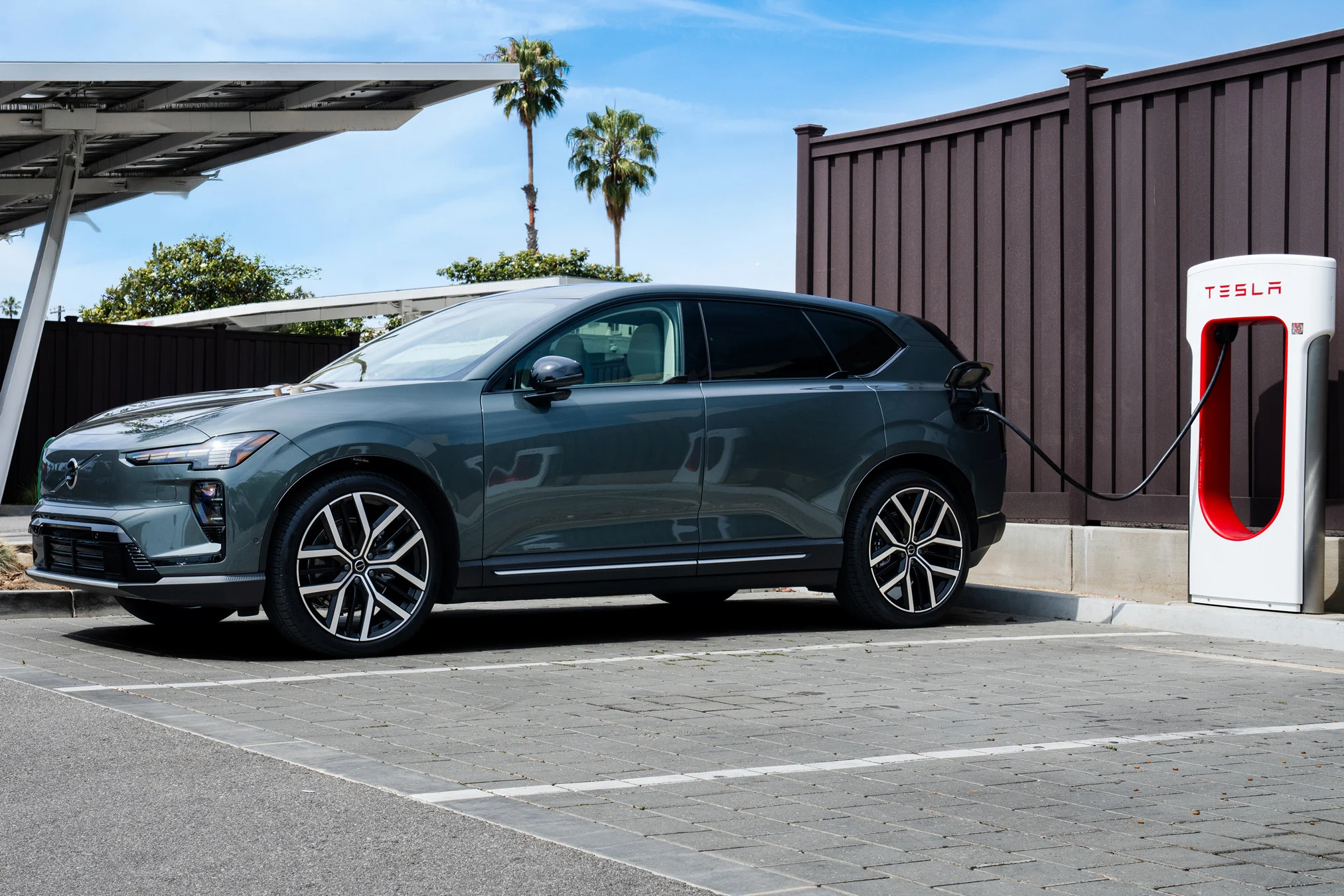
    – Volvo will enable direct access to over 20,000 Tesla Superchargers via Volvo Public Charging Service in its app starting Q4 2026, across 29 European countries.
    – The service already provides access to about 1.2 million charging points in Europe and 3 million worldwide, covering Volvo’s full model lineup.
    – Volvo plans to extend access beyond Europe, transitioning certain Asia-Pacific models to NACS by 2029 for seamless Tesla charging in Asia and North America.


    From the fourth quarter of 2026, Volvo drivers will be able to skip the detour through third-party apps, as more than 20,000 Tesla Superchargers become reachable, activated, and billed directly via the company’s own smartphone app. The plan promises a smoother, more streamlined charging experience, reducing the need to juggle several services on the road.

    Public charging service rollout

    Through the Volvo Public Charging Service inside the app, owners of a fully electric model will gain direct access to the charging stations of the US pioneer. The rollout covers 29 European countries, including Germany, France, the United Kingdom, Italy, Spain, Sweden, and Norway, aiming to support long-distance drivers with quick recharges on the go. This integration is designed to simplify long journeys and daily commutes alike, making charging more predictable and convenient for Volvo users.

    Current and future reach

    Even now, customers can access around 1.2 million charging points in Europe and a total of three million charging options worldwide through the app. Volvo does not exclude anyone from this new convenience and explicitly names the EX30, EX30 Cross Country, EX40, EC40, and EX60, as well as the large flagship EX90 and the ES90 electric sedan. The Swedish brand thus covers its entire range, from compact city cars to luxury long-distance BEVs.

    Global ambitions and market expansion

    But the developers’ focus isn’t only on Europe. In key Asia-Pacific markets like Japan and South Korea, Volvo plans to transition selected model lines to the North American Charging System (NACS, SAE J3400 standard) by 2029. This move will give Volvo drivers in Asia direct access to the local Tesla Supercharger network, removing the need for bulky adapters and promoting easier cross-border charging experiences.

    Impact on charging anxiety

    Through this strategic partnership, Volvo aims to make daily BEV life as straightforward as possible. The ongoing chaos around standardisation and public charging is often cited as a major hurdle to mass market adoption. By integrating one of the most well-known and reliable fast-charging networks directly, Volvo reduces traditional range and charging anxiety for its customers, potentially speeding up the shift to electric driving.

    Volvo

    Sources

  • Record-Breaking Off-Grid Tesla Supercharger with 12 Trailer Piles

    Record-Breaking Off-Grid Tesla Supercharger with 12 Trailer Piles

    Key Takeaways

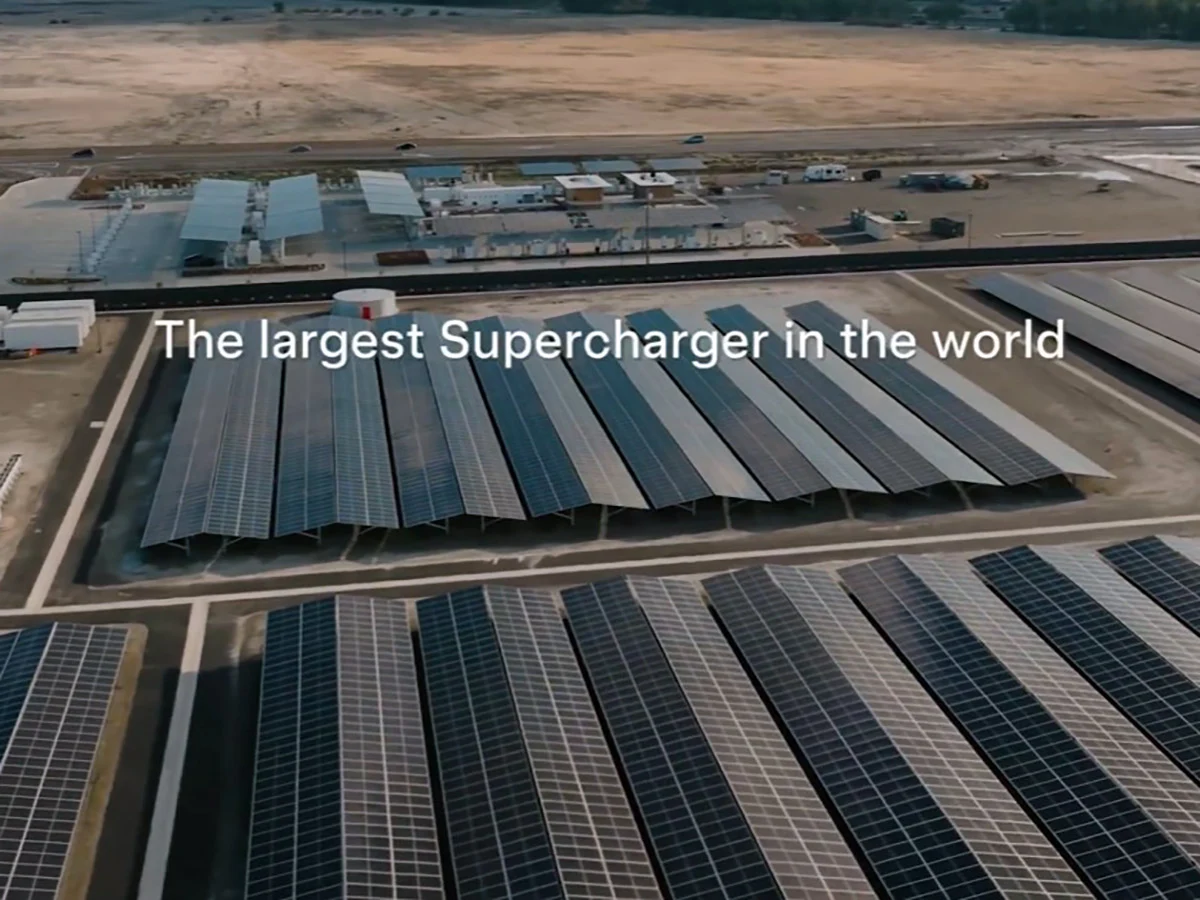
    1. Tesla has launched the world’s largest Supercharger station in Lost Hills, California, with 168 stalls, half of which were operational at its opening for the 4th of July.

    2. The station operates independently from the local utility grid, using 11 MW of solar energy from ten Megapack systems, with a total capacity of 39 MWh.

    3. Future expansion plans include adding more stalls and services, with twelve large pull-through stalls for vehicles towing trailers.

    4. Tesla addressed the charging infrastructure gap between San Francisco and LA by powering the station with Megapacks and solar canopies, completing it in under eight months.

    5. The use of prefabricated Supercharger stalls and innovative setup methods reduces construction time and costs, enhancing Tesla’s ability to secure public charging infrastructure grants.


    After just eight months of hard work, Tesla has launched the largest Supercharger station in the world. Situated in Lost Hills, California, this station boasts an impressive 168 charging stalls, although only half were operational at its grand opening, timed perfectly for the 4th of July travel rush.

    Solar Power and Capacity

    As of Thanksgiving, Tesla has activated the remaining 84 stalls, utilizing 11 MW of solar energy generated from ten Megapack energy storage systems, totaling a remarkable capacity of 39 MWh. Notably, this enormous Supercharger station operates independently from the local utility grid, running entirely on solar power.

    Future Expansion Plans

    The only minor utility connection present is designed for future growth, as Tesla intends to expand the Supercharger site with more stalls and additional services. Among the features of this record-breaking station are twelve large pull-through stalls, which accommodate vehicles towing trailers, allowing them to charge without needing to disconnect.

    Addressing Infrastructure Needs

    Tesla recognized a significant gap in charging infrastructure along the route from San Francisco to LA, especially with the Thanksgiving holiday approaching. Rather than waiting for a utility connection, the company opted to power this massive station with Megapacks and solar canopies over the 168 stalls.

    This strategic decision enabled Tesla to complete this record-setting Supercharger site in under eight months from the start of construction. The company is now employing prefabricated Supercharger stalls and an innovative method to set them up on a foundation without pouring concrete. This approach not only accelerates the building process but also reduces costs, giving Tesla an edge in securing public charging infrastructure grants.

    Source:
    Link


  • Tesla Introduces Live Supercharger Pricing to Reduce Congestion

    Tesla Introduces Live Supercharger Pricing to Reduce Congestion

    Key Takeaways

    1. Tesla has introduced dynamic pricing for Superchargers based on station busyness, affecting over 550 locations in the U.S.
    2. The new pricing model aims to reduce congestion by encouraging drivers to use less busy charging stations.
    3. Customers experience fewer peak rates, and average costs at Supercharger stations have not significantly changed.
    4. Charging rates are fixed once a vehicle is plugged in, even if the station becomes busier.
    5. Drivers can only benefit from lower prices by unplugging and reconnecting their vehicle; Tesla is seeking customer feedback on this system.


    Tesla is changing its Supercharger pricing system. Instead of relying solely on the time of day, they have launched dynamic pricing at over 550 locations in the United States.

    New Pricing Model

    In states like Florida, California, New Jersey, Illinois, and New York, the Supercharger prices now depend on how busy the station is, rather than just the clock. Many drivers prefer to charge their cars at home and use Superchargers mainly for long trips, making the old time-of-day pricing less appealing for most users.

    Successful Pilot Program

    Earlier this year, Tesla tested this dynamic pricing at a few stations, and it seems to have worked well. The company noted that charging more when a station is crowded led drivers to seek out less busy sites, reducing congestion. This approach has helped distribute the charging load more evenly, resulting in shorter wait times.

    Locked-In Rates

    Tesla states that with dynamic pricing, fewer customers are facing peak rates, and the average cost at Supercharger stations has not changed much. They plan to continue refining this pricing model and will make adjustments if customers feel they are being charged too much.

    It’s important to note that the price does not change once a driver starts charging, even if more customers arrive at the station. The charging rate is fixed when the vehicle is plugged in and will not fluctuate during the session.

    If a driver notices that the price has dropped while they’re charging and wants to take advantage of the new rate, they will have to unplug their vehicle and then reconnect it to receive the lower price. Tesla is actively seeking customer feedback as dynamic pricing rolls out to more than 550 locations.


    Source:
    Link


  • California Hits 200,000 EV Chargers, 68% More Than Gas Pumps

    California Hits 200,000 EV Chargers, 68% More Than Gas Pumps

    Key Takeaways

    1. California has over 201,000 public and shared electric vehicle (EV) charging ports, a significant increase from previous years.
    2. The state has nearly 70% more charging ports than gasoline nozzles at fuel stations.
    3. Public chargers include those at grocery stores, gas stations, and shared locations, while around 800,000 private home chargers are installed in single-family homes.
    4. The growth in charging infrastructure supports California’s goal to end the sale of new gasoline-powered vehicles by 2035.
    5. Private charging networks, like Tesla’s Supercharger stations, are expanding to provide faster charging options for EV drivers.


    California has reached an important achievement in moving towards cleaner transport. Governor Gavin Newsom revealed that the state now boasts over 201,000 public and shared electric vehicle (EV) charging ports. This marks an increase of 22,631 since March 2025, and there are almost 70% more charging ports compared to gasoline nozzles at fuel stations.

    Public and Shared Charger Growth

    This latest record pertains solely to public chargers, which include those found at grocery stores, gas stations, and park-and-ride locations, along with shared chargers located in places like apartment complexes, offices, or sports venues that might be restricted to specific users. Moreover, California has about 800,000 private home chargers installed in single-family homes.

    Commitment to Electric Mobility

    Nancy Skinner, a Commissioner at the California Energy Commission (CEC), remarked that this milestone indicates how ‘EV chargers are becoming everywhere in California,’ and emphasized that the agency is dedicated to simplifying electric mobility for its citizens. This growth is part of California’s efforts to reach its 2035 target of discontinuing the sale of new gasoline-powered vehicles.

    Expanding Charging Networks

    In addition to state-supported infrastructure, private charging networks like Tesla’s Supercharger stations are also quickly growing, providing EV drivers with swifter charging options and helping to alleviate concerns about range when traveling long distances.

    Source:
    Link


  • Tesla Unveils Alien Supercharger Station Design in Roswell

    Tesla Unveils Alien Supercharger Station Design in Roswell

    Key Takeaways

    1. Tesla is developing unique Supercharger station designs, including a retro diner and a drive-in movie theater.
    2. A futuristic Supercharger station design in Roswell, New Mexico, is inspired by extraterrestrial themes.
    3. The updated design features eight new V4 Supercharger stalls and a CyberCanopy with an LED light bar.
    4. The design includes elements reminiscent of the Cybertruck, with futuristic lighting and a playful Easter egg.
    5. Tesla aims to create Supercharger locations that enhance the travel experience, making the journey more enjoyable.


    Tesla appears to be developing several unique designs for its Supercharger stations. Recently, plans for a diner and a drive-in movie theater were revealed following the submission of planning approvals. Now, work has begun on the retro Supercharger station, with the diner reaching the final stages of its construction.

    A New Futuristic Vision

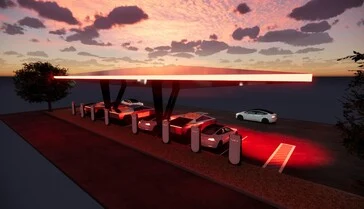
    Another design concept, this time with a more futuristic vibe, has come to light from the approval documents filed by Tesla with the zoning authorities in Roswell, New Mexico. The choice of Roswell as the site hints at a design that could be inspired by extraterrestrial themes, and the sketches in the permit files support this idea.

    Tesla’s Max de Zegher shared, “We want to create a few Superchargers that are impressive enough to make the trip worthwhile.” He mentioned that they wished to keep this under wraps longer, but the planning submission was necessary. This refers to the site documents Tesla submitted back in 2023.

    Exciting Updates and Features

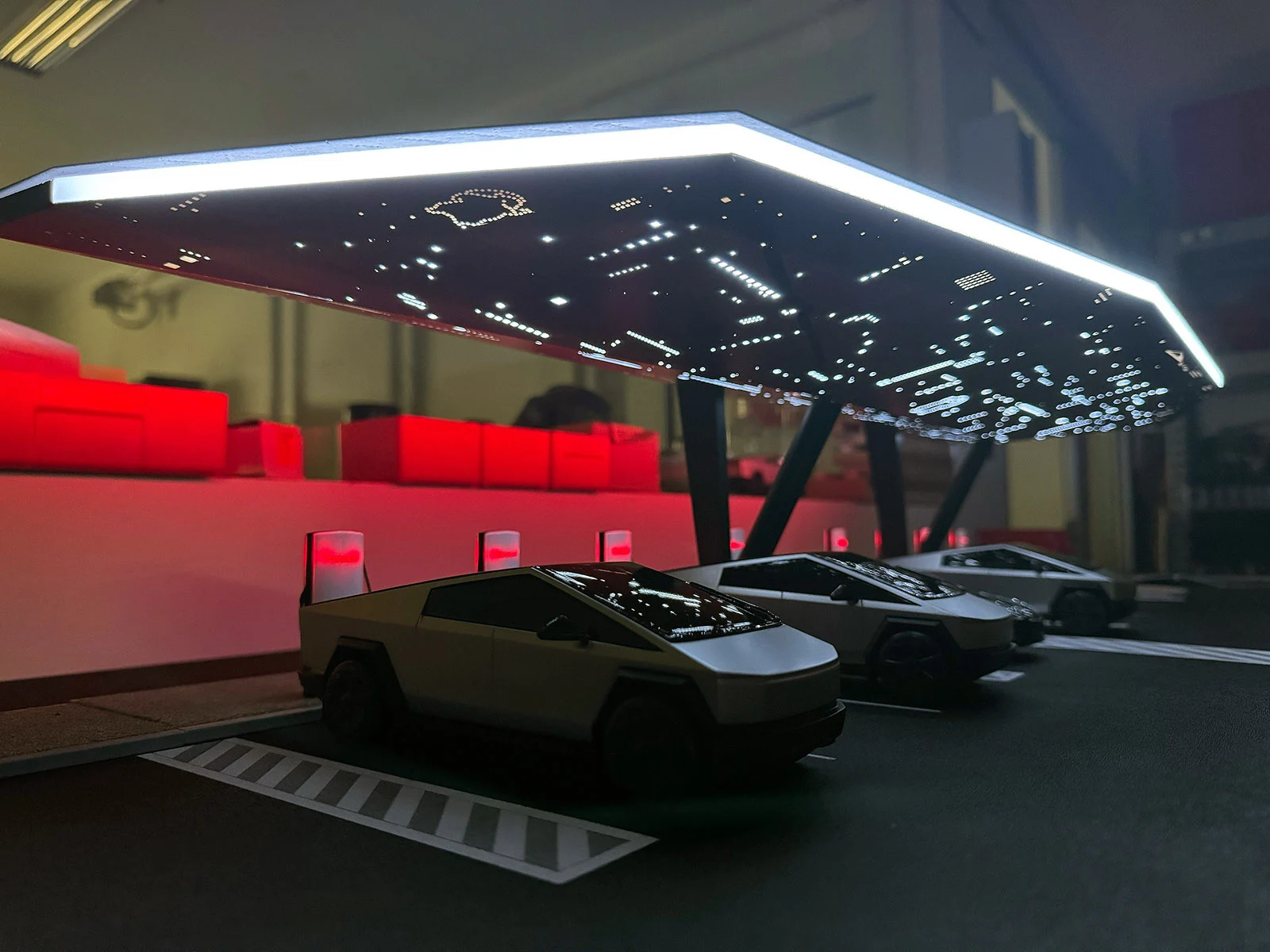
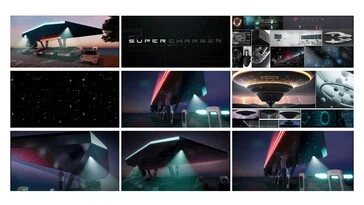
    The updated site permit now includes eight new V4 Supercharger stalls, accompanied by a CyberCanopy featuring an LED light bar inspired by the designs of the Cybertruck and Model Y. The original sketches of a landing spacecraft show where Tesla drew its inspiration from—stories of alien crash sites in Roswell—while the final design of the CyberCanopy maintains an angular shape reminiscent of the Cybertruck.

    With LED dome lights that evoke a scene from Star Trek, the design remains distinctly futuristic, and a hidden hedgehog Easter egg adds a fun twist.

    A Bright Future for Charging Stations

    All signs point to the CyberCanopy Supercharger station moving forward with construction. Tesla may soon offer even more charging locations that are “worthy of the trip itself,” similar to the retro diner experience.

    Source:
    Link


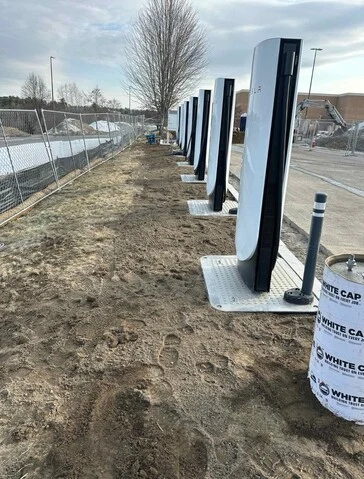
  • Tesla Accelerates Supercharger Installations with New Foundation

    Tesla Accelerates Supercharger Installations with New Foundation

    Key Takeaways

    1. Tesla is increasing the construction of charging stations using a new, cost-effective foundation solution.
    2. The new installation method uses polypropylene housing, allowing faster setup without concrete foundations.
    3. This approach reduces costs by up to 70% compared to competitors and speeds up the installation process.
    4. The method also allows for quicker repairs of damaged Supercharger stations, supporting Tesla’s commitment to rapid restoration.
    5. The innovative solution contributes to reducing the CO2 footprint of the charging infrastructure.


    Tesla is ramping up the construction of its charging stations and the repair or installation of Supercharger piles using a new foundation solution.

    Prefabricated Units and Their Benefits

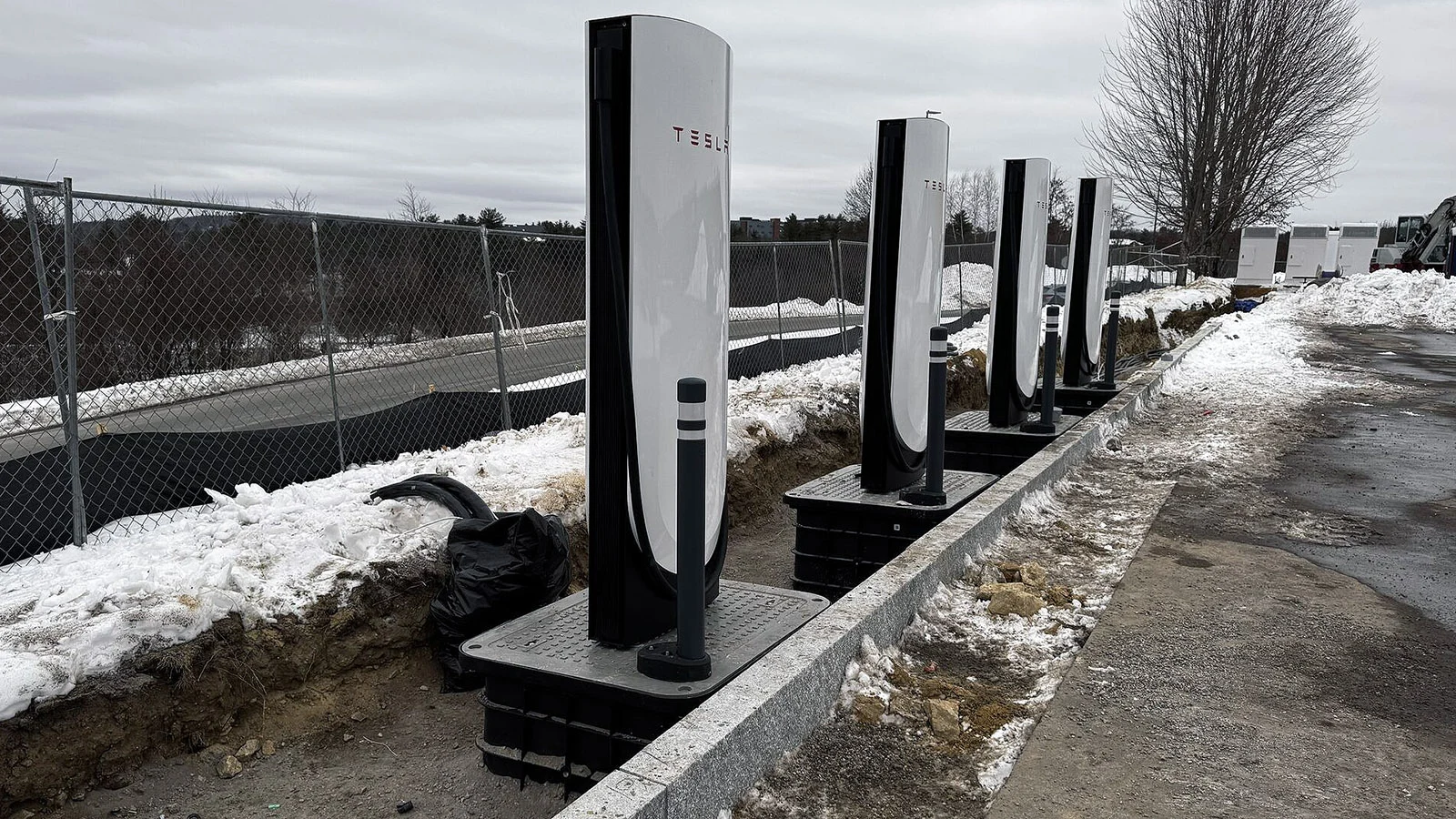
    Previously, the company used a Prefabricated Supercharger Units (PSU) approach, where they shipped ready-made piles with all the electrical wiring on a concrete slab. This method allowed Tesla to set up Supercharger stations in just days rather than weeks, and it was significantly cheaper—up to 70% less than competitors. This cost-effectiveness has helped Tesla win numerous federal and state contracts for public charging infrastructure subsidies.

    Faster and More Efficient Installations

    Now, Tesla aims to speed up the process even further. As Max de Zegher from Tesla emphasizes, the electric vehicle charging infrastructure must grow 30 times larger. To achieve this, the company has developed a new method for installing or replacing Supercharger stalls that eliminates the need for concrete foundations or for transporting prefab units from its Buffalo, NY factory.

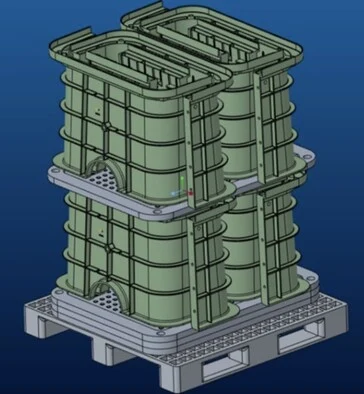
    The new solution involves a polypropylene housing that a single person can easily place in a dugout and then secure with gravel. According to de Zegher, this approach “reduces C02 footprint, is faster, and reduces cost.”

    Responding to Damage Promptly

    This innovative installation method could also facilitate quicker repairs for damaged piles. With Elon Musk’s increasing political activism, there has been a rise in vandalism and arson against Tesla’s vehicles and charging stations. Tesla has committed to replacing any burned or damaged Supercharger stations within 48 hours, and they have successfully met this goal so far.

    The polypropylene housing filled with local gravel may prove useful not just for new installations but also for repairing or replacing piles, depending on the level of damage sustained by Tesla’s charging stations.

    Source:
    Link


  • Hyundai Gives Free Tesla Supercharger Adapters to All EV Owners

    Hyundai Gives Free Tesla Supercharger Adapters to All EV Owners

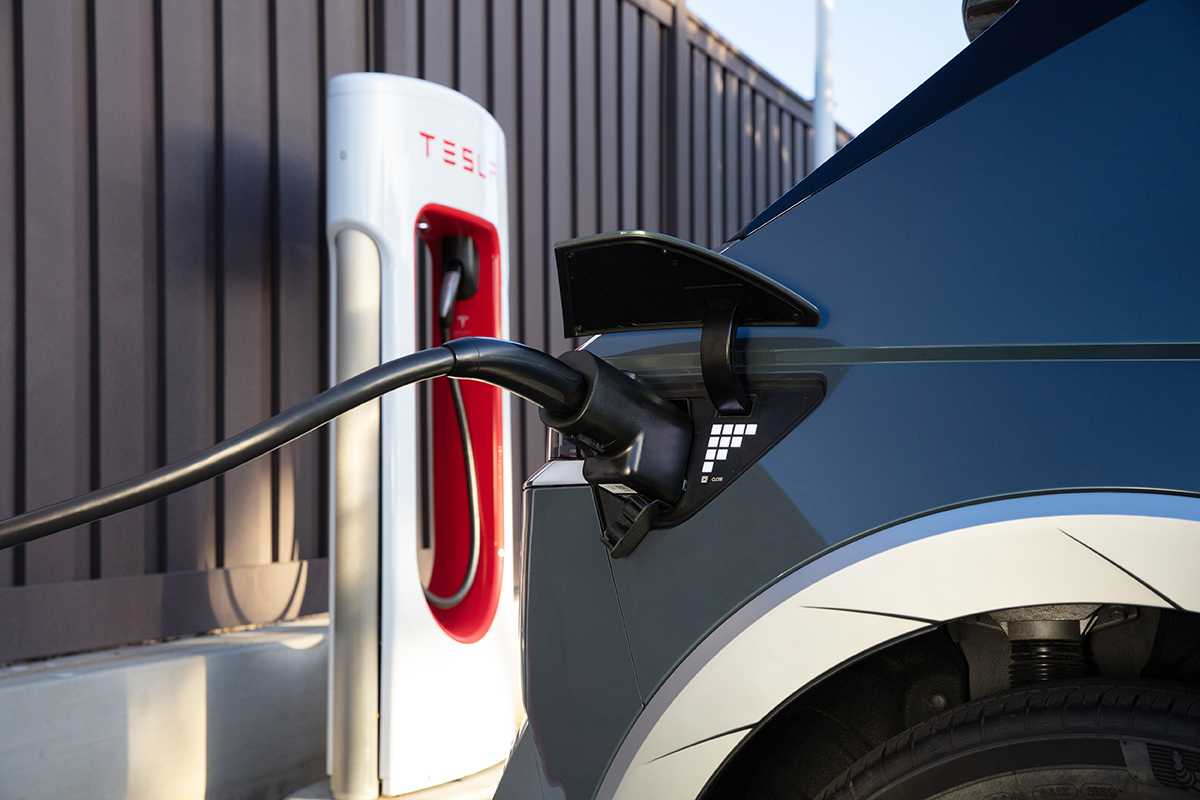
    While the 2025 Ioniq 5 has become the first electric vehicle that isn’t made by Tesla to come with a built-in NACS port, allowing it to connect directly to Superchargers, Hyundai is also sharing some exciting news for the owners of its other electric models.

    Free Tesla Adapter for Hyundai EV Owners

    Hyundai has just revealed that all current owners of its electric vehicles will get a complimentary Tesla adapter. This will let them use the over 20,000 Supercharger stations across the US. These adapters are similar to the Lectron Tesla Supercharger NACS to CCS adapter available on Amazon, meaning Hyundai is effectively saving its EV owners $160 that they would have needed to spend to benefit from Tesla’s opening of its Supercharger network to Hyundai and Kia electric cars.

    Expanding Options for Kia EVs

    Interestingly, it was a Kia EV6 and a Hyundai Ioniq 5 that were the first non-Tesla cars seen using Superchargers with the native NACS ports. Therefore, it’s likely that these adapters will also work for Kia EVs, or there might be an announcement soon about a similar free NACS adapter for Kia vehicles.

    Hyundai’s Growth in the EV Market

    The South Korean company has been rapidly increasing its EV sales in the US, now ranking as the second-largest electric vehicle producer after Tesla. This growth is fueled by their advanced 800V powertrain, offering fast charging, efficient long-range drivetrains, and competitive pricing.

    The free Tesla NACS adapters are set to begin shipping to Hyundai and Genesis electric vehicle owners in the US in early 2025. The Senior Vice President of Product Planning and Mobility Strategy at Hyundai North America emphasized that more electric vehicles with native NACS ports are coming soon:

    “To speed up EV adoption, we have started by hearing feedback from our current customers. These adapters will make DC fast-charging easier for our existing owners. Also, the NACS port on new models like the upcoming Ioniq 9, along with upgrades to our digital charging system, will improve the experience for future EV users. Our aim is to make the switch to electric as smooth as possible.”

    Source: Link