
Tag: Tech industry

  • DDR5 Memory Prices Remain Stable Despite Recent Price Increase

    DDR5 Memory Prices Remain Stable Despite Recent Price Increase

    Key Takeaway

    1. DDR5 memory prices have remained stable, but SSD prices, especially for newer inventory, have surged significantly.
    2. Framework is experiencing higher costs for SSDs due to depleted inventory and increased vendor prices, leading to potential price increases for consumers.
    3. The company is primarily affected by volatile component costs in the tech industry, impacting pricing and product affordability.

    Component Costs Shakeup in the Tech World

    Framework, a well known name in the tech community, recently update about the costs of their components amid unstable market conditions. What they shared was mixed news; the DDR5 memory prices seems to be holding steady, which is good. Yet, the SSDs, especially the cheaper ones from 2025, has gone missing and the new ones coming in are muchc more expensive. This is bad news for folks planning to upgrade or purchase new products like the Framework Laptop 12, 13 Pro, or 16.

    Stable Memory Prices but Rising Storage Costs

    On May 12, the company explained, “We’ve seen memory costs from DDR5 suppliers remain fairly stable over the last few months,” this was part of their regular blog update. They clarified that they had already bought a stock of 8GB memory modules earlier at lower prices and now have to increase prices a little to cover new costs. The good part is that, aside from that capacity, prices of other memory sizes stayed the same as last month. It’s like they’re trying to balance things out without passing too much burden to customers.

    SSD Prices Are Going Through The Roof

    Things aren’t so rosy for SSDs, especially for the fast NVMe drives. According to Framework’s info, prices for these drives, especially those rated at PCIe Gen 4 and Gen 5, has skyrocketed to 3 or even 4 times higher than before. They used to keep those prices below market rates by using old inventory from 2025, but unfortunately, such stocks are now running out. The company explains that they are now sourcing new inventory at prices far higher than before, and this means higher costs for the customers.”

    Pricing Adjustments and Market Volatility

    Framework admits that their pricing reflects both old and new components, but soon they will only have newer, more expensive inventory to sell. The blog states, “by next month, we will have depleted the older inventory for most capacities and will need to reprice fully to reflect the new costs.” This fluctuation is no surprise, especially with the unstable shifts common in the PC hardware industry. Their spokesperson, Nirav Patel, stated plainly, “The price is what it is, unfortunately,” acknowledging that smaller firms have limited options but to pass increased costs down to customers.

    How Storage Prices Have Changed Over Time

    Historically, Framework relied on Western Digital (now SanDisk) SSDs like the WD Black SN770 and SN850X for their laptops and prebuilt units. For example, a 1 TB SN770 NVMe drive used to retail for about $100–$129 two years ago, and the higher-end SN850X without heatsink was around $160. But now, by 2026, the same 1 TB SN770 is costing around $200, while the SN850X is roughly $250 on major retail sites. This shows clear inflation and market shifts affecting even high-performance storage options.
    Sources
  • Apple Price Hikes Begin with Mac Mini; Will MacBook Neo Follow?

    Apple Price Hikes Begin with Mac Mini; Will MacBook Neo Follow?

    Key Takeaway

    1. Apple has increased the entry-level Mac mini price by $200, eliminating the 256GB storage option and making the base model start at $799.
    2. The removal of the more affordable storage tier effectively raises the “buy-in” cost, impacting overall value proposition for new customers.
    3. The MacBook Neo remains the most budget-friendly option, currently starting at $599, potentially making it a better entry point than the Mac mini for some users.
    4. Future Mac upgrades are anticipated with the M6 chip, expected to offer significant performance improvements and new features like OLED displays and touchscreen support.

    Mac mini Price Increase and Market Changes

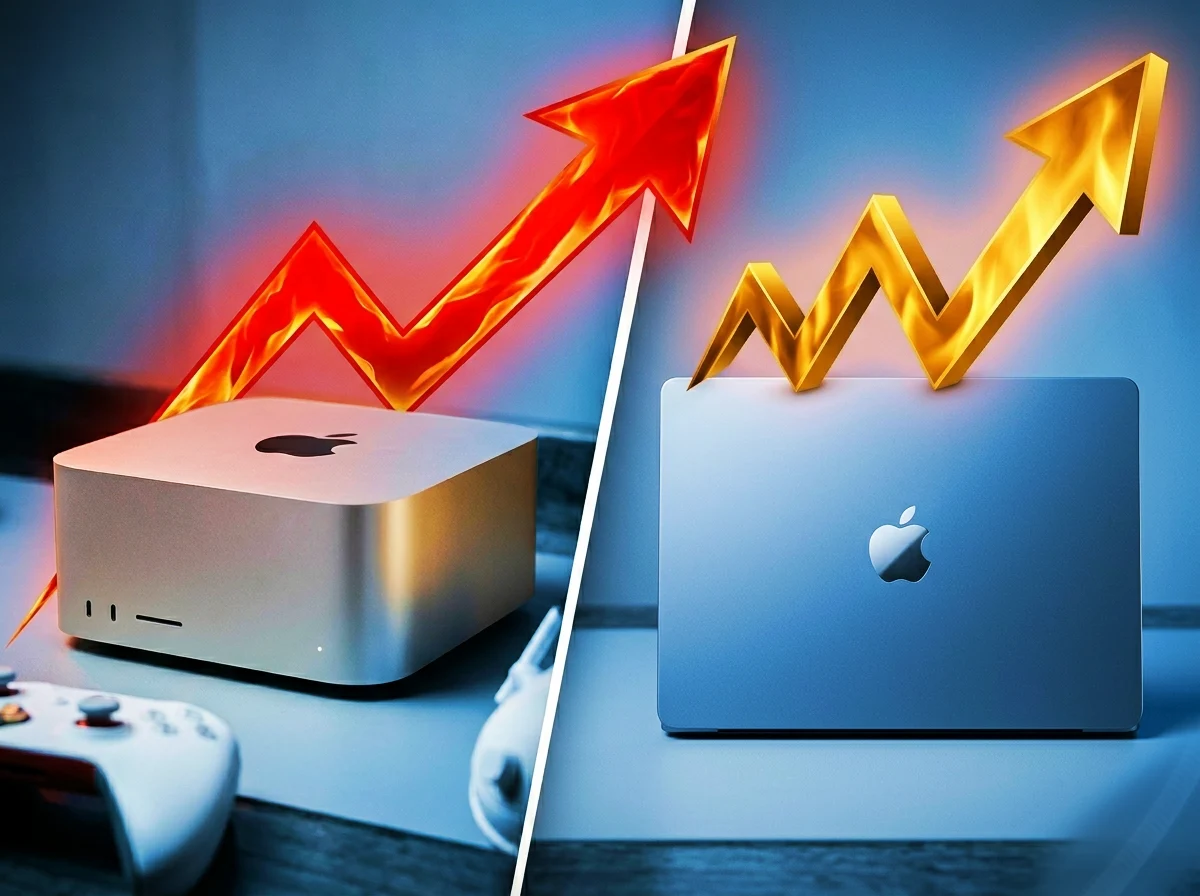
    Shortly after we discussed how Mac and MacBook prices gonna keep rising, apple has officially made a change to the Mac mini lineup. They now increased the starting price by $200, making it more expensive for people who just wanna start with their smallest desktop.

    Shift in Storage Options and Pricing

    By quietly dropping the 256GB storage option from the global configuration, apple has set a barrier higher for new buyers. The new M4 Mac mini now starts at $799 with a chip, 16GB RAM, and at least 512GB storage. The 512GB model itself did not see a price change, but the loss of the cheaper base model counts as a hidden price hike. Apple has used similar tactics before with the M5 MacBook Air and MacBook Pro launches, so no big surprise here.

    Supply/Demand and Industry Factors

    During a recent earnings call, Tim Cook, Apple’s CEO, explained that both high demand and supply constraints have led to these price adjustments. He also mentioned that Mac mini and Mac Studio are gaining popularity among AI tool users. Industry analysts, however, point to a global chip shortage and increasing component costs as main reasons behind the price hike.

    Global Pricing and Market Impact

    Looking at different countries, the price of the Mac mini’s base model (with M4 and 16GB RAM) now varies. While the 512GB version stayed the same price, the removal of 256GB configuration means new customers are now paying $200 / £200 / €230 more to buy into Mac mini.

    Implications for Buyers and Ecosystem Shifts

    With the new pricing, the value of Mac mini is kinda shifting. Interestingly, the MacBook Neo, Apple’s cheapest device, is now the most affordable way to get into the Apple ecosystem. Currently, Neo starts at $599 for a 256GB drive and 8GB RAM. The 512/8GB model is $699, still $100 less than the Mac mini.

    Alternative Choices for Consumers

    Some users might find it more sensible to spend around $1,100 for a MacBook Air with 512GB storage and 16GB RAM – which offers portability, a built-in display, and a more powerful M5 chip compared to the Mac mini’s M4. At this price point, the MacBook Air might be a better buy considering overall features and performance.

    Future Outlook and Rumors

    Now with the Mac mini starting at $799, attention turns to the MacBook Neo as Apple’s budget-friendly option. Launched in March 2026, the Neo became unexpectedly popular, which could lead Apple to consider discontinuing the 256GB variant, especially given ongoing memory shortages.

    Upcoming Mac Developments

    Rumors are already brewing about the next generation of Macs, expected around late 2026 or early 2027. The upcoming M6 Macs may feature OLED displays, slimmer designs, and even touchscreen support. The M6, built on a new 2nm process, promises to be a significant upgrade over current models, especially for professional users who need high performance.

    Conclusion: Price hikes are Unavoidable

    One thing is clear – just like Windows laptops, Mac prices are going up, and they’re unlikely to get any cheaper any time soon.

    Sources