Tag: Snapdragon 8 Elite Gen 5

  • OnePlus 15 Magnetic Protective Cases Revealed Before Launch

    OnePlus 15 Magnetic Protective Cases Revealed Before Launch

    Key Takeaways

    1. OnePlus will launch the OnePlus 15, featuring the Snapdragon 8 Elite Gen 5 processor, on October 27, 2025, in China.
    2. Three magnetic cases have been introduced for the OnePlus 15, allowing compatibility with magnetic accessories.
    3. The types of cases include the Sandstone Magnetic Case, Aramid Fiber Case, and Magnetic Hole Case, each with unique designs and features.
    4. The Magnetic Hole Case offers customizable design options and improved heat dissipation.
    5. The magnetic cases ensure compatibility with the Oppo Mag ecosystem, with more information on global pricing and availability expected after the launch.


    OnePlus is preparing to introduce several smartphones in China, including its first flagship device featuring the Snapdragon 8 Elite Gen 5 processor, known as the OnePlus 15. The official reveal is set for October 27, 2025. Prior to its launch in China, the company has displayed the official magnetic cases designed specifically for this smartphone.

    Details on Magnetic Cases

    The brand has introduced three different magnetic cases for the OnePlus 15. Similar to the protective cases offered for the previous generation, these cases will enable the phone to function with magnetic accessories, which includes MagSafe-like wireless chargers and magnetic power banks like the Baseus 5K PicoGo, currently priced at $22.99 on Amazon.

    Types of Cases Available

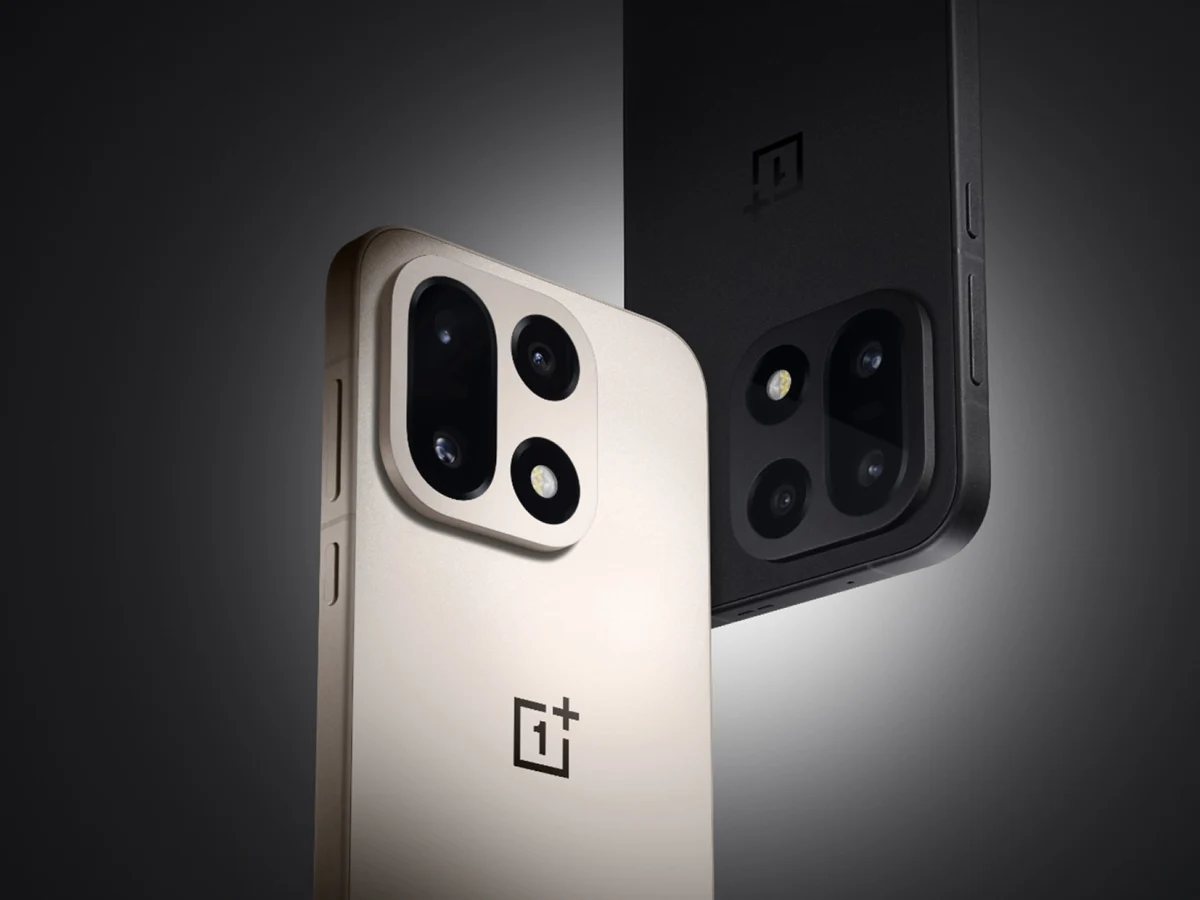
    Among the three cases, one is named the Sandstone Magnetic Case. It features the classic sandstone texture that harks back to the back of the Sandstone OnePlus One. Another accessory revealed by the company is the Aramid Fiber Case, which has a soft skin-like interweaved texture.

    The last case is referred to as the Magnetic Hole Case, and according to the brand, it serves as a customizable open canvas. Its hollow design is also claimed to enhance heat dissipation, helping the device remain cool during demanding usage.

    Compatibility and Future Updates

    The company highlights that these magnetic cases ensure the OnePlus 15’s compatibility with the Oppo Mag ecosystem. With these cases, the phone is expected to operate similarly to MagSafe and various other magnetic accessories. Information regarding global pricing and availability for the phone and its accessory range should be revealed shortly after the Chinese launch on October 27.




  • OnePlus Ace 6: Affordable Sub-Flagship with Impressive Camera Features

    OnePlus Ace 6: Affordable Sub-Flagship with Impressive Camera Features

    Key Takeaways

    1. The OnePlus Ace 6 will debut in China alongside the OnePlus 15, featuring the Snapdragon 8 Elite Gen 5 processor as a budget-friendly sub-flagship phone.
    2. It includes a Sony 50 MP primary camera sensor, promising “crystal-clear” images with vibrant colors and good detail in bright conditions.
    3. The primary camera has a 24 mm focal length and an f/1.8 aperture, but its low-light performance is still uncertain.
    4. The Ace 6 is expected to have an 8 MP ultrawide secondary camera, but it will not include a telephoto lens, which may be a drawback compared to competitors.
    5. Other notable features include a 165 Hz display, a metal mid-frame, and a 7,800 mAh battery with 120 W fast charging, with a global release anticipated as the OnePlus 15R.


    The OnePlus Ace 6 is set to debut in China, alongside the OnePlus 15, which is powered by the Snapdragon 8 Elite Gen 5. This upcoming device aims to be a budget-friendly sub-flagship phone, and recent teasers have hinted at impressive specifications for its price range. The company’s latest teasers have highlighted the smartphone’s camera features.

    Camera Specifications

    According to OnePlus, the Ace 6 will be equipped with a Sony 50 MP primary sensor, using the same technology that its sister brand, Oppo, employs for its premium devices. This blend is said to deliver “crystal-clear” images, with well-defined shadows and highlights, along with bright colors.

    Sample Photos and Performance

    OnePlus has provided sample photos taken with the Ace 6’s cameras. These samples indicate that the primary sensor will have a 24 mm focal length and an f/1.8 aperture. They show the phone’s ability to capture detailed and vibrant images in bright conditions, but it remains uncertain how well it will perform in low-light situations.

    Additional Camera Features

    Moreover, there appears to be a secondary camera on the back, rumored to be an 8 MP ultrawide sensor. If this is correct, the Ace 6 will lack a telephoto camera, which could be seen as a downside when compared to the camera configuration of the newly launched Redmi K90, which also uses the Snapdragon 8 Elite.

    On the bright side, other specifications look promising. The device will feature a 165 Hz display, a metal mid-frame, and a robust 7,800 mAh battery that supports 120 W fast charging (the 140 W Anker Prime charger is currently priced at $79.99 on Amazon). The Ace 6 is anticipated to be released globally as the OnePlus 15R, positioned below the OnePlus 15. More information will be revealed at the launch event on October 27, 2025.


  • Xiaomi Redmi K90 Pro Max: Snapdragon 8 Elite Gen 5 at Mid-Range

    Xiaomi Redmi K90 Pro Max: Snapdragon 8 Elite Gen 5 at Mid-Range

    Key Takeaways

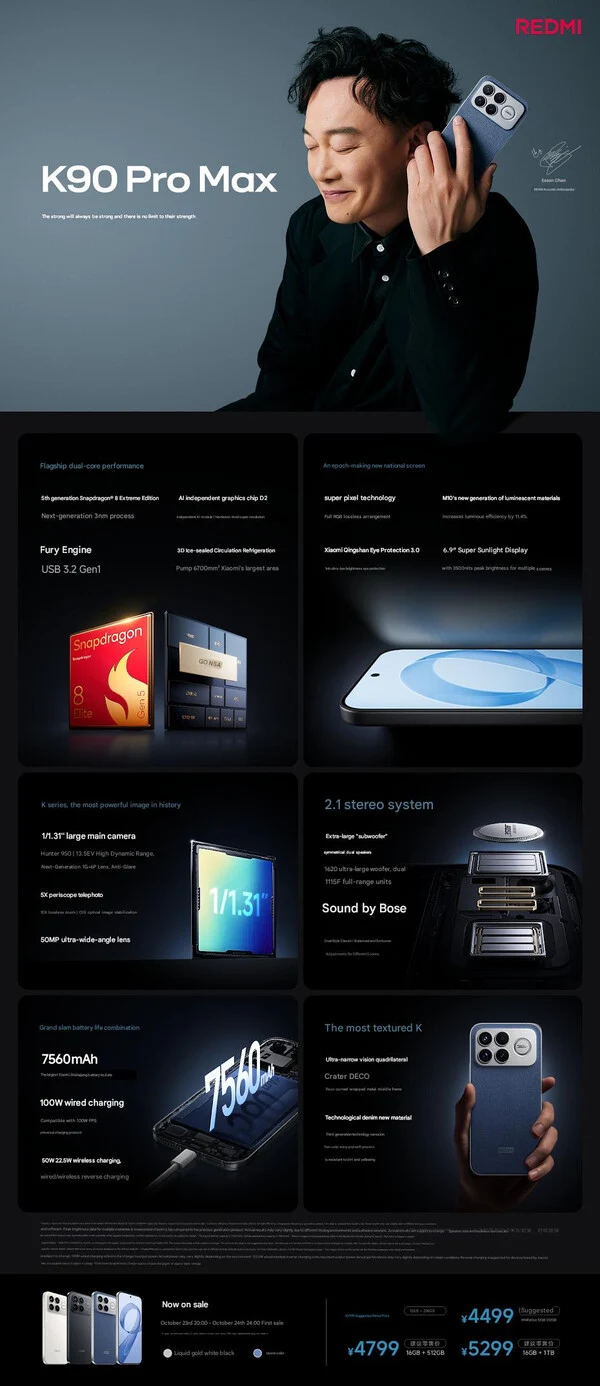
    – Xiaomi launched the Redmi K90 Pro Max with upgraded Snapdragon 8 Elite Gen 5 and a 7,560 mAh battery.
    – The device features a 6.9-inch LTPO AMOLED display with a resolution of 2,608 x 1,200 pixels and a peak brightness of 3,500 nits.
    – The camera system includes a 50 MP main sensor, a 5x telephoto camera, and a 50 MP ultra-wide camera.
    – The Redmi K90 Pro Max starts at CNY 3,999 (~$561) for the base model and offers configurations up to 16 GB RAM and 1 TB storage.
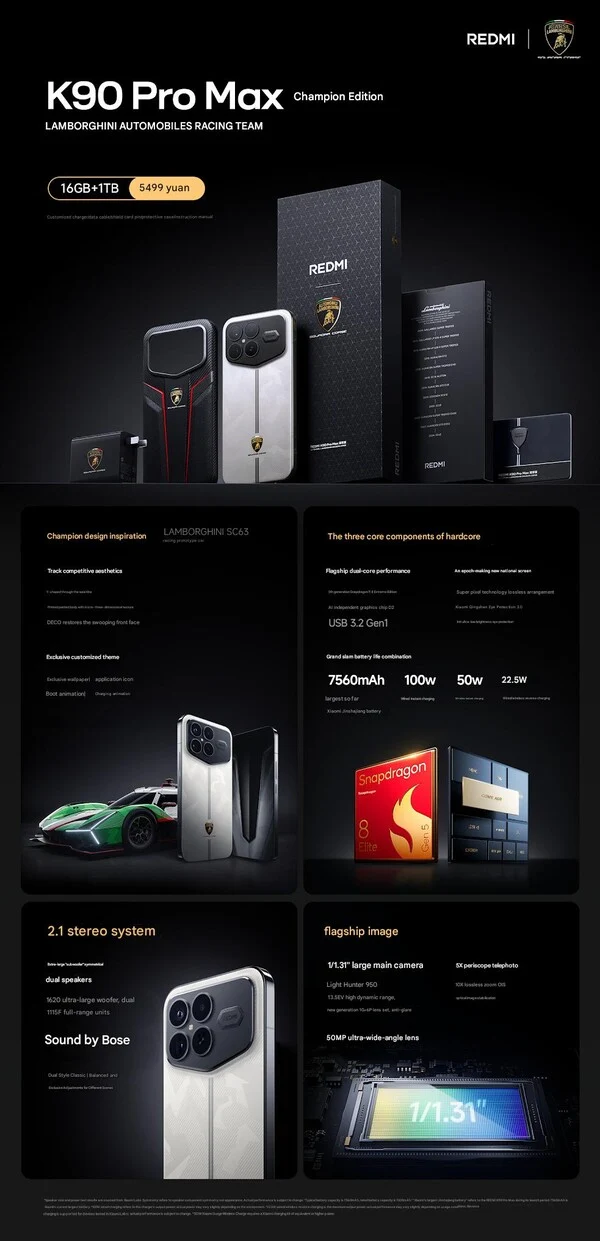
    – A special Lamborghini-branded version, the Redmi K90 Pro Max Champion Edition, is priced at CNY 5,499 (~$772) but may not have a global release.


    Last month, Xiaomi became the first Android maker to start selling smartphones powered by the Qualcomm Snapdragon 8 Elite Gen 5. The Xiaomi 17, Xiaomi 17 Pro, and Xiaomi 17 Pro Max are all flagship models, but iQOO and Realme have fought back with their more affordable iQOO 15 and Realme GT 8 Pro, respectively. In response to this competition, Xiaomi has launched the Redmi K90 Pro Max, designed to take the place of last year’s Redmi K80 Pro in China and the Poco F7 Ultra on the global market (curr. $759 on Amazon).

    Upgraded Specifications

    Xiaomi has upgraded from the Snapdragon 8 Elite to the Snapdragon 8 Elite Gen 5, and paired it with LPDDR5X RAM and a new 7,560 mAh silicon carbon battery. While it still supports 50 W wireless charging, Xiaomi has replaced the 120 W wired charging from the Redmi K80 Pro with 100 W wired charging for the Redmi K90 Pro Max. The dimensions of this year’s higher-end Redmi K model have increased to 163.33 x 77.82 x 7.9 mm and weighs 218 g, allowing for a 6.9-inch LTPO AMOLED display featuring a resolution of 2,608 x 1,200 pixels, a refresh rate of 120 Hz, and a peak brightness of 3,500 nits that can drop to 1 nit in darker settings.

    Camera Features

    In addition, the Redmi K90 Pro Max is equipped with a Light Hunter 950 sensor as its main 50 MP camera, which has a 1/1.31-inch optical format and a dynamic range of 13.5 EV. Xiaomi has also introduced a 5x telephoto camera this year, which can shoot natively at 50 MP thanks to its ISOCELL JN5 sensor. Furthermore, the Redmi K90 Pro Max includes a 50 MP OmniVision OV50M ultra-wide camera and a 32 MP front-facing camera.

    The Redmi K90 Pro Max kicks off at CNY 3,999 (~$561) for the version with 12 GB of RAM and 256 GB of storage. It is already available for import, and buyers can opt for a configuration with up to 16 GB of RAM and 1 TB of storage priced at CNY 5,299 (~$744). Alternatively, there’s a special Lamborghini-branded version known as the Redmi K90 Pro Max Champion Edition, which is priced at CNY 5,499 (~$772). This variant is unlikely to get an official global release like the Poco F8 Ultra, and may be difficult to obtain from importers.


  • Nubia Z80 Ultra: 35mm Camera Flagship with Snapdragon 8 Elite Gen 5

    Nubia Z80 Ultra: 35mm Camera Flagship with Snapdragon 8 Elite Gen 5

    Key Takeaways

    1. The Nubia Z80 Ultra is the successor to the Z70 Ultra and Z70S Ultra, maintaining a rectangular design similar to other premium ZTE devices.
    2. It features a Qualcomm Snapdragon 8 Elite Gen 5 processor and a powerful 7,200 mAh battery with fast charging capabilities (80 W wireless, 90 W USB Type-C).
    3. The phone includes advanced photography options, with macro photography possible from 15 cm and a hidden front camera using under-panel technology.
    4. The 6.85-inch AMOLED display has a resolution of 2,688 x 1,216 pixels, a 144 Hz refresh rate, and a peak brightness of 2,000 nits.
    5. Pricing starts at CNY 4,999 (around $702) for 12 GB RAM and 512 GB storage, with an upgrade option to 16 GB RAM and 1 TB storage for CNY 5,699 (approximately $800).


    The Nubia Z80 Ultra has been officially announced as the successor to the Z70 Ultra and Z70S Ultra models. True to expectations, Nubia’s newest Z series phone keeps the same rectangular style found in other premium devices made by its parent company ZTE, which includes the gaming-centric RedMagic 10 Air and RedMagic 10 Pro (currently priced at $899 on Amazon).

    Powerful Performance

    In line with the recent RedMagic 11 Pro, the Nubia Z80 Ultra features a Qualcomm Snapdragon 8 Elite Gen 5 processor. Nubia pairs this with a robust 7,200 mAh battery, capable of charging wirelessly at 80 W and via USB 3.2 Type-C at 90 W. The Snapdragon 8 Elite Gen 5 manages images through four different cameras, providing users with versatile photography options.

    Innovative Features

    Moreover, the Z80 Ultra allows macro photography from as close as 15 cm using its ultra-wide-angle camera. Nubia has chosen to conceal the front camera using under-panel technology, which keeps the 6.85-inch AMOLED screen free from any camera cutout. This impressive display boasts a resolution of 2,688 x 1,216 pixels, features a 2,592 Hz PWM frequency, a 144 Hz refresh rate, and a touch sampling rate of 3,000 Hz, although its peak brightness of 2,000 nits is somewhat lacking.

    Pricing and Availability

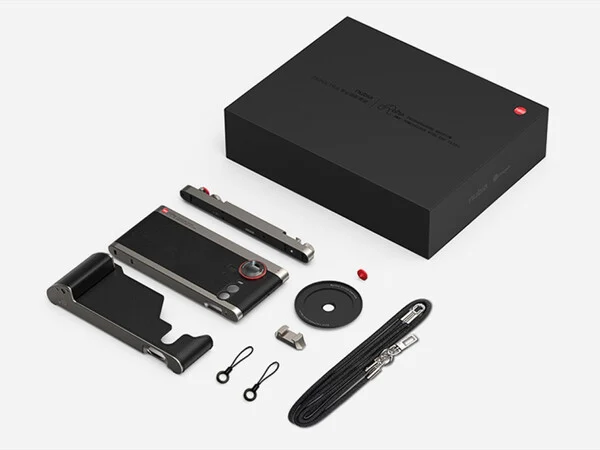
    The Nubia Z80 Ultra is priced starting at CNY 4,999 (around $702) in China, offering 12 GB of RAM and 512 GB of storage. For those wanting more power, it can also be upgraded to 16 GB of RAM and 1 TB of storage for CNY 5,699 (approximately $800). Additionally, the camera kit shown below is available for CNY 699 (about $98). Nubia has also provided some initial details regarding the global launch of the smartphone, which we have discussed in a separate article.


  • Xiaomi Redmi K90 Pro Max Highlights Snapdragon 8 Elite Gen 5 Camera

    Xiaomi Redmi K90 Pro Max Highlights Snapdragon 8 Elite Gen 5 Camera

    Key Takeaways

    1. The Redmi K90 Pro Max will be fully unveiled in China on October 23, 2025, with a global release expected as the Poco F8 Ultra.
    2. It features a 50 MP main camera with a 1/1.31-inch sensor, promising good dynamic range.
    3. The ultrawide camera is also a 50 MP sensor, maintaining detail and color accuracy.
    4. The telephoto camera offers 5x optical zoom and 10x “lossless zoom,” producing highly detailed images.
    5. While the Xiaomi 17 Pro Max has Leica tuning advantages, the Redmi K90 Pro Max is still expected to capture quality images, though pre-launch samples should be viewed with caution.


    Xiaomi is set to fully reveal the Redmi K90 Pro Max in China on October 23, 2025. While there’s no official date for its global release, it is anticipated that the phone will debut outside of China as the Poco F8 Ultra. The brand has already shared several exciting details about this flagship device through recent promotional teasers, including a 2.1 Bose-tuned speaker system.

    Camera Features Highlighted

    In a recent promotional post, Xiaomi highlighted the camera features of the forthcoming Snapdragon 8 Elite Gen 5 smartphone. The Redmi K90 Pro Max will sport a 1/1.31-inch 50 MP main camera, identical to that of the Xiaomi 17 Pro Max (which can be imported from TradingShenzhen). The samples released indicate that this camera offers a commendable dynamic range.

    Ultrawide and Telephoto Specs

    The ultrawide sensor has also been confirmed as the same 50 MP ultrawide that is seen in the Xiaomi 17. Among the shared images, there seems to be just one photo taken with this sensor, showcasing its ability to preserve details and colors quite effectively.

    On the telephoto front, Xiaomi has disclosed that the Redmi K90 Pro Max will include a telephoto sensor capable of 5x optical zoom and 10x “lossless zoom.” The zoomed images in the samples suggest that this sensor can deliver highly detailed photos, and the portrait images appear to be quite impressive as well.

    Comparison with Xiaomi 17 Pro Max

    Although the Xiaomi 17 Pro Max may have a slight advantage over the Redmi K90 Pro Max due to its Leica tuning, the samples indicate that the new phone has sufficient capability to take quality images. However, it’s wise to remain somewhat skeptical about these pre-launch camera samples, as companies often do not provide completely accurate representations of their products.

    Source:
    Link


  • OnePlus 15 Features Best Camera Yet with Oppo Imaging Tech

    OnePlus 15 Features Best Camera Yet with Oppo Imaging Tech

    Key Takeaways

    1. The OnePlus 15 is powered by the Snapdragon 8 Elite Gen 5 and features a large 7,300mAh battery.
    2. The device will have a new 165Hz display and will not include Hasselblad camera tuning.
    3. It features Oppo’s “LUMO Condensed Light Imaging” technology, although specific improvements are not detailed.
    4. The OnePlus 15 will have a 50MP triple rear camera setup with a periscope telephoto lens offering 3.5x optical zoom.
    5. The global launch for the OnePlus 15 is expected in November, following its unveiling in China on October 27.


    Ahead of its launch, OnePlus is sharing important features of the OnePlus 15. This flagship smartphone, powered by the Snapdragon 8 Elite Gen 5, has a massive 7,300mAh battery. Earlier, the company already highlighted its new 165Hz display. Now, OnePlus has also disclosed some information about the camera on the OnePlus 15.

    Camera Changes

    Since the OnePlus 9 series, the high-end OnePlus devices have incorporated a camera system fine-tuned by Hasselblad. However, the collaboration with Hasselblad has now come to an end. This means that the OnePlus 15 will not have Hasselblad tuning. In a post on Weibo, OnePlus President Louis Lee stated that the OnePlus 15 features the best camera the company has ever made. It will include Oppo’s innovative “LUMO Condensed Light Imaging” technology, though details on how this will improve camera capabilities are still unclear.

    Retained Features

    The company has assured fans that some features will still be present, including “Master Mode” and “XPan Mode.” The OnePlus 15 will come with a 50MP triple rear camera setup. Its periscope telephoto lens will allow for a 3.5x optical zoom, which is equivalent to an 85mm focal length. Additionally, the device will enable 4K video recording at 120fps with Dolby Vision support.

    The OnePlus 15 is scheduled to be unveiled on October 27 in China. Alongside this flagship model, a more budget-friendly Ace 6 will also be introduced. The global launch for the OnePlus 15 is anticipated to take place in November.

    Source:
    Link


  • OnePlus 15 Features Advanced Cooling System for Optimal Performance

    OnePlus 15 Features Advanced Cooling System for Optimal Performance

    Key Takeaways

    1. OnePlus is launching the OnePlus 15 soon, generating excitement among fans.
    2. The new “Glacier Cooling System” features a larger vapor chamber for improved thermal performance.
    3. The device includes a “Supercritical Aerogel” layer for better thermal insulation, reducing core temperature by 18 degrees Celsius.
    4. A specialized “Gaming Hand” temperature sensor targets cooling in 10 touch zones, lowering temperatures by 5.6 degrees Celsius.
    5. The OnePlus 15 aims to enhance gaming experiences with a 165 Hz refresh rate and Snapdragon 8 Elite Gen 5 SoC, with a reveal on October 27.


    OnePlus is generating excitement among its fans for the upcoming OnePlus 15, which will launch very soon. As part of the build-up to the release, the company has revealed some details about the new cooling system, which utilizes innovative technology that promises impressive performance, at least theoretically.

    Enhanced Cooling Features

    On its official Weibo account, OnePlus announced that the new flagship will include an upgraded cooling system called the “Glacier Cooling System” (translated). This system consists of a bigger vapor chamber measuring 5,778 mm2, which is claimed to be twice as effective as previous models from the brand.

    Additionally, the phone will incorporate a groundbreaking “Supercritical Aerogel” (translated) layer that enhances thermal insulation. OnePlus indicates that this material is utilized in rocket engines and boasts a thermal conductivity of 0.025W/mK. Moreover, the architecture of the device’s packaging facilitates better heat dissipation, which leads to a reported reduction of 18 degrees Celsius in the core area temperature.

    Tailored for Gamers

    For gaming enthusiasts, the OnePlus 15 will feature what the company describes as a “Gaming Hand” temperature sensor that spans 10 touch zones, providing optimal cooling for the areas where your hands usually rest. According to OnePlus, this technology can lower temperatures by 5.6 degrees Celsius, though it’s not clear what the starting temperature for this measurement is.

    All these advancements are designed to ensure the device runs at its best without overheating and causing performance issues. Coupled with a 165 Hz refresh rate and the high-end Snapdragon 8 Elite Gen 5 SoC, the OnePlus 15 aims to offer a superb gaming experience. The phone is set to be revealed in China on October 27, with a global release anticipated for November.

    OnePlus Weibo (1,2,3)

    Source:
    Link


  • OnePlus 15 Global Launch Teased with Official Website Pages Live

    OnePlus 15 Global Launch Teased with Official Website Pages Live

    Key Takeaways

    1. The OnePlus 15 will launch in China on October 27, 2025, powered by the Snapdragon 8 Elite Gen 5.
    2. Teaser pages for the OnePlus 15 are active in various regions, with the UK page hinting at two pre-launch events.
    3. A special event is set for November 12, 2025, with a possible global launch on November 13, 2025.
    4. The Indian teaser page suggests an important announcement on October 29, potentially revealing the global launch date.
    5. OnePlus is shifting its strategy to launch the OnePlus 15 globally shortly after its initial release in China, aiming to enhance its competitive position in the market.


    OnePlus has revealed several details about its upcoming flagship smartphone, the OnePlus 15, which will be powered by the Snapdragon 8 Elite Gen 5. The launch event for this device is scheduled for October 27, 2025, in China, according to the company.

    Global Launch Information

    While there is currently no confirmed global launch date, OnePlus has activated teaser pages on various regional websites. Notably, the UK teaser page hints at two events leading up to the worldwide release of the OnePlus 15. These events will include a fast charger and a sling bag, valued at £139, available for just £1 (the 100 W Anker Prime adapter is currently $59.99 on Amazon).

    The second event is set for November 12, 2025, and previous reports suggest that the OnePlus 15 could be launched internationally on November 13, 2025. An Indian teaser page also exists, but it lacks information on the bonus drop events.

    Special Announcement Coming Soon

    Instead, the Indian teaser page points to October 29 as a significant date, hinting that an important announcement could be made then. This might be when the global launch date for the OnePlus 15 will be officially shared. Interestingly, neither of the teaser pages shows the Mist Purple color option for the device, implying it might not be available worldwide.

    With these teaser pages now active, it seems probable that the OnePlus 15 will be released outside of China shortly after its initial launch. This marks a shift in strategy for OnePlus, as they have not typically done this in the past. It appears they are aiming to gain a competitive edge in the global market. Meanwhile, Realme is reportedly planning a similar move with an earlier-than-anticipated global launch of the GT 8 Pro.

    OnePlus In and OnePlus UK.

    Source:
    Link


  • Realme GT 8 Pro: Snapdragon 8 Elite Gen 5 and Amazing Camera

    Realme GT 8 Pro: Snapdragon 8 Elite Gen 5 and Amazing Camera

    Key Takeaways

    1. Vivo launched the iQOO 15 with the Snapdragon 8 Elite Gen 5 chipset.
    2. Realme introduced the GT 8 Pro and GT 8, with significant differences in features and chipsets.
    3. The GT 8 Pro supports 120 W wired charging and 50 W wireless charging; the GT 8 lacks wireless charging.
    4. The GT 8 Pro features enhanced cameras with Ricoh filters and a removable camera cover.
    5. The GT 8 Pro starts at CNY 3,999 (around $562), with various memory options available, but no international release plans announced.


    Just yesterday, Vivo unveiled the iQOO 15, marking its latest premium smartphone that features the Qualcomm Snapdragon 8 Elite Gen 5 chipset. In response, Realme has launched the GT 8 Pro alongside the more affordable GT 8 during a joint event in China. Although the two phones may appear similar, they differ significantly in various aspects, including their chipsets.

    Charging and Battery Features

    The GT 8 Pro boasts a 20 W faster wired charging capability, reaching up to 120 W, mirroring the global version of the GT 7, which is currently priced at $799 on Amazon. While both models share a battery capacity of 7,000 mAh, the GT 8 Pro includes 50 W wireless charging, a feature absent in the GT 8. The camera setup on the GT 8 also features some interesting specs:

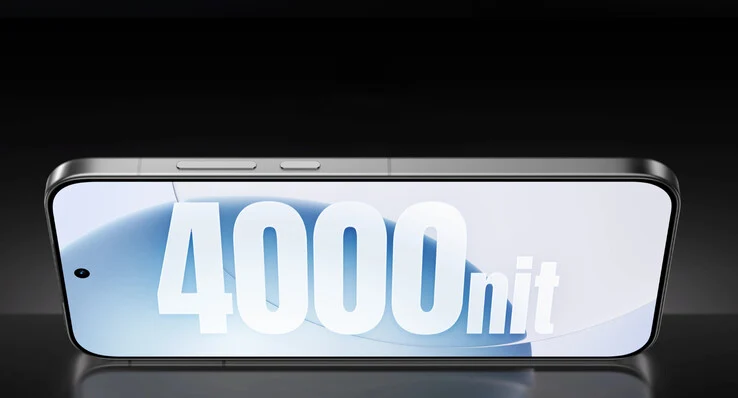
    The cameras are enhanced with Ricoh filters and modes, plus a removable camera cover for the rear lenses. This cover is secured by torx screws and can be swapped out for one from Realme or a 3D-printed version, with design files available on Maker World. Notably, the device has a 32 MP front camera that works with a 6.79-inch AMOLED screen, which supports a 144 Hz refresh rate, 1440p resolution, and a maximum brightness of 4,000 nits, similar to the Realme GT 8.

    Pricing and Availability

    The Realme GT 8 Pro is priced starting at CNY 3,999 (around $562) in China, offering 12 GB of RAM and 256 GB of storage, which is an increase of CNY 1,100 (approximately $155) compared to the Realme GT 8. At launch, customers can also choose from four additional memory configurations, going up to 16 GB of RAM and 1 TB of storage, with a price tag of CNY 5,199 (about $730). As of this moment, Realme has not announced any plans for an international release.

    Source:
    Link


  • Exynos 2600 to Boost Galaxy S26 Ultra with Enhanced GPU and NPU

    Exynos 2600 to Boost Galaxy S26 Ultra with Enhanced GPU and NPU

    Key Takeaways

    1. The Exynos 2600 is Samsung’s upcoming SoC, with initial benchmarks showing mixed results compared to competitors like Apple and Snapdragon.
    2. The Exynos 2600’s NPU is reported to be 6 times faster than the Apple A19 Pro, with a 14% boost in multi-core CPU performance and a 75% increase in GPU performance.
    3. Recent Geekbench results indicate that the Exynos 2600 slightly outperforms Snapdragon 8 Elite Gen 6 in multi-core performance and beats it by 29% in GPU performance.
    4. Samsung may use the Exynos 2600 in select markets for the Galaxy S26 Ultra, despite historical concerns over Exynos chips compared to Snapdragon.
    5. The Exynos 2600 will be produced using Samsung’s SF2 node, making it the first 2 nm smartphone SoC, with production stability issues reportedly resolved.


    With the release of the Apple A19 Pro, MediaTek Dimensity 9500, and Snapdragon 8 Elite Gen 5, the only major player yet to make its appearance in the crowded smartphone SoC arena is Samsung’s Exynos 2600. Although initial leaked benchmarks haven’t looked too impressive, it’s understandable since the launch is still months away. Recently, a report has surfaced making some bold statements regarding its capabilities.

    Performance Expectations

    According to the report, the NPU of the Exynos 2600 is said to be an astonishing 6 times faster than that of the Apple A19 Pro, based on some undefined benchmarks. The chip is claimed to have a 14% boost in multi-core CPU performance and a significant 75% increase in GPU performance. The CPU improvement seems reasonable, especially since the Exynos 2600 is expected to feature ten CPU cores. Conversely, the GPU enhancements might be attributed to either an in-house GPU or AMD’s RDNA technology.

    Benchmark Insights

    In the latest Geekbench results for the Exynos 2600, it only slightly surpasses the Snapdragon 8 Elite Gen 6 in terms of multi-core performance. While the final version might perform a bit better, it reportedly beats Qualcomm’s chip by 29% on the GPU side. If the chip employs the Arm Lumex C1-Ultra as its main core, its single-core performance could potentially match that of the MediaTek Dimensity 9500.

    Regional Variations

    Initially, it was widely believed that the Galaxy S26 Ultra would be launched solely with the Snapdragon 8 Elite Gen 5 for Galaxy, just like its earlier models. However, new information suggests that Samsung might opt to use the Exynos 2600 in certain markets. This has raised some eyebrows in the community, considering Exynos chips have traditionally struggled against Snapdragon counterparts.

    Despite these worries, Samsung appears to have pushed the Exynos 2600 to operate at 85% of its peak potential, which could mean we are looking at a genuinely competitive chip this time around. As it will be produced using Samsung’s SF2 node, it is set to be the first 2 nm smartphone SoC in the world. Earlier this year, there were concerns about its stability and production yields, but it seems those issues have been resolved.

    Source:
    Link