
Tag: Saturn

  • New Moons Discovered Orbiting Jupiter and Saturn: Exciting Findings

    New Moons Discovered Orbiting Jupiter and Saturn: Exciting Findings

    Key Takeaways

    1. Jupiter and Saturn are the largest planets in our solar system and have many moons orbiting them.
    2. Recently, four new moons were discovered around Jupiter and eleven around Saturn, as announced by the Minor Planet Center.
    3. These new moons are small, averaging about 3 km in diameter, and have broad orbits and low brightness.
    4. Powerful telescopes, including Magellan, CFHT, and Subaru, are needed to observe these new moons, as they cannot be seen with amateur telescopes.
    5. Jupiter currently has 101 moons, while Saturn has 285, but these numbers may change with future discoveries from ongoing spacecraft missions.


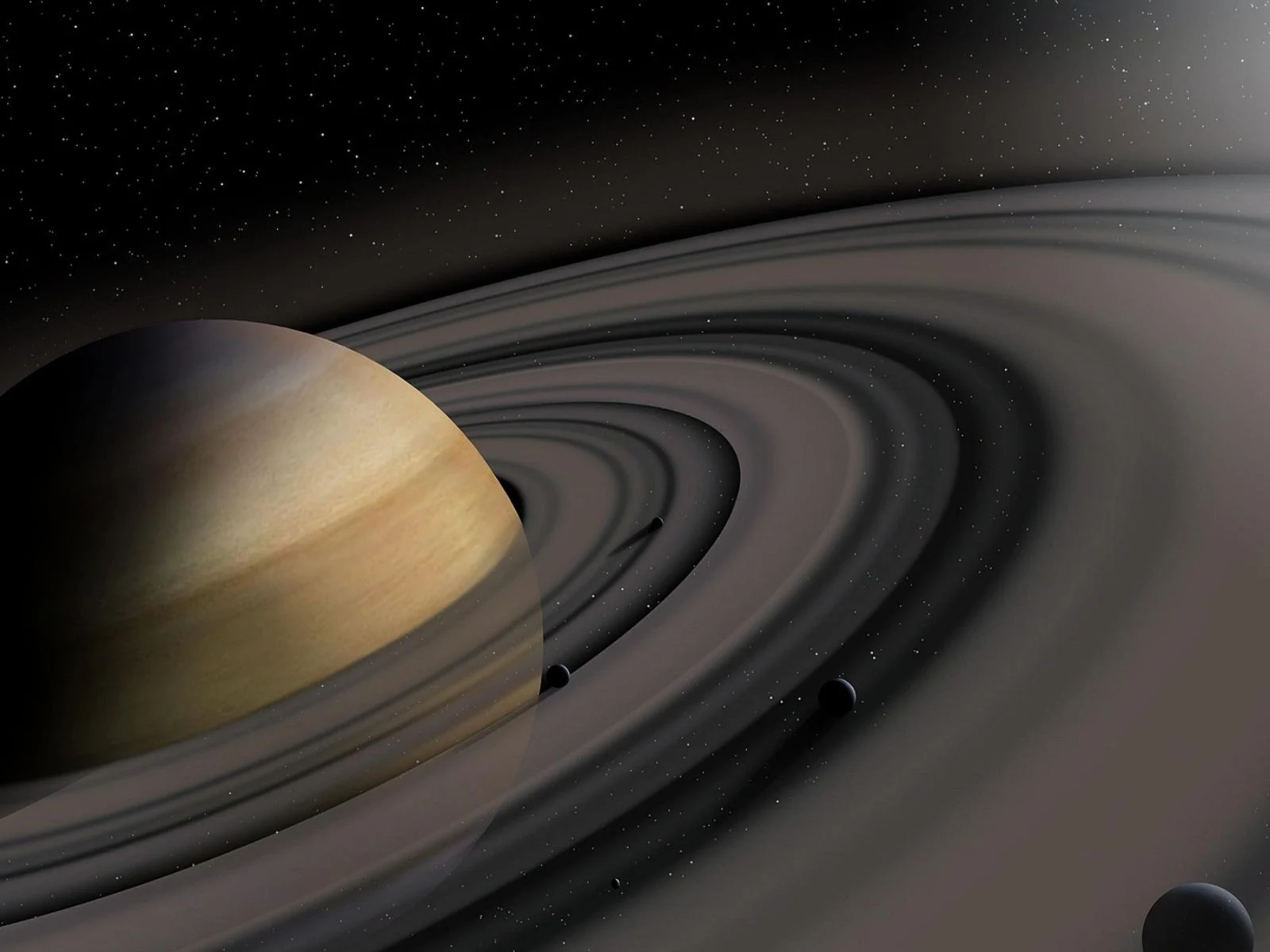
    Jupiter and Saturn are the biggest planets in our solar system, each with many moons orbiting them. Recently, astronomers have found new moons by studying these gas giants. In fact, four new natural satellites have been discovered around Jupiter, while eleven have been found orbiting Saturn.

    Recent Discoveries

    The Minor Planet Center made this announcement. However, these new celestial bodies are not very big, averaging about 3 km in diameter. Other interesting features have also been noted, such as their broad orbits and very low brightness, which falls between magnitudes 25 and 27.

    Observational Challenges

    Consequently, it’s impossible to view these new moons using an amateur telescope. To spot them, astronomers Scott Sheppard from the Carnegie Institution for Science, David Tholen from the University of Hawaii, and Edward Ashton utilized powerful telescopes like the Magellan, Canada-France-Hawaii (CFHT), and Subaru.

    Current Moon Counts

    As of now, Jupiter has 101 moons, while Saturn boasts 285. However, these figures may change in the future. Several spacecraft are currently on their way to Jupiter, which could lead to more discoveries. It’s also important to mention that moons can form rapidly, especially in chaotic conditions where celestial collisions are common. Under gravitational influence, fragments can merge and settle into orbit around the planet.

    Source:
    Link


  • Rare 15-Year Phenomenon Observed on Saturn

    Rare 15-Year Phenomenon Observed on Saturn

    Key Takeaways

    1. Saturn experiences equinoxes, similar to Earth, creating stunning views.
    2. The planet is home to 274 known natural satellites, with some potentially supporting life.
    3. Titan, Saturn’s largest moon, creates large shadows on the planet’s surface.
    4. A rare event occurred on September 20, allowing observers to see Titan transit during Saturn’s equinox.
    5. This view happens only once every fifteen years, with the next full opportunity in 2040.


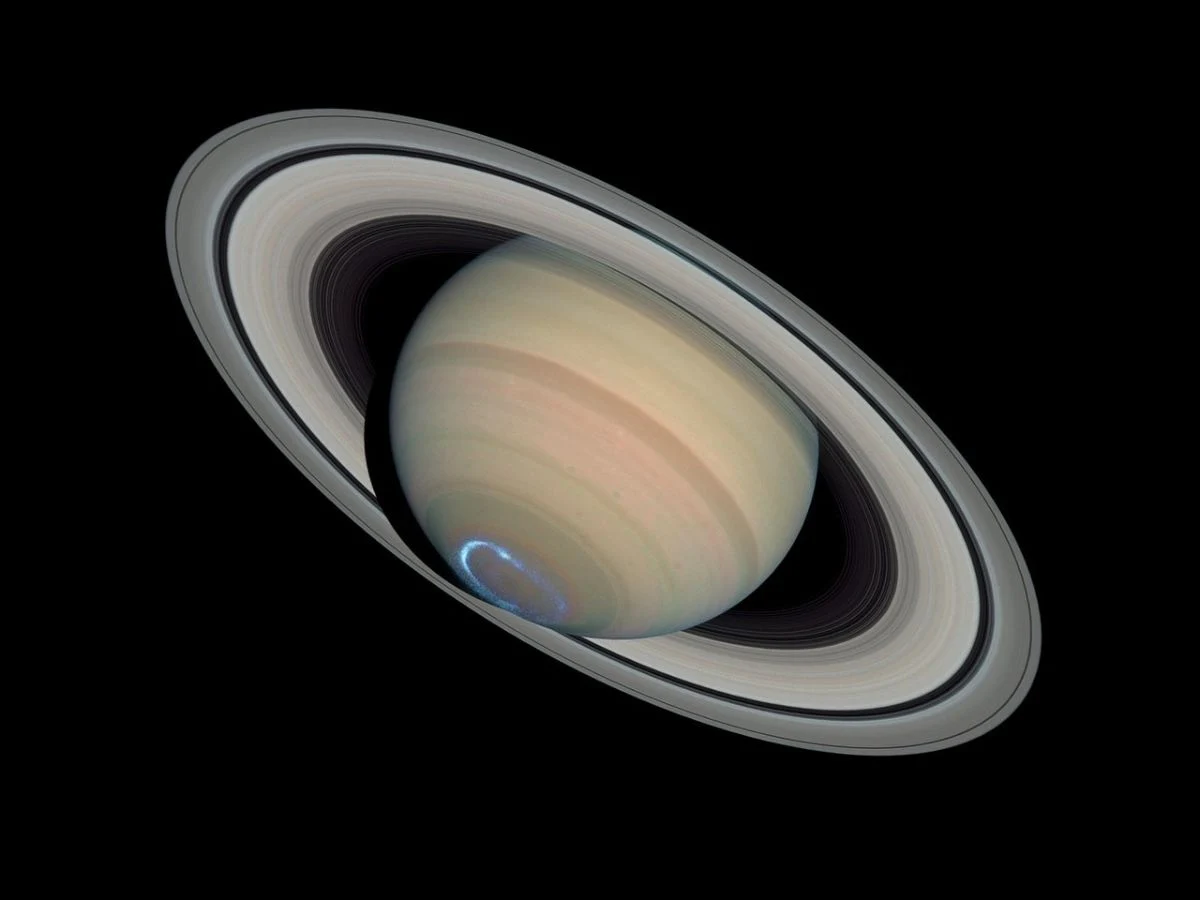
    Saturn is a planet that experiences equinoxes just like Earth, and recently, this event took place on the gas giant, bringing with it a remarkable occurrence that created a stunning view.

    The Satellites of Saturn

    Saturn is home to 274 known natural satellites, each differing in size and orbiting at various distances from the planet. Some of these moons have piqued the interest of scientists because they might support some kind of life.

    A Special Focus on Titan

    Our spotlight shines on Titan, the largest of Saturn’s moons. Titan creates large shadows on the planet when it moves across its surface, making for quite the sight.

    On Saturday, September 20, astronomers, both amateur and professional, had the chance to witness a rare event. Titan transited during Saturn’s equinox, allowing observers to see a large dark patch on the planet’s surface while its rings appeared nearly invisible from Earth.

    A Rare Opportunity

    This remarkable view only happens once every fifteen years, and it can be seen worldwide. If you didn’t catch this event, you’ll have to wait until 2040, although Titan will have one more incomplete transit on October 6. But be cautious, as unexpected issues could arise in the meantime that might disrupt this event.

    Source:
    Link


  • NASA Seeks Witnesses After Possible Asteroid Crash on Saturn

    NASA Seeks Witnesses After Possible Asteroid Crash on Saturn

    Key Takeaways

    1. An astronomer captured a potential asteroid impact on Saturn on July 5, creating a large burst of light.
    2. NASA is seeking witnesses to confirm the impact, as it may vanish quickly due to Saturn’s gas composition.
    3. Impacts on gas giants like Saturn are rare; the chance of a significant one is about once every 3,125 years.
    4. Astronomers who observed Saturn during a specific time on July 5 are encouraged to share their findings with NASA.
    5. If verified, this would be the first documented observation of such an event on Saturn, offering valuable data for scientists.


    Many cosmic events happen out in space, and some can vanish in an instant. Right now, there’s a potential asteroid impact on Saturn that has led NASA to call for witnesses.

    The Origin of the Discovery

    The whole thing kicked off when astronomer Mario Rana snapped a picture on July 5 and shared it with the Planetary Virtual Observatory & Laboratory (PVOL). In this shot, it looks like an object had a violent collision with Saturn, creating a rather large burst of light. This is quite astonishing, as such impacts are very rare. In fact, the chance of an object larger than one kilometer hitting Saturn is just one in 3,125 years!

    NASA’s Request for Observations

    Because of the significance of this cosmic event, NASA is requesting witnesses. An impact on a gas giant like Saturn can disappear quickly due to its makeup. This is different from rocky planets like Earth, where signs of impacts can linger for millions of years. It’s worth noting that gas giants are prime targets for asteroids. Their enormous mass gives them a strong gravitational force, drawing many objects towards them.

    Calling All Astronomers

    Astronomers who were watching Saturn on July 5 between 09:00 and 09:15 UT are encouraged to share their observations with NASA. This will help in studying the impact more closely and confirming its occurrence officially.

    If this event is verified, it would mark the first time such an observation has been documented on this gas giant. Although smaller impacts happen frequently each year, the number of impacts seems to be similar to that of Earth, which experiences about 8,000 impacts annually. Therefore, with fresh data from amateur astronomers, scientists could gain invaluable insights into this phenomenon on a gas planet.

    Source:
    Link