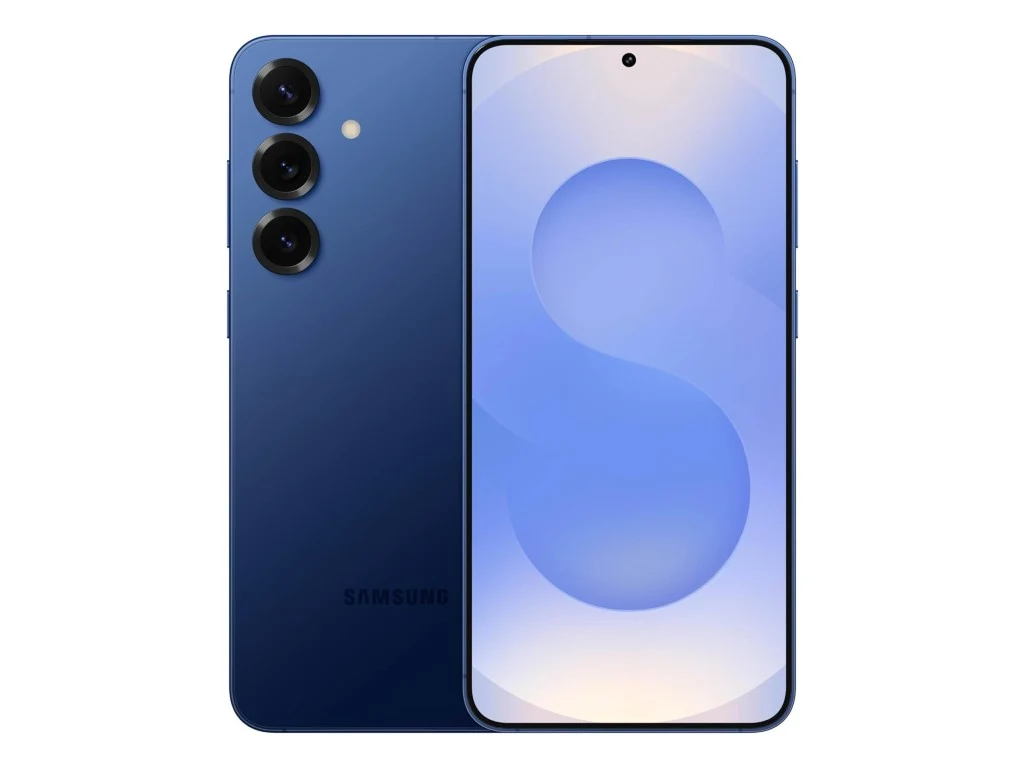
Tag: Samsung

  • Galaxy S26 New Main Sensor: What to Expect and What to Know

    Galaxy S26 New Main Sensor: What to Expect and What to Know

    Key Takeaways

    1. The Galaxy S26 series may feature an improved telephoto system with options for a mix of 3.5x and 8x lenses or a single 200MP telephoto lens using digital cropping for zoom.
    2. The base model is rumored to include a new 50MP ISOCELL GN series sensor, the first refresh in three years, promising sharper images and better low-light performance.
    3. Caution is advised as recent ISOCELL GN series sensors have not significantly changed in size, raising doubts about the potential for larger pixels in the new sensor.
    4. The S26 Edge is expected to replace the S26 Plus model, possibly featuring the same 200MP sensor as its predecessor.
    5. The Galaxy S26 will be powered by either the Exynos 2600 or Snapdragon 8 Elite 2 chipset and will run on One UI 8 based on Android 16, aiming for competitive pricing and gradual upgrades.


    The Galaxy S26 series has been rumored to come with an improved telephoto system, featuring either a mix of 3.5x and 8x lenses or a single 200MP telephoto lens that utilizes digital cropping for longer zoom capabilities due to its high resolution. Recent information also hints at an upgrade for the main sensor of the base model, introducing a new 50MP sensor. But hold your horses before getting too thrilled!

    New Sensor Details

    The Galaxy S26 is set to bring in a new ISOCELL GN series sensor, which will be the first refresh of the sensor in three years. Although precise details about this sensor are not fully clear yet, it’s anticipated to feature larger pixels, resulting in sharper images and improved performance in low-light conditions.

    Caution is Advised

    However, it’s worth noting that the sensor sizes in the ISOCELL GN series haven’t changed significantly over recent years. In fact, the GN3 and GN5 are smaller than the GN1 and GN2, which makes it hard to believe that a new GN sensor will actually come with larger pixels. Here’s a quick look at the sensor sizes:

    – GN1: 1/1.31″
    – GN2: 1/1.12″
    – GN3: 1/1.57″
    – GN5: 1/1.57″
    – GNK: 1/1.3″
    – GNJ: 1/1.56″
    (Source: Samsung Semiconductor)

    Interestingly, the source did not mention a Plus model, which aligns with previous rumors suggesting that the S26 Edge (likely to include a 200MP sensor like its predecessor) will take the place of the S26 Plus in Samsung’s future offerings.

    What to Expect

    Equipped with either an Exynos 2600 or Snapdragon 8 Elite 2 chipset along with One UI 8 on Android 16, the S26 seems to aim for a balance between gradual upgrades and competitive pricing. Will this new sensor enhance the S26’s photography capabilities to compete with Chinese flagship phones? More leaks are expected in the upcoming months to shed light on its potential.

  • Samsung Galaxy Watch8 Classic Leaks: Rotating Bezel & Redesign

    Samsung Galaxy Watch8 Classic Leaks: Rotating Bezel & Redesign

    Key Takeaways

    1. The Galaxy Watch6 Classic was launched in summer 2023 and may be replaced by the Galaxy Watch8 Classic in 2025.
    2. The Galaxy Watch8 Classic design combines elements from the Galaxy Watch6 Classic and Galaxy Watch Ultra.
    3. It features a rotating dial, two physical buttons, a digital crown, and a unique band system.
    4. The dimensions of the Galaxy Watch8 Classic are approximately 46 x 46.5 x 14.2 mm, likely marketed as a 47 mm case size.
    5. The Galaxy Watch8 Classic is expected to be revealed in July at the next Galaxy Unpacked event alongside other new products.


    The Galaxy Watch6 Classic has been out for a bit now, first shown to the world in the summer of 2023, alongside the Galaxy Z Fold5 and Galaxy Z Flip5 (currently priced at $488 – renewed on Amazon). Though Samsung shifted focus to the Galaxy Watch Ultra last year, a recent beta version of One UI Watch suggests that the Classic could make a comeback in 2025 as part of the Galaxy Watch8 lineup.

    Sneak Peek of the Galaxy Watch8 Classic

    Recently, OnLeaks has shared an initial detailed glimpse of the upcoming Galaxy Watch8 Classic, in collaboration with SammyGuru. Technically, the Galaxy Watch8 Classic is set to take the place of the Galaxy Watch6 Classic. However, the design presented appears to blend features from not only the Galaxy Watch6 Classic but also last year’s Galaxy Watch Ultra.

    Design Features and Specifications

    In terms of design, the Galaxy Watch8 Classic boasts a rotating dial that fits snugly into a squircle-shaped case. Additionally, Samsung has added two physical buttons and a digital crown, along with its unique band system. Reports indicate that the Galaxy Watch8 Classic will have dimensions of 46 x 46.5 x 14.2 mm, which Samsung will likely market as a 47 mm case size. As it stands, the Galaxy Watch8 Classic is anticipated to be unveiled alongside the Galaxy Watch8, Galaxy Z Fold7, and Galaxy Z Flip7 this coming July at Samsung’s next Galaxy Unpacked event.

    Source:
    Link

  • Galaxy Watch 8 Battery Capacity Leak: Minor Upgrade from Previous Model

    Galaxy Watch 8 Battery Capacity Leak: Minor Upgrade from Previous Model

    Key Takeaways

    1. Improved Battery Sizes: The Galaxy Watch8 series will feature slightly improved battery sizes compared to the previous generation, with the 40mm model having a 318 mAh battery and the 44mm model a 426 mAh battery.

    2. Two Sizes for Galaxy Watch8: The Galaxy Watch8 will be available in two sizes: 40mm and 44mm, along with a Classic version that includes a rotating bezel.

    3. Model Numbers Revealed: Recent leaks indicate specific model numbers for the Galaxy Watch8 and its Classic version, including SM-L320, SM-L325 for the 40mm, and SM-L500, SM-L505 for the Classic.

    4. Slight Battery Life Improvement: Compared to the Galaxy Watch7 series, the new models show only a minor increase in battery capacity, with the 40mm version going from 300 mAh to 318 mAh.

    5. Official Unveiling Expected: Samsung is expected to unveil the new Galaxy Watch series in July, alongside the Galaxy Z Fold7 and Z Flip7.


    There has been a lot of buzz and speculation about the new Galaxy Watch series, focusing on various models, their look, and how fast they charge. Recent info indicates that the battery sizes for the three anticipated models are set to improve from the last generation, but not by a significant amount. The Galaxy Watch8 is rumored to come in two sizes: 40mm and 44mm, plus there will be a Galaxy Watch8 Classic featuring a rotating bezel.

    Latest Leak Details

    The newest leak originates from a certification site shared by SammyGuru, revealing the usual model numbers linked to the Galaxy Watch8 and its Classic version. Looking at the Galaxy Watch8, the 40mm model is rumored to have model numbers SM-L320 and SM-L325 for its Bluetooth and LTE versions, respectively. The smaller watch is expected to include a 318 mAh battery (with a typical capacity of 325 mAh). On the other hand, the 44mm model might carry the numbers SM-L330 and SM-L335, along with a battery size of 426 mAh (435 mAh typical).

    Comparison with Previous Models

    For comparison, the Galaxy Watch7’s 40mm Bluetooth version available on Amazon includes a 300 mAh battery, while the 44mm Bluetooth version has a 425 mAh battery. If these leaks are accurate, the new Galaxy Watch8 series will see only a slight improvement in battery life compared to the Watch7 series.

    Insights on the Galaxy Watch8 Classic

    Regarding the Galaxy Watch8 Classic, it is said to have model numbers SM-L500 (Bluetooth) and SM-L505 (LTE) attached to it. This variant is expected to feature a 435 mAh battery (with a typical capacity of 450 mAh). In contrast, the Galaxy Watch6 Classic (43mm model available on Amazon) boasts a 425 mAh battery, while the Galaxy Watch5 Pro (Bluetooth version on Amazon) has a larger 590 mAh cell. While the name isn’t officially confirmed, it is assumed to be the Watch8 Classic due to the presence of both Bluetooth and LTE models, unlike the Galaxy Watch Ultra (available on Amazon), and the battery size is fairly small for a Pro or Ultra watch.

    Source:
    Link

  • Nintendo Switch 2 Shortages to Ease with Nvidia’s 8nm Chips

    Nintendo Switch 2 Shortages to Ease with Nvidia’s 8nm Chips

    Key Takeaways

    1. Nintendo has chosen Samsung’s 8nm chips for the Switch 2, opting for a more established technology over a faster but less accessible 5nm process.

    2. The use of Samsung’s 8nm technology provides a significant performance boost compared to the previous 14nm Tegra X1 chipset.

    3. Nintendo is facing high demand for the Switch 2, with 2.2 million preorders in Japan, and is working with Samsung to increase chip production.

    4. Samsung’s 8N technology offers a production yield of up to 80%, avoiding potential bottlenecks that could arise from using TSMC’s advanced processes.

    5. Nintendo aims to increase Switch 2 production to around 20 million units, up from an initial estimate of 15 million, to address anticipated shortages before its US release.


    The Nintendo Switch 2 will indeed utilize Samsung’s silicon, as the Japanese gaming company is said to have turned to its foundry for additional 8nm chips.

    Previous Rumors

    Earlier reports suggested that Nintendo planned to introduce a faster Switch 2 model featuring a chipset manufactured on Samsung’s 5nm processor technology, similar to the OLED version currently priced at $335 on Amazon. However, it appears that for the initial version, Nintendo has opted for Samsung’s 8nm process, which is more established and readily accessible. This choice still represents a significant performance boost from the 14nm Tegra X1 chipset found in the previous version, without stepping into the competitive territory of TSMC’s 7nm nodes and lower.

    Manufacturing Choices

    Although TSMC is more advanced in production capabilities, it serves many clients with larger budgets, including Apple and Qualcomm. Consequently, Nintendo would likely have faced delays and higher costs if they had chosen TSMC instead of Samsung.

    Nintendo has already announced that it won’t be able to meet the demand for Switch 2 preorders, having received 2.2 million orders just in Japan for the more affordable local model. The company expressed regret to its fans and is exploring options to boost production by asking Samsung to increase output of a custom chip created in partnership with Nvidia.

    Production Yield

    Samsung’s 8N production technology is mature enough to achieve a yield of up to 80%, eliminating the possible bottleneck that Nintendo might have encountered if it had used a more advanced TSMC process. Additionally, the Nvidia T239 chip powering the Switch 2 is designed on the Ampere GPU architecture, which has been optimized for production in Samsung’s facilities from the start.

    The Switch 2 represents a significant victory for Samsung, which has lagged behind TSMC in production yield for advanced nodes. This partnership will enable Nintendo to ramp up manufacturing more swiftly and at a more favorable cost.

    After announcing the Switch 2, Nintendo indicated that it could only reach the original Switch production level of 15 million units by March 2026, which is nearly 2 million units below what analysts had anticipated. This modest production target is also dependent on the outcome of ongoing tariff disputes, which could lead to a price increase for the console in the US.

    By securing more 8nm chips from Samsung for the Switch 2, Nintendo appears to be aiming to boost production to around 20 million units, a significant rise from its earlier estimate of 15 million. This increase should help alleviate the anticipated shortages of the Nintendo Switch 2 ahead of its US release on June 5.

    Source:
    Link

  • Samsung Galaxy Z Fold7 Leaked Early with Titanium Rumors

    Samsung Galaxy Z Fold7 Leaked Early with Titanium Rumors

    Key Takeaways

    1. Samsung is expected to unveil the Galaxy Z Fold6 in summer, with current pricing at $1,299 on Amazon.
    2. The Galaxy Z Fold7 will feature a Snapdragon 8 Elite for Galaxy chipset and at least 12 GB of RAM.
    3. The design of the Galaxy Z Fold7 is likely to be slimmer than the previous Galaxy Z Fold Special Edition.
    4. The new model may adopt a design similar to the Galaxy Z Fold Special Edition, with a wider format to compete with other foldables.
    5. The Galaxy Z Fold7 might have a titanium backplate and could omit the S Pen digitizer, potentially reducing thickness by 0.6 mm.


    Samsung is not likely to unveil the Galaxy Z Fold6 (currently priced at $1,299 on Amazon) until the summer season. Despite this, details about the upcoming model are surfacing online. For instance, Geekbench reveals that the Galaxy Z Fold7 will feature a Snapdragon 8 Elite for Galaxy chipset, along with a minimum of 12 GB of RAM. Additionally, it seems that Samsung has managed to reduce the thickness of this new foldable device, making it slimmer than last year’s Galaxy Z Fold Special Edition.

    First Looks at the Galaxy Z Fold7

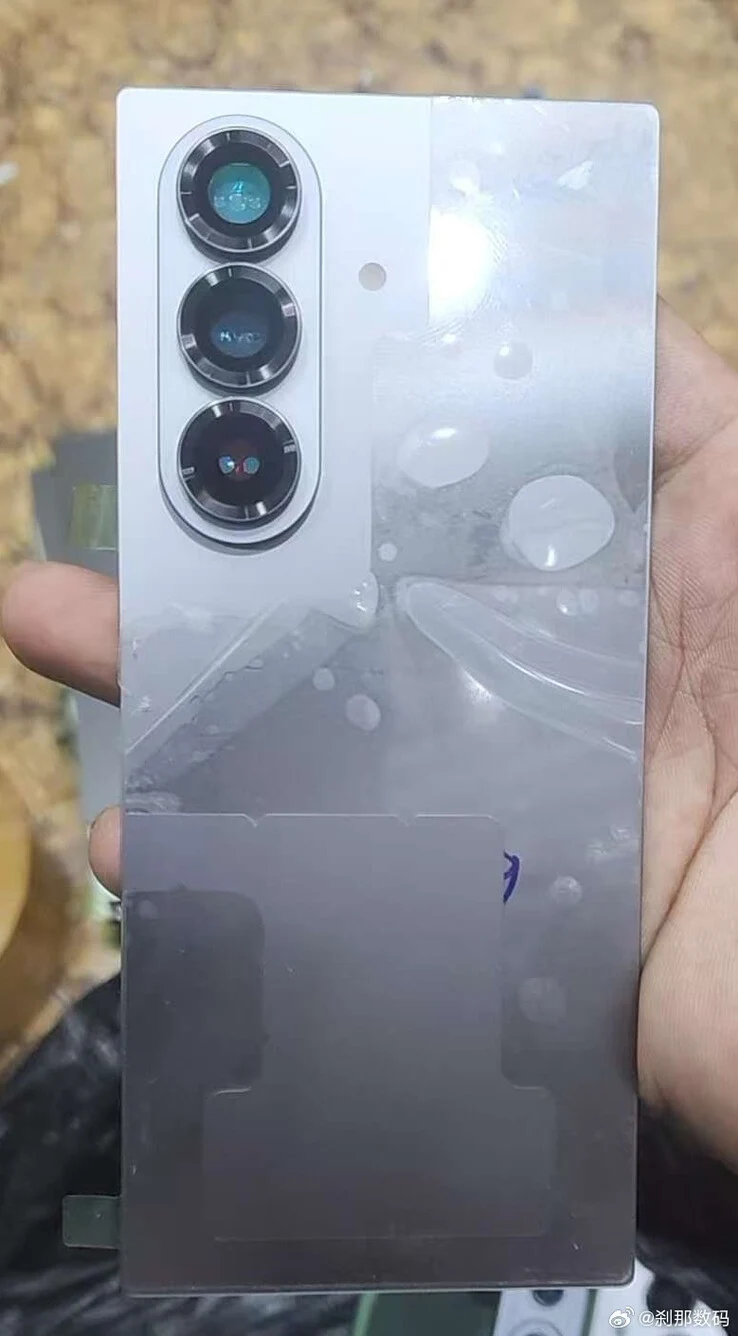
    Recently, the initial image of the Galaxy Z Fold7 has surfaced on the internet. Shared by Shane Craig on YouTube, this image predominantly showcases the back panel of the device rather than a full prototype. Nevertheless, it appears that Samsung is steering its standard Galaxy Z Fold series towards a design similar to the Galaxy Z Fold Special Edition, adopting a wider format that could bring the Galaxy Z Fold7 in line with competitors like the Oppo Find N5 and Vivo X Fold3 Pro, among other modern foldables.

    Design and Features

    In addition, the Galaxy Z Fold7 is anticipated to follow in the footsteps of the Galaxy Z Fold Special Edition by incorporating a titanium backplate situated between its hinge mechanism and inner display. This titanium component is reported to be thinner than the carbon fiber (CFRP) materials that Samsung has utilized in the Galaxy Z Fold3 through Galaxy Z Fold6. According to The Elec, the Galaxy Z Fold7 might also emulate the Galaxy Z Fold Special Edition by omitting the S Pen digitizer, potentially reducing the thickness by 0.6 mm when the device is folded. However, there are speculations that Samsung is working on a new S Pen that will be compatible with the Galaxy Z Fold7 once it launches.

    Source:
    Link


  • Samsung Galaxy A26 5G Review: A Dependable Daily Driver

    Samsung Galaxy A26 5G Review: A Dependable Daily Driver

    Key Takeaways

    1. Storage and Pricing: The Galaxy A26 5G offers 128 GB and 256 GB storage options with 6 GB of RAM, priced at $299 (often found under $250 online), and promises six years of updates until 2031.

    2. Performance: Powered by the Exynos 1380 SoC and featuring a 120 Hz refresh rate, the device provides a smooth display experience suitable for gaming, though occasional stuttering may occur with demanding applications.

    3. Display Quality: The smartphone has a 6.7-inch Super AMOLED display with a resolution of 2340 x 1080, delivering crisp visuals and a high brightness level, comparable to its predecessor.

    4. Build and Features: Weighing 200 grams, the Galaxy A26 5G features Gorilla Glass Victus+, an IP67 rating for dust and water resistance, and mid-range specs including Wi-Fi 5 and Bluetooth 5.3.

    5. Missing Features: Compared to the Galaxy A25 5G, the A26 5G lacks stereo speakers and a 3.5mm audio jack.


    Samsung has launched the Galaxy A26 5G, available in both 128 GB and 256 GB of UFS 3.1 storage options. Each variant comes equipped with 6 GB of LPDDR4x RAM. The smaller 128 GB option of this 6.7-inch smartphone, which we recently took a look at, has an official price tag of $299, but you can often find it online for under $250. Samsung promises six years of updates for this device, lasting until 2031.

    Performance and Display

    The Galaxy A26 5G is powered by the Exynos 1380, a mid-range SoC that was previously used in last year’s Galaxy A35 5G. Paired with a 120 Hz refresh rate, this SoC provides a mostly fluid display experience and makes the phone suitable for gaming. However, more demanding applications or updates may cause occasional stuttering, although we found this to be rare in our testing.

    Size and Screen Quality

    In comparison to its predecessor, the Galaxy A25 5G, the Galaxy A26 5G has gotten a bit bigger, as the display size has increased by 0.2 inches to 6.7 inches. The Super AMOLED display maintains the same resolution of 2340 x 1080, delivering crisp visuals with a pixel density of 385 PPI. With an average brightness of 731 cd/m² for SDR content and a peak of 1112 cd/m² for HDR, the display brightness is on par with its predecessor.

    Build and Features

    Even though it’s larger, the Galaxy A26 5G is only 3 grams heavier than the Galaxy A25 5G, weighing in at 200 grams, which feels quite light. It offers better materials than the earlier model, featuring Gorilla Glass Victus+ on both the front and back. It also carries an IP67 rating, providing good protection against dust and water.

    With Wi-Fi 5, Bluetooth 5.3, NFC, hybrid dual SIM capabilities, and USB-C 2.0, the Galaxy A26 5G has impressive mid-range specifications. It comes equipped with Samsung’s Knox Vault for secure storage of passwords and sensitive data, along with some AI features from OneUI 7. Additionally, it includes a solid 50MP main camera and slightly improved battery life compared to the older model.

    Missing Features

    In comparison to the Galaxy A25 5G, two features have been removed: there’s now only one speaker instead of stereo speakers, and the 3.5mm audio jack is no longer included.

    Source:
    Link

  • Galaxy Z Fold7 and Oppo Find N5 Thicker than Official Specs

    Galaxy Z Fold7 and Oppo Find N5 Thicker than Official Specs

    Key Takeaways

    1. Smartphone manufacturers, especially for foldable devices, have unique and often inconsistent methods of measuring sizes.
    2. Leakers like Steve Hemmerstoffer and Ice Universe provide more accurate measurements than official data sheets.
    3. Samsung’s measurement for the Galaxy Z Fold 7 includes a 0.5 mm bezel that affects the overall thickness when folded.
    4. Other brands, such as Oppo, also have discrepancies between listed specs and actual measurements.
    5. The significance of these measurement variations may vary among users.


    If you’re trying to find the exact sizes of a smartphone, you would typically check the data sheet for precise measurements, right? Well, that’s not entirely true. It seems like manufacturers have their own unique ways of measuring, especially for foldable devices. While these methods might make sense in some cases, they often appear quite random.

    Leakers Weigh In

    Famous French leaker Steve Hemmerstoffer, known as @OnLeaks, recently reached out to the X community to get the actual dimensions of the Galaxy Z Fold 6 (which you can find here on Amazon). He wasn’t interested in what the data sheet claims but wanted to know the real thickness of the foldable from Samsung. In February, based on a CAD model, he estimated the upcoming Galaxy Z Fold 7 to be about 4.5 mm thick, but another reliable leaker, Ice Universe, measured it at just 3.9 mm.

    Samsung’s Measurement Method

    Thanks to YouTuber Shane Craig (check out the video below), it turns out that Samsung might be bending the rules a bit with its measurements. Both leakers are indeed correct. Samsung measures the height of the unfolded device to the edge of the flexible display at 3.9 mm. But there’s a bezel of around 0.5 mm above that, designed to keep the two parts of the display from touching when the smartphone is folded. This gap explains why the Galaxy Z Fold 7 doesn’t just double the 3.9 mm when folded, but instead reaches 8.9 mm, as per the leak.

    Other Brands Have Issues Too

    It seems Samsung isn’t the only one with this strange approach to measurements. Shane Craig has pointed out that Oppo’s data is also off. Additionally, there’s a discrepancy between the specs listed and the actual measurements for the Galaxy Z Fold 6. Based on his findings:

    Whether or not these variations matter to users is a whole different question.

    Source:
    Link

  • Galaxy Z Flip 7 Leak Reveals Larger Cover Screen in One UI 8

    Galaxy Z Flip 7 Leak Reveals Larger Cover Screen in One UI 8

    Key Takeaways

    1. The Galaxy Z Flip 7 will feature a 4-inch edge-to-edge cover screen, larger than the previous models’ 3.4-inch screen.
    2. It is scheduled for release in July 2025 alongside the Galaxy Z Fold 7, with enhancements in design and specifications.
    3. The main display will increase to 6.85 inches and have thinner 1.2mm bezels for a more elegant look.
    4. An upgraded 4,300mAh battery is expected to improve battery life, though the chipset details remain unclear.
    5. The anticipated price is around $1,099, and it will launch with One UI 8.0 (Android 16) and a 7-year OS update guarantee.


    A leak regarding One UI 8.0 has revealed that the Galaxy Z Flip 7 will feature a 4-inch edge-to-edge cover screen, confirming previous speculations. Scheduled for release in July 2025 along with the Galaxy Z Fold 7, this new device will also include a larger main display, thinner bezels, and an enhanced battery that draws some attention away from its foldable counterpart.

    Samsung Galaxy Z Flip 7 Design Insights

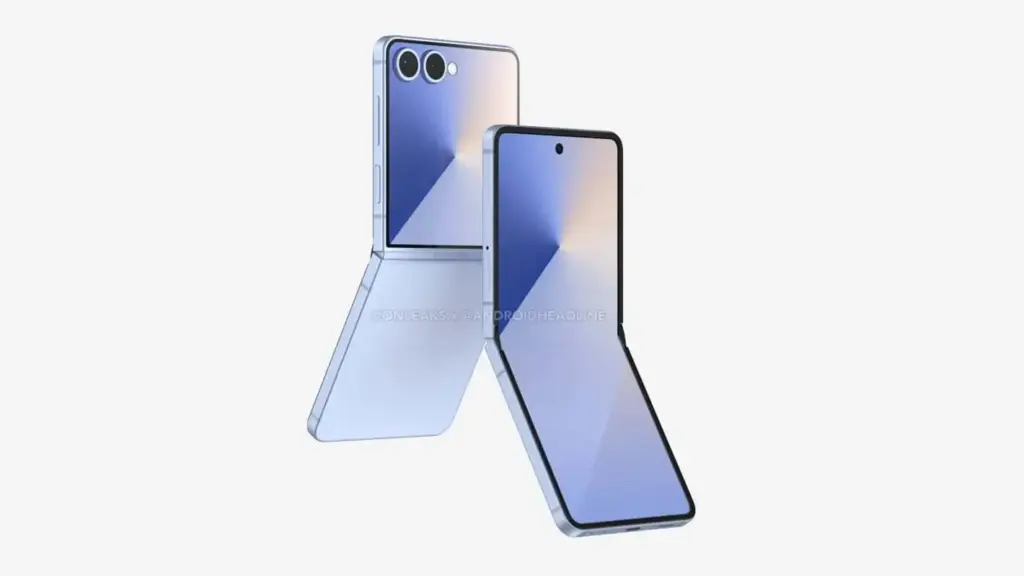
    The Galaxy Z Flip 7 is poised to be a highlight at the Unpacked event in July 2025, as leaks from One UI 8.0 firmware showcase significant improvements. Animation files pulled by Android Authority from leaked versions—tested on the Galaxy Z Flip 6, Z Fold 6, and S25 Ultra—validate the presence of a 4-inch OLED cover screen that extends over the dual-camera arrangement, echoing the design of the Motorola RAZR 60 Ultra. To note, both the Z Flip 5 and Flip 6 came with a 3.4-inch cover screen. The larger cover screen is likely to enhance the device’s functionality for notifications and quick tasks.

    Performance and Specifications

    The enhancements don’t end there. The Z Flip 7 is expected to sport a 6.85-inch AMOLED main display, which is an increase from the 6.7 inches in the previous model, featuring sleeker 1.2mm bezels for a more elegant appearance. An upgraded battery of 4,300mAh, compared to the Z Flip 6’s 4,000mAh, is anticipated to enhance battery life, although the chipset details remain unclear. Historically, Samsung has utilized Snapdragon processors for its foldable devices, but the Exynos 2500 appears to be on the horizon as a potential component for the Z Flip 7.

    Additional Features and Pricing

    Earlier reports suggest that the foldable’s crease might be almost invisible, and it will uphold the 7-year OS update guarantee, launching with One UI 8.0 (Android 16) alongside the Z Fold 7. While the specifications of the selfie camera—potentially remaining at 10MP or upgrading to 12MP similar to the S25 series—are not yet verified, new Galaxy AI functionalities are anticipated.

    Priced at approximately $1,099, it remains to be seen if the larger cover screen and upgraded design will outshine competitors like the Motorola Razr+ 2025, which is currently available for $999 on Amazon (also known as Razr 60 in other regions). The chipset for the Flip 7 is still not confirmed, making it one of the most critical factors to consider. As we approach the launch, it’s wise to stay alert before making any choices.

    Source:
    Link


  • Gemini AI Upgrade for Galaxy Watches and Buds: Smarter Control

    Gemini AI Upgrade for Galaxy Watches and Buds: Smarter Control

    Key Takeaways

    1. Samsung is integrating Google’s Gemini AI into Galaxy Watch and Galaxy Buds 3, enhancing device intelligence.
    2. Gemini will enable natural voice commands on Galaxy Watches, allowing users to manage tasks hands-free.
    3. The AI assistant will provide quick responses across various applications directly on the watch.
    4. Galaxy Buds 3 users can activate Gemini with voice commands or gestures, improving efficiency.
    5. This integration aims to create a more connected and intuitive wearable ecosystem for users.


    In a major move towards creating a more intelligent wearable environment, Samsung is set to incorporate Google’s Gemini AI into its Galaxy Watch and Galaxy Buds 3 series. This announcement showcases Samsung’s goal to merge AI functionalities across its devices, providing users with smarter and more contextually aware interactions.

    Enhanced Voice Commands for Smart Watches

    With the introduction of Gemini, users of the Galaxy Watch will be able to maintain their productivity seamlessly. The Gemini update will introduce natural voice command capabilities to Galaxy Watches, allowing users to manage tasks while on the move. For example, when at the gym, you could instruct Gemini to save a locker number or request a summary of an email, even if your hands are occupied.

    Effortless Interactions Across Applications

    The AI assistant is built to function across various applications, offering swift and pertinent replies straight on your watch. This hands-free method could significantly speed up and simplify routine activities like jotting down notes or checking emails, all without interrupting your flow. Samsung has not yet confirmed which specific Galaxy Watch models will receive the Gemini AI enhancement.

    Seamless Integration with Galaxy Buds 3

    The experience becomes even more efficient when the Galaxy Watch is used alongside the Buds 3. Activating Gemini is as easy as giving a voice command or using a pinch-and-hold gesture on the earbuds, allowing it to communicate with your smartphone. This functionality is beneficial for checking the weather before heading out for a run or replying to texts without needing to grab your phone. The blend of AI and gesture recognition hints at a future where wearables can manage more of your daily activities intuitively, enhancing the connectivity and intelligence of the Galaxy ecosystem.

  • Samsung to Replace Galaxy S26 Plus with Galaxy S26 Edge

    Samsung to Replace Galaxy S26 Plus with Galaxy S26 Edge

    Key Takeaways

    1. Samsung has officially launched the Galaxy S25 Edge, the slimmest model in the Galaxy S25 series.
    2. The Galaxy S26 series is expected to feature an Edge model that may replace the Galaxy S26 Plus due to poor sales of the Plus variant.
    3. The Galaxy S25 Edge has a smaller battery, slower charging, and lacks wireless charging and a telephoto camera compared to the Galaxy S25+.
    4. The success of the Galaxy S25 Edge will influence whether Samsung continues with the Plus model in future series.
    5. Samsung may launch four models in the Galaxy S26 series, similar to this year’s lineup, as they are developing four OLED panels.


    Samsung has unveiled the Galaxy S25 Edge, marking it as the slimmest addition to the Galaxy S25 series. Although it was initially revealed with other Galaxy S25 models earlier this year, it has taken several months for the official launch to occur. The Galaxy S25 Edge isn’t merely a prototype or a one-time offering; recent reports suggest that it may even take the place of one of the core models in the Galaxy S series.

    Future Galaxy S Models

    A report from Korea’s The Elec indicates that Samsung intends to introduce an Edge model in the upcoming Galaxy S26 series. Similar to the Galaxy S25 Edge, this new model will sport an ultra-slim design. More significantly, the anticipated Galaxy S26 Edge is likely to replace the Plus variant. If this goes ahead, it means there may not be a Galaxy S26 Plus released.

    This change is reportedly due to the Plus model’s underwhelming sales performance in the Galaxy S lineup. To illustrate, Samsung has set a sales target of only 6.7 million units for the Galaxy S25+, in contrast to 13.6 million units for the Galaxy S25 and 17.4 million for the Galaxy S25 Ultra.

    Features and Competition

    Should Samsung pursue this plan, they will need to deliver more than just a sleek design. The Galaxy S25 Edge comes with a smaller battery capacity, yet it shares the same screen size as the Galaxy S25+ (currently listed on Amazon for $865). It also charges slower, lacks wireless charging capabilities, and does not feature a telephoto camera. Moreover, its price of $1,099 makes it pricier than the Galaxy S25+, which starts at $999. If Samsung decides to eliminate the Galaxy S Plus model, it must ensure the replacement offers superior features and design.

    The final decision is not yet made, as the source mentions that the success of the Galaxy S25 Edge will significantly influence this choice. Nevertheless, work on the Galaxy S26 series, dubbed ‘Project NPA’, has already started. Currently, the Plus model is not in the development phase, but this could alter depending on the performance of the Galaxy S25 Edge.

    Upcoming Launches

    There’s also speculation that Samsung may launch four models in the Galaxy S series next year, mirroring this year’s lineup, as they are working on four OLED panels for the Galaxy S26 series. More information will likely emerge as time progresses.

    The Elec.

    Source:
    Link