
Key Takeaways
1. Samsung has started shipping its new HBM4 memory, targeting Nvidia GPUs and AI data centers.
2. The price of HBM4 memory is around $500 per unit, double that of the previous HBM3E, contributing to Samsung’s stock surge.
3. HBM4 memory performs at 13 Gbps, exceeding JEDEC benchmarks by 46% and achieving 3.3 TB/s bandwidth, surpassing Nvidia’s needs.
4. The advanced 10nm-class 6th-generation DRAM process and 4nm foundational die enhance performance, with improved heat dissipation and energy efficiency.
5. Samsung can currently supply up to 36 GB of HBM4 memory, with plans for a 48 GB option and ongoing development of HBM4E memory set for sampling in 2026.
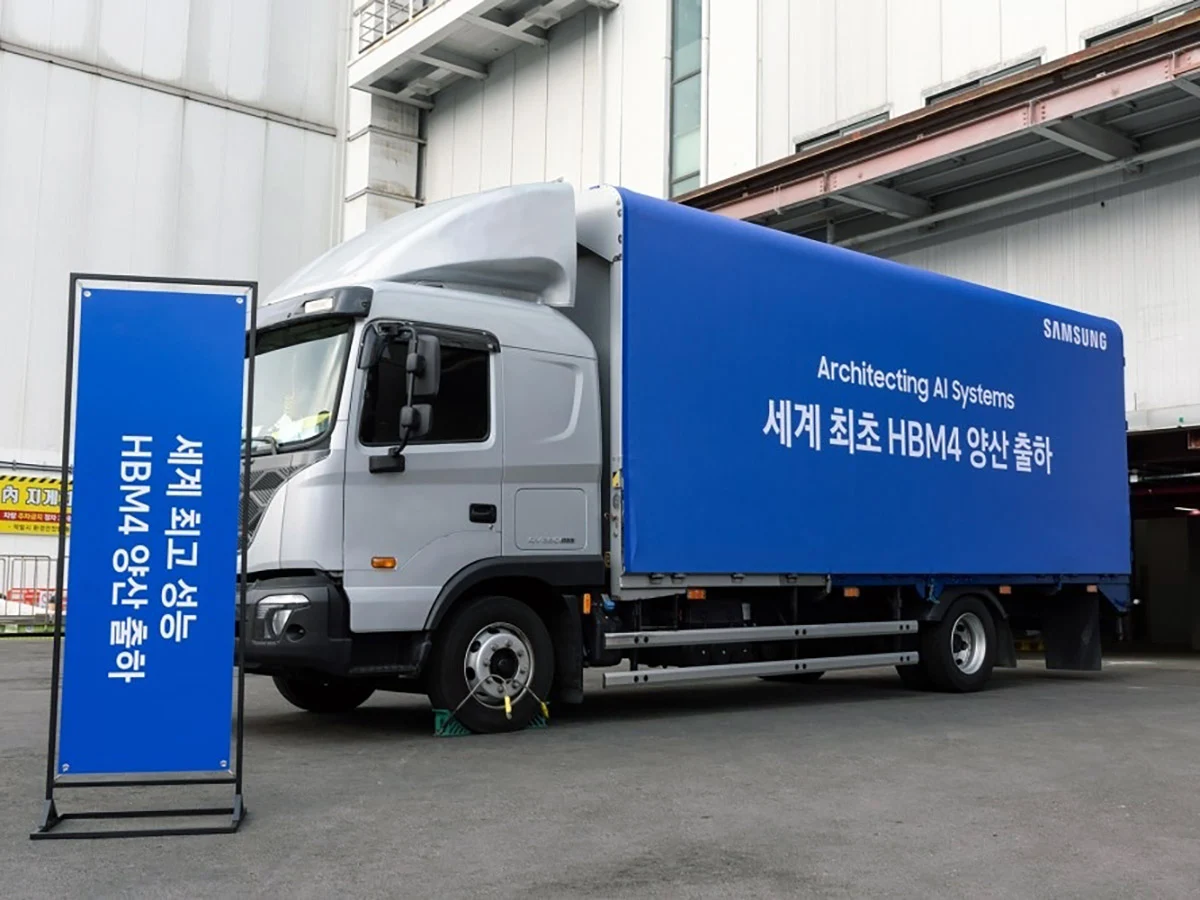
Samsung has revealed that it has begun the first shipments of its new HBM4 memory, which is aimed at applications like Nvidia GPUs and related AI data centers.
Pricing Details
Reports indicate that Nvidia and other clients are shelling out nearly $500 each for Samsung’s HBM4 memory, which is twice the cost of the previous HBM3E high-bandwidth memory. This price hike has led to Samsung’s stock reaching a record high, and the company’s management is optimistic about another prosperous year, fueled by the ongoing memory shortage.
Performance Breakthroughs
Currently, memory manufacturers are demanding a premium for every unit they create, but Samsung claims that its HBM4 AI memory has exceeded both the Joint Electron Device Engineering Council (JEDEC) benchmarks and Nvidia’s specifications. The operating speed of HBM4 can hit an impressive 13 Gbps, which is 46% above JEDEC’s standards. Moreover, its total memory bandwidth can reach up to 3.3 TB/s per stack, significantly surpassing the 3 TB/s requirement from clients like Nvidia.
Advanced Technology
Samsung achieved this remarkable performance by preemptively utilizing the 10nm-class 6th-generation 1c DRAM process, with the foundational die produced at 4nm, in contrast to the 14nm 1a DRAM used for the HBM3 version. This allows for substantial room for enhancements in both process and performance. To handle the heat generated, Samsung crafted the core die and data transmission systems using low-power and low-voltage technologies, resulting in 30% improved heat dissipation and 40% enhanced energy efficiency compared to the HBM3 memory currently employed in Nvidia’s Blackwell series AI graphics cards.
Future Prospects
At present, Samsung can deliver up to 36 GB of HBM4 memory using a 12-layer stack, but it can also create a 16-layer stack for a total of 48 GB once Nvidia finalizes its GPU design and budget. Samsung assures that it will maintain a steady supply of these premium HBM4 chips, stating it will “continue to secure stable supply capabilities to meet the growing mid- to long-term demand, particularly from AI and data centers.” Furthermore, Samsung plans to begin sampling its next-generation HBM4E memory in the latter half of 2026.
Source:
Link