Tag: Qualcomm

  • Snapdragon 8 Gen 4 to Cost 30% More Than Gen 3, Up to $240

    Snapdragon 8 Gen 4 to Cost 30% More Than Gen 3, Up to $240

    The upcoming Snapdragon 8 Gen 4 Soc from Qualcomm has been a topic of much speculation, particularly regarding its pricing. According to tipster Yogesh Brar, the new chipset is expected to be more expensive than its predecessor. Reports suggest the new chipset will cost between $220 and $240, marking a price hike of 25% to 30% over the Snapdragon 8 Gen 3. The official unveiling of the Snapdragon 8 Gen 4 is set for the Snapdragon Summit in October this year, with models expected to be available by 2025.

    New Manufacturing Process

    Rumors indicate that Qualcomm will employ the TSMC 3nm N3E process for the Snapdragon 8 Gen 4. The ARM core from the Snapdragon 8 Gen 3 will be replaced by Qualcomm’s self-developed Oryon core. This switch to the Oryon core is believed to be a significant factor contributing to the higher price of the new chipset. The current price range for the third-generation Snapdragon 8 chipset is between $190 and $200. Previous rumors have suggested that Qualcomm is redesigning the Snapdragon 8 Gen 4 processor to achieve a new target frequency of 4.26GHz. This enhancement is allegedly aimed at competing with Apple’s M4/A18/Pro processors and seems to justify the rumored price increase.

    Awaiting Official Confirmation

    As of now, Qualcomm has not released an official statement confirming the quality of the rumored changes or the pricing of the next-gen Snapdragon 8 chipset. More details about the upcoming Qualcomm Snapdragon 8 Gen 4 processor are expected to emerge as we approach the October unveiling.


    Snapdragon 8 Gen 4 to Cost 30% More Than Gen 3, Up to 0
  • Qualcomm Unveils Snapdragon 6s Gen 3: New Chip or Rebranded 695?

    Qualcomm Unveils Snapdragon 6s Gen 3: New Chip or Rebranded 695?

    Qualcomm has discreetly introduced the Snapdragon 6s Gen 3 5G chipset designed for mid-range smartphones. This chipset is fabricated using a 6nm process node.

    Snapdragon 6s Gen 3 Specs and Features

    The Snapdragon 6s Gen 3 is an octa-core chipset featuring a (2+6) core configuration, reaching a peak clock speed of 2.3GHz. It incorporates unspecified Qualcomm Kryo CPU cores. The GPU, also undisclosed, supports H.264 (AVC), H.265 (HEVC), VP8, and VP9 playback. A benchmark listing suggests it might be the Adreno 619, the same GPU found in the Snapdragon 695.

    This chipset supports FHD+ (1080 x 2520) display output at a 120Hz refresh rate.

    Camera Capabilities

    For the camera system, manufacturers can implement up to 108MP photo capture, a 32MP single camera, a 25MP + 13MP dual-camera setup, or a 13MP triple camera setup. It supports 1080p video recording at 60 fps and 720p slow-motion video capture at 120 fps. The actual implementation of these features depends on the smartphone manufacturer.

    The chipset includes the Qualcomm Spectra triple ISP for image processing, similar to the Snapdragon 6 Gen 1.

    Audio and Connectivity

    The chipset supports high-fidelity audio up to 384 kHz/32-bit, and features AI-based echo cancellation and noise reduction.

    For cellular connectivity, it uses the Snapdragon X51 5G Modem-RF System, offering a maximum download speed of 2.5Gbps. It supports a range of technologies including mmWave, 5G NR, LTE, HSPA, sub-6 GHz, TDD, WCDMA, FDD, SA, NSA, TD-SCDMA, CDMA 1x, EV-DO, and GSM/EDGE.

    WiFi and Bluetooth

    The chipset supports WiFi 4, WiFi 5, and Bluetooth 5.2 through the Qualcomm FastConnect 6200 System. It also includes Qualcomm’s proprietary TrueWireless technology for enhanced performance with compatible Bluetooth devices.

    The Snapdragon 6s Gen 3 supports LPDDR4x memory (up to 2133 MHz), UFS 2.2 storage, and Quick Charge 4+ technology for fast charging.

    A Rebranded Snapdragon 695?

    According to Android Authority, this new chipset might be a rebranded version of the Snapdragon 695 5G. The chipset has two part numbers: SM6375-AC and SM6370. Documentation indicates that the latter is not 5G capable, although it still includes the same 5G Snapdragon X51 modem.

    Android Authority speculates that the Snapdragon 6s Gen 3 could merely be a rebranding of the Snapdragon 695, with the 4G version having its 5G modem disabled. For reference, the Snapdragon 695 was launched in 2021.


    Qualcomm Unveils Snapdragon 6s Gen 3: New Chip or Rebranded 695?
  • Snapdragon 8 Gen 4 Targets 4.26GHz to Outperform Apple A18/Pro

    Snapdragon 8 Gen 4 Targets 4.26GHz to Outperform Apple A18/Pro

    Qualcomm has announced that they will integrate chips with their custom CPU cores following the acquisition of Nuvia. The forthcoming Snapdragon 8 Gen 4 will feature custom cores in a 2+6 CPU cluster configuration, comprising two performance cores and six energy-efficient cores. Rumors suggest that a design update for the chip, targeting a clock frequency of 4.26GHz, might be finalized in the coming month, aiming to rival Apple A18.

    Redesign and Enhanced Performance

    The Snapdragon 8 Gen 4 could potentially see a performance boost, particularly in single-core tasks, with the speculated redesign set to be completed in June, focusing on achieving a 4.26GHz clock speed to compete with Apple's A18 chip.

    Process Node Efficiency

    Both Apple's M4 series and the Snapdragon 8 Gen 4 are anticipated to be manufactured using TSMC's second-generation 3nm process node. This technology has shown efficiency in sustaining high clock frequencies, evident in the latest Apple Silicon chips.

    Power Efficiency and Features

    Qualcomm's chipset, while utilizing the same 3nm process node, lacks support for ARMv9 instruction set and Scalable Matrix Extension (SME), which enhances chip performance in complex tasks. Managing power efficiency will be crucial for Qualcomm this time, as previous reports hinted at higher power consumption, potentially necessitating larger smartphone batteries.

    Qualcomm is projected to reveal the Snapdragon 8 Gen 4 chipset at the upcoming Snapdragon Summit, expected to take place in October. The Xiaomi 15 series could possibly be among the first smartphones to feature the Oryon CPU-powered Android flagship.

    Moreover, Qualcomm is actively developing two ARM-based chips featuring custom Oryon CPU cores for Windows PCs – the 12-core Snapdragon X Elite and the 10-core Snapdragon X Plus.

  • Snapdragon 8 Gen 4 Leak Suggests Impressive Gaming Performance

    Snapdragon 8 Gen 4 Leak Suggests Impressive Gaming Performance

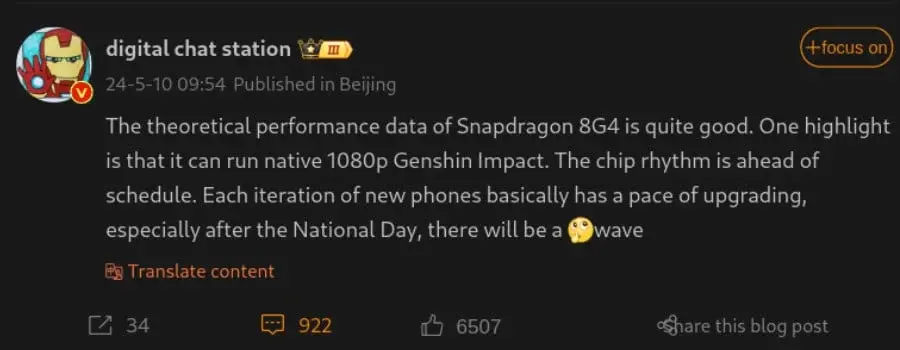
    According to a leak from a well-known industry tipster, Digital Chat Station, Qualcomm’s upcoming Snapdragon 8 Gen 4 processor seems to be progressing as planned for a punctual release, showcasing a high level of performance.

    The leaked information implies that the 8 Gen 4 chip will be capable of smoothly running the graphically intensive mobile game, Genshin Impact, at its original 1080p resolution.

    Anticipated Wave of New Devices

    Digital Chat Station also suggests that there will be a surge of new smartphones incorporating the 8 Gen 4 chip following China’s National Day holiday on October 1st. This aligns with expectations as Qualcomm is set to unveil the new chipset in October.

    Potential Devices and Benchmark Performance

    Speculations point towards the Xiaomi 15 series smartphone being the first to feature the new chip, with subsequent releases from Redmi for the K80 series and OnePlus for the upcoming OnePlus 13 smartphone.

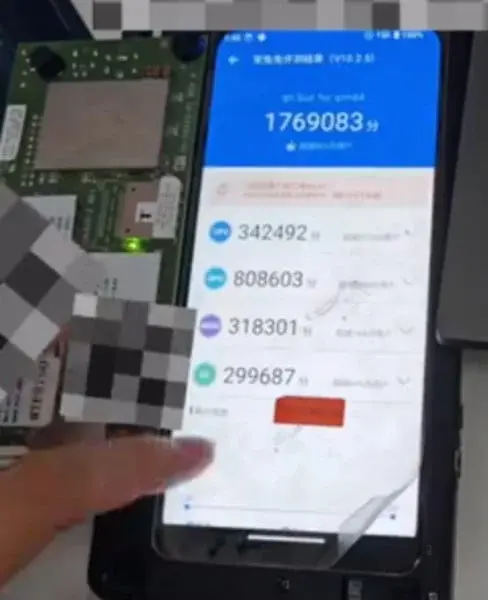
    Benchmark results for the 8 Gen 4 have been consistently emerging. A recent instance involved a device equipped with the 8 Gen 4 processor achieving a score of 1,769,083 points on AnTuTu. Despite this, the score falls short of the current Snapdragon 8 Gen 3 due to the nature of the engineering sample used and significant CPU throttling during testing.

    Final Thoughts and Awaited Reviews

    To gain a comprehensive understanding of the Snapdragon 8 Gen 4’s actual capabilities, it is essential to wait for Qualcomm’s official product launch and subsequent independent reviews.

  • Samsung may introduce Arm-based Galaxy Book 4 Edge this month

    Samsung may introduce Arm-based Galaxy Book 4 Edge this month

    We previously mentioned that Samsung is developing a new laptop within the Galaxy Book 4 series. In contrast to existing Galaxy Book models powered by Intel chips, the upcoming Galaxy Book 4 Edge will run on the Windows on Arm platform and feature Qualcomm's Snapdragon X Elite chip. Qualcomm has hinted that these Arm-based chips may launch around "mid-2024" and potentially even this month.

    Samsung's Galaxy Book 4 Edge Launch

    Recent reports suggest that Samsung intends to introduce the Galaxy Book 4 Edge, featuring the new chip, before the end of this month. Sources from Sammobile indicate that Samsung aims to unveil the Galaxy Book 4 Edge promptly as the new Arm-based chips hit the market.

    Features and Pricing

    GeekBench listings have previously confirmed the Galaxy Book 4 Edge's name and its utilization of an Arm-based chip. This laptop will offer a 14" display, 16GB of RAM, 512GB of storage, and is expected to be priced around €1,800.

    Both Qualcomm's benchmarks and GeekBench listings have showcased promising performance and energy efficiency with the new chip. While these results are encouraging, it is important to note that real-world performance may vary, influenced by factors like power management and cooling solutions. Therefore, it is advisable to wait for retail units for a more accurate assessment.

    Snapdragon X Elite Specifications

    The Snapdragon X Elite chip features 12 Qualcomm Oryon CPUs, two running at 4.3GHz and the others at 3.8GHz. It also integrates a Qualcomm Adreno GPU capable of up to 4.6 TFLOPS and a powerful 45TOPS Qualcomm Hexagon NPU for AI applications.

  • Snapdragon 8 Gen 4 Featured in Video Running AnTuTu Benchmark

    Snapdragon 8 Gen 4 Featured in Video Running AnTuTu Benchmark

    Qualcomm has been quite secretive about the details of their upcoming flagship mobile processor, the Snapdragon 8 Gen 4. Nonetheless, leaks and speculations have been emerging, gradually shedding light on its features.

    Leak Reveals Potential Launch Date

    Recent leaks suggest that the initial smartphones equipped with this System on Chip (SoC) might hit the market as early as October.

    Engineering Sample Benchmark Leak

    In another leak today, a video surfaced on Bilibili (via @negativeonehero on Twitter) showcasing an engineering sample of the Snapdragon 8 Gen 4 being put through benchmark tests.

    During testing on AnTuTu, the SoC achieved a score of 1,769,083 points, slightly lower than the current Snapdragon 8 Gen 4.

    Insights into Core Architecture

    The video not only provides benchmark results but also offers a glimpse into the core architecture of the CPU. The Snapdragon 8 Gen 4 is anticipated to adopt a 2+6 core setup, comprising two high-performance cores and six efficiency cores.

    The leaked video confirms this setup, displaying two "Phoenix M" cores with a peak clock speed of 2.4 GHz and "Phoenix L" cores limited to 1.939 GHz. The chip is identified with the codename "Sun for Arm x64."

    Future Adjustments Expected

    Although the revealed clock speeds fall below the previously speculated 4.2 GHz for the performance cores, it is probable that these figures pertain to the engineering sample. Qualcomm is likely to fine-tune these clock speeds in the final version of the chip.

    Anticipating Official Unveiling

    To gain a comprehensive understanding of the Snapdragon 8 Gen 4’s actual capabilities, we await Qualcomm’s official product reveal and independent reviews.


    Snapdragon 8 Gen 4 Featured in Video Running AnTuTu Benchmark
  • Qualcomm Developing Powerful Snapdragon X Plus Processor

    Qualcomm Developing Powerful Snapdragon X Plus Processor

    Qualcomm recently unveiled its latest Snapdragon X series of processors designed for Windows on Arm laptops. The lineup consists of four chipsets, with three falling under the Snapdragon X Elite tier and the fourth being the Snapdragon X Plus, aimed at more budget-friendly Windows laptops.

    Qualcomm's Plans for Snapdragon X Plus Lineup

    Industry insider Kamila Wojciechowska has hinted at potential future developments within Qualcomm's Snapdragon X Plus lineup. There are talks of a more powerful variant in the works, known as the X1P-42-100, which is set to feature eight Oryon CPU cores, an increase from the six cores found in the X1P-64-100. Interestingly, the X1P-42-100 is rumored to omit the four efficiency cores present in its predecessor.

    Enhanced Performance with Fewer PCIe Lanes

    While the X1P-42-100 promises improved performance, it is noted to offer fewer PCIe lanes compared to the X1P-64-100.

    Here is a table showcasing the specifications of all the SoCs in the Snapdragon X line:

    SoC Performance Cores Efficiency Cores Turbo GPU Frequency Video Hardware PCIe
    X1 Elite (X1E-84-100) 8x Oryon – 3.8GHz 4x Oryon – 3.8GHz 4.2GHz 1.5GHz 4K 60 fps encode, 4K 120 fps decode 8+4 lanes of PCIe
    X1 Elite (X1E-80-100) 8x Oryon – 3.4GHz 4x Oryon – 3.4GHz 4.0GHz 1.25GHz 4K 60 fps encode, 4K 120 fps decode 8+4 lanes of PCIe
    X1 Elite (X1E-78-100) 8x Oryon – 3.4GHz 4x Oryon – 3.4GHz 1.25GHz 4K 60 fps encode, 4K 120 fps decode 8+4 lanes of PCIe
    X1 Plus (X1P-64-100) 6x Oryon – 3.4GHz 4x Oryon – 3.4GHz 1.25GHz 4K 60 fps encode, 4K 120 fps decode 8+4 lanes of PCIe
    X1 Plus (X1P-42-100) 8x Oryon – ? ? 4+4 lanes of PCIe

    The X1P-42-100 is anticipated to have limitations in video encoding and decoding capabilities, reportedly capped at 4K/30 FPS encoding and 4K/60 FPS decoding. In comparison, the X1P-64-100 is expected to support 4K/60 FPS encoding and 4K/120 FPS decoding. Specific details regarding the CPU clock speeds and GPU specifications of the X1P-42-100 are currently undisclosed.

    Qualcomm's Future Plans Beyond X Series

    In addition to the X series, Wojciechowska's leaks suggest Qualcomm is developing a server-grade chipset codenamed "SD1." This processor purportedly features 80 Oryon cores on a 9470-pin LGA socket and is manufactured using TSMC's 5nm (N5P) production process.

    The leak also indicates that the SD1 chipset will support 16 channels of DDR5-5600 RAM, offer 70 PCIe 5.0 lanes, and have the capability to run two chipsets simultaneously. Moreover, Wojciechowska mentions that the SD1 will integrate Compute Express Link (CXL) 1.1, although details about the silicon remain unclear at this stage.

  • All about Qualcomm Snapdragon X Series Chip

    All about Qualcomm Snapdragon X Series Chip

    Qualcomm has introduced its latest Windows on ARM platform, the Snapdragon X series processor, boasting impressive performance and efficiency. The company’s goal is to emulate Apple’s success with its M-series chip and offer a compelling option for ARM-based Windows laptops.

    Snapdragon X Series Overview

    The Snapdragon X series consists of two main tiers: the high-performance Snapdragon X Elite and the budget-friendly Snapdragon X Plus. These SoCs are designed to cater to different market segments, providing users with a range of options based on their needs and preferences.

    Performance and Efficiency

    Qualcomm’s Snapdragon X series promises to deliver a balance of power and efficiency, similar to what users have come to expect from Apple’s M-series chips. By offering a variety of features and capabilities, Qualcomm aims to enhance the overall user experience on Windows on ARM devices.

    Conclusion

    With the introduction of the Snapdragon X series processors, Qualcomm is positioning itself as a key player in the Windows on ARM market. By providing a competitive alternative to Apple’s M-series chips, Qualcomm is aiming to drive innovation and choice in the laptop industry.


    All about Qualcomm Snapdragon X Series Chip
  • Qualcomm Snapdragon X Elite Performance Claims Found Misleading

    Qualcomm Snapdragon X Elite Performance Claims Found Misleading

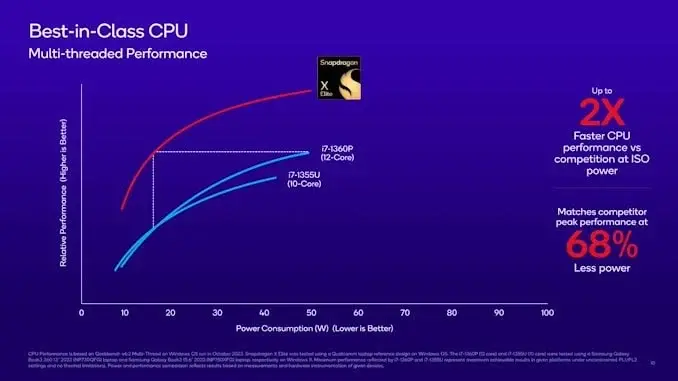
    Qualcomm recently showcased impressive performance metrics of its upcoming Snapdragon X Elite chip, suggesting that Windows-on-Arm laptops empowered by this chip will surpass Intel processors and Apple's M series chips in performance. The specifics of the tests conducted were not disclosed, and the comparison data provided was not independently verified.

    Lack of Transparency

    The company has been criticized for the lack of transparency in disclosing the details of the benchmark tests conducted on the Snapdragon X Elite chip. Reports suggest that Qualcomm's benchmark results are challenging to replicate, even by top-tier OEM developers, casting doubts on the accuracy of the performance comparisons with competitors.

    Discrepancies in Performance

    Upon receiving the Snapdragon X series chip, device manufacturers failed to achieve performance levels close to what Qualcomm had initially presented. OEMs struggled to reach even 50% of the claimed performance figures, with Qualcomm engineers attributing the shortfall to suboptimal Windows-on-Arm optimization and inadequate device cooling solutions. Despite efforts to enhance cooling, OEMs were unable to significantly improve the chip's performance, leading to unfavorable comparisons with Intel Celeron chips.

    Future Outlook

    While concerns have been raised regarding the testing methodologies employed by Qualcomm, the alignment of the Snapdragon X Elite chips with devices produced by the same OEMs running Windows could potentially mitigate these discrepancies. Qualcomm has yet to address detailed technical inquiries about the Snapdragon X series, with promises of comprehensive technical briefings prior to the anticipated mid-2024 launch.

    Qualcomm has also introduced the Snapdragon X Plus, a more cost-effective variant of the Snapdragon X Elite chip. However, the announcement primarily focused on potential camera features enabled by the SoC rather than offering in-depth technical specifications, deviating from the initial assurances provided by the company.

  • Snapdragon 7 Gen 3 vs Snapdragon 7+ Gen 2: Choose the Right Processor

    Snapdragon 7 Gen 3 vs Snapdragon 7+ Gen 2: Choose the Right Processor

    Qualcomm offers a range of impressive products, although navigating their naming conventions can sometimes be perplexing. To provide clarity, we will delve into a comparison of two renowned Qualcomm processors: the Snapdragon 7 Gen 3 and the Snapdragon 7 Plus Gen 2, shedding light on their disparities and specifications.

    Snapdragon 7 Gen 3 vs Snapdragon 7 Plus Gen 2: Distinctions and Specifications

    In scrutinizing the Snapdragon 7 Gen 3 and the Snapdragon 7+ Gen 2, it becomes apparent that both leverage an advanced 4nm fabrication process, likely resulting in enhanced power efficiency. Nonetheless, the 7 Plus Gen 2 claims an edge in CPU performance. Boasting a maximum clock speed of 2.91 GHz, it surpasses the 2.63 GHz maximum clock speed of the 7 Gen 3.

    Specifications:

    Specification Snapdragon 7 Gen 3 Snapdragon 7 Plus Gen 2
    Fabrication Process 4 nm 4 nm
    CPU Cores 1x 2.63 GHz ARM Cortex-A715 1x 2.91 GHz ARM Cortex-X2
    3x 2.4 GHz ARM Cortex-A715 3x 2.5 GHz ARM Cortex-A710
    4x 1.8 GHz ARM Cortex-A510 4x 1.8 GHz ARM Cortex-A510
    Max CPU Clock Speed 2.63 GHz 2.91 GHz
    GPU Adreno 720 Adreno 725
    NPU Hexagon Hexagon
    Memory type LPDDR5 LPDDR5
    5G Modem Snapdragon X63 Snapdragon X62
    Peak 5G Download Speed 5 Gbps 4.4 Gbps
    Wi-Fi / Bluetooth Wi-Fi 6E / Bluetooth 5.3 Wi-Fi 6E / Bluetooth 5.3

    Both chipsets incorporate robust Adreno 700 series GPUs, yet the Snapdragon 7+ Gen 2 distinguishes itself with the marginally superior Adreno 725, making it a preferred option for mobile gaming aficionados.

    Moreover, the Neural Processing Unit (NPU) plays a pivotal role in executing artificial intelligence tasks. In this realm, the Snapdragon 7 Gen 3 and Snapdragon 7 Plus Gen 2 exhibit comparable performances, employing the Hexagon NPU.

    In terms of connectivity features, these processors align closely, differing primarily in their modems. While the Snapdragon 7 Gen 3 integrates the Snapdragon X63 modem, the Snapdragon 7+ Gen 2 incorporates the Snapdragon X62 5G modem. Although this implies marginally quicker download speeds on one end, this variance has minimal real-world performance implications. Given the strikingly similar technical specifications, discerning the performance disparity might pose a challenge.