
Tag: PLATO

  • ESA’s Plato to Explore 200,000 Planets with 26 Cameras

    ESA’s Plato to Explore 200,000 Planets with 26 Cameras

    Key Takeaways

    1. Plato is a new spacecraft by the European Space Agency (ESA) designed to find planets that may host life.
    2. It features 26 sensitive cameras to observe stars similar to our Sun in the habitable zone, where conditions are right for liquid water.
    3. The spacecraft detects exoplanets by monitoring changes in star brightness as planets transit in front of them.
    4. Plato will study starquakes to gather information about star age and structure, observing over 200,000 stars during its mission.
    5. The launch of Plato is scheduled for December 2026, with final assembly and testing currently underway at the European Space Research and Technology Centre (ESTEC).


    Scientists have been looking for planets that could host life. Many missions, like the James Webb Space Telescope, have helped in this quest. Now, the European Space Agency (ESA) is advancing this effort with a new spacecraft called Plato.

    The Technology Behind Plato

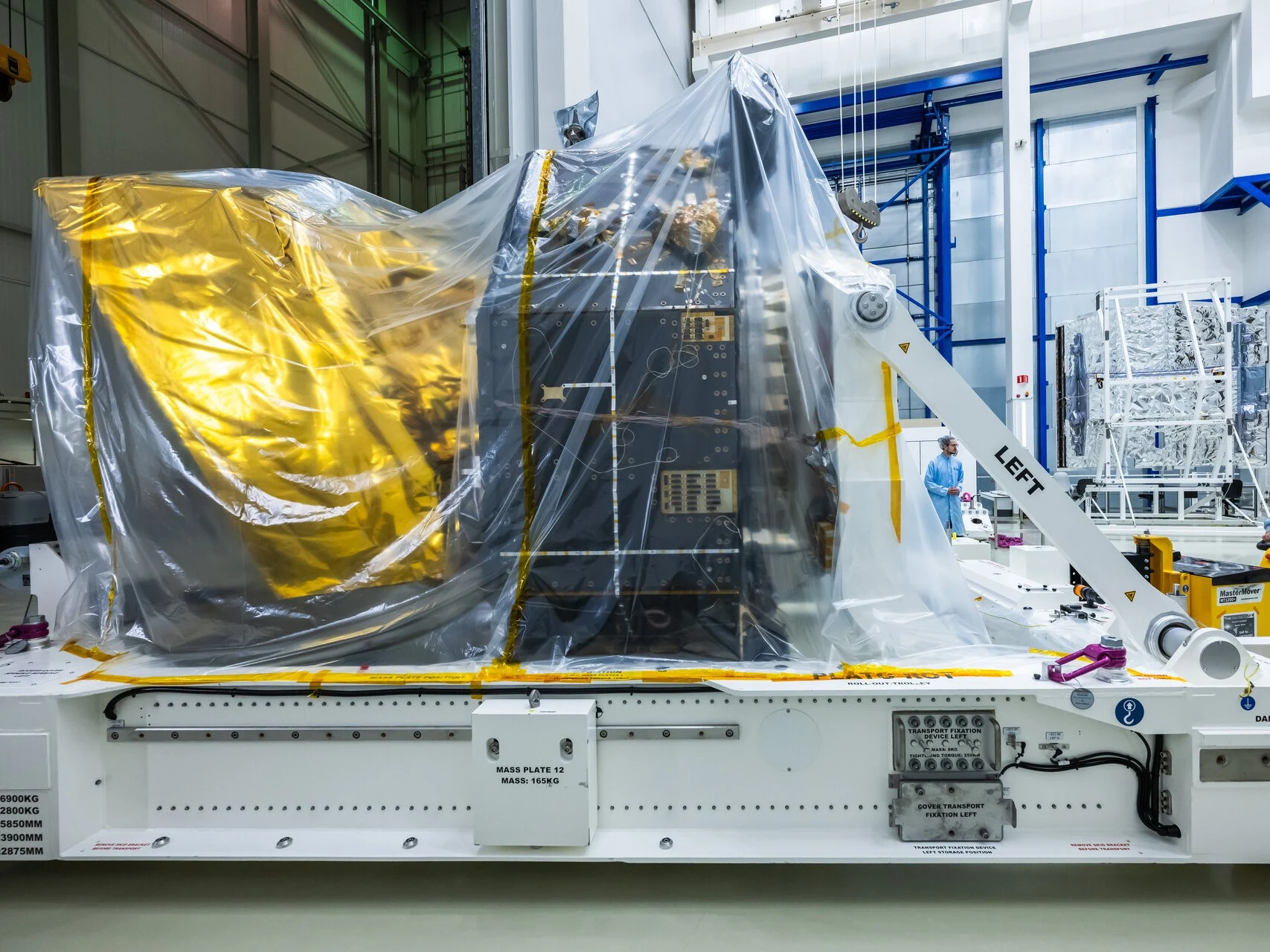
    Plato is a spacecraft with 26 highly sensitive cameras. Its mission is to find planets that orbit stars similar to our Sun, specifically in what is called the habitable zone. This area, often referred to as the “Goldilocks region,” is neither too close nor too far from a star. In this zone, temperatures are just right for liquid water to exist on a planet’s surface.

    Observing Stars and Discovering Exoplanets

    The spacecraft’s 26 cameras will focus on these Sun-like stars to detect even the slightest changes in their brightness. When a planet transits in front of a star, the star’s light dims momentarily. This is the method scientists plan to use with Plato to identify exoplanets, which are those planets that exist outside our solar system.

    Studying Starquakes and More

    Since Plato’s cameras will monitor the same area for at least two years, it will also look into starquakes. This research will give scientists valuable information about a star’s age and its internal structure. Plato aims to observe over 200,000 stars during its mission.

    Plato is set to launch in December 2026. It has recently reached the European Space Research and Technology Centre (ESTEC), where engineers will finalize its assembly by attaching the combined sunshield and solar arrays module. Following this, Plato will go through a series of tests to confirm its readiness for space.

    Source:
    Link



  • 44 New Earth-Like Exoplanet Candidates Discovered in Breakthrough

    44 New Earth-Like Exoplanet Candidates Discovered in Breakthrough

    Key Takeaways

    1. A research group from the University of Bern developed a machine learning model to identify planetary systems likely to host Earth-like exoplanets, achieving 99% accuracy.
    2. The model was trained using synthetic data from the “Bern Model of Planet Formation and Evolution.”
    3. After training, the model identified 44 planetary systems that may contain unknown Earth-like planets.
    4. The findings are crucial for upcoming space missions like ESA’s PLATO, which launches in 2026, to discover habitable exoplanets.
    5. The model will help select the best targets for future missions like LIFE, aimed at studying the atmospheres of distant planets for signs of life.


    A research group hailing from the University of Bern and the National Center of Competence in Research PlanetS has reached a key point in the quest for planets that may support life. Announced on April 9, 2025, this group has created a machine learning model that can accurately identify planetary systems likely to have Earth-like exoplanets. This advancement not only propels the search for habitable planets but also represents an exciting step toward finding alien life.

    Development of the AI Model

    The machine learning model was crafted under the direction of Dr. Jeanne Davoult during her doctoral studies at the University of Bern, with assistance from Prof. Dr. Yann Alibert and Romain Eltschinger at the Center for Space and Habitability (CSH). It underwent training using synthetic data produced by the acclaimed “Bern Model of Planet Formation and Evolution,” which mimics the physical mechanisms involved in forming planetary systems. The results are impressive: the model boasts a 99% accuracy rate in identifying systems that are very likely to host at least one Earth-like planet.

    Application to Real Data

    Once the training was complete, the model was tested on real observational data, leading to the identification of 44 planetary systems that might harbor previously unknown Earth-like planets. These results hold great importance for future space missions, including ESA’s PLATO and the proposed LIFE project, both of which aim to find and analyze Earth-like worlds.

    PLATO (PLAnetary Transits and Oscillations of stars), scheduled to launch in 2026, will employ the transit method along with asteroseismology to discover potentially habitable exoplanets, particularly focusing on those orbiting stars similar to our Sun. The best candidates chosen by PLATO will serve as the groundwork for future missions like LIFE (Large Interferometer For Exoplanets), which plans to study the atmospheres of distant planets through infrared spectroscopy and nulling interferometry in order to search for biosignatures such as water or methane. The novel machine learning model could significantly aid in pre-selecting the most viable targets, thus improving the effectiveness and success rates of these missions.

    Source:
    Link