Tag: Peking University

  • Future Smartwatches and Rings: Powered by Body Heat Technology

    Future Smartwatches and Rings: Powered by Body Heat Technology

    Key Takeaways

    1. Peking University scientists have developed the world’s first “thermoelectric rubber,” which is flexible and generates electricity effectively.
    2. This new material can harness temperature differences between the body and ambient air for power, enabling self-sustaining wearable gadgets.
    3. The innovative design combines semiconducting polymers with elastic rubber, enhancing electrical conductivity while reducing thermal conductivity.
    4. The material can stretch to 150% and return to 90% of its original form, with the ability to expand over 850% its initial size.
    5. Potential applications include wearable technology and healthcare devices, such as power for medical sensors.


    Peking University scientists have developed a groundbreaking material they are calling the world’s first “thermoelectric rubber.” This innovative creation is both extremely flexible and capable of generating electricity effectively. As detailed in the journal Nature, this advancement could pave the way for a new generation of self-sustaining wearable gadgets that harness the temperature differences between a person’s body and the ambient air for power.

    New Approach to Power Generation

    Previously, attempts to create materials that could utilize body heat to power electronic devices have led to results that were only somewhat flexible. The high-performing thermoelectric materials created were not as elastic as desired. However, this new research team has successfully achieved what many have been striving for — an effective thermoelectric material that retains its elasticity.

    Innovative Hybrid Design

    Under the guidance of material scientist Lei Ting, the Peking University team tackled this challenge by creating a hybrid polymer. They mixed semiconducting polymers with elastic rubber, resulting in the development of semiconducting nanofibrils encased in an elastomer. This unexpected design enhances electrical conductivity while lowering thermal conductivity, turning the material into a highly efficient thermoelectric generator.

    The team showcased that the material could return to 90% of its original form after being stretched to 150%. It can also expand to more than 850% of its initial size. The researchers plan to continue improving its characteristics even more.

    Potential Applications

    The unique combination of flexibility and thermoelectric properties makes this material an excellent candidate for use in wearable technology. In addition to consumer electronics, there are potential healthcare applications, such as powering medical sensors.

    Source:
    Link



  • China Launches World’s First 6G Chip with 100 Gbps Speeds

    China Launches World’s First 6G Chip with 100 Gbps Speeds

    Key Takeaways

    1. Chinese scientists developed a new wireless networking chip that can reach speeds of up to 100 Gbps, currently a working prototype.
    2. The chip measures 11mm by 1.7mm and operates over a wide frequency range from 0.5 GHz to 115 GHz, integrating nine systems into one device.
    3. It uses a novel technique for signal generation and transmission, incorporating a broadband electro-optic modulator to convert wireless signals to optical signals.
    4. The chip features optoelectronic oscillators that produce stable signals with a frequency tuning value as low as 180 microseconds and bandwidth exceeding 100 GHz.
    5. Commercial applications of this technology are not expected until at least 2030 due to the need for specific infrastructure and compatible devices for 6G networks.


    Chinese scientists have made an exciting new advancement in the wireless networking sector. A chip created by a collaboration of experts from Peking University and the City University of Hong Kong has been revealed, boasting the ability to reach speeds of up to 100 Gbps, though it is still merely a working prototype.

    Chip Specifications

    This innovative chip has dimensions of 11 millimeters by 1.7 millimeters and operates over a wide frequency range from 0.5 GHz to 115 GHz. Existing commercial hardware typically necessitates nine separate systems to cover this frequency range, but the new design consolidates all essential components into a single thin-film lithium niobate (TFLN) device.

    Technology Behind the Breakthrough

    The research team describes that their system utilizes a novel technique for generating and transmitting signals. The hardware incorporates a broadband electro-optic modulator that converts wireless signals into optical signals. These transformed signals are then handled by optoelectronic oscillators, which produce stable signals across the frequency spectrum. Tests conducted thus far have shown remarkable outcomes, including a frequency tuning value as low as 180 microseconds and a bandwidth that surpasses 100 GHz.

    Unfortunately, the deployment of 6G networks requires specific infrastructure and compatible devices for end users. Due to these needs, most analysts in the industry predict that we won’t see any commercial applications until at least 2030.

    Source:
    Link


  • “Rapid 1-Minute Charge: Durable LiS Solid-State Battery Development”

    “Rapid 1-Minute Charge: Durable LiS Solid-State Battery Development”

    Solid-state lithium-sulfur batteries boast a significant energy density and consist of materials that are easy to find. Nevertheless, their stability over many charge cycles and the slow exchange of electrons have hindered their practical use so far.

    New Electrolyte Breakthrough

    Recently, a new electrolyte has been developed that speeds up the chemical reactions in these solid-state batteries, addressing their issues and offering performance that outshines existing battery technologies. This solid electrolyte is composed of boron, sulfur, lithium, phosphorus, and iodine, resembling glass. It lacks a crystalline structure, yet it maintains a solid form while exhibiting liquid-like properties.

    Collaborative Research Efforts

    Researchers from China and Germany, particularly from Peking University, the University of Giessen, and the Karlsruhe Institute of Technology, have demonstrated that this innovative battery can endure up to 25,000 charging cycles, depending on how fast it is charged. After this extensive use, the battery retains just under 80 percent of its capacity, which is quite typical.

    In optimal conditions, the energy density can be nearly three times higher than that of conventional lithium-ion batteries. The study also highlights an impressive charging speed, suggesting that full charging can be achieved in less than 1 minute. More specifically, under certain conditions, a charging time of 24 seconds is feasible, while still achieving an energy density comparable to what current batteries offer.

    Long-term Charge Cycles

    On the flip side, to ensure the battery’s longevity, a complete charge cycle should ideally take 12 minutes. This means the solid-state battery could potentially be charged seven times a day for over a decade.

    All these findings indicates that there remains a substantial amount of unexplored potential in battery research. However, it’s important to note that these results are based on lab experiments conducted on prototypes using experimental materials. It might take some time before this technology becomes available in a practical and, crucially, cost-effective manner.

    Source:
    Link

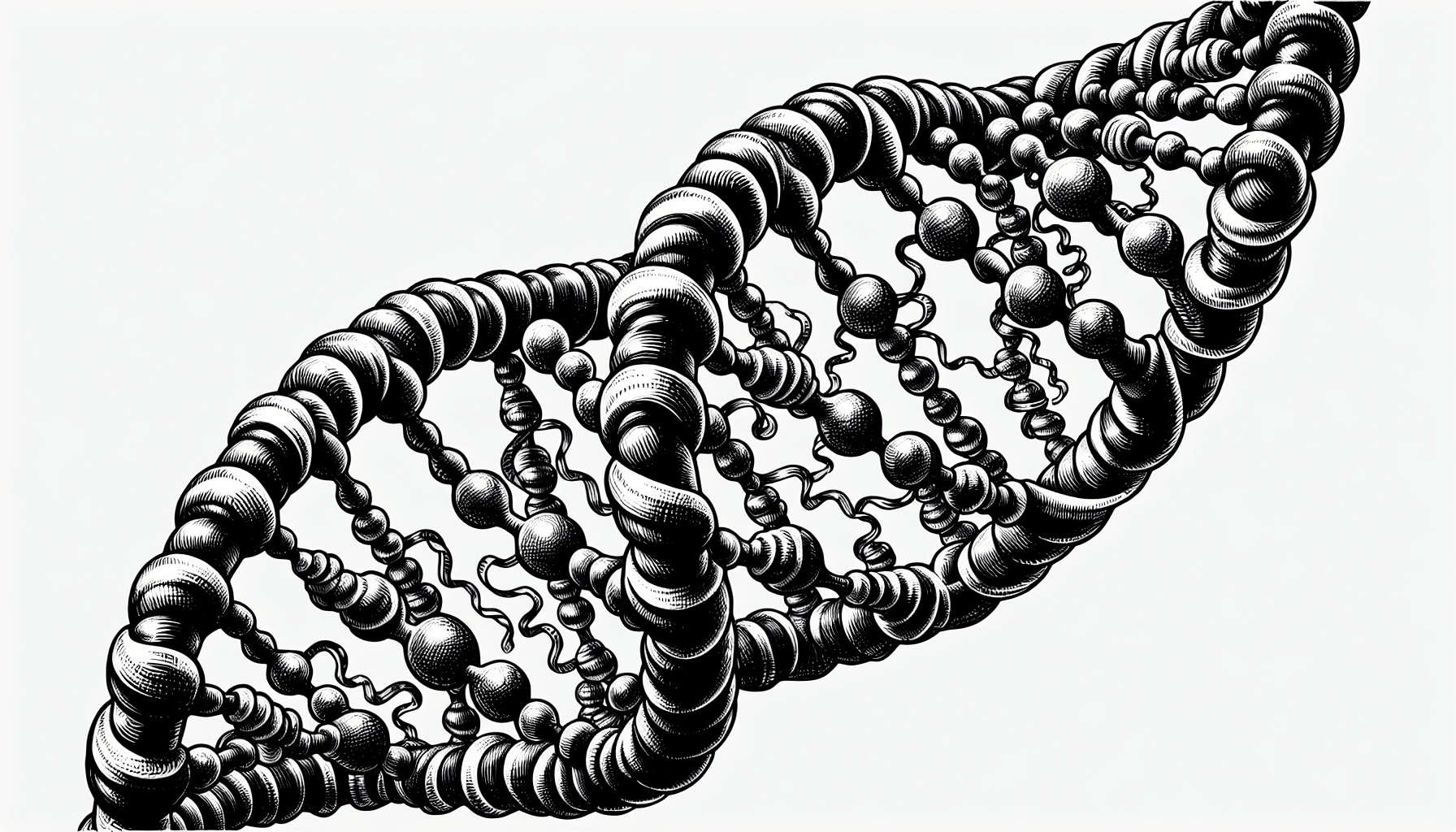
  • DNA Data Storage Breakthrough: Using Natural Cell Processes

    DNA Data Storage Breakthrough: Using Natural Cell Processes

    Researchers have come up with a smart new technique for keeping digital information in DNA without the need to create custom DNA sequences from the ground up. A recent paper in Nature discusses how they utilized a natural epigenetic method called methylation to essentially "print" information onto existing DNA strands.

    The Traditional Approach

    Typically, storing data in DNA involves transforming digital information into sequences of nucleotide bases: A, C, T, and G. Then, these sequences are chemically created in the lab through a process known as de novo synthesis to make the data-rich DNA. Although there have been major advancements in this field, the process remains slow, expensive, and prone to errors—far from ideal for large-scale data storage.

    A New Technique

    Nonetheless, the research team from Peking University and other institutions tackled these challenges by employing methylation to modify naturally existing DNA. Methylation is an epigenetic change that living organisms generally use to turn genes on or off without altering the genetic code itself.

    They created 700 distinct DNA "movable type" fragments to serve as components for their storage technique. By carefully assembling these movable types onto a primary DNA template, the researchers encoded digital information. An enzyme then attaches methyl groups at specific locations, chemically marking the DNA with the desired sequences of 1s and 0s.

    Impressive Results

    In their trials, they successfully stored and retrieved high-resolution images of a panda and an ancient Chinese artwork, achieving an accuracy rate of up to 97.47 percent. The researchers recorded a data writing speed of nearly 350 bits per DNA synthesis reaction, which is quicker than traditional de novo synthesis. This methylation-based approach is theoretically much more cost-effective since it utilizes existing DNA templates rather than generating new ones from scratch.

    Although it’s still not as fast or economical as electronic storage, this epigenetic twist on DNA data storage represents a significant advancement in managing the rapid increase of digital information using nature’s own medium. With additional adjustments, DNA storage systems that use methylation could evolve into a practical solution for archiving global data in a low-energy, durable, and more budget-friendly manner than creating DNA from the beginning.

    The researchers remarked, "With DNA data storage entering the dawn of commercialization, the epi-bit framework shows potential pathways for parallel molecular information storage with prefabricated modularity."