Tag: overheating

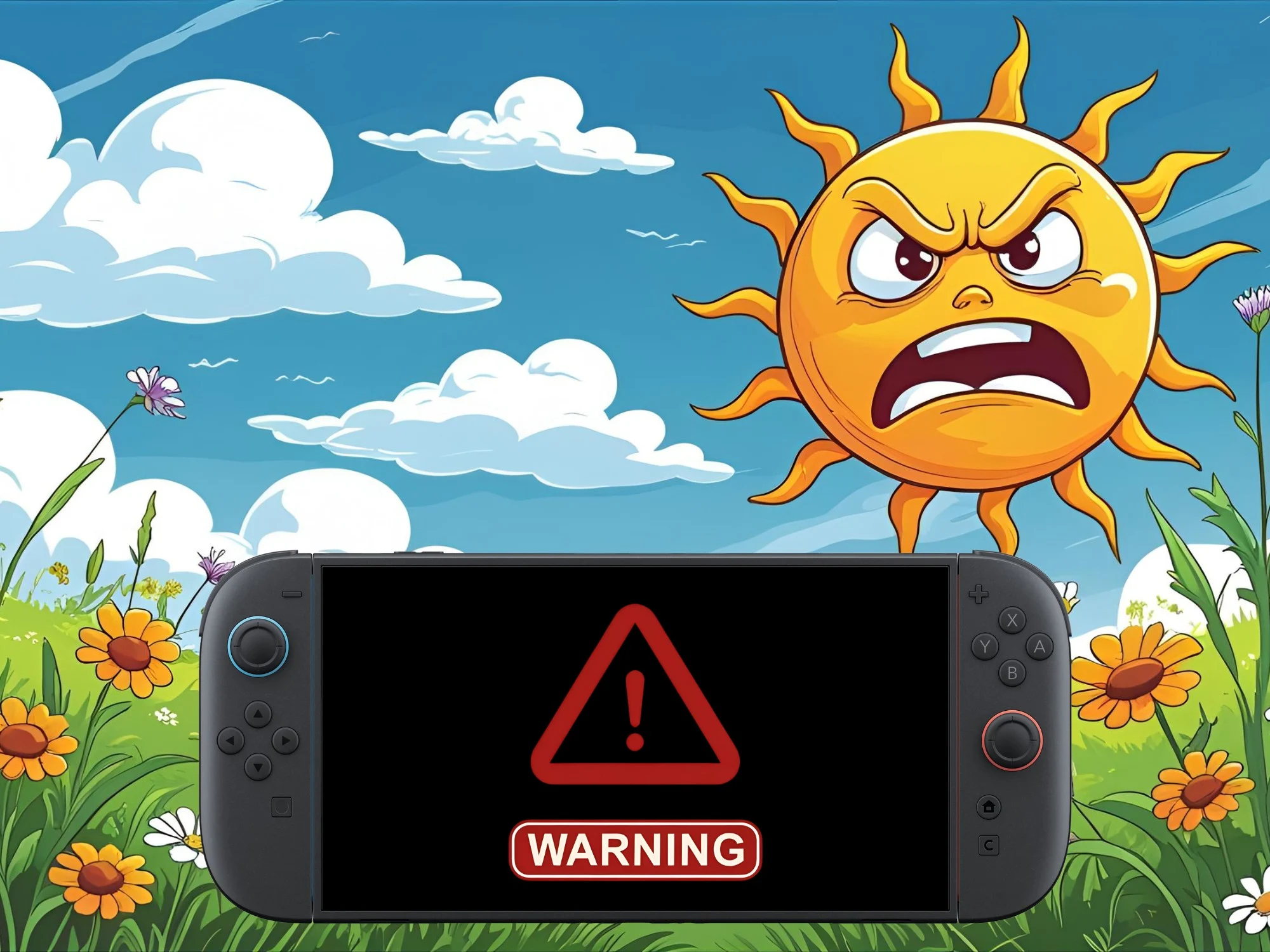
  • Nintendo Warns Switch 2 May Overheat in Summer, Faces Winter Issues

    Nintendo Warns Switch 2 May Overheat in Summer, Faces Winter Issues

    Key Takeaways

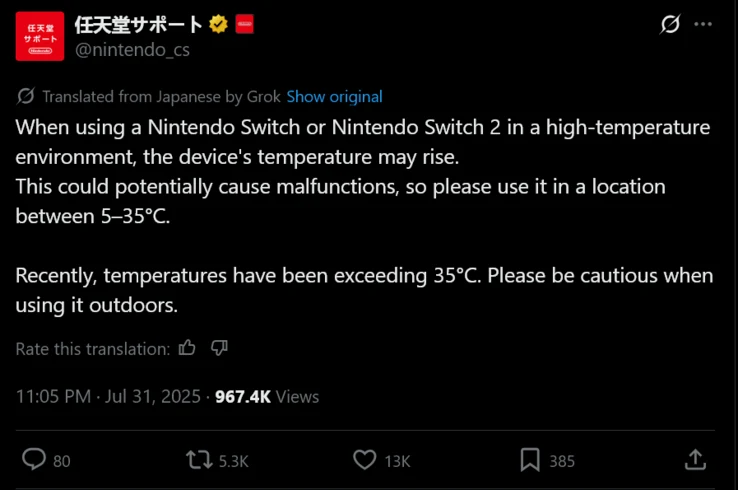
    1. Nintendo advises against exposing the Switch 2 to extreme temperatures, with warnings for both high (above 35°C) and low (below 5°C) conditions.
    2. High temperatures can cause performance issues, but the console has built-in safety features that trigger sleep mode if overheating is detected.
    3. Gamers are concerned that the upgraded specs of the Switch 2 may make it more vulnerable to overheating, especially when docked.
    4. Instances of serious overheating and permanent damage are rare, but some users report battery swelling due to high temperatures.
    5. Nintendo warns that cold weather can damage the Switch 2, making it unsuitable for use in very low temperatures, such as on ski slopes.


    One of the benefits of the Switch 2 is that it allows owners to relish the warm summer days. Nevertheless, Nintendo Support in Japan is cautioning gamers against exposing their devices to extreme conditions. In many areas of the nation, temperatures have climbed above 35°C, surpassing the suggested limit. With other regions also facing similar heat, gamers everywhere should keep an eye out for any signs of overheating with the Switch 2.

    Risks of Extreme Temperatures

    According to a translation by Automaton, Nintendo indicated that high temperatures could lead to performance issues. The company hasn’t gone into detail about the potential damages, perhaps trusting that the built-in safety features will avert serious problems. As was the case with the original Switch, the Switch 2 will show a warning message if it senses overheating, prompting it to enter sleep mode automatically.

    Concerns Over Enhanced Specs

    Even with these safety measures in place, some gamers are concerned that the upgraded specifications of the Switch 2 may increase its vulnerability. While enjoying the bright outdoors is often prioritized, the console might face more strain when it’s docked. Gamers have noticed that the handheld’s fan operates at higher speeds because its GPU runs at elevated clock rates. The dock for the Switch 2 is equipped with an internal fan; however, it is mainly meant to cool the dock itself.

    Rare Overheating Reports

    Up to now, instances of Switch 2 overheating that lead to permanently damaged machines are uncommon. There have been some signs of possible battery swelling, which can be exacerbated by high temperatures. Even less demanding Switch 2 games can push the console to its limits. Some users are taking precautions by using external devices like the Jsaux USB-C Cooling Fan USB-C.

    Cold Weather Warnings

    Nintendo Support has also pointed out that temperatures below 5°C can negatively affect the Switch 2. Severe cold conditions might cause delicate components and plastic parts to deteriorate. This has led to worried responses from individuals in Northern Japan regarding Nintendo’s advisory. It’s clear that bringing the Switch 2 to the ski slopes is not a wise idea.

    Source:
    Link


  • Nintendo Switch 2 Overheating Issues Persist with Simple Games

    Nintendo Switch 2 Overheating Issues Persist with Simple Games

    Key Takeaways

    1. Gamers are reporting excessive heating and noise issues with the Switch 2, raising concerns about potential overheating.
    2. The enhanced specs of the Switch 2 allow it to run demanding games, but even less intensive titles can cause overheating problems.
    3. The Switch 2 dock may contribute to heating issues, as it is not primarily designed for cooling and can obstruct ventilation.
    4. The console has an internal fan and will switch to sleep mode if it gets too hot, but users are advised to keep it in a cooler environment.
    5. Despite concerns, many original Switch users note that the new model runs warmer, and Nintendo is working to address overheating worries.


    As the hottest summer months roll in for the Northern Hemisphere, attention has shifted towards how well the Switch 2 keeps cool. While it’s unusual to hear about consoles getting bricked, some gamers have reported their handhelds heating up excessively and being noisy. An article from Nintendo Soup points out that gamers in Japan have voiced their frustrations regarding this issue. However, users in other parts of the world are also worried about the Switch 2 overheating.

    Enhanced Specs and Heat Generation

    The upgraded specs of the Switch 2 allow it to run demanding games such as Cyberpunk 2077. With added support for better frame rates and higher resolutions, it’s expected that the system will produce more heat compared to the older model. Nonetheless, some titles on both the original Switch and Switch 2 that aren’t graphically intense are also putting a strain on the handheld. For instance, Super Smash Bros. Ultimate hasn’t rolled out an Upgrade Pack yet, but one Reddit user shared that the game caused their console to shut down after playing for two hours.

    Docking Dilemmas

    The dock for the Switch 2 might be playing a role in the heating issues as well. Even though it has a built-in fan, its main function isn’t to cool down the handheld. Many users are utilizing the dock for 4K gaming with high refresh rates, which leads it to heat up quite rapidly. Some fans of Nintendo speculate that the dock might obstruct some ventilation for the console, causing the Switch 2 to overheat. Interestingly, even downloading files via the Ethernet port seems to put stress on the dock, making it noticeably loud in nearby rooms.

    Internal Cooling Mechanisms

    To combat overheating, the new console has an internal fan designed to avoid throttled performance or unexpected shutdowns during hot conditions. When used in handheld mode, players have reported that a console that feels hot to touch may show a warning message. To help cool it down, the Switch 2 will switch to sleep mode. It’s advisable for gamers to unplug the console or dock from any AC adapter and place it in a cooler space.

    Even with the potential risk of high temperatures damaging handheld gaming devices, many original Switch users have noted that the new model operates at a warmer temperature. Nevertheless, Nintendo has tried to minimize these worries.

    Source:
    Link


  • Burnt Marks Emerge on Pixel 6 Pro’s Heat Sink After Just 10-Minute Phone Call

    Burnt Marks Emerge on Pixel 6 Pro’s Heat Sink After Just 10-Minute Phone Call

    Overheating Issue on Google Pixel 6 Pro Raises Concerns

    A user on Reddit recently reported an overheating problem with their Google Pixel 6 Pro, which resulted in the thermal paste on the device's original Google Tensor chip burning. Surprisingly, this issue occurred during a mere 10-minute phone call. The user shared an image of the device's internals, revealing burnt marks on the SoC (system-on-a-chip), indicating the excessive heat generated. Furthermore, the heat produced exceeded the heat sink's capacity to keep it within safe limits.

    Lower Power Efficiency as the Culprit

    The root cause of this overheating problem appears to be the lower power efficiency of the Google Tensor chip. This means that the chip consumes relatively more power and dissipates more heat for a given operation. It is worth noting that Tensor chips, including the original Google Tensor, are manufactured by Samsung's foundry. This inefficient nature of Tensor chips is also observed in Samsung's Exynos chips. Although Samsung's fabrication process has improved in terms of power efficiency, the first Tensor chip dates back three years, when efficiency was even lower.

    Throttling Issues and Performance Trade-offs

    Despite efforts to improve thermal efficiency, reports indicate that the third version of Google Tensor still experiences throttling during tests, more so than its competitors. To address overheating concerns, Google has prioritized AI-based tasks for Tensor chips and reduced the performance of the Tensor G3 to mitigate overheating issues.

    Looking ahead, it is expected that next year's Google Pixel 9 series phones will continue to face power efficiency challenges. This could result in either competitive performance with higher-than-usual temperatures or reduced performance to prevent overheating. Neither of these outcomes is an ideal solution for users.

    The Future: Google Tensor G5

    Google aims to address these power efficiency issues with the upcoming Google Tensor G5 chip, which is set to be released in 2025. Unlike previous iterations, the Tensor G5 chip will be designed entirely in-house by Google and will utilize the more efficient TSMC 3nm process. This advancement is expected to significantly improve the performance and thermal efficiency of the Google Tensor G5.

    Coping with Overheating

    In the meantime, if your Pixel phone experiences overheating, it is advised to discontinue the operation causing the excessive heat and, if possible, turn off the device until it cools down. This precautionary measure can help prevent further damage and ensure the longevity of your Pixel phone.