Tag: OLED screen

  • MacBook Pro with OLED Display Expected to Launch in Late 2026

    MacBook Pro with OLED Display Expected to Launch in Late 2026

    Key Takeaways

    1. Apple is expected to announce refreshed MacBook Pros with M4 Pro and M4 Max chips soon, primarily featuring an upgraded System on Chip (SoC).
    2. A new MacBook Pro variant with an OLED display is planned for release in late 2026 to early 2027, with Samsung starting production of OLED panels in May 2026.
    3. The new OLED MacBook Pro may introduce touch capabilities, marking a first for Apple laptops.
    4. Additional features may include FaceID and a Dynamic Island display, while the base model may not have these enhancements.
    5. Apple may unveil three versions of the MacBook Pro alongside three new laptop SoCs, including the M6 Pro and M6 Max.


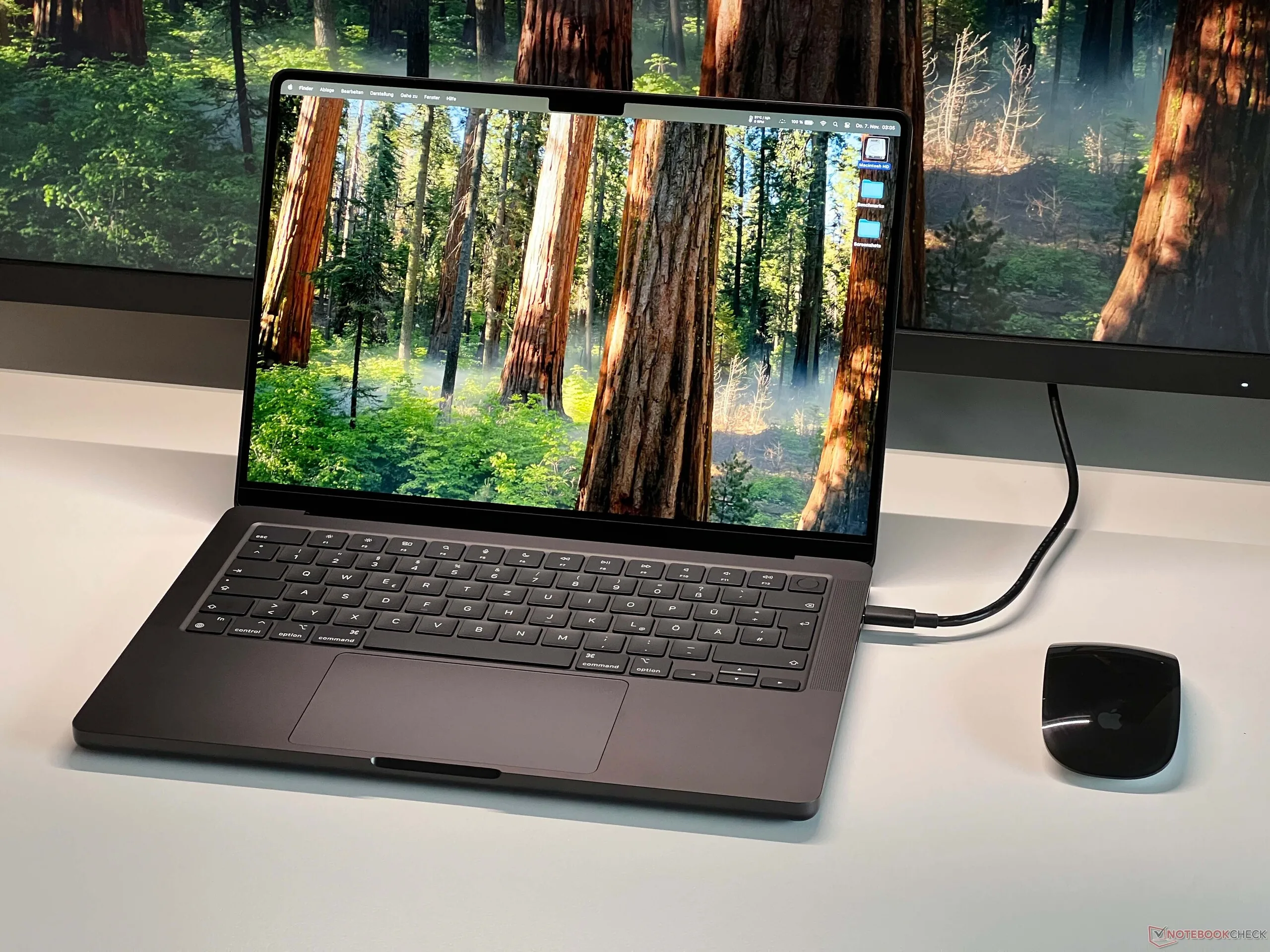
    Apple is likely to announce refreshed MacBook Pros powered by the new M4 Pro and M4 Max chips in the near future. These upgraded laptops are not expected to feature much more than an upgraded System on Chip (SoC). Recently, a report from The Elec has indicated that Apple intends to introduce another variant of the MacBook Pro in 2026, which will include a highly desired feature: an OLED display.

    Samsung’s Production Plans

    It seems Samsung Display will begin mass production of 14-inch and 16-inch OLED panels for this MacBook Pro variant around May 2026, with an official launch anticipated in the fourth quarter of 2026. This timeline matches with previous reports suggesting a release window from late 2026 to early 2027. The Elec mentions that not all the components are ready yet, likely because Apple is adjusting design details to manage price hikes. The new OLED screen is also likely to introduce touch capabilities to the MacBook Pro, which would be a first for Apple’s laptops.

    Possible Features and Upgrades

    In addition to the OLED screen, there might be other significant enhancements including a FaceID feature and a revamped display with a Dynamic Island instead of the traditional notch. Naturally, the laptops will be equipped with the all-new Apple M6 series chip. However, Mark Gurman previously noted that the base model of the MacBook Pro with the standard M6 chip will not have the OLED display or the new chassis design. Instead, these updates could be reserved for the more advanced M6 Pro and M6 Max versions. If this is accurate, there is a possibility that Apple could unveil all three versions of the MacBook Pro along with three new laptop SoCs simultaneously.

    The Elec’s report points to an exciting future for Apple users, who are eagerly awaiting these enhancements.

    Source:
    Link
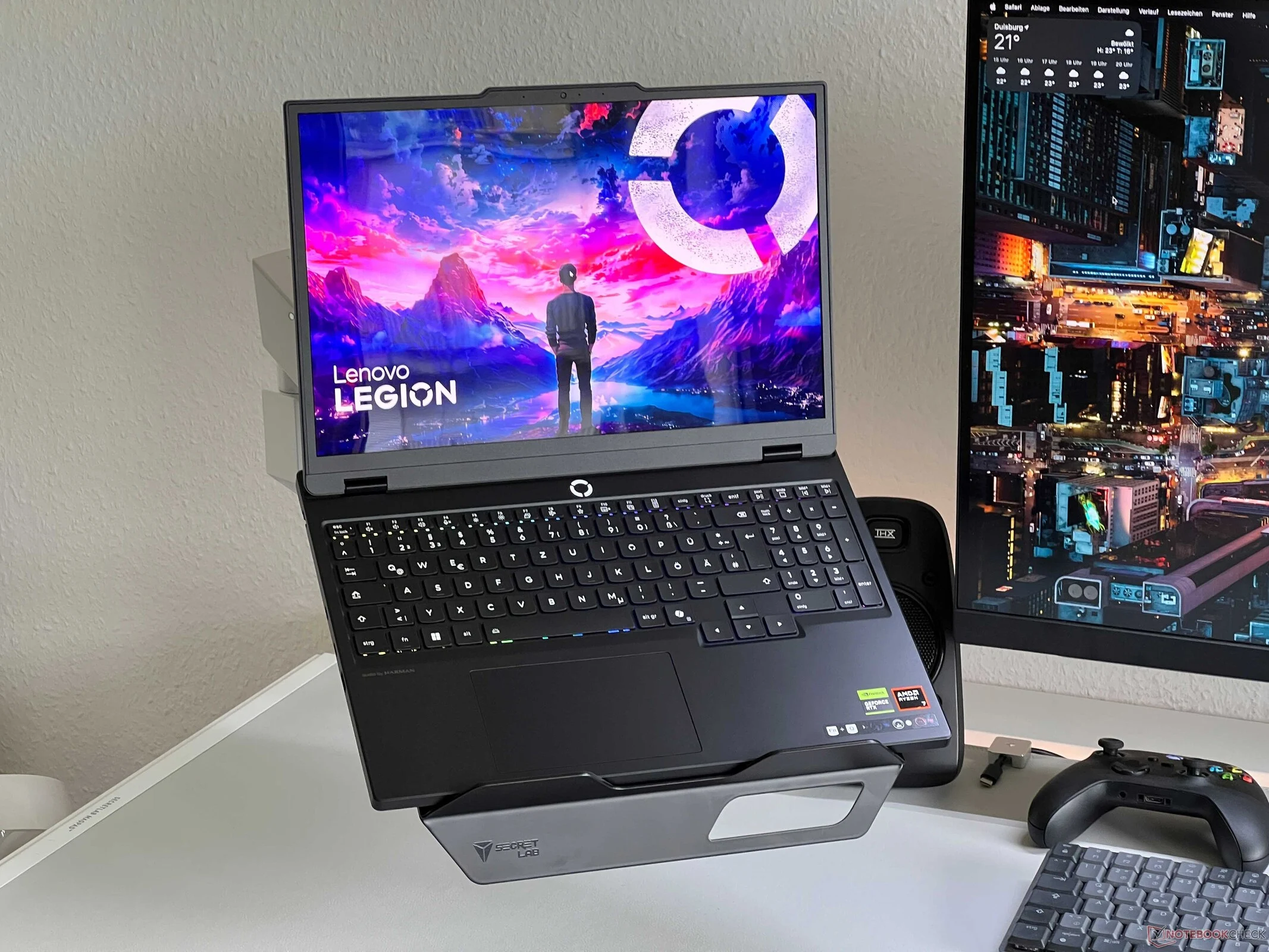


  • Lenovo Legion 5 15 RTX 5070: Best Gaming Laptop under €1500

    Lenovo Legion 5 15 RTX 5070: Best Gaming Laptop under €1500

    Key Takeaways

    1. Strong Gaming Performance: The Lenovo Legion 5 15 features the Nvidia GeForce RTX 5070, delivering impressive gaming performance, though limited by 8 GB VRAM for demanding games at QHD resolution.

    2. Exceptional OLED Display: The laptop boasts a vibrant OLED display with deep blacks, a 165 Hz refresh rate, and high brightness levels (500 nits SDR, ~1,100 nits HDR), enhancing the visual gaming experience.

    3. High Color Accuracy: Lenovo includes accurate color profiles for sRGB and P3, making the Legion 5 15 suitable for photo and video work, in addition to gaming.

    4. Minor Drawbacks: While the chassis lacks extensive lighting features and the fans can be loud during gaming, these issues do not significantly affect the overall performance.

    5. Variety of Configurations: Lenovo offers multiple configurations for the Legion 5 15, with differences in CPU options and battery life, allowing users to choose based on their needs.


    What are the key features to look for in a gaming laptop? Most likely, users prioritize gaming performance and image quality. These two elements are central to the Lenovo Legion 5 15, which delivers impressive gaming performance thanks to the Nvidia GeForce RTX 5070 Laptop. This model competes closely with the pricier Legion Pro 5 16, which also uses the 5070, making it one of the fastest 5070 laptops available. However, the graphics card is limited to 8 GB VRAM, which may cause some limitations, especially in demanding games at QHD resolution. This is typical for this price tier, as laptops with the RTX 5070 Ti come at a higher cost, particularly when paired with a quality OLED display.

    Exceptional Display Quality

    Now, let’s talk about the fantastic OLED display. Lenovo has received praise throughout the year for their excellent screens, and the Legion 5 15 certainly lives up to that reputation. The display showcases vibrant colors, deep blacks, and rapid response times, with a refresh rate of 165 Hz. It impressively handles brightness levels in both SDR (500 nits) and HDR (~1,100 nits), making games like Horizon Forbidden West look absolutely breathtaking. Lenovo has effectively minimized PWM flickering, ensuring a frequency exceeding 1 kHz and a reduced amplitude, so there should be no significant concerns. Additionally, Lenovo includes highly accurate color profiles for both sRGB and P3, making this laptop a solid option for photo and video work.

    Minor Drawbacks

    There are a few less favorable points, but they don’t greatly diminish the overall positive impression of the laptop. The chassis lacks extensive lighting features, but that isn’t necessarily a negative. The fans can be quite loud during gaming sessions, but this is common among competitors, and other power settings allow for a quieter experience without a big drop in performance. Lenovo offers numerous configurations for the Legion 5 15. For instance, our Intel model with the Core i7-13650HX does not have USB 4.0 support, and its battery life is significantly shorter compared to the AMD model we evaluated earlier this year, which was equipped with the RTX 5060.


  • Lenovo’s 2.8K OLED Screen Mystery in Ryzen AI 9 ThinkPad Laptop

    Lenovo’s 2.8K OLED Screen Mystery in Ryzen AI 9 ThinkPad Laptop

    Key Takeaways

    1. OLED technology is now available in mid-range laptops, like the Lenovo ThinkPad T series, expanding beyond premium models.
    2. The Lenovo ThinkPad P14s Gen 6 AMD presents a choice between an OLED display and a powerful AMD Ryzen 9 processor, but not both.
    3. There seems to be no technical reason for the limitation of not pairing the OLED screen with the Ryzen 9 processor.
    4. The decision between performance (Ryzen 9) and display quality (OLED) creates a dilemma for potential buyers.
    5. The review emphasizes the complexities and trade-offs users face when choosing features in the Lenovo ThinkPad P14s Gen 6 AMD.


    It was once the case that OLED technology, known for its high-resolution displays, was reserved for premium laptops. However, in recent times, this technology has become accessible in mid-range devices. A great example is the ThinkPad line: OLED displays first appeared in the X1 models, but now they are also featured in the more affordable T series.

    Options and Limitations

    Naturally, one might expect that a more advanced model would allow for such options. Yet, the Lenovo ThinkPad P14s Gen 6 AMD tells a different story. We recently examined this mobile workstation and discovered an oddity: when you select the OLED display, the option for the AMD Ryzen 9 HX 370 processor disappears. Conversely, if you opt for the Ryzen 9, the OLED screen is no longer available.

    The Technical Perspective

    We see no justifiable technical reasoning behind this restriction. The ThinkPad P14s Gen 6 AMD (which can be found at lenovo.com) comes with a compact 65 W charger, which already meets the demands of the tested LCD. A larger 100 W charger should not pose any issues. The most plausible explanation seems to be market segmentation, suggesting that Lenovo deliberately chose not to pair the OLED display with the Ryzen 9.

    Customers looking at the Lenovo ThinkPad P14s Gen 6 AMD face a tough dilemma. They can either go for the Ryzen 9 AI HX processor, a standout with its twelve cores, sacrificing display quality, or they can choose the OLED screen, which only works with the less powerful Ryzen 5 AI or Ryzen 7 AI options. Either way, it feels like a lose-lose scenario for potential buyers.

    Final Thoughts

    In conclusion, the Notebookcheck review has highlighted the complexities surrounding the Lenovo ThinkPad P14s Gen 6 AMD, pointing out the limitations in choosing between performance and display quality. This dilemma might make it tough for users to decide which features they value more in their next laptop purchase.

    Source:
    Link

  • Lenovo Yoga 7 14 Convertible: Cheaper & Better Than Yoga 9

    Lenovo Yoga 7 14 Convertible: Cheaper & Better Than Yoga 9

    Key Takeaways

    1. Both Lenovo Yoga 7 14 and Yoga 9 14 feature an aluminum body, Intel Lunar Lake processors, and vibrant OLED displays, but differ in display specs and quality.
    2. The Yoga 9 has a luxurious design and compact chassis, while the Yoga 7 offers more connectivity options, including an extra HDMI output and microSD card reader.
    3. Performance is similar, with minimal differences in power consumption and quiet operation during typical tasks for both models.
    4. The Yoga 7 has better battery life, but the Yoga 9 excels in audio quality and keyboard performance.
    5. There is a significant price difference of 700 Euros between the two models, which is hard to justify given their similarities.


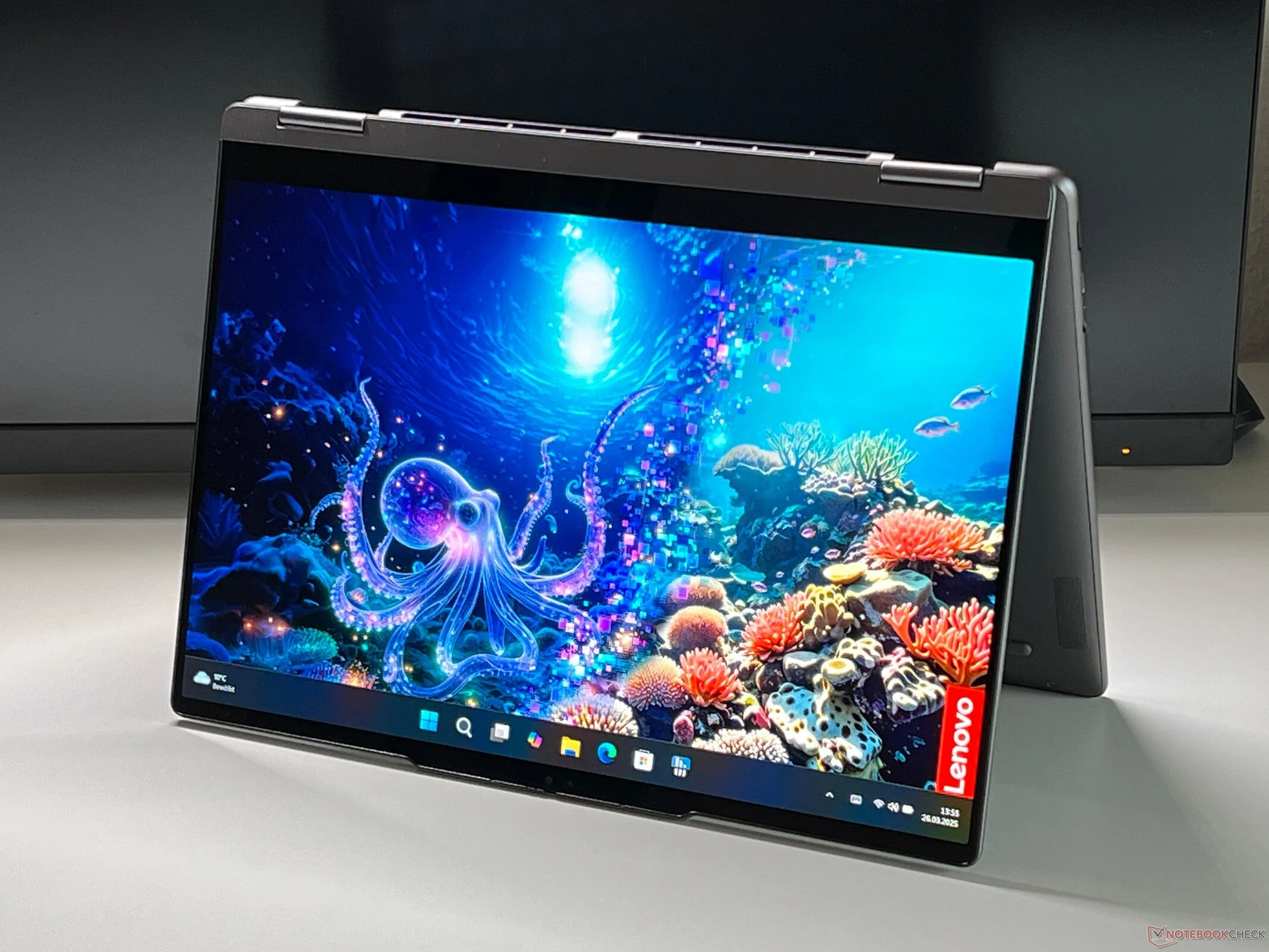
    We recently evaluated two Lenovo convertibles, the Yoga 7 14 and Yoga 9 14, which are quite alike in many ways. Both devices feature an aluminum body, a state-of-the-art Intel Lunar Lake processor, and vibrant OLED displays. Our premium version of the Yoga 9 came with a stunning 4K OLED display at 60 Hz, while the Yoga 7 showcased a new 2.8K OLED with a 120 Hz refresh rate and improved brightness (especially when in HDR mode, exceeding 1,000 nits), although it does have a minor grid effect. Both models face the same problem with color inaccuracies, as the color deviations are somewhat excessive, and Lenovo fails to provide accurate color profiles for P3 or sRGB color spaces.

    Design and Ports

    When examining the chassis, the Yoga 9 is slightly more compact and aims for a more luxurious look with its shiny side surfaces, yet the Yoga 7’s build quality is also commendable. Additionally, the Yoga 7 comes with more connectivity options, including an extra HDMI output and a microSD card reader. In terms of performance, both models are quite similar; the Core Ultra 7 258V paired with 32 GB of RAM can draw up to 37 Watts. Under sustained workloads, the Yoga 9 shows a slight advantage, consuming 30 Watts compared to Yoga 7’s 25 Watts, but the difference is minimal in real-world use. Both laptops operate quietly during typical tasks, and the fan noise is similar for both.

    Audio and Battery Life

    The Yoga 7 does have a slight edge regarding battery life, but it lags behind in audio quality and keyboard performance, where the Yoga 9 excels a bit. Now, let’s talk about pricing; there’s a significant gap of 700 Euros between our two similarly configured review units, which is difficult to justify. For comprehensive insights, including benchmarks and measurements, check out our detailed review of the Yoga 7 14 2in1 G10.