Tag: International Space Station

  • Understanding the Chain Fountain Effect in Space Behavior

    Understanding the Chain Fountain Effect in Space Behavior

    Key Takeaways

    1. Steve Mould partnered with NASA astronaut Don Pettit to explore the chain fountain effect in zero gravity on the ISS.
    2. The chain fountain effect occurs when a chain of beads is pulled from a cup, creating an upward force that defies classical mechanics.
    3. The experiment faced challenges in zero gravity, leading Mould and Pettit to arrange the chain into a closed loop for smoother movement.
    4. The results confirmed Mould’s theory, showing the chain flowed through its loop as expected while maintaining its shape in weightlessness.
    5. The project was a personal milestone for Mould, who fulfilled his childhood dream of doing science with an astronaut.


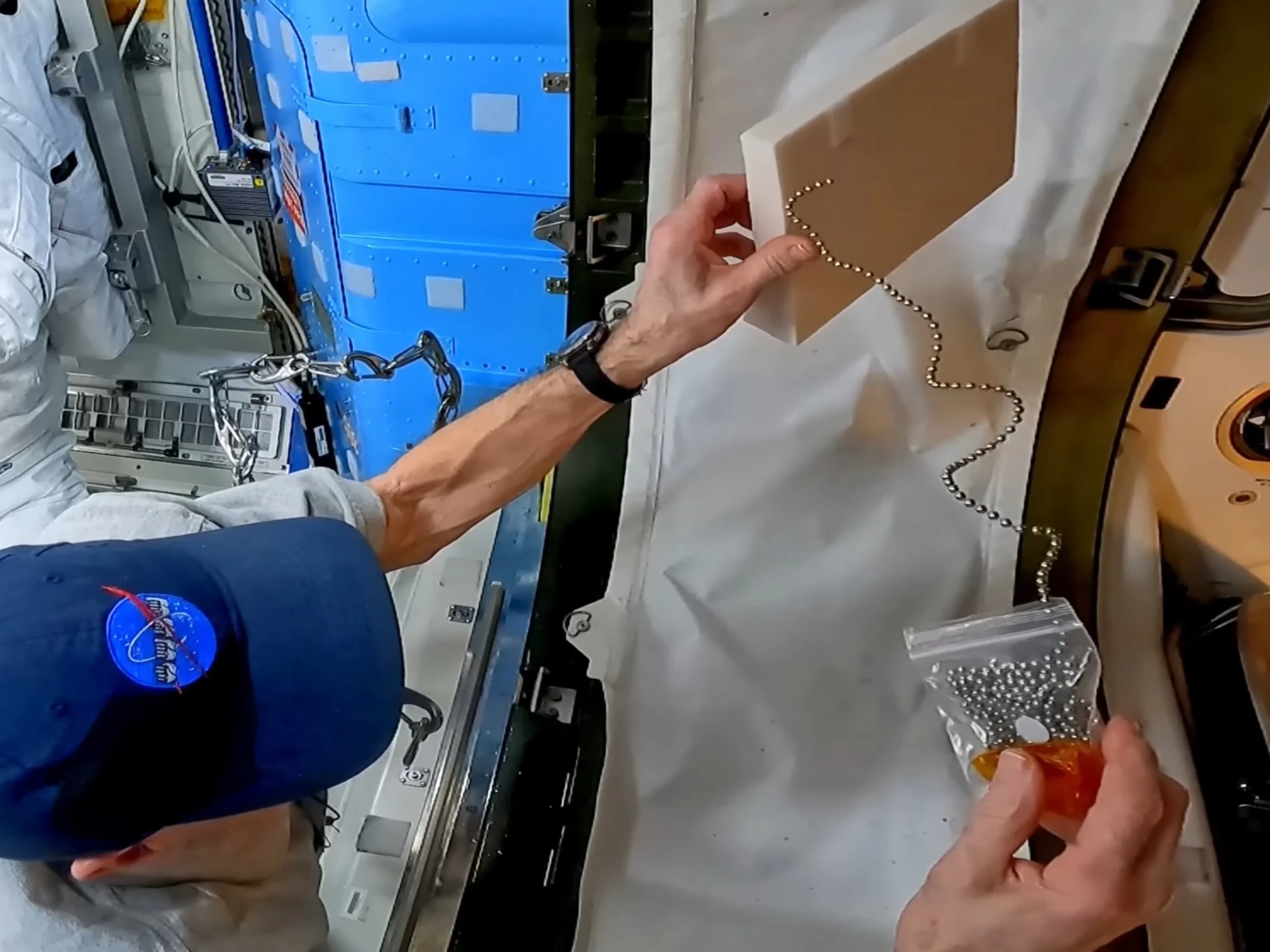
    British science communicator Steve Mould, who is one of the top science YouTubers with 3.44 million subscribers, has partnered with NASA astronaut Don Pettit on the International Space Station (ISS) to explore the chain fountain effect in a zero-gravity setting for the very first time.

    Discovery of the Chain Fountain Effect

    Mould stumbled upon this phenomenon nearly a decade ago: when a chain of beads is pulled out of a cup, it briefly lifts above the rim before dropping down – an occurrence that seemed to go against classical mechanics at first. Later, he showed that the impact of the chain links against the edge of the container creates an extra upward force – a discovery that has been validated by physical models since then.

    The Experiment in Space

    Through the European Space Agency (ESA), Mould connected with astronaut Samantha Cristoforetti, who took a four-meter chain to the ISS. Since she had limited time for experiments, she handed the project over to NASA astronaut Don Pettit, who performed the experiment under Mould’s supervision via a Microsoft Teams call.

    In the weightlessness of space, it quickly became apparent that setting up the experiment was nearly impossible without chaos. The chain moved in an unpredictable way, acting almost like molecules. In zero gravity, objects continue to move forever since there’s no energy loss. After a few unsuccessful tries, Mould and Pettit opted to arrange the chain into a closed loop, which allowed for smoother movement without tangling.

    Surprising Results

    What they found was unexpected: the chain “flowed” through its own loop precisely as Mould’s theory suggested. Initially, the loop kept a more angular form, but gradually smoothed out over time due to friction between the links and slight air movements. Ultimately, Mould determined that the experiment proved his theory correct – a chain in zero-gravity holds its shape as long as it moves steadily and is free from outside forces.

    The feedback on the video has been extremely positive. Viewers commended Mould’s enthusiasm and Pettit’s childlike wonder, while also making jokes about using Microsoft Teams in space (“Even in space, you can’t escape Teams”). For Steve Mould, this project was a personal achievement: “I wanted to be an astronaut when I was young – and now I’m doing science with one.”

    Source:
    Link



  • NASA Unveils Stunning Space Photo of Aurora Australis Sister

    NASA Unveils Stunning Space Photo of Aurora Australis Sister

    Key Takeaways

    1. NASA released a stunning image of the Aurora Australis captured by astronaut Nichole Ayers from the International Space Station.
    2. The Aurora Australis is less accessible than the Aurora Borealis, mainly visible over Antarctica and surrounding oceans.
    3. Key viewing locations for the Southern Lights include Stewart Island, Tasmania, and the southern tip of South America, but sightings can be faint and weather-dependent.
    4. The optimal time to view the aurora is during the Southern Hemisphere’s autumn and winter, from March to September, due to longer dark nights.
    5. Astronaut photography provides a rare opportunity for people to see the beauty of the Southern Lights, as many may never witness them in person.


    NASA has released a breathtaking new picture of the Aurora Australis, giving a view of the Southern Lights that few people will ever experience firsthand. The image, captured by astronaut Nichole Ayers on June 12, 2025, displays the bright green arcs of the aurora shining above the Indian Ocean while the International Space Station was orbiting 269 miles (432.91 km) above Earth.

    The Mystery of the Southern Lights

    While its northern sibling, the Aurora Borealis, attracts many tourists, the Aurora Australis remains one of the most hard-to-find light displays in the world. This is largely due to its geographic location — the southern lights are mainly visible over the expansive, unpopulated land of Antarctica and the adjacent oceans. In contrast to the Northern Hemisphere, there are very few accessible areas within the best viewing regions, making it tough to catch a glimpse from the Earth’s surface.

    The Quest for the Southern Lights

    For those who are determined to see the Southern Lights, the search can be quite challenging. The most dependable places to view the aurora are located at the extreme southern parts of the planet. These include Stewart Island in New Zealand, Tasmania in Australia, and the southern tip of South America. However, even from these optimal spots, the aurora usually shows up as a faint glow along the horizon, and unpredictable weather conditions can often ruin the view.

    The prime time for attempting to see the aurora is during the long, dark nights of the Southern Hemisphere’s autumn and winter, which runs from March to September. The limited daylight during this period creates a dark background that allows the aurora’s soft light to stand out.

    The Importance of Astronaut Photography

    Due to these difficulties, images like this one from the Crew Earth Observations team on the space station are extremely valuable. For many around the globe, photographs taken by astronauts using handheld cameras provide the only opportunity to appreciate the complete beauty of this magnificent and remote celestial event.

    Source:
    Link


  • Honda to Test Lunar Fuel Cell System on International Space Station

    Honda to Test Lunar Fuel Cell System on International Space Station

    Key Takeaways

    1. Honda’s Space Development Division is sending a water electrolysis system to the ISS for lunar fuel cell use.
    2. The system splits water into hydrogen and oxygen using solar-generated electricity through electrolysis.
    3. Hydrogen can be stored for fuel cell applications, while oxygen ensures breathable air for astronauts.
    4. The fuel cell system generates electricity at night using stored hydrogen and oxygen, recycling water as a by-product.
    5. Honda is collaborating with Sierra Space and Tec-Masters, with a launch date yet to be announced.


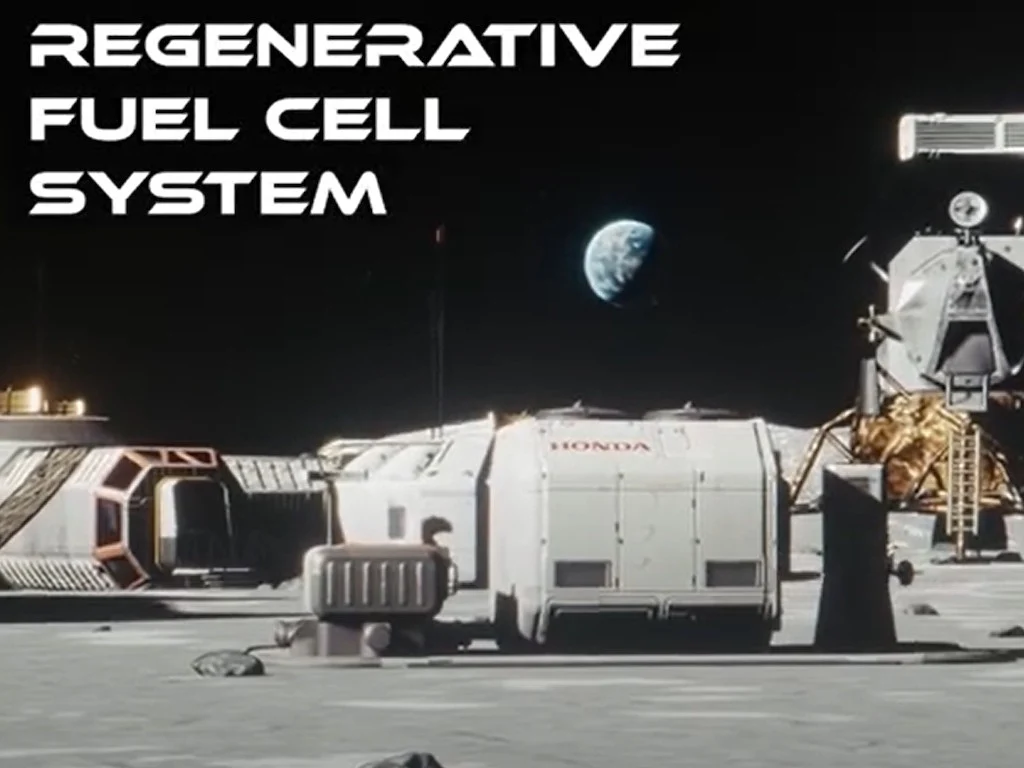
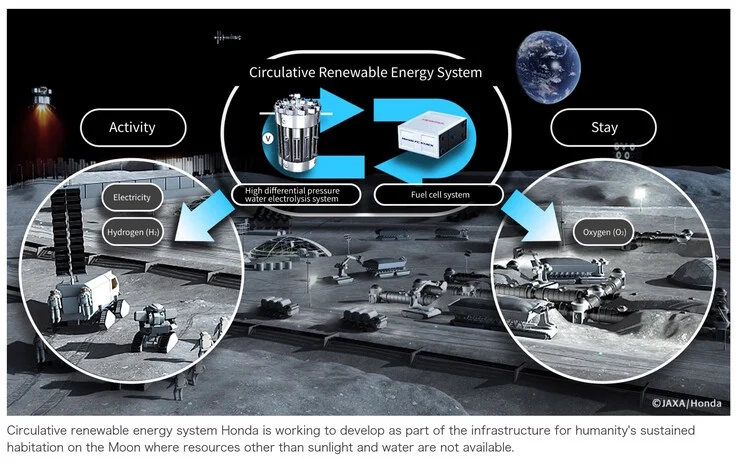
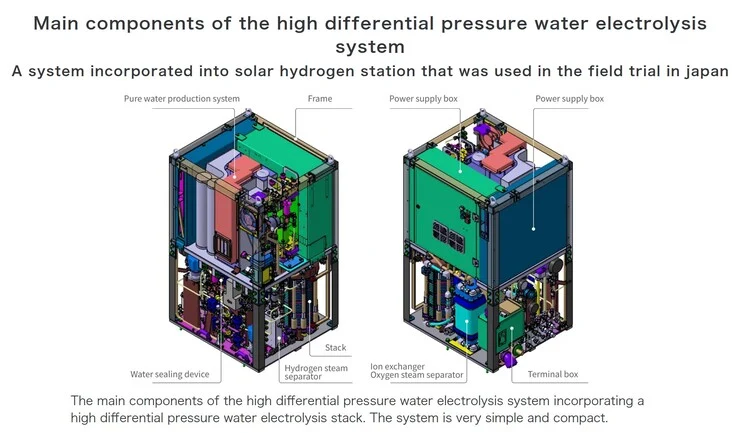
    Honda’s Space Development Division is gearing up to send its water electrolysis system to the International Space Station (ISS). This innovative system plays a crucial role in the regenerative lunar fuel cell setup, which is designed to produce electricity, hydrogen, and oxygen for astronauts working on the moon.

    How It Works

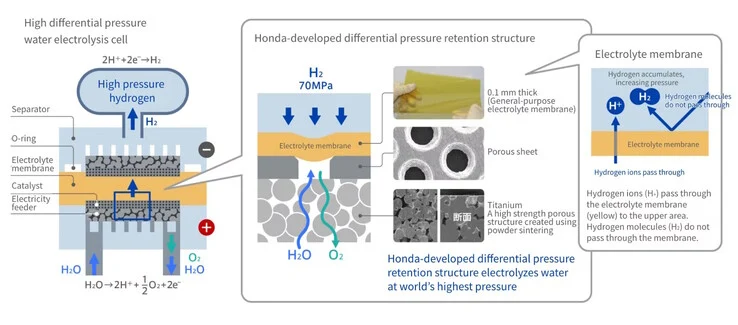
    The only things needed for this system are water and electricity. During the day, solar panels on the moon will generate electricity to split water into hydrogen ions through the process called electrolysis. The small H+ ions move through a special one-way electrolyte membrane and then combine on the other side to form hydrogen. This membrane, which is just 0.1 mm thick, is built to handle a pressure of 70 MPa, which is about 700 times that of Earth’s atmosphere.

    Collecting and Using Hydrogen

    Under these high-pressure conditions, larger H2 molecules can be gathered and stored for use in the fuel cell system or for other applications, like powering lunar vehicles with hydrogen. This electrolysis process also produces oxygen, ensuring that astronauts have enough air to breathe while they’re on the moon.

    At night, the fuel cell system utilizes some of the hydrogen and oxygen in a reverse reaction to generate electricity, with water being the only by-product. This water can then be recycled for use the following day, creating a sustainable energy cycle.

    Collaboration and Future Plans

    Honda is collaborating with Sierra Space and Tec-Masters for this exciting project. However, the specific launch date has not yet been revealed.

    For those fascinated by the potential of hydrogen, there is a book available on Amazon that explores its uses. Additionally, for DIY enthusiasts, there’s a guide on Amazon that teaches how to build a solar hydrogen fuel cell system.

    Source:
    Link