Tag: Inkjet Printing

  • TCL Begins Construction of World’s First Large-Scale 8.6-Gen OLED Plant

    TCL Begins Construction of World’s First Large-Scale 8.6-Gen OLED Plant

    Key Takeaways

    1. TCL CSOT is investing $4.15 billion in a new T8 8.6G OLED manufacturing plant in Guangzhou, China, using innovative inkjet printing technology.

    2. The T8 plant aims to produce 22,500 large 8.6G substrates monthly, primarily for high-end laptops, tablets, and monitors, rather than televisions.

    3. The inkjet printing method is expected to reduce material waste and cut production costs by about 20% compared to traditional techniques.

    4. If successful, the T8 could increase the supply of mid-sized OLED panels, impacting competitors and potentially lowering prices in the premium OLED market.

    5. Technical challenges remain, particularly in scaling the new printing process for consistent high-yield production, as TCL competes with established players like LG and Samsung.


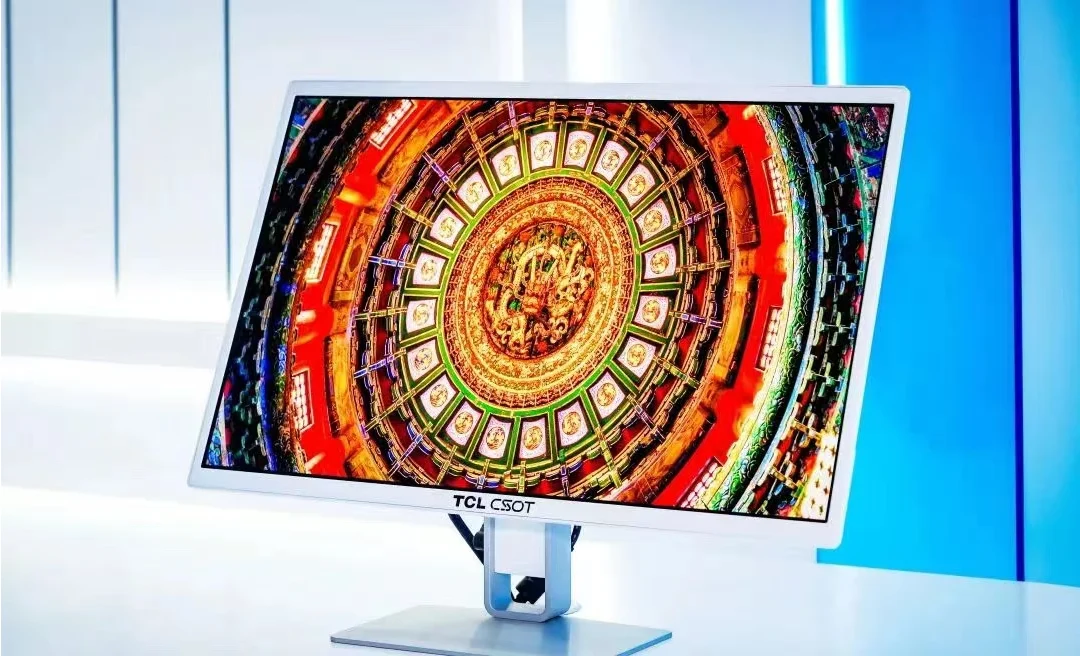
    TCL CSOT has started construction on its much-anticipated T8 8.6-generation OLED manufacturing plant located in Guangzhou, China. The firm has announced an investment of around $4.15 billion for this venture. This factory will utilize inkjet printing technology instead of the traditional vacuum deposition method to produce RGB OLED panels on a large scale. The facility is being hailed as the world’s first large-scale 8.6G inkjet-printed OLED production line. Installation of the necessary equipment is scheduled to take place until 2026, with plans for mass production to begin in 2027.

    Production Capacity

    The key aspect here is scale. TCL reports that the T8 will have the ability to manufacture 22,500 8.6G (2290 × 2620 mm) substrates every month. These large substrates can be divided into several panels aimed at high-end laptops, tablets, and monitors, which is the primary focus market for the facility. It’s worth mentioning that TCL isn’t immediately targeting the television market; instead, they seem to be focusing on IT panels where the benefits of OLED in terms of contrast and color are already valued, although high prices have limited their widespread use.

    Innovative Manufacturing Process

    A major difference in the technology is the manufacturing technique, particularly the inkjet printing method. Rather than using vacuum deposition (or a combination of white OLED and color filters), this new approach prints RGB OLED materials directly. TCL asserts that this method minimizes material waste and could cut production costs by about 20% when compared to traditional techniques. The leadership at TCL has positioned the T8 line as a way to integrate the entire OLED value chain, from raw materials to assembly, aiming to create a more competitive and cost-effective production environment.

    Potential Risks and Rewards

    Experts have highlighted both the potential and the challenges involved. If TCL meets its targets for cost and yield improvements, the T8 could significantly increase the supply of mid-sized OLED panels and help accelerate their adoption in laptops and monitors first. This additional capacity may also pressure competitors in panel technology, including RGB-LED backlighting and QD-OLED, to reevaluate their own value propositions and pricing.

    This development could serve as a vital counterbalance in an industry that typically doesn’t see affordable OLED TVs at the high-end market. For instance, LG’s flagship 97-inch model often falls behind in competition, particularly compared to its own 83-inch G5 TV version. Notably, the G5 97’ model lacks both MLA and LG’s Tandem technology, highlighting existing challenges in yield, especially for larger screens. Analysts like those at UBI Research anticipate that OLED shipments will increase in the coming years. The T8’s capacity would significantly contribute to this growth if its throughput remains strong.

    Challenges Ahead

    However, there are notable technical challenges. Scaling a new printing process for consistent, high-yield mass production at an 8.6G substrate size involves complications in material formulation, precision of nozzles, defect management, and ensuring the long-term reliability of the panels. LG Display and Samsung Display currently hold advantages due to their experience and maturity in large-format yield, so TCL must prove its ability to maintain longevity and color consistency to gain trust from OEMs.

    For consumers, the first noticeable effects are likely to be in high-end laptops and monitors rather than televisions. In the long run, a successful ramp-up of T8 could lead to increased supply, heightened competition, and gradual price reductions for premium OLED panels. The industry will closely monitor the installation of equipment until 2026 and the debut of the first mass-produced printed panels in 2027 to see if TCL’s $4.15 billion investment pays off.


  • TCL CSOT to Build Massive OLED Factory with Inkjet Printing Tech

    TCL CSOT to Build Massive OLED Factory with Inkjet Printing Tech

    Key Takeaways

    1. TCL CSOT plans to build an 8.6-generation OLED production plant in Guangzhou, starting construction in October 2025, with operations expected by 2027.

    2. The initial production line will handle 45,000 glass substrates monthly, with a potential second line increasing capacity to 90,000 substrates.

    3. TCL CSOT’s output would significantly exceed competitors like Samsung and LG, positioning the T8 facility as one of the largest OLED plants globally.

    4. The company utilizes inkjet printing technology, which reduces material waste and production costs by about 30%, differentiating it from competitors’ methods.

    5. Despite recent advancements, TCL CSOT faces technical challenges in improving panel brightness, lifespan, and production yields, as it aims to compete with established South Korean manufacturers.


    TCL CSOT is said to be gearing up to construct a huge 8.6-generation OLED production plant in Guangzhou, China.

    A recent report from UBI Research indicates that the construction of the “T8” facility is slated to kick off in October 2025, with plans to install equipment by the end of 2026. If everything goes as planned, the factory could be fully operational by 2027.

    Plans in Place

    Although TCL CSOT hasn’t officially confirmed the details, UBI Research claims the company has cemented its plans and is ready to proceed. The plant will start with one 8.6G production line that has the capacity to handle 45,000 glass substrates each month.

    When a second line is introduced, the production could potentially increase to 90,000 substrates per month. These sizable sheets, measuring approximately 2.29 by 2.62 meters, are suitable for cutting into displays for televisions, monitors, tablets, and smartphones.

    Competitive Edge

    This output level would place TCL CSOT well ahead of its rivals. Samsung’s forthcoming QD-OLED A6 line is expected to peak at 15,000 substrates monthly, while LG Display’s new Paju line is predicted to reach between 7,500 and 15,000.

    Moreover, BOE, a competitor in China, has also revealed intentions to launch an OLED line with a capacity of 33,000 substrates each month. The goal for TCL CSOT would position the T8 facility among the largest OLED manufacturing plants globally.

    Innovative Techniques

    What distinguishes TCL’s method is its adoption of inkjet printing, differing from LG and Samsung’s fine-mask evaporation technique. This method accurately applies red, green, and blue OLED materials onto the substrate, minimizing material waste and cutting production costs by about 30 percent.

    UBI Research estimates that the T8 facility will require approximately RMB 20 billion, which translates to around USD 2.75 billion—a relatively modest investment considering its anticipated output.

    TCL CSOT has been working on inkjet-printed OLED technology for several years, having laid out its goals back in 2020, with aspirations to begin mass production by 2024. Although this timeline hasn’t been fully met, TCL did commence limited production last year.

    Future Outlook

    In 2024, the company delivered 21.6-inch 4K OLED panels produced using its Gen 5.5 line and began distributing monitor panels by November. By May 2025, TCL had presented a complete lineup of inkjet-printed OLED prototypes, including screens for smartphones, laptops, and TVs.

    UBI anticipates that an official announcement might be forthcoming, possibly within this month. Nevertheless, the report warns that TCL CSOT still encounters technical challenges. These obstacles include enhancing panel brightness and lifespan, achieving better large-area uniformity, and improving production yields.

    The inkjet printing technique remains perceived as less developed and dependable compared to the more traditional methods utilized by Korean display manufacturers.

    Nonetheless, TCL’s approach is part of a larger effort by Chinese firms to contest South Korea’s supremacy in OLED display technology. Companies like BOE and Visionox are also making significant investments in alternative manufacturing processes.

    Source:
    Link

  • Samsung’s Inkjet Printing Technology Ready for Budget-Friendly Foldables on the Horizon

    Samsung’s Inkjet Printing Technology Ready for Budget-Friendly Foldables on the Horizon

    Samsung Rumored to Cut Foldable Smartphones Costs With Budget Friendly Inkjet Printing

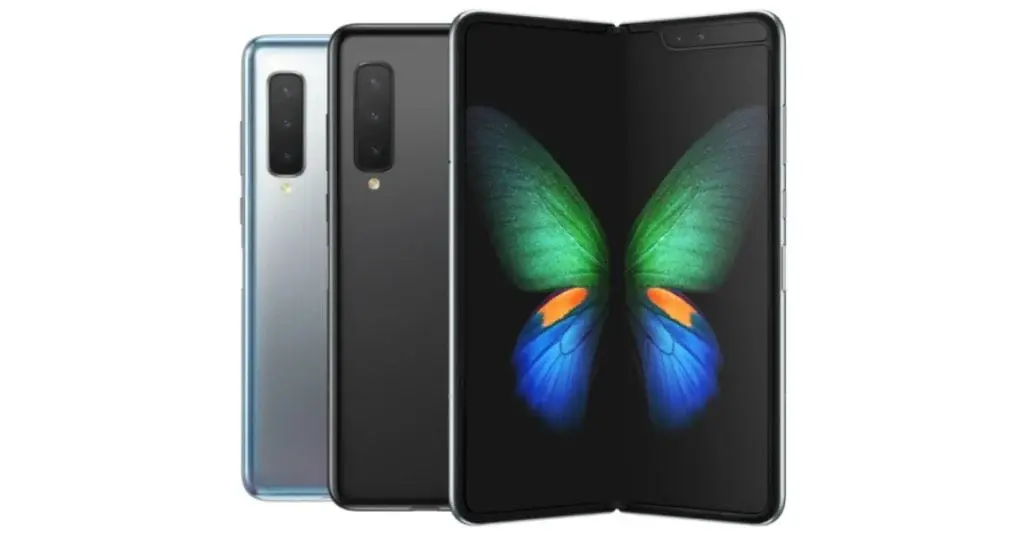
    Samsung is known for its lineup of foldable devices, including popular series like the Galaxy Fold and Flip. However, these phones, such as the Galaxy Z Flip 5 and Galaxy Z Fold 5, come with a hefty price tag of $1,000 and more. In an effort to make foldable smartphones more affordable, Samsung is reportedly exploring cost-cutting solutions like inkjet printing for foldable displays.

    Expanding the Foldable Lineup

    On January 17, Samsung unveiled its latest flagship phones, the Galaxy S24 series, at the Unpacked event. Following this release, the company has plans to introduce the Flip 6 and Fold 6. Additionally, rumors suggest that Samsung is working on a budget-friendly foldable phone with a book-style design, which is expected to be significantly cheaper than the current foldable models.

    Shifting to Inkjet Printing Technology

    Previously, Samsung utilized the Micro Dry Process Decoration (MDD) for its foldable phone screens. This involved creating frames by cutting films from a roll, with the necessary ink already embedded in the film. However, this method raised concerns due to its cost implications. Thankfully, after extensive research and development efforts, Samsung is now transitioning to inkjet printing technology.

    By adopting inkjet printing, Samsung aims to extract more frames from the original film, ultimately reducing costs and potentially lowering the prices of its foldable smartphones. The frames of OLED panels play a crucial role in hiding internal circuits and components, and frame films are applied post-coating to protect against oxygen and water. Once the frames are in place, ultra-thin glasses are laminated onto the panels to complete the production process.

    Staying Ahead in a Competitive Market

    Samsung currently holds a prominent position in the foldable smartphone market, which continues to expand rapidly and contribute significantly to the company’s revenue. However, the smartphone market as a whole faces increasing competition from brands like Xiaomi, Oppo, Honor, and Vivo. In order to maintain its advantage, Samsung must leverage its position and extensive knowledge in this sector.

    This strategic move to explore inkjet printing technology could potentially help Samsung regain its title as the world’s largest smartphone manufacturer, which it lost to Apple. By finding ways to reduce costs and make foldable smartphones more accessible to a wider audience, Samsung aims to solidify its position and continue to lead the market.

    In conclusion, Samsung’s rumored exploration of inkjet printing technology for its foldable smartphones is a promising development. By cutting costs and potentially reducing prices, Samsung aims to make these innovative devices more budget-friendly. As the company expands its foldable lineup and faces competition in the market, this strategic move could play a significant role in Samsung’s future success.