Tag: IBIS

  • Stellantis IBIS Battery: New AC Prototype Enhances Performance

    Stellantis IBIS Battery: New AC Prototype Enhances Performance

    Key Takeaways

    1. Innovative Design: The IBIS battery system delivers alternating current directly, eliminating the need for separate inverters, onboard chargers, or DC converters.

    2. Efficiency Gains: The system saves 17 liters of space, reduces weight by 88 lbs, charges 15% faster, and decreases WLTP consumption and energy losses by 10%.

    3. Simplified Construction: IBIS streamlines vehicle design compared to standard lithium-ion batteries, which require additional charging systems.

    4. Versatile Applications: The IBIS framework is adaptable, with potential uses for rail transport, aerospace, maritime shipping, and data centers.

    5. Future Integration: Stellantis plans to integrate IBIS into production vehicles by 2029 or 2030, aiming for lighter and more efficient electric vehicles.


    IBIS has been in development for more than six years, working alongside Saft, a battery expert that is part of TotalEnergies. As reported by InsideEVs, this system delivers alternating current straight at the output, which means separate inverters, onboard chargers, or DC converters are no longer necessary. The current prototype is built upon the Peugeot E-3008 and is currently undergoing tests on public roads.

    Efficiency and Space Saving

    Stellantis highlights several benefits of the battery system. It saves around 17 liters of space and reduces weight by nearly 88 lbs. Charging with AC becomes 15% quicker, and both WLTP consumption and energy losses are decreased by 10%. Meanwhile, battery power can increase by as much as 15%, reaching 172 kW without changing the size. Maintenance is made easier, and the battery can also be used for second-life applications.

    Simplifying Vehicle Design

    Unlike standard lithium-ion batteries that store direct current and need extra inverters, IBIS greatly streamlines the vehicle’s construction. Companies like Tesla and Volkswagen still rely on separate charging systems. With its compact design, reduced weight, and improved energy efficiency, IBIS offers distinct advantages.

    Future Potential

    The IBIS framework is quite adaptable as well. A stationary version has been in testing since 2022, and it could potentially be utilized for rail transport, aerospace, maritime shipping, or data centers in the future.

    Stellantis’ battery initiative includes a team of 25 engineers from Saft, CNRS, the Sorbonne, the University of Paris-Saclay, and the Lafayette Institute. Stellantis aims to integrate IBIS into production vehicles by 2029 or 2030. This technology could pave the way for lighter, more efficient, and easier-to-maintain electric vehicles.

    Source:
    Link


  • Leica M12 with IBIS: Major Upgrades for Full-Frame Rangefinder

    Leica M12 with IBIS: Major Upgrades for Full-Frame Rangefinder

    Key Takeaways

    1. The Leica M11, launched in January 2022, features upgrades like a 60MP sensor, optional electronic shutter, and 64GB internal storage.
    2. The upcoming Leica M12 may include In-Body Image Stabilization (IBIS) for longer handheld exposure times, but this feature is uncertain due to space limitations in compact M bodies.
    3. The M12 might have a larger 3.9-inch touchscreen, potentially removing some physical buttons.
    4. The dedicated ISO dial could be replaced by a second programmable thumb dial in the M12 design.
    5. Speculation about the M12 should be approached cautiously as it’s based on early rumors.


    The Leica M11, available from $10,120 on Amazon, was launched in January 2022. This camera features many notable upgrades over the Leica M10, such as a 60MP full-frame sensor, an optional electronic shutter, 64GB of internal storage, and a Leica Visoflex 2 attachable EVF with improved resolution.

    Potential Upgrades in the Leica M12

    The upcoming Leica M12 may represent a major leap forward. As per the latest updates from LeicaRumors, the company is reportedly testing a prototype that includes IBIS (In-Body Image Stabilization). This would allow for longer handheld exposure times without the risk of blurriness. Current IBIS technology, similar to that found in the new Hasselblad X2D II, can enable exposure times lasting several seconds without needing a tripod. However, Leica has previously indicated that their compact M bodies lack the space to accommodate a stabilized sensor. Thus, it remains uncertain if the Leica M12 will indeed feature this technology.

    Design Changes to Expect

    Earlier speculation suggests that the Leica M12 could include a significantly larger 3.9-inch touchscreen, potentially eliminating some buttons on the camera’s rear. The dedicated ISO dial might vanish in favor of a second programmable thumb dial. This change could be necessitated by the need for extra space for a hybrid viewfinder, which would convert the traditional rangefinder into an electronic viewfinder with a simple button press. As always, such early rumors should be viewed with caution.

    Source:
    Link


  • Fujifilm X-E5 Launch Date Leaked Ahead of Upcoming X Summit

    Fujifilm X-E5 Launch Date Leaked Ahead of Upcoming X Summit

    Key Takeaways

    1. Fujifilm will host an X Summit event on June 12, featuring exciting product announcements, likely including the X-E5 camera.
    2. The X-E5 is expected to share the same sensor and processor as the Fujifilm X100VI, potentially including in-body image stabilization (IBIS).
    3. Leaks suggest the X-E5 will have 6-stop, 5-axis IBIS similar to the X100VI, enhancing handheld video and low-light photography capabilities.
    4. The addition of IBIS may increase the X-E5’s price and size, possibly positioning it above the entry-level segment occupied by the X-E4.
    5. Implementing IBIS in the X-E5 is seen as a necessary upgrade, as many competitors already offer this feature, and it could elevate the camera into the mid-range market.


    Fujifilm has revealed that it will be hosting another X Summit event on June 12, promising “exciting product announcements” during the presentation. The event is set to kick off at 5 AM EDT (9 AM UTC). Although Fujifilm hasn’t disclosed much more than the date and time, it seems likely that the X Summit will introduce the Fujifilm X-E5.

    Speculation About the X-E5

    Recent leaks suggest that the Fujifilm X-E5 will come equipped with the same sensor and processor as the well-regarded Fujifilm X100VI (currently priced at $2,348.99 on Amazon). This leads to the belief that the X-E5 will also feature in-body image stabilization (IBIS), which is a capability of the X100VI. Fuji Rumors has now shared a leak with a 99% confidence level, indicating that the X-E5 will indeed come with in-body image stabilization. It’s likely that this IBIS will mirror the 6-stop, 5-axis stabilization found in the X100VI, enhancing its versatility for handheld video and low-light photography.

    Potential Drawbacks of IBIS

    Yet, the addition of IBIS comes with certain drawbacks. The primary concerns are that it could increase the cost and potentially make the camera larger than it might otherwise be. For reference, the X100VI had a $200 price increase compared to its predecessor, and the upgrades from the X100V to the X100VI are similar to what we might expect from the X-E4 to the X-E5. Therefore, it’s reasonable to anticipate that the X-E5 will be pricier than the X-E4. There’s also the possibility that Fujifilm might compromise in other areas to keep the X-E5’s price more manageable, which could result in a less advanced control scheme or a more basic design.

    The Need for IBIS in the X-E5

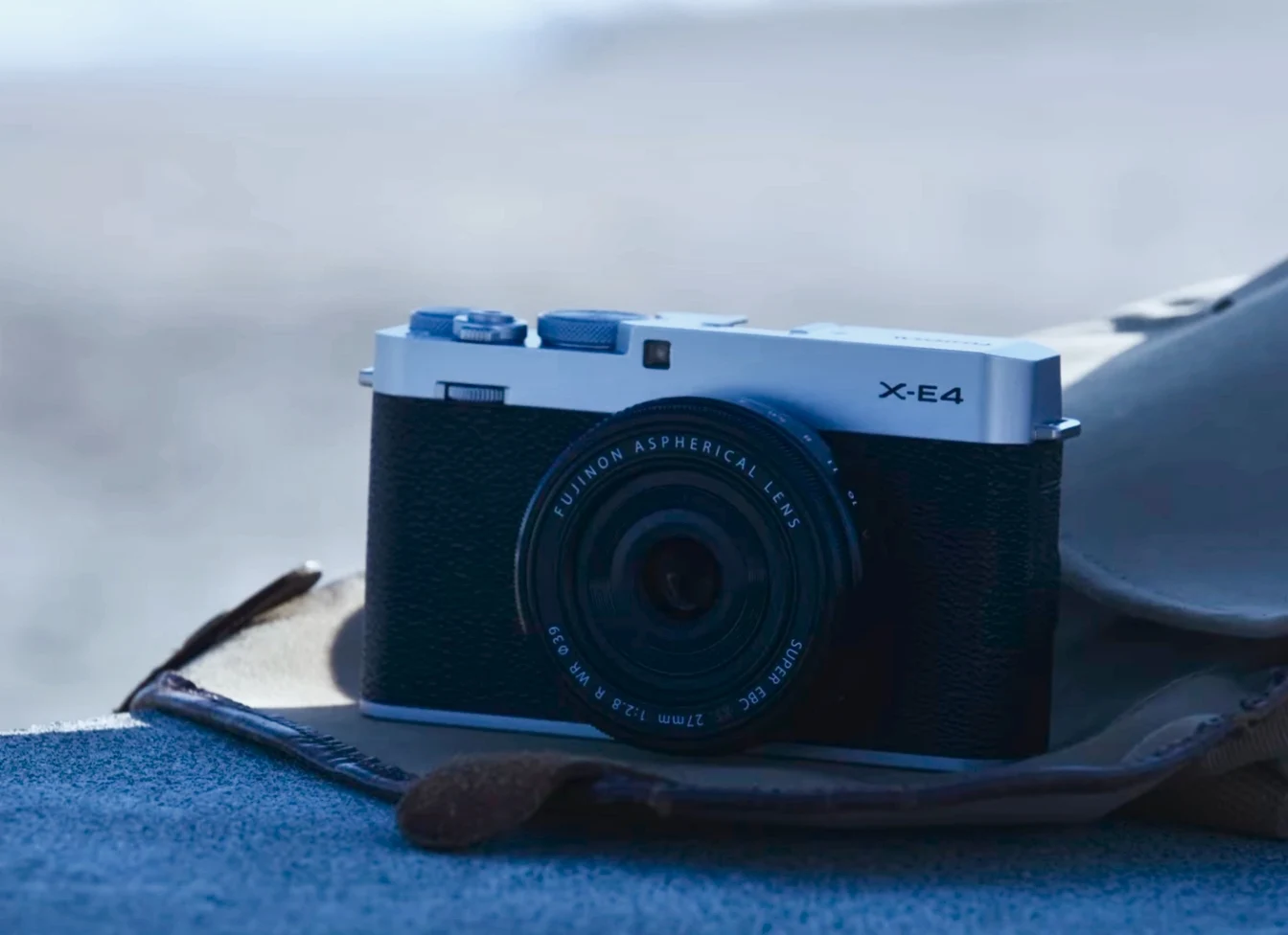
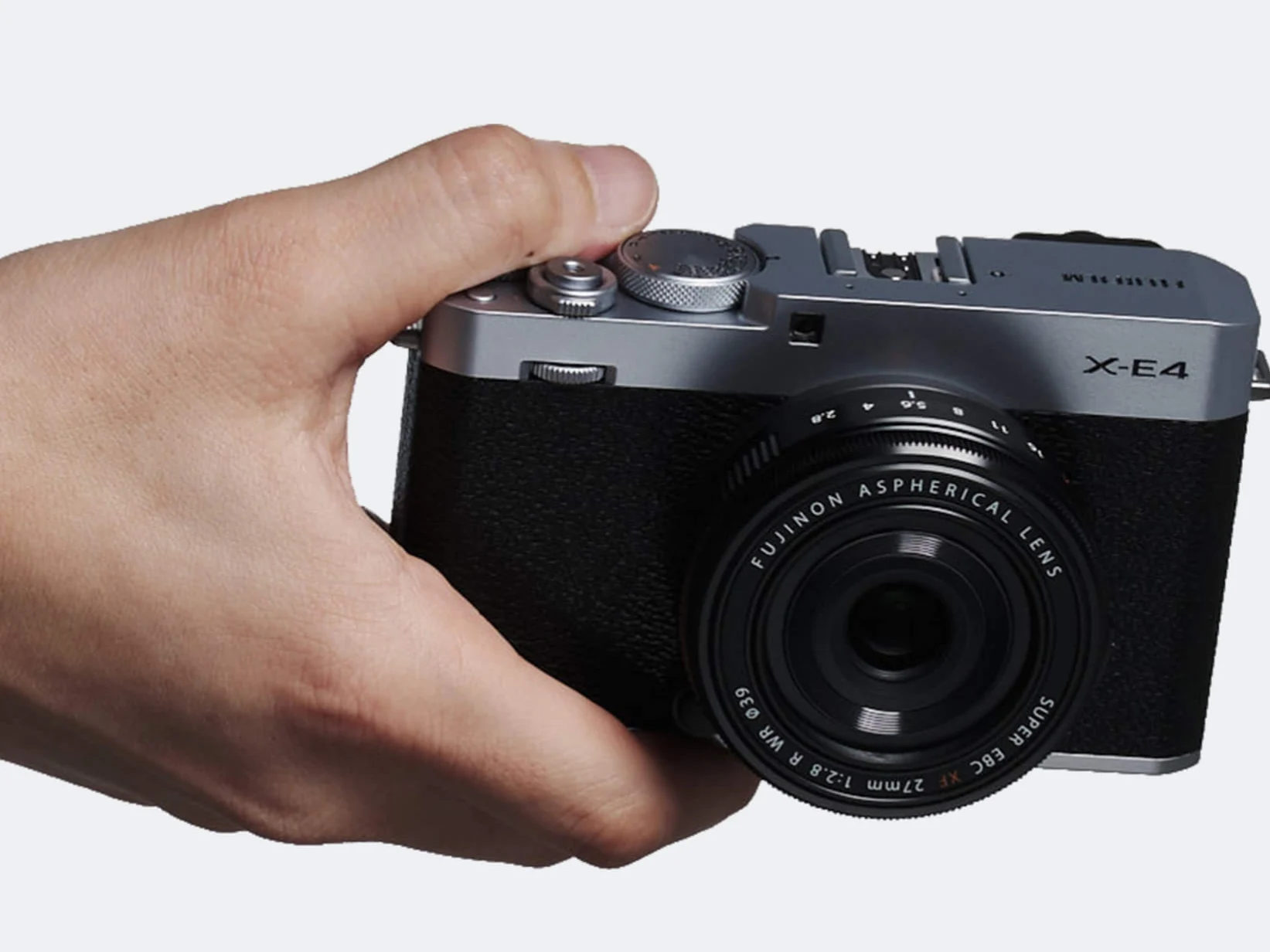
    While adding IBIS would be a major enhancement for the X-E5, it’s a long-awaited improvement for Fujifilm, considering that many competitors in the compact APS-C market, like the Sony A6700 and Ricoh GR III, have had IBIS for some time now. Even within Fujifilm’s own flagship APS-C camera series, the X-T line has boasted IBIS since the X-T4. It’s worth noting that the Fujifilm X-E4 was launched with a MSRP of just $849.95, clearly positioning it in the entry-level segment. Implementing IBIS would likely elevate the X-E5 into the mid-range price level, pushing it well beyond the $1,000 threshold.

    Source:
    Link

  • Fujifilm X-E5 Specs Rumored to Match X100VI in Compact APS-C

    Fujifilm X-E5 Specs Rumored to Match X100VI in Compact APS-C

    Key Takeaways

    1. Sensor and Processor Upgrades: The X-E5 will feature a 40 MP X-Trans CMOS 5 HR sensor and X-Processor 5, offering significant improvements over the X-E4’s 26 MP sensor and older processor.

    2. In-Body Image Stabilization (IBIS): The X-E5 is expected to introduce In-Body Image Stabilization, providing six stops of 5-axis stabilization, a first for the X-E series.

    3. Improved Video and Autofocus: The new model is anticipated to enhance video recording capabilities and autofocus functionalities, expanding on the features seen in previous models.

    4. Comparison with Previous Models: The X-E5 is likely to exceed the X-E4 in video quality (possibly supporting higher frame rates and resolutions) and autofocus subject detection, which will include a wider variety of subjects compared to the X-E4.

    5. Design Speculation: There is uncertainty about the design of the X-E5, with possibilities ranging from maintaining the minimalist style of the X-E4 to adopting new control layouts like those seen in the X-T50.


    The Fujifilm X-E5 has been mentioned several times lately as we await the launch of this compact, retro-style APS-C camera, which is rumored to debut in June. Recently, initial details about the new model have started to emerge from various sources.

    Sensor and Processor Upgrades

    As per Fuji Rumors, a reliable source known for accurate leaks, the Fujifilm X-E5 will include the same 40 MP X-Trans CMOS 5 HR sensor and X-Processor 5 setup that we see in the Fujifilm X100VI. This change could mean a significant improvement over the X-Trans CMOS 4 sensor and X-Processor 4 used in the X-E4. In fact, this might even be a more substantial enhancement than the upgrades seen in the X100VI compared to the X100V, which had an X-Processor 5 and an X-Trans 4 sensor.

    Enhanced Features and Capabilities

    The advantages of these upgrades go beyond just higher resolution and better image quality. For example, every Fujifilm camera equipped with the X-Trans 5 sensor has included an impressive six stops of 5-axis image stabilization. This indicates that the X-E5 could be the first in the X-E series to introduce In-Body Image Stabilization (IBIS), marking a notable advancement over earlier models. Additionally, the X-E5 is expected to provide improved video and autofocus functionalities, leveraging its enhanced processing capabilities and updated AF algorithms.

    Comparison with Previous Models

    To give a clearer picture, the X-E4’s maximum video recording is DCI 4K at 29.97 fps, while the X100VI can shoot 6.2K video at the same frame rate and DCI 4K at 59.94 fps. Furthermore, the X100VI offers two more film simulations—totaling 20—compared to the 18 available on the X-E4. The combination of the X100VI’s sensor and processor also broadens the autofocus subject detection capabilities to include animals, birds, cars, motorcycles, bicycles, planes, and trains, whereas the X-E4 is limited to face and eye detection.

    Speculation and Anticipation

    While these details are still in the early stages and might not be fully accurate, Fuji Rumors expresses a strong level of confidence regarding these specifications. What remains uncertain is how Fujifilm will present the X-E5—will it follow the minimalist design of the X-E4 or introduce a new control layout, similar to the tactile film simulation dial found on the X-T50 (currently priced at $1,399 on Amazon)? It’s highly likely that the X-E5 will maintain a compact design, especially within the APS-C category, positioning it as tough competition against the recently announced Ricoh GR IV.

    Source:
    Link