Tag: Huawei

  • Huawei Band 9 Receives TDRA Certification, Suggesting Upcoming Launch

    Huawei Band 9 Receives TDRA Certification, Suggesting Upcoming Launch

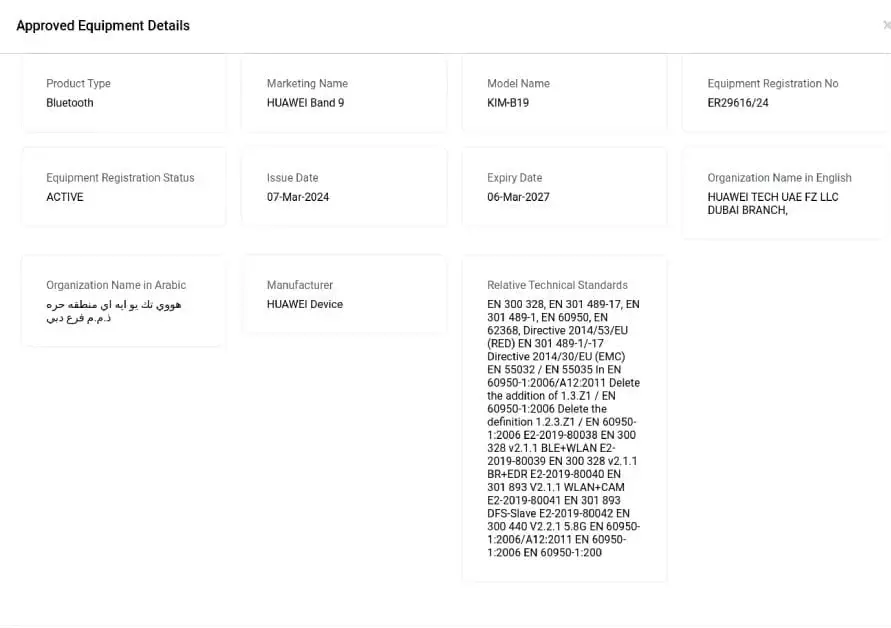
    Huawei is preparing for the global launch of its upcoming fitness tracker, the Band 9, as indicated by recent developments. Following its recent certification on Malaysia’s SIRIM platform, the Band 9 has now also gained certification from the UAE’s TDRA.

    Certification Details

    The band is listed on the TDRA’s database under the model number KIM-B19, aligning with the listing on the SIRIM database. However, beyond its presence on the certification site hinting at a potential UAE launch, no further specifics regarding the tracker have been disclosed.

    Anticipated Features

    Although the certification does not delve into the specifics of its features or specifications, expectations are high for the Band 9 to enhance upon the achievements of its predecessor, the Band 8, which made its debut last year.

    Band 8 Overview

    A brief overview of the Band 8 showcases a substantial 1.47-inch AMOLED display that provides an excellent visual experience at an affordable price point. It incorporates Huawei’s TruSleep 3.0 technology for precise sleep monitoring and personalized sleep recommendations.

    Furthermore, the Band 8 is armed with TruSeen 5.0 heart rate monitoring, enabling users to access a 7-day resting heart rate chart for valuable insights into their cardiac well-being.

    Apart from sleep and heart rate tracking, the Band 8 offers an array of features such as over 100 sports modes, blood oxygen level detection, women’s health monitoring, and continuous stress tracking. Impressively, it boasts a notable 14-day battery life and supports rapid charging, reaching full capacity from 0% in just 45 minutes.

    Conclusion

    The imminent launch of the Huawei Band 9 is clearly on the horizon with its appearance on certification databases. While specific details are currently limited, it is anticipated that more information will surface in the near future.

    Huawei Band 9 Receives TDRA Certification, Suggesting Upcoming Launch
  • Huawei 2025 Launch: New Magneto-Electric Disk (MED) Storage Device

    Huawei 2025 Launch: New Magneto-Electric Disk (MED) Storage Device

    Huawei is said to be in the process of unveiling its cutting-edge data storage solution, the OceanStor Arctic, by 2025.

    The heart of this upcoming product is an innovative technology known as the “magneto-electric disk” (MED). Nevertheless, details surrounding this new storage method remain shrouded in secrecy, with specifics yet to be disclosed.

    Huawei's MED Technology Advancements

    According to reports, Huawei's upcoming MED technology is expected to accommodate rack capacities exceeding 10PB while operating on less than 2kW of power. The company also asserts a 20% cost reduction compared to tape storage alternatives and an impressive 90% decrease in power utilization when juxtaposed with conventional hard drives.

    Impressive Efficiency and Performance Metrics

    Huawei's projections are indeed striking. Today, a standard 42U rack has the capacity to house approximately 288 HDDs, with the capability to store up to 8.64PB of data. Such a configuration typically demands around 2.88kW of power for operation.

    A Glimpse into Future Storage Solutions

    Moreover, there exist 4U storage servers such as the ASRock Rack 4U100-C612, capable of accommodating 100 3.5-inch hard drives and storing up to 3PB of data while operating at 1kW. Nonetheless, the energy consumption of 10 such machines would be considerable.

    The reduced power requirements of the Huawei OceanStor Arctic emerge as a standout feature. However, the precise methodologies enabling Huawei to achieve such significant power efficiencies with seemingly disk-based technology remain ambiguous.

    The Mystery Behind MED Technology

    Additionally, details concerning Huawei's MED technology remain elusive. Speculations from a Tom's Hardware report propose that the foundational concept of MED technology could revolve around the magneto-electric effect, establishing a link between a material's magnetic and electric attributes.

    Yet, this speculation remains just that—an educated guess. The full scope of Huawei's MED technology and the mechanisms enabling its remarkable efficiency and performance enhancements are yet to be unveiled.

  • MediaTek Overtakes Apple & Qualcomm as Top Smartphone Chipset Vendor 2023

    MediaTek Overtakes Apple & Qualcomm as Top Smartphone Chipset Vendor 2023

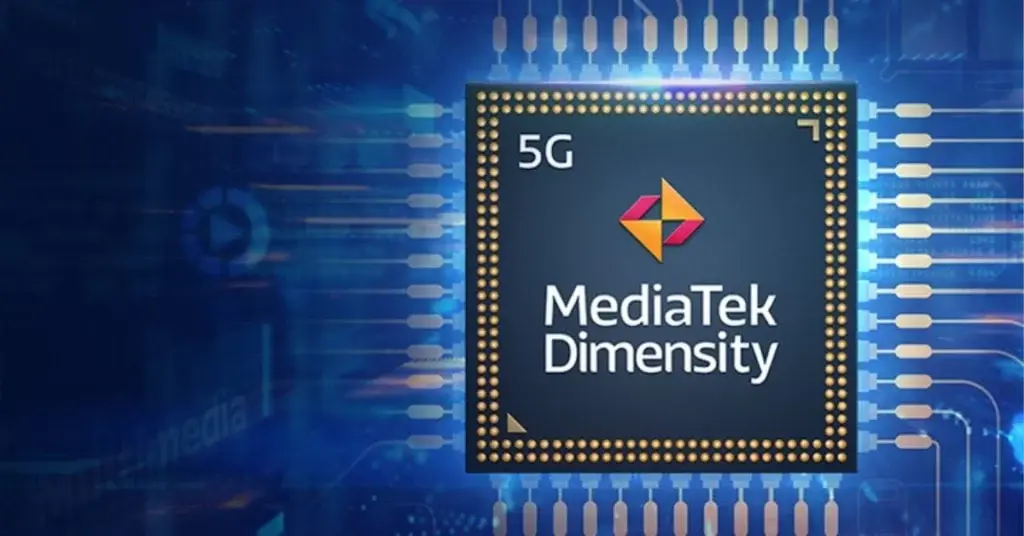
    Chipmaker MediaTek has been recognized as the leading System on Chip (SoC) vendor by the close of 2023. Known for developing the fastest smartphone processor currently available, MediaTek’s Dimensity 9300 and other chipsets have secured a significant share in the smartphone market.

    MediaTek’s Dominance in the SoC Market

    A recent report from Canalys sheds light on MediaTek’s ascent as the preferred SoC vendor in 2023. In the fourth quarter of the year, MediaTek sold 117 million units of chipsets, surpassing Apple’s 78 million and Qualcomm’s 69 million units. Noteworthy competitors in the smartphone SoC sector include Google, Samsung, and Unisoc. MediaTek’s smartphone shipments for the year exhibited a 21% year-on-year increase, amounting to $23 billion in revenue. Despite this, Apple’s revenue from shipments reached $87 billion, overshadowing MediaTek. Qualcomm also surpassed MediaTek with shipments valued at $30 billion in 2023.

    Market Dynamics and Competitors

    The Canalys report reveals a 2% decline in Qualcomm’s SoC shipment revenue from the previous year. Samsung experienced a significant 44% decrease in earnings from its Exynos chips, suggesting potential for improvement with chips from other providers in Q4 2023. This decline accounted for approximately 40% of Qualcomm’s returns and 25% of MediaTek’s figures for the quarter. Notably, Xiaomi emerged as a key buyer of Qualcomm chipsets, representing 25% of purchases. While Xiaomi also contributed about 20% of MediaTek chipsets shipped in Q4 2023, Samsung stood out as the primary customer for the vendor.

    Emerging Players and Growth Prospects

    Huawei made a substantial impact in the market in 2023 as per the Canalys report. With a remarkable 5,121% surge, the Chinese OEM shipped 7 million units and generated $7 billion in revenue, largely fueled by its new Kirin SoCs. Unisoc also demonstrated strong potential for growth, with a 24% increase in revenues year-on-year totaling $3 billion, alongside 27 million units shipped. The primary clientele of Unisoc included brands like Transsion, Realme, and Lenovo. In contrast, Google’s performance in SoC shipments was lackluster with estimated revenues of $2 billion and 3 million units sold, possibly due to the exclusive nature of its Tensor chipsets designed solely for Pixel phones.


    MediaTek Overtakes Apple & Qualcomm as Top Smartphone Chipset Vendor 2023
  • Huawei’s Patent Licensing Deals with Amazon and Vivo

    Huawei’s Patent Licensing Deals with Amazon and Vivo

    Huawei Technologies, a prominent Chinese telecommunications company, has recently finalized a fresh patent licensing pact with Amazon, the U.S.-based tech giant. This extensive agreement encompasses ongoing legal disputes related to Huawei’s patented wifi and video playback technologies. While the precise details of this accord remain undisclosed by both entities, Alan Fan, the head of Huawei’s intellectual property rights division, emphasized the collaborative nature of global corporations in standards and patent licensing, irrespective of prevailing geopolitical tensions.

    Agreements and Challenges

    Despite facing market restrictions in the United States due to concerns over data security, Huawei is unable to source critical components from U.S. suppliers. These limitations have severely impacted Huawei’s smartphone division. Nevertheless, the company is determined to restore its pre-ban standing. The introduction of the Mate 60 series, featuring 5G support, signifies a promising shift for Huawei after years of setbacks. Subsequently, Huawei unveiled the Nova 12 series of smartphones with 5G capabilities and launched a laptop integrated with an in-house chipset.

    Collaborative Efforts and Patent Portfolio

    In addition to the partnership with Amazon, Huawei has also struck a cross-licensing patent deal with Vivo, a domestic smartphone manufacturer. This particular agreement centers on essential cellular standard patents, particularly those relevant to 5G technology. By December 31, 2023, Vivo’s patent applications span more than 70 countries and regions, showcasing a robust portfolio of 25,000 families. Noteworthy is the fact that over 6,000 families are dedicated to essential 5G patents, with a substantial number declared to ETSI and numerous standard document submissions to 3GPP.

    Broadening Collaborations

    Huawei has established similar licensing arrangements with other Chinese smartphone companies like Xiaomi and Oppo, emphasizing a trend towards collaborative efforts in the realm of patents and technology advancements.

  • Shenzhen’s Plan to Boost HarmonyOS Apps for Huawei

    Shenzhen’s Plan to Boost HarmonyOS Apps for Huawei

    Shenzhen, known for being the birthplace of Huawei Technologies and a thriving center for technological innovation in China, has revealed its annual strategy to boost the growth of native applications for HarmonyOS, the operating system endorsed by the Chinese tech giant.

    The city of Shenzhen aims to strengthen the ecosystem surrounding HarmonyOS by enhancing the supply capacity of HarmonyOS apps, promoting the clustering of HarmonyOS-original app industries, and refining the overall HarmonyOS app industry ecosystem. This comprehensive plan, unveiled on March 2nd, demonstrates Shenzhen's dedication to supporting Huawei's software development initiatives.

    Shenzhen's Initiative for HarmonyOS Development

    The latest release of HarmonyOS Next, introduced by Huawei on January 18th, represents a significant step towards independence by moving away from apps designed for Google's Android platform. This shift has led to a surge in the creation of HarmonyOS-native apps, with almost half of China's top 200 apps now transitioning and intensifying their focus in this direction.

    Driving Innovation in Software Ecosystem

    Experts believe that Shenzhen's strategic plan will bring about substantial enhancements in the HarmonyOS software ecosystem. The plan not only aims to facilitate the growth of HarmonyOS-native apps but also aims to explore new application scenarios, tackle technical challenges, and ensure the security of Chinese data and industries.

    Shenzhen has set specific objectives for HarmonyOS development this year, including increasing the number of HarmonyOS-native apps to over 10% of China's total, ensuring full coverage across key domains, and nurturing a skilled pool of HarmonyOS developers representing over 15% of the nation's total workforce. Additionally, the city plans to create two or more specialized industrial parks dedicated to HarmonyOS-native software development and application, while also certifying over 1,000 software firms with HarmonyOS development credentials.

    To promote and facilitate these endeavors, Shenzhen intends to reward relevant software companies, support the release of HarmonyOS-native apps by public service systems and state-owned enterprises, and promote the integration of such apps in emerging areas like aerospace satellites, smart homes, and intelligent vehicles. Financial institutions are encouraged to offer services to HarmonyOS-native app firms, and universities will receive subsidies for training HarmonyOS engineers and professionals.

    Market analyses project a bright future for HarmonyOS, with Tech Insights predicting its rise to become the second-largest operating system in the Chinese smartphone market, trailing only behind Android. This forecast highlights the increasing momentum behind Huawei's efforts to promote HarmonyOS adoption, signaling a shifting landscape in China's tech industry.

  • Huawei Taishan V120 Server CPU Benchmarked, Comparable to AMD Epyc

    Huawei Taishan V120 Server CPU Benchmarked, Comparable to AMD Epyc

    A new performance benchmark has surfaced for Huawei’s upcoming server CPU, showcasing competitive levels akin to AMD’s Zen 3 cores. The processor recently appeared on the Geekbench platform, although specifics regarding its name remain undisclosed. Nonetheless, its performance indicators suggest Huawei is staying in step with industry leaders like AMD and Intel.

    Performance Insights

    The processor, speculated to be the Taishan V120 from Huawei’s HiSilicon subsidiary, underwent testing on Geekbench with a single core. This core, initially seen in Huawei’s Kirin 9000s smartphone chip featured in the Mate 60 series, is presumed to be the driving force behind the performance.

    Technical Details

    The latest Geekbench 6 results hint that the Taishan V120 core is potentially built on the second-generation 7nm node, similar to the Kirin 9000s chips. Achieving a commendable score of 1,527 in the single-core benchmark, it slightly trails behind AMD’s Epyc 7413 and Intel’s Xeon E-2136. However, newer chips from both AMD (Epyc 9554) and Intel (Xeon w9-3495X) outshine its performance significantly.

    Speculations and Future Prospects

    While the benchmark outcomes remain vague about the CPU’s specifics, references to "Huawei Cloud OpenStack Nova" suggest it might be a Kunpeng server CPU, potentially the Kunpeng 916, 920, or 930. Speculations favor the Kunpeng 930, especially due to its superior single-core performance as per observations from Tom’s Hardware.

    Despite rumors of the Kunpeng 930’s release in 2021, complications arising from Huawei’s manufacturing ban at TSMC may have delayed the plan. Nonetheless, recent indications suggest that Huawei has not abandoned its development efforts despite the challenges encountered.

    In light of the Taishan V120 core’s promising capabilities, questions linger about Huawei’s ability to mass-produce server chips without access to contemporary manufacturing tools and processes.


    Huawei Taishan V120 Server CPU Benchmarked, Comparable to AMD Epyc
  • Huawei P70 Rumored to Boast 50MP OmniVision OV50H Primary Camera

    Huawei P70 Rumored to Boast 50MP OmniVision OV50H Primary Camera

    Huawei is preparing to introduce its latest Huawei P70 series of flagship smartphones in China, with a recent report shedding light on the specifics of its primary rear camera. This upcoming release is highly anticipated by tech enthusiasts eager to delve into the world of cutting-edge mobile photography.

    Unveiling the Camera Specs

    The Huawei P70’s main camera is set to feature a 50MP OmniVision sensor, emphasizing the company’s commitment to delivering superior camera capabilities within its P series devices. Insider sources from the supply chain have disclosed that the base P70 model will be equipped with an OmniVision OV50H sensor for its primary camera, boasting impressive specifications. This sensor offers a remarkable 50-megapixel image resolution, housed within a 1/1.3-inch sensor size, with individual pixels measuring 1.2μm.

    Triple Camera Setup

    Following previous hints from tipster Digital Chat Station, it is anticipated that the Huawei P70 will flaunt a triple camera setup, spearheaded by the powerful OmniVision OV50H sensor. This setup will include a 50-megapixel ultra-wide-angle lens and a 50-megapixel periscope telephoto shooter capable of 4x optical zoom and adept at capturing stunning macro shots.

    Display Details

    Digital Chat Station also shared insights into the display features of the upcoming Huawei P70 smartphone. Rumors suggest that the device will showcase a tall 6.7-inch quad-curved display, likely to be an OLED panel sourced from local manufacturers such as BOE, CSOT, Visionox, and Tianma. This display configuration promises an immersive visual experience for users, complementing the device’s advanced camera capabilities.

    The Huawei P70 series is poised to make a significant impact in the competitive smartphone market, offering cutting-edge camera technology and innovative display features to cater to the evolving needs of mobile users. Stay tuned for more updates on the official unveiling of the Huawei P70 series in the near future.

  • Rumored Huawei P70 Series to Feature Kirin 5G Chip, Succeeding P40 Series

    Rumored Huawei P70 Series to Feature Kirin 5G Chip, Succeeding P40 Series

    Huawei is rumored to be gearing up for an anticipated press conference in March to unveil the Huawei P70 series. The focal point of this release lies in the return of Kirin 5G chip to the Huawei’s P series which will succeed the Kirin 990 5G of the Huawei P40 series, marking a significant advancement in Huawei’s mobile technology.

    Reports and Rumors Surrounding Huawei P70 Series

    Reports from various sources, including prominent tipster @Digital Chat Station, shed light on the key features expected in the Huawei P70 series. According to the latest leaks, the entire series will come standard with the K9 5G processor (Kirin 9XXX), highlighting Huawei’s continuous development of cutting-edge technology amidst the trade restrictions. However, leaks suggest that there may be variations in chip frequency between the standard and Pro versions of the Huawei P70 series.

    Huawei P70 Series: Innovation Continues

    Building on Huawei’s legacy of innovation, the P70 series follows in the footsteps of last year’s Huawei Mate 60 series, which featured the Kirin 9000S processor. Notably, the CPU configuration of this processor included 8 cores and 12 threads, delivering exceptional performance across various tasks. The GPU, a self-developed Maleoon 910. Unfortunately, no specific information about the chip model for the upcoming P series flagship is available at this point.

    Exciting Features of the Huawei P70 Series

    Alongside the return of a Kirin 5G chip, all models in the P70 series are rumored to feature high-density battery cells, wireless charging capabilities, and a robust camera setup, including a 50MP super outsole main camera and a 4x periscope telephoto lens. Speaking of the camera, the P70 series was previously rumored to come with the 1″ Sony IMX 989 sensor with variable aperture support.

    Innovative Additions to the Huawei P70 Series

    Another revelation by the tipster DCS is the inclusion of satellite communications as standard in the Huawei P70 series. Furthermore, the series is said to feature a 1.5K deep micro-curved screen, boasting a screen size of approximately 6.7 inches. This, coupled with a earpiece stereo dual speakers, promises an immersive multimedia experience for users.

    Rumored Huawei P70 Series to Feature Kirin 5G Chip, Succeeding P40 Series
  • Huawei FIN-AL60a Specs & Live Images Leak via TENAA

    Huawei FIN-AL60a Specs & Live Images Leak via TENAA

    Earlier this week, a mysterious Huawei smartphone was certified by TENAA. Based on its model number FIN-AL60a, this device is expected to be part of the Huawei Nova 12 series.

    Now, the listing of the phone has been updated with its specs and images. At the same time, it has been also certified by 3C.

    Huawei FIN-AL60a | Source: TENAA

    Based on the information so far, the upcoming Huawei FIN-AL60a could be a variant of the Huawei Nova 12 Lite, which has model number FIN-AL60. However, we are not sure of the product’s official name.

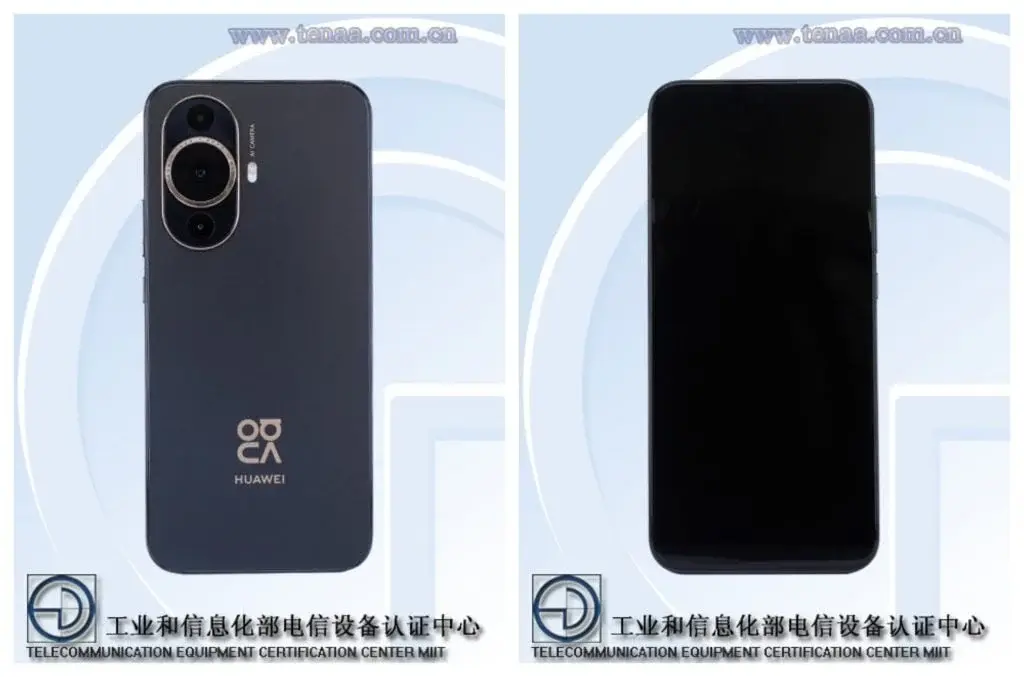
    The live pictures of the handset on TENAA confirm that it will look identical to the Nova 12 Lite. Even the specs scream the same, and 3C certification reveals that it will also support 66W wired charging.

    Specifications and Features

    The 4G-only smartphone will be powered by a chipset featuring an octa-core 2.4GHz CPU. For reference, the Nova 12 Lite houses a Qualcomm Snapdragon 778G SoC with the same CPU clock speed. So the phone could have the same chip.

    Further, the device will sport a 6.7-inch centered punch-hole OLED display with a resolution of 2412 × 1084 pixels. It should offer a 120Hz refresh rate and a 1440Hz PWM dimming.

    The handset will come with a 50MP primary camera paired with an 8MP ultrawide unit. On the front, it will feature a 60MP selfie camera.

    Release and Conclusion

    Last but not least, the phone will boot HarmonyOS and will be backed by a 4,500mAh battery.

    We have no info on the product’s launch date. However, it should go official soon.

  • New Huawei Nova 12 Series Smartphone Spotted on MIIT Certification

    New Huawei Nova 12 Series Smartphone Spotted on MIIT Certification

    A new Huawei phone, with the model number FIN-AL60a, has recently appeared on the Chinese MIIT certification platform. This new device might potentially be part of Huawei’s Nova 12 smartphone series, judging by its model number.

    Huawei’s Expansion Plans

    While Huawei is gearing up for the launch of the anticipated P70 series, there are hints that the company might also be developing additional mid-range offerings, such as this new device from the Nova series.

    Insights from MIIT Listing

    The MIIT listing for the FIN-AL60a model discloses that the smartphone will support only 4G networks. Notably, the model number bears a striking resemblance to the FIN-AL60 associated with the Huawei Nova 12 Lite, hinting at a possible connection to the Nova 12 lineup.

    Speculations and Expectations

    Regrettably, detailed information confirming the exact positioning of this device within Huawei’s product portfolio is currently unavailable. It is plausible that this new phone could serve as a more budget-friendly alternative within the Nova 12 series, which presently features the Nova 12 Lite as its most economical offering.

    New Huawei Nova 12 Series Smartphone Spotted on MIIT Certification

    Huawei Nova 12 Lite Specifications

    Here’s a rundown of the key specifications of the Huawei Nova 12 Lite:

    • Display: The device boasts a 6.7-inch FHD+ OLED display with a 120Hz refresh rate and P3 color gamut support, ensuring vibrant visuals and color accuracy.
    • Processor and Storage: Equipped with a Snapdragon 778G 4G processor, offering 256GB or 512GB storage options, and running on HarmonyOS 4.
    • Camera Setup: The camera system includes a 50MP primary sensor, an 8MP ultrawide lens, a macro camera, and a 60MP front-facing camera capable of 4K video recording and slow-motion capture.
    • Battery and Charging: Powering the device is a 4500mAh battery with 66W fast charging support, enabling a 60% charge in just 15 minutes and a full charge in 31 minutes.

    By aligning with these specifications, Huawei continues to cater to a wide range of consumers with varying needs and budget considerations.