Tag: GDDR6

  • Nintendo Stock Drops More Than Sony’s Amid Memory Shortage

    Nintendo Stock Drops More Than Sony’s Amid Memory Shortage

    Key Takeaways

    1. Nintendo’s stock has dropped 33% since August 2025, partly due to concerns over a memory shortage affecting the Switch 2.
    2. Sony has secured sufficient GDDR6 memory for the PS5, reducing the risk of price increases and allowing for promotional discounts.
    3. Nintendo President Shuntaro Furukawa plans to focus on long-term component procurement, but suppliers are hesitant to offer long-term contracts.
    4. The success of the Switch 2 is crucial for Nintendo, as it needs to attract hesitant Switch owners with strong game titles.
    5. Any price increase for the Switch 2 or PS5 could significantly impact gamers amid ongoing economic challenges.


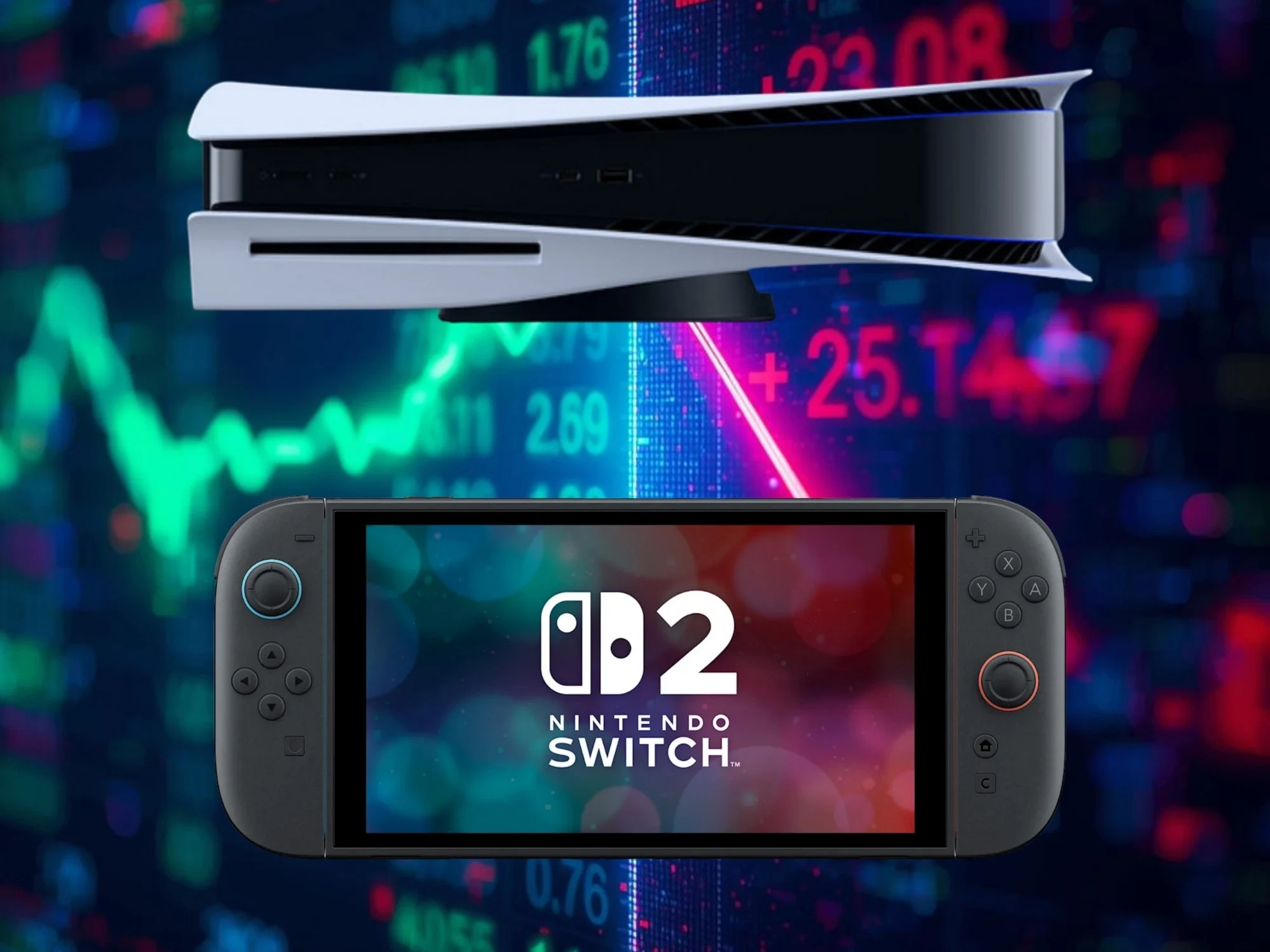
    Japanese gaming journalist Tane Kiyoshi has shared his thoughts on the challenges facing Nintendo’s stock. In an article on Yahoo Japan, he links the recent decline to worries about the ongoing memory shortage. While it appears that PlayStation has managed to stock up on GDDR6 RAM for the PS5, there seems to be more uncertainty regarding the preparations for the Switch 2.

    Stock Performance

    Nintendo’s stock has dropped around 33% since reaching its peak in August 2025. In contrast, even though hardware sales are down, Sony investors have experienced a less severe decline. Kiyoshi suggests that the inflated memory prices are making Nintendo fans more cautious. If the supply of essential components remains unstable, there may be a risk of higher prices for the Switch 2.

    Insights from Industry Sources

    In November, the insider source Moore’s Law Is Dead disclosed that the PS5 manufacturer has secured plenty of GDDR6 memory. This means the console is less likely to face price increases, allowing the company to promote holiday discounts effectively.

    Nintendo President Shuntaro Furukawa recently addressed concerns regarding the financial impact of the crisis. He mentioned that his approach would be to “advance component procurement over the medium to long term.” However, manufacturers of LPDDR5X like Samsung and SK Hynix are hesitant to provide anything more than short-term contracts. Kiyoshi believes that the struggling Nintendo stock is indicative of the challenges the company is currently facing.

    Future Prospects for Nintendo

    The Switch 2 is at a more crucial stage in its lifecycle compared to the PS5. Sony’s console has built a large user base and can better endure a long-term sales dip. Nintendo, on the other hand, is still working to win over hesitant Switch owners, which would be simpler with blockbuster Switch 2 games. While 2026 is expected to feature a rich lineup of titles, neither a new 3D Mario nor a mainline Zelda game has a confirmed launch date.

    As pointed out in the Yahoo Japan article, Nintendo’s success largely hinges on its gaming products. In contrast, PlayStation’s performance significantly affects Sony’s stock, but the company has a wider range of investments. Regardless, any price hike for the PS5 or Switch 2 would heavily impact gamers who are already dealing with a tough economy.

    Source:
    Link
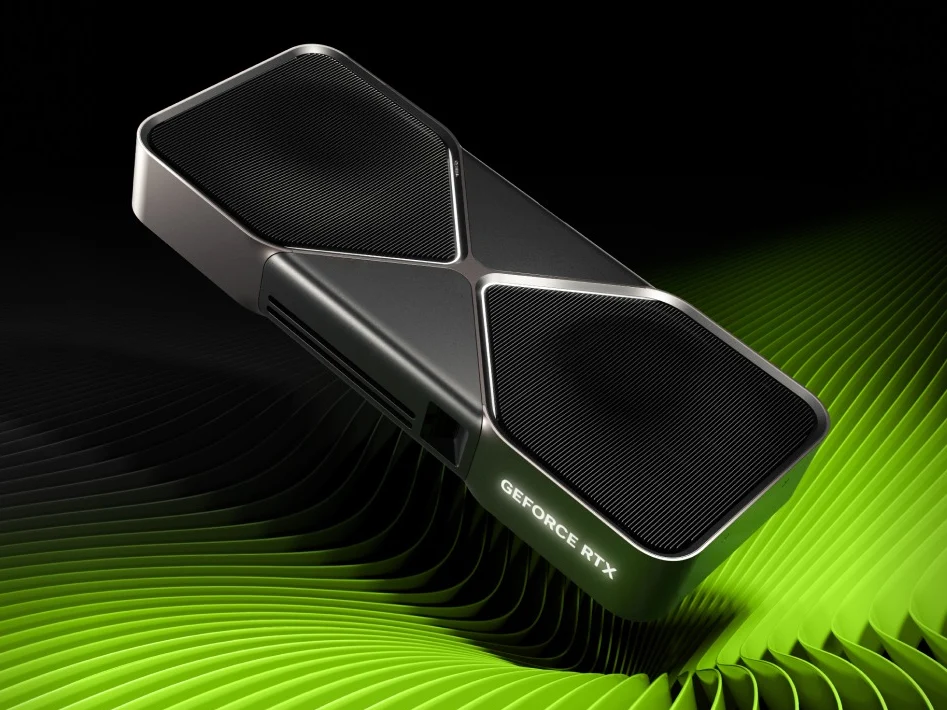


  • RTX 5050 GPU Set to Compete with RX 9060 XT in Key Feature

    RTX 5050 GPU Set to Compete with RX 9060 XT in Key Feature

    Key Takeaways

    1. The Nvidia RTX 5050 GPU is expected to feature a GB207-300 chip with 2,560 CUDA cores and 8 GB of VRAM, with a potential release in July 2025.
    2. There is conflicting information about the VRAM, but it is now confirmed to have 8 GB of GDDR6 VRAM operating at 20 Gbps.
    3. The RTX 5050 will be the only model in the RTX 50 series to use GDDR6, while higher models will use GDDR7, potentially limiting its performance.
    4. The RTX 5050 is expected to be an entry-level GPU priced under $250, possibly around $200, justifying the choice of GDDR6.
    5. Performance expectations for the RTX 5050 are uncertain, with speculation that it may not significantly outperform the previous-gen RTX 4060.


    We shared some news back in March about Nvidia working on an RTX 5050 desktop GPU that comes with a GB207-300 chip. This chip is said to have 2,560 CUDA cores and 8 GB of VRAM. Initially, there were rumors that the card would be released in April, but when that didn’t happen, sources from AIBs suggested a launch in July 2025 for the RTX 5050.

    Conflicting VRAM Information

    While there has been a lot of talk about the specs and release date of the RTX 5050, the details regarding the 8 GB VRAM have been inconsistent. For example, kopite7kimi stated back in March that the RTX 5050 would have 8 GB of GDDR6 VRAM. However, a recent leak mentioned that it would actually be using GDDR7 modules like the rest of the RTX 50 series.

    Now, a dependable leaker, MEGAsizeGPU, has revealed that the RTX 5050 will indeed feature 8 GB of GDDR6 VRAM operating at 20 Gbps. This puts the RTX 5050 on par with the RX 9060 XT, which also utilizes 20 Gbps GDDR6 VRAM modules.

    Performance Insights

    If the RTX 5050 does come with GDDR6, it will be the only model in the RTX 50 family to use GDDR6. The rest, from the RTX 5060 to the RTX 5090, will have GDDR7. This difference is likely to limit the bandwidth and overall performance of the card.

    Even so, the use of GDDR6 isn’t particularly surprising. The RTX 5050 is expected to be an entry-level GPU, likely priced under $250 and possibly as low as $200. Thus, it makes sense for Nvidia to opt for the more affordable GDDR6 instead of the pricier GDDR7.

    Uncertain Performance Expectations

    At this stage, we can’t make any definite claims about performance. In previous discussions, we suggested that with a CUDA core count similar to the RTX 4050 mobile GPU, but a 15 W higher TDP and a 33.3% wider bus, a significant performance increase might be possible. However, it’s likely that the final performance won’t be too impressive, as the previous-gen RTX 4060 may still outperform it.

    Source:
    Link

  • Radeon 9060 XT Geekbench Results Show Major Performance Boost

    Radeon 9060 XT Geekbench Results Show Major Performance Boost

    Key Takeaways

    1. AMD announced the Radeon RX 9060 XT on May 21, with 8 GB and 16 GB versions set for release on June 5.
    2. The 16 GB model achieved notable benchmark scores: 109,315 in OpenCL and 124,251 in Vulkan, surpassing the RX 7600 XT by over 25%.
    3. The Nvidia RTX 5060 Ti outperformed the RX 9060 XT in benchmarks, scoring 138,869 in OpenCL and 133,861 in Vulkan.
    4. AMD claims the RX 9060 XT can outperform the RTX 5060 Ti by an average of 6% in 1440p gaming across 40 titles.
    5. The RX 9060 XT is competitively priced at $299 for the 8 GB version and $349 for the 16 GB version.


    AMD officially announced the Radeon RX 9060 XT on May 21, presenting two options: an 8 GB version and a 16 GB version. The card is set to be released on June 5, and the first synthetic benchmark results for the 16 GB model have emerged, showing a notable improvement in performance compared to the previous generation. This new graphics card is in competition with the Nvidia RTX 5060 Ti, which also comes in both 8 GB and 16 GB VRAM options.

    Performance Highlights

    The information comes from Geekbench, a popular benchmarking site, which reveals the OpenCL and Vulkan scores for the Radeon RX 9060 XT 16 GB. The GPU achieved a score of 109,315 in OpenCL and 124,251 in Vulkan. It was tested using a Gigabyte X870E Aorus Master motherboard paired with a Ryzen 7 9800X3D CPU. As the RX 9060 XT is intended to be a successor to the Radeon RX 7600 XT 16 GB, it surpasses the older model by over 25%.

    Comparing with Nvidia

    In contrast, the RTX 5060 Ti outperformed the RX 9060 XT in the same benchmarks, achieving 138,869 in OpenCL and 133,861 in Vulkan tests (according to Videocardz). It’s important to mention that synthetic benchmarks from Geekbench don’t always reflect real-world gaming performance, so the RX 9060 XT’s lower scores compared to the RTX 5060 Ti, and even the Radeon RX 7700 XT, don’t give a complete view of their capabilities.

    AMD asserts that the RX 9060 XT can beat the RTX 5060 Ti by an average of 6% at 1440p across 40 different games. Unlike the GDDR7 memory used in Nvidia’s variant, the RX 9060 XT is equipped with GDDR6 memory. Regarding pricing, the Radeon RX 9060 XT is competitively priced compared to the RTX 5060 Ti, with the 8 GB version starting at $299 and the 16 GB version priced at $349.

    Source:
    Link

  • Unreleased Nvidia RTX Titan Ada Prototype Leaked Online

    Unreleased Nvidia RTX Titan Ada Prototype Leaked Online

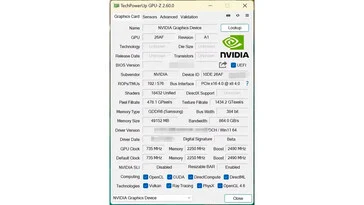
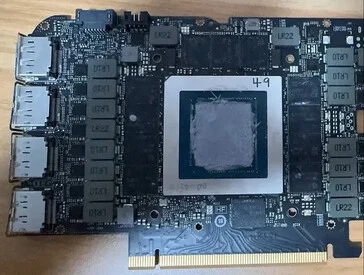
    Fresh information about a yet-to-be-released Nvidia RTX Titan Ada graphics card has emerged, thanks to a GPU-Z screenshot and some PCB images shared on the Nvidia subreddit. This supposed prototype boasts a fully unlocked AD102 GPU, accompanied by 48 GB of GDDR6 memory, indicating a position above the RTX 4090 in NVIDIA’s product range.

    Specifications Revealed

    According to the GPU-Z data, the RTX Titan Ada is loaded with 18,432 CUDA cores, 192 ROPs, and 576 TMUs. The card achieves a pixel fillrate of approximately 478.1 GPixel/s, while the texture fillrate is around 1,434.2 GTexel/s. The memory configuration consists of standard GDDR6 chips on a 384-bit interface, providing a bandwidth of 864 GB/s.

    Unique Clock Speeds

    Notably, the prototype displays a surprisingly low base clock of 735 MHz, which is lower than other RTX 40 series cards, but it still reaches a boost clock of 2,490 MHz. These unusual clock speeds might be a result of the card being a prototype—especially since it uses GDDR6 rather than the more advanced GDDR6X.

    Performance Comparison

    In terms of sheer performance, the RTX Titan Ada surpasses the RTX 4090 with a higher count of shaders and a larger memory capacity. While the 4090 operates on roughly 89 percent of the AD102 die, this Titan variant utilizes the entire silicon. The 48 GB memory setup is achieved through a clamshell design, employing GDDR6 modules on both sides of the PCB, much like the RTX 3090 and RTX 6000 Ada.

    Possible Reasons for Cancellation

    The potential cancellation of the RTX Titan Ada could stem from its overlap with high-end professional cards like the expensive US$6,800 RTX 6000 Ada. Moreover, AMD has not released any products that directly compete with the RTX 4090, which may have made the development of a more powerful gaming GPU less urgent.

    Source:
    Link


    Image 1
    Image 1