Tag: gamma-ray bursts

  • Billion-Sun Explosion May Reveal New Stellar Object

    Billion-Sun Explosion May Reveal New Stellar Object

    Key Takeaways

    1. A powerful explosion, equivalent to a billion suns, was recently discovered but went unnoticed due to lack of visible light.
    2. The event was detected through radio afterglow using the ASKAP radio telescope, adding mystery to its source.
    3. Two main theories explain the explosion: it could be an orphan gamma-ray burst not aimed at Earth or involve intermediate-mass black holes.
    4. If the intermediate-mass black hole theory is confirmed, it could provide evidence for the existence of these cosmic structures.
    5. Astronomers suspect the galaxy 2dFGRS TGS143Z140 may be the location of this explosive event.


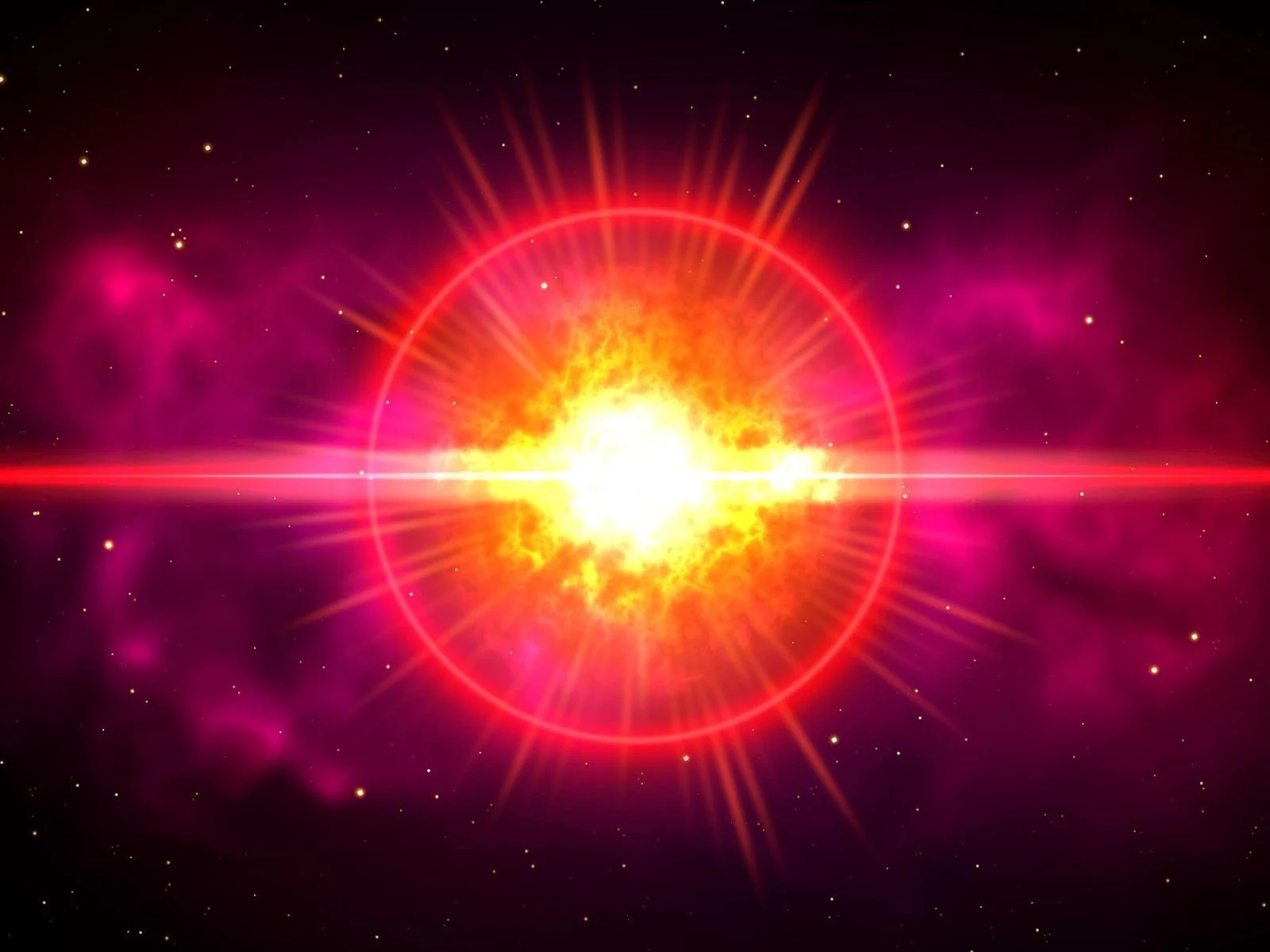
    Although the universe has been a subject of fascination for astronomers for many years, some events still catch them off-guard. A recent investigation has unveiled an explosion that is as powerful as a billion suns, which had gone unnoticed until now.

    Discovery of an Unseen Event

    Typically, gamma-ray bursts are known for their intense flashes of light, which last just a few seconds and can be picked up by many telescopes. In contrast, this particular instance did not reveal any visible light, and the finding was only made possible by detecting a radio afterglow through the ASKAP radio telescope. This adds a layer of mystery not just to the event itself but also to its source.

    Theories Behind the Explosion

    At present, the exact reason behind this explosion remains unclear. However, the astronomers have proposed two main theories in their research. The first theory suggests that it might be an orphan gamma-ray burst, which means it was not aimed at Earth, explaining its initial invisibility. The second theory, which captivates scientists’ attention, involves the possibility of intermediate-mass black holes.

    So, they hypothesize that a star might have been pulled in by one of these black holes, resulting in the tremendous explosion. Should this theory be confirmed through future research, it would mark a significant milestone by potentially proving the existence of these cosmic structures. Additionally, while some questions linger about the event’s origin, astronomers think that the galaxy 2dFGRS TGS143Z140 might be the location where this phenomenon took place.

    arXiv

    Source:
    Link


  • NASA Reveals Events Just Before Neutron Star Collisions

    NASA Reveals Events Just Before Neutron Star Collisions

    Key Takeaways

    1. Neutron star mergers create powerful gamma-ray bursts, among the most intense explosions in the universe.
    2. The magnetic fields generated by these stars are extremely strong, up to 10 trillion times more potent than typical refrigerator magnets.
    3. NASA’s Pleiades supercomputer was used for over 100 simulations to study the effects of magnetic fields during neutron star mergers.
    4. Significant interactions among magnetic field lines occur in the last 7.7 milliseconds before a merger, converting particles into radiation and vice versa.
    5. While high-energy gamma-rays cannot escape due to strong magnetic fields, lower-energy gamma-rays can escape and may lead to X-ray emissions, providing insights into neutron star mergers.


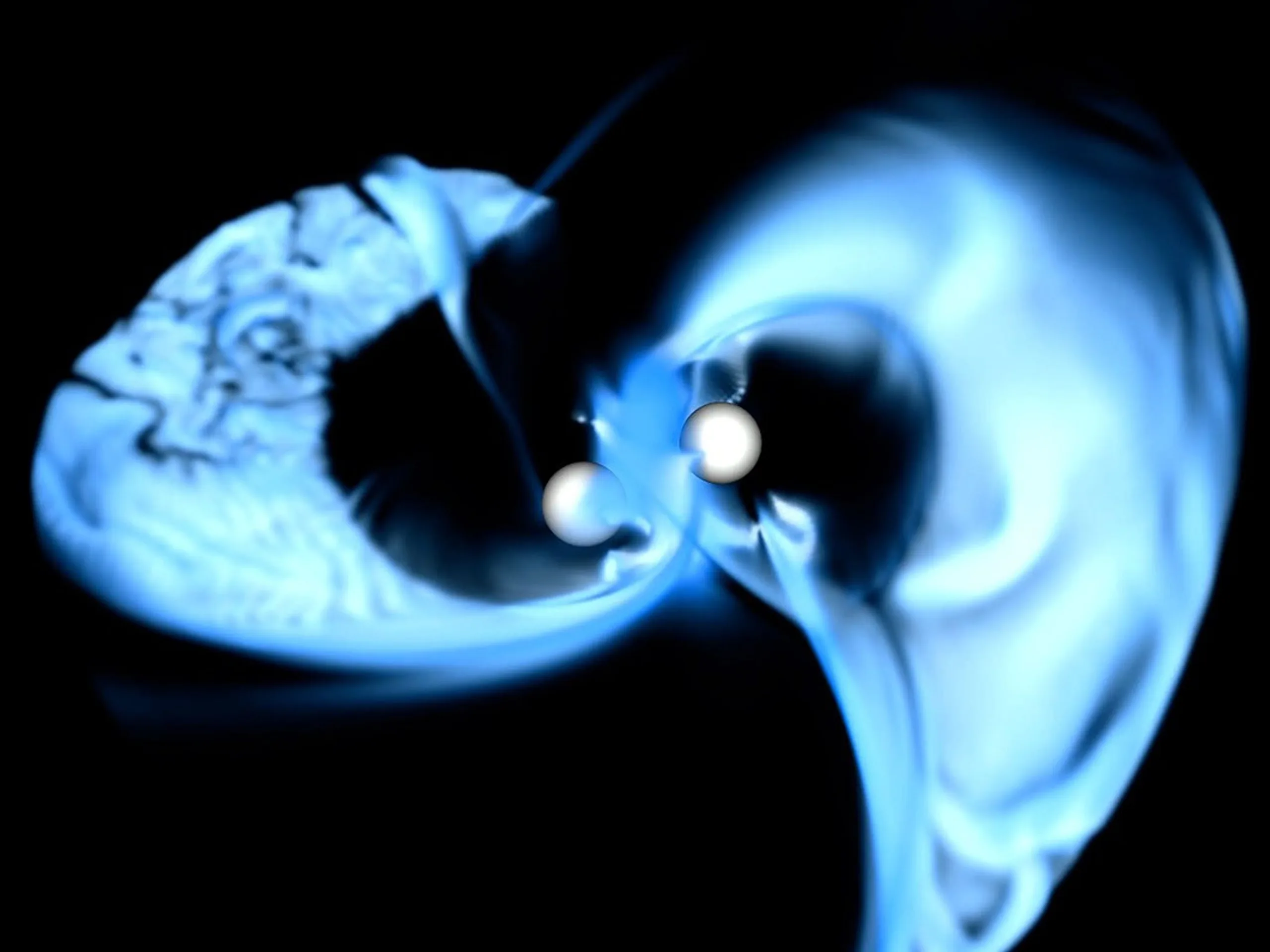
    When a neutron star merger takes place, it creates one of the most intense explosions in the universe — gamma-ray bursts. Prior to these mergers, the stars revolve dozens of times, generating a magnetic field. This magnetic field is among the most powerful known, being up to 10 trillion times more potent than a typical refrigerator magnet. The strength of these magnetic fields allows them to convert gamma-rays directly into electrons and positrons, accelerating them to extremely high energies.

    Complex Simulations

    Scientists utilized NASA’s Pleiades supercomputer to conduct over 100 simulations to examine how various magnetic field setups influenced the emission of electromagnetic waves from a pair of orbiting neutron stars, each with a mass of 1.4 solar masses. Most simulations concentrated on the last 7.7 milliseconds leading up to the merger. The results indicated a significant interaction among the magnetic field lines during this brief period, where the lines connect, break apart, and reconnect. As these fields interact, particles are turned into radiation and the other way around.

    Insights on Gamma-Rays

    The simulations also identified areas where the highest-energy gamma-rays are generated. These gamma-rays cannot escape the merging system due to their rapid conversion into particles in the presence of strong magnetic fields. However, lower-energy gamma-rays can escape and may produce X-rays later. Future observatories could focus on detecting these lower-energy emissions, offering scientists a glimpse of a neutron star merger just before it occurs.

    Source:
    Link


  • NASA’s StarBurst Mission Successfully Completes Key Tests

    NASA’s StarBurst Mission Successfully Completes Key Tests

    Key Takeaways

    1. StarBurst is a NASA mission aiming to find short gamma-ray bursts from neutron star mergers, which create heavy metals like gold and platinum.
    2. The mission will detect gamma-rays simultaneously with gravitational waves from neutron star mergers.
    3. StarBurst has successfully completed thermal and vibration tests to prepare for space conditions.
    4. The next step is instrument calibration, with a planned launch in 2027 to align with observations from the Laser-Interferometer Gravitational Wave Observatory.
    5. StarBurst could help discover up to 10 neutron star merger events each year, significantly increasing observations of these cosmic phenomena.


    StarBurst is a mission led by NASA that aims to find the first signs of short gamma-ray bursts created by neutron star mergers. These bursts are some of the most intense explosions in the cosmos. The heavy metals we see in the universe, like gold and platinum, are primarily produced from these neutron star collisions.

    Groundbreaking Detection

    On Earth, observatories can already pick up the gravitational waves resulting from neutron star mergers. The StarBurst mission is designed to detect gamma-rays at the same time as these gravitational waves.

    Testing Success

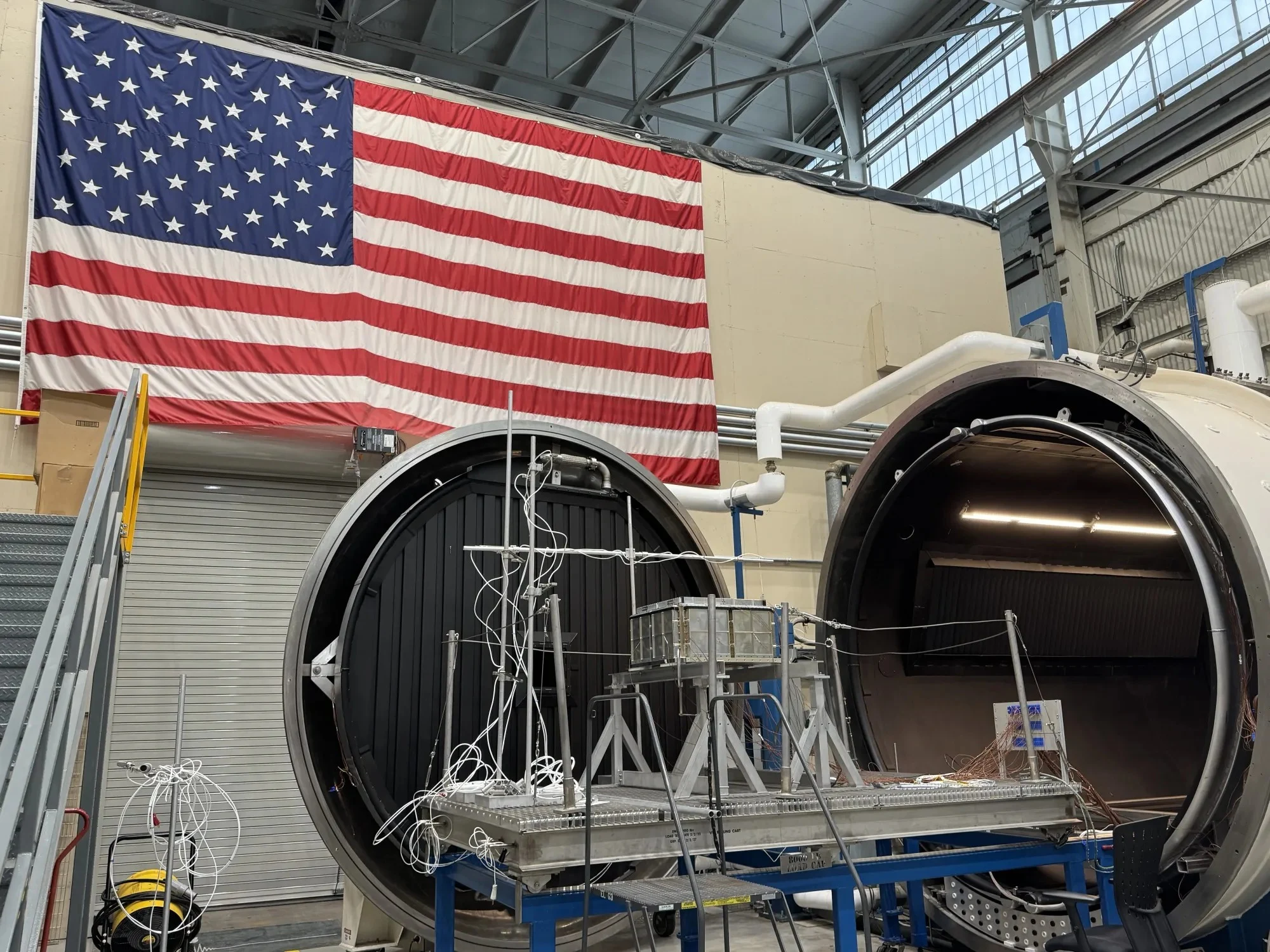
    StarBurst has successfully completed its thermal and vibration tests at NASA Marshall. The thermal test was conducted in a vacuum chamber to replicate the extreme temperatures the device will face in space. Vibration testing was done to mimic the shaking and turbulence StarBurst will experience during its launch.

    Moving Forward

    The next step for StarBurst is instrument calibration, moving it closer to being ready for launch. NASA plans to launch StarBurst as soon as 2027, coinciding with the next series of observations from the Laser-Interferometer Gravitational Wave Observatory. This timing is meant to increase the likelihood of catching gamma-ray bursts at the same time as gravitational waves.

    Anticipating Discoveries

    So far, astronomers have only seen one neutron star merger where both a gamma-ray burst and gravitational waves were detected together. With the help of StarBurst, scientists believe they could discover up to 10 such events each year.

    Source:
    Link