
Tag: Game Compatibility

  • Steam hardware controversy: Valve hardware price and purpose divide players

    Steam hardware controversy: Valve hardware price and purpose divide players

    Key Takeaway

    – The debate centers on price versus value: can a Steam Machine justify a high price with modest performance, or is a traditional PC/console still a better deal?
    – Core appeal lies in a living-room, SteamOS experience with easy access to a user’s Steam library and minimal setup, rather than raw power.
    – Game compatibility and anti-cheat issues on Linux (via Proton) remain a major risk for mainstream multiplayer titles, affecting broad appeal.
    – Audience split: it may mainly attract existing Steam users rather than drawing new PC or console players.
    – Overall success hinges on achieving the right balance of price and broad game compatibility to satisfy both PC enthusiasts and living-room users.


    A heated debate about the Steam Machine has erupted on Reddit. In a thread titled “RANT: Steam gamers hate Valve hardware,” more than 170 comments were posted within five hours. The community is split into two camps. Thread creator u/Ayzuki criticizes what they see as many PC gamers reflexively dismissing Valve hardware. Instead of discussing the actual concept, the debate often comes down to whether a self-built gaming PC would be more powerful or cheaper.

    Different Perspectives emerge

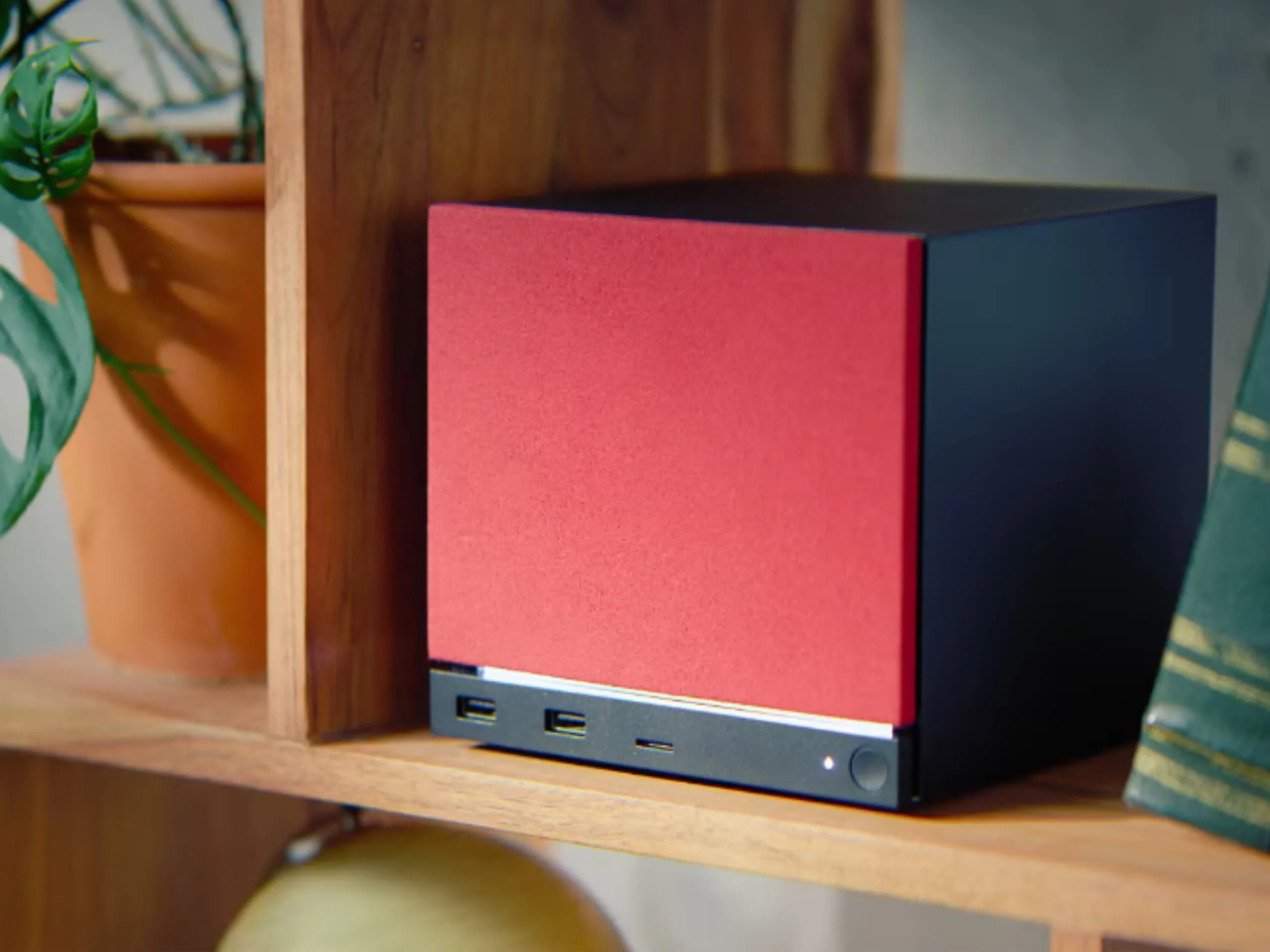
    For many users, the Steam Machine is interesting less because of its price or raw performance and more because of its concept: a living-room PC with SteamOS and direct access to the user’s Steam library – without driver hassle or hours of optimization. Some would apparently be willing to pay a little more for that experience or accept some performance trade-offs. In this context, many also point to the Steam Deck, which is not the most powerful handheld compared with rivals such as the Asus ROG Ally X or Lenovo Legion Go but remains one of the most popular devices of its kind thanks to its ease of use and Steam integration.

    Price as a defining issue

    For the other side, however, the Steam Machine will ultimately stand or fall with its price. According to current rumors, the console could cost more than $1,000. If Valve actually charges a high three-digit or even four-digit price, the overall package would have to offer more than just a compact PC with SteamOS and 4K support. That is where many objections come in: users familiar with hardware could potentially build a more powerful living-room PC for similar money – or simply stick with a traditional console.

    Game compatibility concerns

    There is also the question of game compatibility. Valve has made major progress with Proton and the Steam Deck, but some popular multiplayer titles still have problems running on Linux, mainly because of anti-cheat systems. Fortnite, Apex Legends and Valorant are among the affected games. Some users therefore doubt that the Steam Machine will be attractive enough for mainstream gamers if many major online games do not run or only work with limitations.

    Audience and purpose

    The target audience is also controversial. Supporters see the Steam Machine as a simple bridge between console and PC. Others, however, question who exactly is supposed to buy the device: PC enthusiasts tend to already have more powerful hardware, while console gamers are often firmly tied into the PlayStation, Xbox or Nintendo ecosystems. In the end, the Steam Machine could primarily appeal to existing Steam fans – in other words, the very group that already uses gaming PCs or handhelds anyway.

    Conclusion and outlook

    Overall, the discussion shows less outright dislike of Valve hardware than a fundamental divide within the Steam community. While one side judges the Steam Machine by classic PC standards such as price and performance, the other primarily sees it as a convenient living-room solution for an existing Steam library. Whether Valve can reconcile both expectations will likely depend above all on price and game compatibility.


    Sources
  • Crimson Desert Performance: Intel Arc GPUs at Ultra Settings vs Medium with XeSS 3.0

    Crimson Desert Performance: Intel Arc GPUs at Ultra Settings vs Medium with XeSS 3.0

    Key Takeaway

    1. Crimson Desert initially experienced a hardware block on Intel Arc GPUs, but recent updates and patches have improved compatibility, allowing playable performance with certain workarounds.
    2. Running the game at maximum settings (Ultra or Cinematic) eliminates visual artifacts on Intel Arc Pro B70, despite issues at medium or high presets.
    3. XeSS 3.0 upscale is currently unusable due to image degradation, while AMD’s FSR functions effectively as a temporary solution.
    4. Achieving a 60 FPS experience at 4K requires aggressive FSR scaling; at native 1440p, the GPU maintains near-60 FPS with minimal micro-stuttering.
    5. Intel’s initial game support issues mirror past issues seen with other vendors, highlighting ongoing challenges in game and driver optimization across manufacturers.

    Crimson Desert’s Compatibility Challenges for Intel GPU Users

    Recently launched Crimson Desert faced a big issue for owners of Intel GPUs. The game was completely blocked from running on Intel Arc systems at first, with developer Pearl Abyss advising people to just refund it. This created a mess between the companies, with Intel claiming they had offered support for years but still couldn’t get the game working smoothly. The main issue was the outright hardware block which meant many Intel GPU users couldn’t even start the game.

    Recent Updates and Community Reactions

    After lots of complaints from the community, both driver updates and game patches were released, which helped bring Intel GPUs back into play. The situation improved slightly, but not without quirks. YouTube tech reviewer Tech Guy Beau recently tested the game using a new Intel Arc Pro B70 workstation GPU combined with an AMD Ryzen 9 7945HX3D processor and 64 GB of RAM. His tests showed that while the game is playable, some unusual workarounds must be used for best performance.

    Performance and Visual Issues

    Interestingly, Crimson Desert running on the Arc B70 was kinda odd. When set to Medium or High graphics quality, the game experienced big issues like shadow flickering and visual artifacts. But, when the settings were pushed to Ultra or Cinematic, these problems vanished. Surprising enough, forcing the graphics to the maximum actually fixed the texture problems completely, leading to a clearer and artifact-free look. At 1440p resolution with these high settings, the GPU performed well with smooth visuals and no noticeable bugs.

    Upscaling and Frame Rate Details

    Despite the recent updates, Intel’s new XeSS 3.0 upscaling tech isn’t usable yet. Turning it on just makes the image more pixelated and worse. AMD’s FSR, on the other hand, is working fine and acts as a quick fix workaround. When measuring fps, at 1440p with cinematic settings and FSR in quality mode, the game runs at nearly 60 fps most of the time, with lows around 40 fps to help reduce micro-stuttering in fights. At 4K full resolution with high settings, fps drops to a steady 30, similar to what modern consoles offer. To hit 60 fps at 4K, aggressive FSR upscaling to performance mode is needed.

    Frustrations and Comparison with Other Games

    People who bought the game expecting to play it and then found they could not because of the lockout were understandably upset. When a recent update finally fixed some issues and re-enabled compatibility, new problems appeared, like textures only appearing correctly at maximum settings. A similar story happened with Bethesda’s Starfield a few years back. At launch, Starfield didn’t run well on Intel Arc GPUs, suffering from crashes and missing textures. Unlike Crimson Desert, which was locked out deliberately, Starfield’s issues were mainly due to Intel’s inexperienced drivers which needed weeks of urgent patches from Intel to improve—and even then, some problems persisted.

    Optimization Woes Across Brands

    While Intel’s GPU struggles often take the spotlight, it’s important to remember that other brands like AMD and Nvidia also face compatibility issues with many games. Over the years, similar problems have shown up, revealing that even the best hardware sometimes requires fine-tuning and driver updates to reach full compatibility. So, it’s not just an Intel problem, but a common challenge in the gaming industry.


    Sources