
Key Takeaways
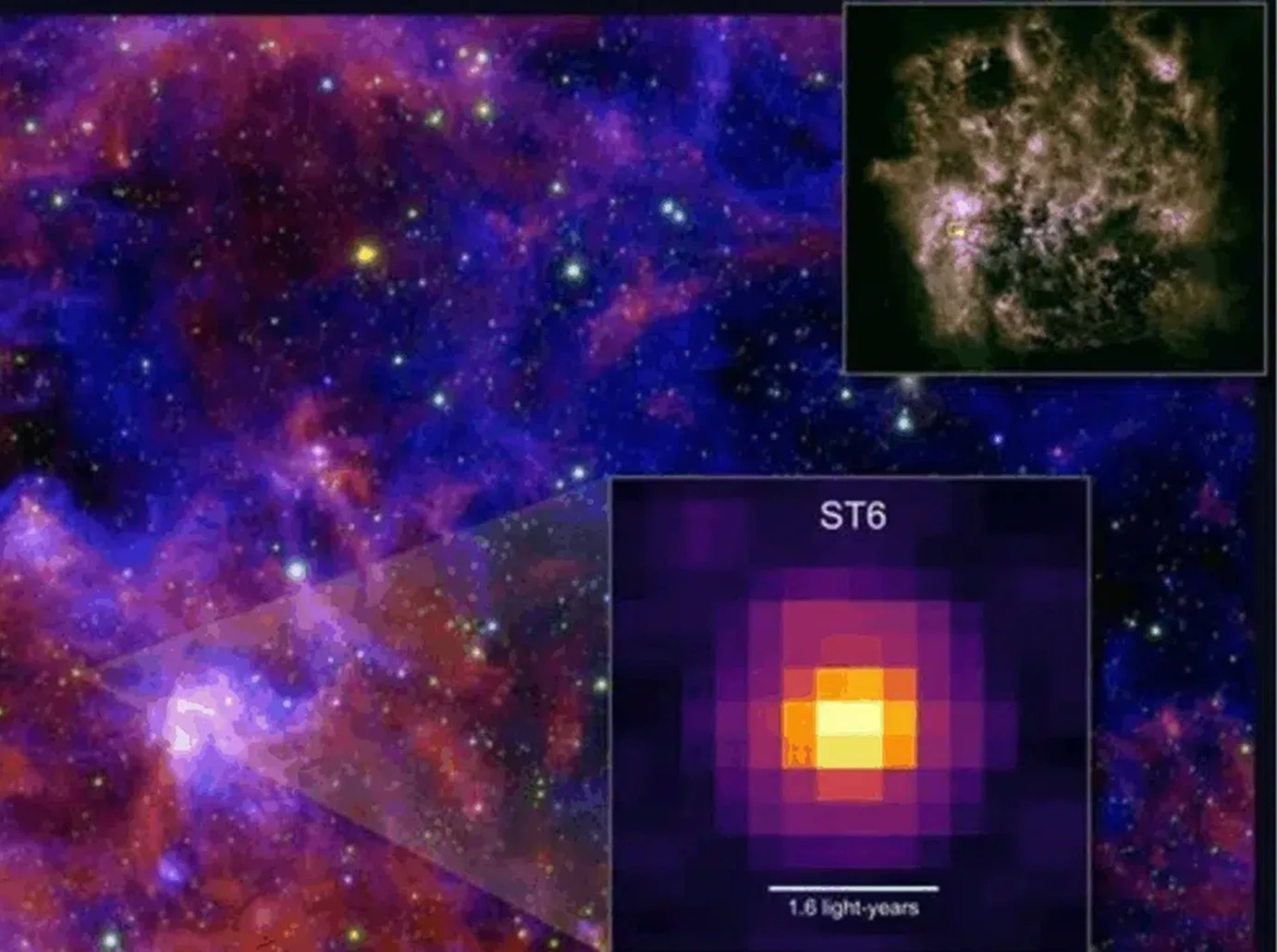
1. NASA’s James Webb Space Telescope (JWST) detected frozen organic molecules around a young star in the Large Magellanic Cloud, 163,000 light-years away.
2. The discovery was made while studying ST6, a protostar, using the JWST’s Mid-Infrared Instrument (MIRI).
3. This marks the first time the JWST has identified essential life elements outside the Milky Way galaxy.
4. The findings provide insights into the chemical complexities of star formation regions in different galaxies.
5. Preliminary analyses suggest the presence of glycolaldehyde, a potential precursor to RNA-related sugars.
A recent discovery in space has completely amazed astronomers. NASA’s James Webb Space Telescope (JWST) has detected frozen organic molecules in the most unexpected place: surrounding a young star in a far-off galaxy.
Discovery of Organic Molecules
The scientists were exploring ST6, a protostar (a star in its very early formation stage), when they stumbled upon these carbon-based compounds. This ‘young’ star is located in the Large Magellanic Cloud (LMC), a dwarf galaxy situated 163,000 light-years from our planet.
Research and Techniques Used
The study was led by Marta Sewilo from the University of Maryland. Using the JWST’s Mid-Infrared Instrument (MIRI), the team uncovered complex organic molecules (COMs, or carbon-bearing molecules containing more than six atoms) within interstellar ice. These findings were close to the Tarantula Nebula, which is known for being a prolific factory for star formation.
Importance of the Findings
The discovery of COMs marks a significant achievement for the JWST. This is the first occasion the space telescope has identified the essential elements for life outside our Milky Way galaxy, as previous findings were restricted to within our galaxy.
The carbon-based compounds present an opportunity to expand our knowledge about the chemical intricacies of areas where stars are formed. Researchers can also examine how molecular chemistry evolves under varying conditions in different galaxies. Early analyses have even hinted at the existence of glycolaldehyde, which could be a precursor to ribose, a sugar that is vital for RNA.
Source:
Link