
Tag: Debian 13

  • DietPi 9.17: Ultralight Debian 13 Linux for SBCs Now Available

    DietPi 9.17: Ultralight Debian 13 Linux for SBCs Now Available

    Key Takeaways

    1. DietPi is a Debian-based distribution focused on single-board computers (SBCs) and operates on over 135,000 machines worldwide.
    2. It supports a wide range of SBCs, including Raspberry Pi, PINE64, NanoPi, and Asus Tinker Board.
    3. The latest version, 9.17, is based on Debian 13 and introduces features like quicker backups and early access to the Roon Server.
    4. Users can find a complete list of supported hardware and download options, including BIOS/CSM and UEFI images.
    5. Additional improvements in this update resolve SPI storage flashing problems and enhance overall performance.


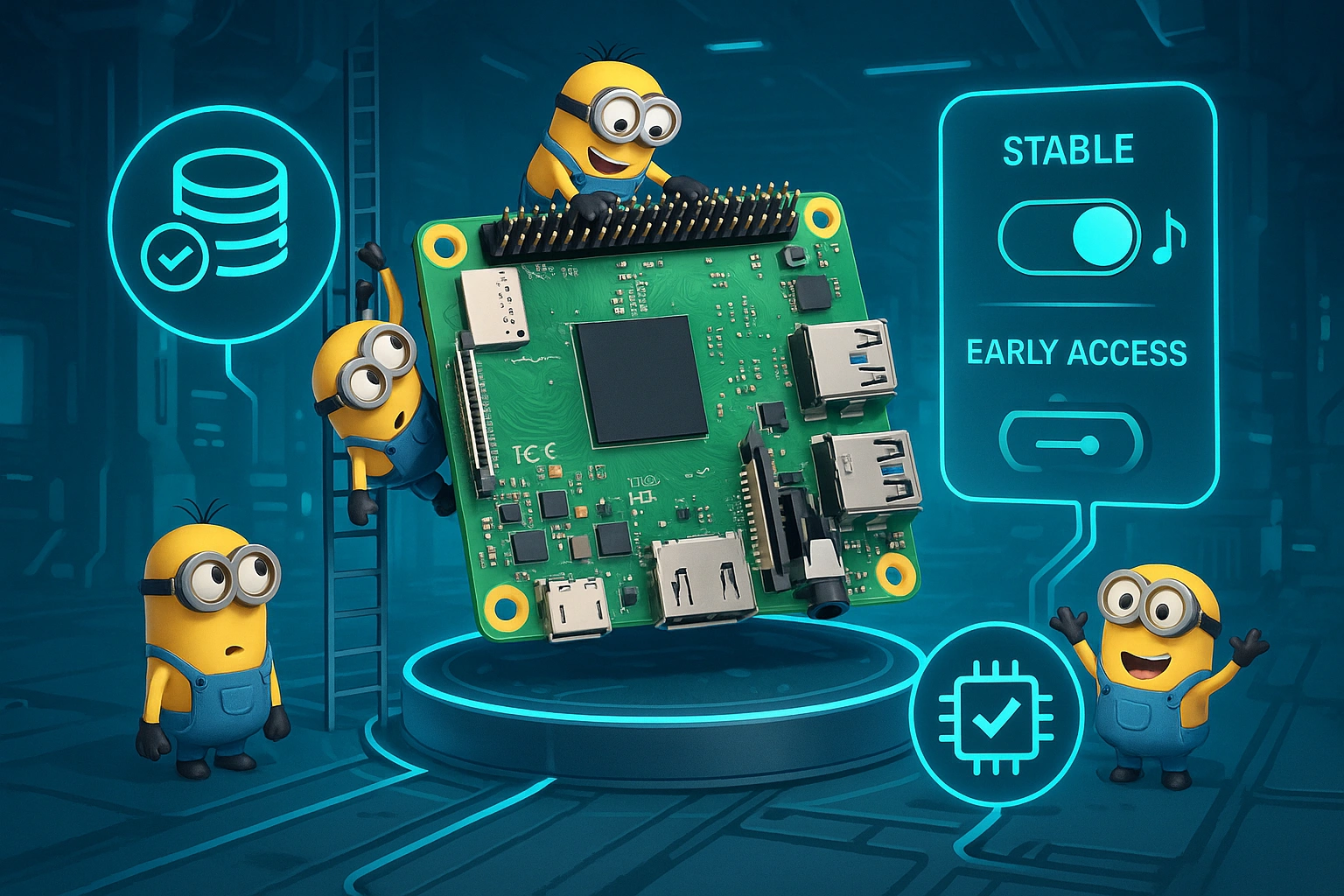
    Introduced more than ten years ago, DietPi is a Debian-based distribution that currently operates on over 135,000 machines across the globe. While it caters to PCs and virtual environments, its primary focus is on single-board computers (SBCs). The range of supported devices is extensive and features both well-known and lesser-known SBC families, including Raspberry Pi, PINE64, NanoPi, and the Asus Tinker Board. Notably, the Tinker Edge T, equipped with GC7000 Lite graphics, a quad-core processor clocked at 1.5 GHz, and memory/storage options of 1/8 GB, is now available for $87.79 on Amazon. The most recent update is derived from Debian 13 and is labeled as version 9.17.

    New Features in the Update

    As stated in the official release notes (a link is provided at the end of this article), this latest version “offers quicker and more disk space-efficient DietPi backups, a toggle for early access to the Roon Server, resolutions for SPI storage flashing problems, and additional improvements.” Here are some key points:

    Supported Hardware and Downloads

    You can view the complete list of compatible hardware devices on this page. The downloads section also features BIOS/CSM and UEFI native images, in addition to various virtual machine images, such as those for Parallels, Hyper-V, and VirtualBox, among others.

    Source:
    Link


  • Debian 13 Trixie OS Adds Official 64-bit RISC-V Support

    Debian 13 Trixie OS Adds Official 64-bit RISC-V Support

    Key Takeaways

    1. Debian 13, named Trixie, will officially support 64-bit RISC-V architecture starting August 9, 2025.
    2. Trixie aligns with other Linux distributions in supporting the open standard RISC-V architecture, specifically for 64-bit, little-endian processors.
    3. RISC-V was created in 2010 and is managed by RISC-V International, promoting it as a free alternative to proprietary architectures like ARM, AMD, and Intel.
    4. Trixie’s main focus is on stability, security, and transitioning from 32-bit to 64-bit timekeeping to address future clock overflow issues.
    5. Users interested in Trixie can purchase RISC-V computers online and find additional resources in the Debian release notes and wiki.


    Debian 13 is set to debut with its official 64-bit RISC-V compatibility on August 9, 2025.

    Trixie and Its Support

    Known by the name Trixie, this operating system aligns itself with various other Linux distributions such as Fedora, FreeBSD, OpenBSD, openSUSE, and Ubuntu, in its official support for the RISC-V architecture, which is an open standard. It’s important to note that Trixie exclusively supports 64-bit, little-endian RISC-V processors.

    Background of RISC-V

    The RISC-V architecture was created in 2010 by researchers at the University of California, Berkeley. Since 2015, it has been managed by RISC-V International, promoting it as a free and open architecture standard. This is in contrast to other architectures like those from ARM, AMD, and Intel, which require licensing fees. Debian itself was first introduced in 1993 and is one of the pioneering free Linux distributions, serving as a foundation for many other distributions.

    Stability and Security in Trixie

    The main goal of this distribution is to offer a stable, dependable, and secure operating system. Along with the standard security enhancements, Trixie will transition from 32-bit to 64-bit timekeeping. This change aims to tackle clock overflow issues that are expected to arise in 2038.

    For those interested in trying out the newest Debian OS, a RISC-V computer can be purchased from Amazon. Additionally, readers can find more information about the architecture in a book available on Amazon.

    Emilio Pozuelo Monfort has shared insights on the Debian mailing list, and further information can be found in the Debian 13 release notes and on the Debian wiki.

    Source:
    Link