Tag: Counter-Strike 2

  • Steam Player Count Hits 41 Million with Battlefield 6 Boost

    Steam Player Count Hits 41 Million with Battlefield 6 Boost

    Key Takeaways

    1. Steam reached over 41 million concurrent players, driven by popular game releases like Battlefield 6.
    2. Launched in 2003, Steam has evolved from a platform for Valve’s games to a diverse marketplace for third-party titles and indie developers.
    3. Long-standing games like Counter-Strike 2 and Dota 2 attract millions of daily players, contributing to Steam’s ongoing popularity.
    4. The platform fosters a strong community through discussion forums, Steam Workshop for mods, and a review system for games.
    5. Despite challenges such as criticism over moderation and competition from subscription services, Steam remains dominant in the PC gaming market.


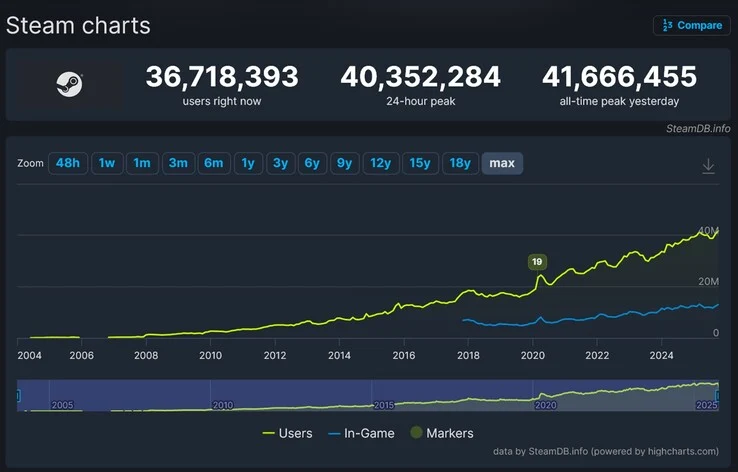
    Despite the rivalry from platforms like the Epic Games Store and various subscription models, Steam’s grip on the PC gaming market remains unshakeable. On Sunday, October 12th, Valve’s gaming platform achieved another milestone, reaching a peak of over 41 million concurrent players. This surge was largely driven by the release of popular titles such as Battlefield 6, which drew in gamers in droves.

    The Evolution of Steam

    Launched in 2003, Steam aimed to simplify the process of downloading, playing, and updating Valve’s games. A few years later, the introduction of third-party titles opened doors for significant growth. By 2008, SteamDB recorded that the platform had already welcomed its first million players. The COVID-19 pandemic further boosted its popularity, pushing the player count past 24 million in 2020, and by 2025, it had reached over 40 million.

    Daily Engagement and New Releases

    Long-standing games like Counter-Strike 2 and Dota 2 collectively attract over 2 million players each day. The recent launch of Battlefield 6 likely played a pivotal role in breaking the latest record, achieving a player count of over 747,000 on its release day. Moreover, the influx of indie developers into the marketplace helps ensure that Steam’s library remains diverse and appealing.

    One key aspect of Steam’s thriving success is its ability to cultivate a strong community. Each game features its own discussion forum where players can exchange strategies or seek help with technical challenges. Some games also include Steam Workshop, making it easier for users to access mods and user-generated content. Its review and rating system, for better or worse, has become a popular method for gauging how new games are received.

    Challenges and Market Dynamics

    Valve does face criticism, particularly regarding the lack of moderation in forums and the presence of fake reviews. Despite this, it has bowed to demands from payment processors to restrict access to games with adult themes. Still, the introduction of subscription services like Xbox Game Pass has not dented Steam’s player numbers. Recent mass cancellations following a price hike of Microsoft’s service are not expected to affect Steam significantly. Many dedicated PC gamers prefer to build their own library of games, even if it means dealing with DRM restrictions.

    Source:
    Link


  • Valve Bans CS2 Transit Map for Racial Slur and Copyright Issues

    Valve Bans CS2 Transit Map for Racial Slur and Copyright Issues

    Key Takeaways

    1. Valve removed the community-created Transit map from Counter-Strike 2’s official matchmaking just two days after its release due to a hidden racial slur in the map’s files.

    2. Transit was developed for the Wingman mode and took over a year to create, alongside three other new maps included in the recent update.

    3. The controversy arose when players discovered an inappropriate entity label and other references related to a Russian Ponzi scheme hidden in the map.

    4. The map had various easter eggs featuring the Stray cat, with an animation activated by collecting posters throughout the game.

    5. Developer Maxim “Rikuda” admitted the offensive content was a forgotten joke and expressed frustration over Valve’s decision to remove the map without contacting him for a fix.


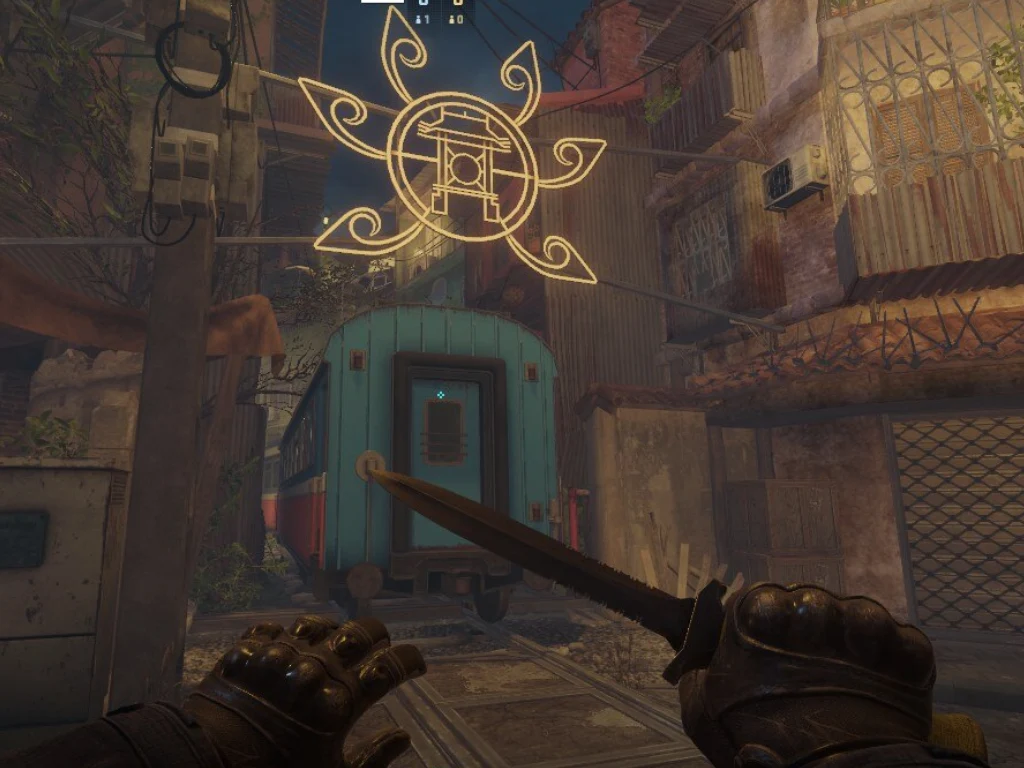
    Valve has recently pulled the community-created Transit map from Counter-Strike 2’s official matchmaking lineup, just two days after its debut on October 2, 2025, without offering any explanation. Players like Ozzny_CS2 on X quickly spotted a racial slur hidden in the map’s files, which sparked the controversy.

    About the Transit Map

    Transit was crafted for the Wingman mode, taking place in a Vietnamese town. It was one of four fresh maps brought in with the recent update, alongside Rooftop for Wingman, Palacio, and Golden for Competitive, Casual, and Deathmatch modes.

    The creators of Transit had spent over a year developing the map before Valve selected it from the Steam Workshop, aiming to enhance player engagement.

    The Controversy Unfolds

    The issue gained momentum when players, employing console commands like “ent_fire,” found an entity labeled “n*a_cat” linked to interactive posters featuring the orange cat from the PlayStation game, Stray.

    This appears to be a forgotten crude joke inserted during the development of Transit, which also violated copyright laws.

    Upon closer inspection, more scattered references hinted at cryptocurrency schemes, including a notorious Russian Ponzi scheme called MMM, inscribed in the skybox as well as mentions of FPIBank. This memecoin seems to be an inside joke among Russian developers.

    Easter Eggs and Reactions

    In addition to this, there were various easter eggs involving posters of the Stray cat throughout the map. Players who collected all these would activate an animation showing the cat racing along a wire in a bucket, accessible through CS2’s console.

    Valve’s update log simply stated: “Removed Transit from official matchmaking,” without providing any extra details. However, players interested in Transit can still find the map available in the Steam Workshop.

    Maxim “Rikuda,” one of the developers of Transit, admitted to the mistake on Discord. He explained that it was “just a joke that I then forgot to rename.” He clarified that it was meant to be a nod to a recurring phonetic meme on YouTube and wasn’t intended to offend.

    While he acknowledged that “it was incredibly stupid,” he felt frustrated that Valve didn’t contact him, mentioning that fixing the issue would’ve taken “five minutes” or even just “a simple two-minute task.”

    He expressed disappointment, realizing that “Valve will probably never add his maps to the game again due to this incident.”

    Source:
    Link


  • CS2 Genesis Uplink Terminal: Mixed Reactions in Gaming Community

    CS2 Genesis Uplink Terminal: Mixed Reactions in Gaming Community

    Key Takeaways

    1. Introduction of Genesis Uplink Terminal: Valve’s new loot box concept allows players to decide after unboxing, avoiding anti-gambling laws in certain countries.

    2. Weekly Free Drops: Players can earn one loot box weekly through the Sealed Genesis Terminal as part of match rewards, featuring a push-your-luck mechanic.

    3. Genesis Collection Mechanics: Players can choose from up to five cosmetics in a 17-piece collection, with prices fluctuating based on real-time global demand.

    4. Dynamic Pricing System: Prices for skins adjust automatically according to demand, and players face a seven-day trade hold before selling on the Steam Community market.

    5. Impact on Skins Economy: The Genesis Terminal utilizes psychological tactics within the multi-billion dollar skins economy, influencing player behavior and spending decisions.


    Valve has a storied past in creating loot boxes, generating billions since the release of Team Fortress 2. Recently, the company introduced a new twist on loot boxes with the “Show Off Update,” launched on September 16, which features the Genesis Uplink Terminal for Counter-Strike 2.

    New Loot Box Concept

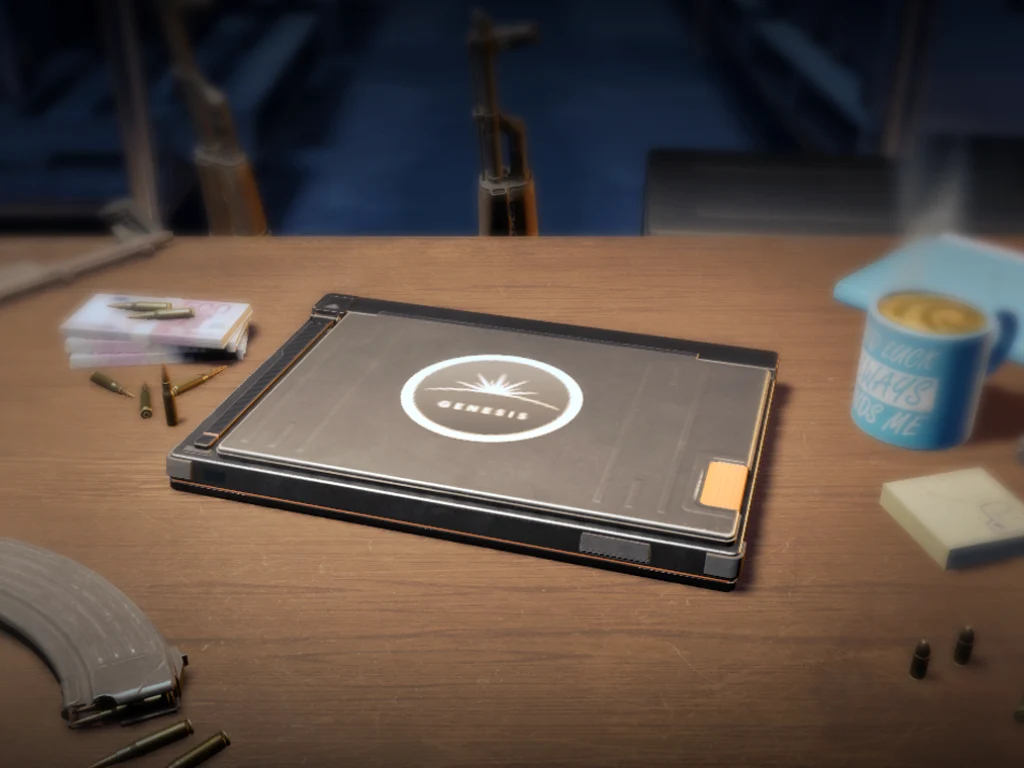
    The Genesis Uplink Terminal serves as a weekly free drop that cleverly avoids anti-gambling laws in countries such as the Netherlands, Belgium, and France. Instead of forcing players into blind purchases, it allows them to make decisions after unboxing, changing the spending dynamic.

    Players can obtain one loot box weekly through the Sealed Genesis Terminal as part of their randomized rewards when they queue for matches. The unique aspect of this new loot box is its push-your-luck mechanics.

    Opening the Genesis Collection

    Upon opening the Genesis Collection, players are presented with up to five cosmetics from a new 17-piece collection, each priced according to Valve’s real-time global demand. Participants can choose to skip a weapon skin to see the next option, but if they reject all items, the Genesis Terminal locks up for another week.

    The Genesis Collection includes 17 community-designed weapon skins, featuring items like the tactical AK-47 | The Oligarch and the sleek M4A4 | Full Throttle, all available in StatTrak variants. Prices start at a low $0.30 for common skins like the SCAR-20 camo and can soar to $1,600 for the most sought-after skins.

    Pricing Adjustments

    On September 18, Valve released a micro-update to clarify the pricing system:

    “Prices are global and adjusted automatically based on demand for each item in this collection.” This means spikes in buying could lead to inflated prices for certain skins, while a drop in interest could make others more affordable. If a player decides to purchase a skin, they need to wait seven days due to a trade hold before they can list it on the Steam Community market. However, recovering their investment isn’t guaranteed, as prices for skins from the Genesis Terminal can fluctuate wildly shortly after their release.

    In addition to the new monetization strategies, Valve rolled out several quality-of-life improvements, such as distinct audio cues for each grenade type, spectator loadouts to check full kits during matches, and a new JavaScript-based system to help map creators develop more interactive maps without needing official updates.

    While some players are concerned about subtick movement, others online jokingly suggested it’s merely a distraction from the real highlight, the Genesis Terminal.

    The Impact of the Skins Economy

    The global skins economy, worth billions, plays a crucial role in Valve’s earnings from the game. While the Genesis Terminal might not qualify as gambling, it certainly employs psychological tactics, making players ponder if the excitement of obtaining a Factory New Covert Rifle is worth the anxiety of a hefty price tag looming over them.

    Source:
    Link


  • Indie Game Peaks in August, Dominates Steam Sales Charts

    Indie Game Peaks in August, Dominates Steam Sales Charts

    Key Takeaways

    1. Peak has sold 3.7 million units, outperforming its closest rival, Mage Arena, by over 200%.
    2. The game’s affordable price of $7.99 contributes to its popularity, but limits its revenue generation.
    3. Peak ranks seventh in total earnings on Steam for August 2025, earning $20.5 million.
    4. The game reached a peak of 170,000 concurrent players on August 17, setting a new record.
    5. Upcoming releases like Borderlands 4 and Hollow Knight: Silksong may affect indie game sales in September.


    When we last talked about Peak, it was already a super popular co-op game. But now, it has become somewhat of a mystery in the indie game world. Recent information shows that Peak has sold more copies than any other paid game on the Steam store, and the gap is quite large.

    Sales Figures

    Data from GameDiscoverCo reveals that in August 2025, Peak sold an impressive 3.7 million units, leading over its closest rival, Mage Arena, by 2.5 million units. To put it simply, it has done better than Mage Arena by more than 200%.

    Pricing and Accessibility

    A big part of Peak’s success comes from its affordable price of $7.99 and its overall accessibility. The game requires only basic system requirements, like an Nvidia GeForce GTX 1060 or AMD Radeon RX 6600 XT.

    However, this low price means that Peak doesn’t generate as much revenue as some other games. It ranks seventh in total earnings, bringing in $20.5 million for the month, which is behind other top-earning games on Steam for August 2025. The highest earners are mostly free-to-play games, with Counter-Strike 2 making a staggering $154.8 million in first place, followed by PUBG: Battlegrounds at $56.7 million, Battlefield 6 at $52.6 million, Apex Legends at $23.5 million, and Marvel Rivals at $22.5 million, filling out the top five.

    Player Engagement

    The player count stats from SteamDB also support Peak’s remarkable sales in August, showing that the game hit a peak of 170,000 concurrent players on August 17, which set a new record.

    As we look to September, it will be fascinating to see how things unfold, especially with the release of both Borderlands 4 and Hollow Knight: Silksong. These are two much-anticipated titles, yet they cater to very different audiences. It’s thought that Silksong could significantly impact the sales of indie games, especially since it launched with very little notice to other indie developers.

    Source:
    Link


  • YouTuber Creates Shocking Aimbot That Controls Muscles for Pro Play

    YouTuber Creates Shocking Aimbot That Controls Muscles for Pro Play

    Key Takeaways

    1. Basically Homeless showcased a “Neuromuscular Aim Assist” device that enhances aiming precision by stimulating muscles with electrical signals.
    2. The device uses Computer Vision to analyze game footage in real-time and send commands to control muscle contractions and trigger pulls.
    3. The technology is built on a YOLO model trained with Counter-Strike 2 gameplay, utilizing a Raspberry Pi for management.
    4. Despite achieving a response time under 100 ms, the device faced challenges like latency issues and muscle cramps, affecting its reliability.
    5. The creator considers the device a gray area in terms of cheating, emphasizing that it’s his own muscles being used.


    In a video released on August 11, 2025, American YouTuber Basically Homeless displayed his home-made “Neuromuscular Aim Assist” – a device that resembles a stun gun aimed at enhancing aiming precision. By merging a bold spirit with Computer Vision and muscle stimulation, this gadget sends signals to electrodes that cause selected muscles to contract, allowing the hand to snap to the target in mere milliseconds. Additionally, it can automatically pull the trigger when necessary.

    Understanding the Technology

    Muscles react to electrical signals from the brain. An EMS (electromyostimulation) or TENS (transcutaneous electrical nerve stimulation) device can mimic these electrical signals from the outside. By utilizing Computer Vision – which is the automated image analysis performed by a computer – the setup effectively acts like the brain, producing signals in response to happenings in the game, such as detecting an opponent in Counter-Strike 2. Basically Homeless designed his neuromuscular aim assist using a YOLO model that was trained with CS2 gameplay footage. This model evaluates the game feed in real-time and sends commands to a Raspberry Pi (which can be purchased on Amazon for $80), that manages a relay linked to the EMS/TENS device.

    Overcoming Obstacles

    The endeavor was not free of difficulties. Apart from dealing with latency problems, the YouTuber faced painful muscle cramps but still achieved notable outcomes. During his best trials, the system cut down response time to less than 100 ms – about half his normal speed and quicker than many pros. Nonetheless, the reliability of the device still fluctuates. When questioned if this gadget constitutes cheating, Basically Homeless referred to it as a gray area: “It’s my muscles – so no cheat.” Viewers found the electric shock aimbot incredibly entertaining, sharing jokes about a bleak future and making wordplay like “The results were shocking” and “That was a really stimulating video.”

    Source:
    Link


  • CS: Legacy Announced – Counter-Strike 1.6 Remake on Source Engine

    CS: Legacy Announced – Counter-Strike 1.6 Remake on Source Engine

    Key Takeaways

    1. Counter-Strike 2 has set a record with 1.8 million concurrent players.
    2. A new project called CS: Legacy recreates Counter-Strike 1.6 using Valve’s Source Engine.
    3. CS: Legacy aims to maintain the classic feel of Counter-Strike 1.6 while offering modern updates.
    4. The game will enter early access in 2025, with a full version expected to take longer.
    5. Players can follow CS: Legacy’s development on social media and support it through Patreon.


    Counter-Strike 2, with its highs and lows, has managed to set a new record for concurrent players, reaching a peak of 1.8 million. Fans of the classic Counter-Strike series will be excited to learn that a skilled group of modders has recreated the iconic Counter-Strike 1.6 from the ground up. This ambitious project is named CS: Legacy, and it comes from the same developers who created CSPromod.

    A Modern Take on a Classic

    CS: Legacy has been constructed entirely on Valve’s Source Engine, featuring unique assets and game code. This essentially transforms it into a contemporary version of Counter-Strike 1.6. Players can only wish that the developers retain some of the beloved quirks of Counter-Strike 1.6 to preserve the authentic feel. The trailer showcases two key maps: de_nuke and fy_pool_day. Additionally, it’s expected that fan-favorite maps like cs_untitled and cs_untitled2 will also be included, which would be great.

    Waiting for the Release

    Sadly, CS: Legacy won’t be available for play right away. The game is set to enter early access at some point in 2025, and the full version might take even longer to arrive. To stay updated and get more information, you can follow the development team on various social media or join their official Discord channel. If you’re interested in supporting the developers financially, there’s a Patreon page specifically for that purpose.

    Source:
    Link