Tag: Battery Performance

  • Galaxy S26 Ultra: Better Thermals & 12% Longer Battery Than S25

    Galaxy S26 Ultra: Better Thermals & 12% Longer Battery Than S25

    Key Takeaways

    1. The Galaxy S26 Ultra has minimal hardware upgrades compared to its predecessor, with the notable feature being the Privacy Display.

    2. Its 5,000 mAh battery offers a runtime of 12 hours, positioning it third in performance compared to competitors like OnePlus 15 and Oppo Find X9 Pro.

    3. The device excels in thermal management, maintaining a cool temperature of around 27°C during battery life tests, unlike competitors that overheated.

    4. Despite having a smaller battery than its rivals, the S26 Ultra only lags behind in runtime by 7%, showcasing efficient optimization.

    5. Overall, Samsung has successfully balanced battery life and thermal performance in the Galaxy S26 Ultra, warranting a reassessment of the device despite initial criticisms.


    Fans and the media have really criticized Samsung for not including more hardware upgrades in the Galaxy S26 Ultra. The design and camera features of the Galaxy S26 Ultra introduce only a few new elements, with the standout being the impressive Privacy Display. Nevertheless, specifications alone do not reveal the whole picture, especially when it comes to the battery life and thermal efficiency of the Galaxy S26 Ultra.

    Battery Performance Comparison

    Although the Galaxy S26 Ultra’s 5,000 mAh battery is not as powerful as the 7,000+ mAh batteries found in the OnePlus 15 and Oppo Find X9 Pro, Samsung has seemingly optimized the battery life and thermal management of the Galaxy S26 Ultra quite effectively. In tests conducted by Mrwhosetheboss, the Galaxy flagship achieved a runtime of 12 hours, securing the third position. The Oppo Find X9 Pro and OnePlus 15 took the first two places with impressive runtimes of 14 hours 16 minutes and 12 hours 55 minutes, respectively.

    Competitors’ Performance

    Trailing behind the Galaxy S26 Ultra, the iPhone 17 Pro Max managed to last 28 minutes less. The Xiaomi 17 Ultra also struggled, only reaching 11 hours 27 minutes despite housing a 6,000 mAh battery. Meanwhile, the Galaxy S25 Ultra and the Pixel 10 Pro XL fell behind the pack, with runtimes of just 10 hours 43 minutes and 9 hours 53 minutes, respectively.

    Thermal Management Success

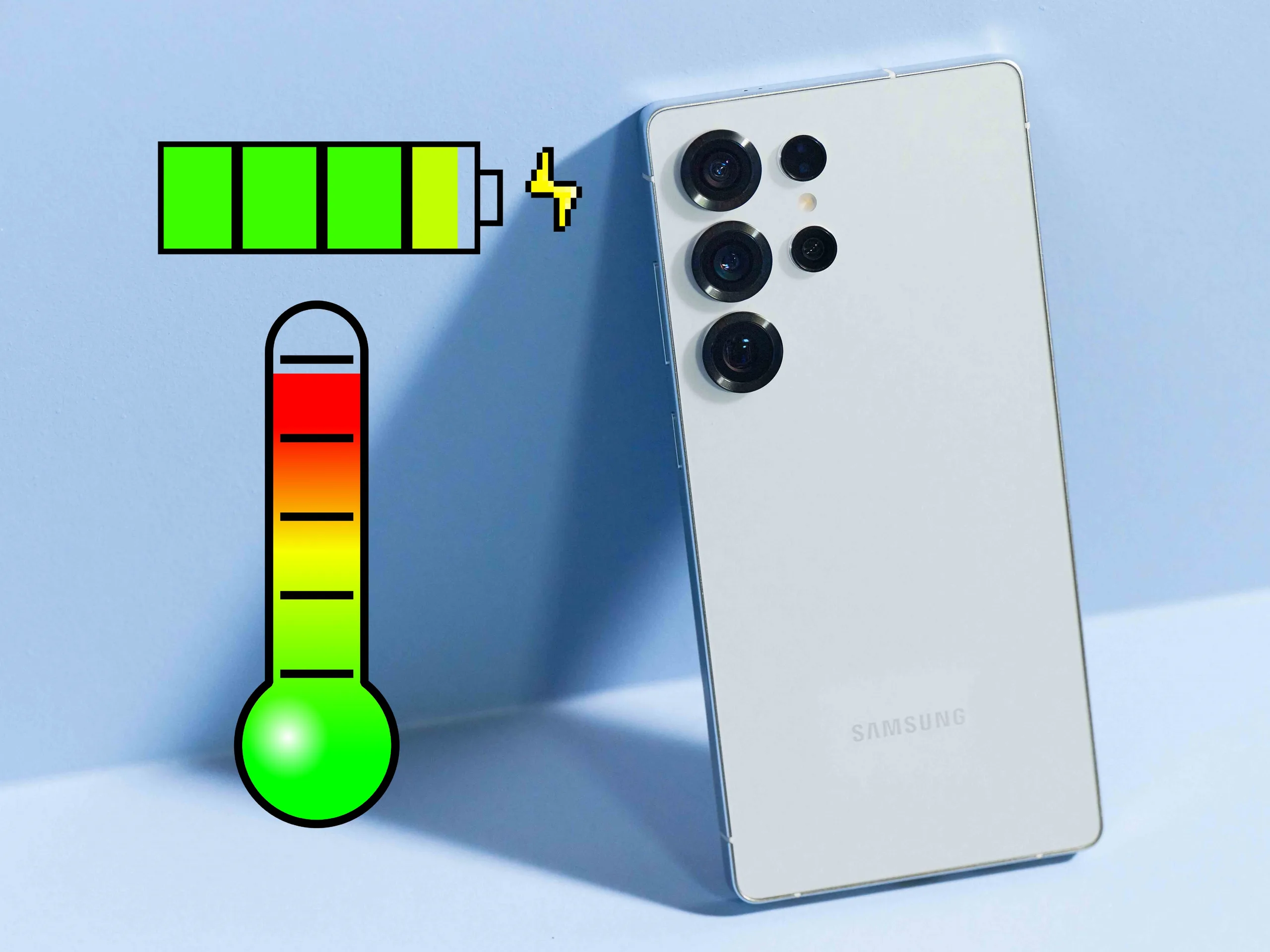
    What stands out, though, is that both the Galaxy S26 Ultra and iPhone 17 Pro Max kept their cool during testing, maintaining temperatures around 27°C while measuring battery life. In contrast, other models, like the Google Pixel 10 Pro XL, heated up to 32°C during the tests.

    Mrwhosetheboss noted similar thermal behavior under heavy usage. After gaming and completing three rounds of Geekbench, the Galaxy S26 Ultra and iPhone 17 Pro Max remained the coolest options. The Oppo Find X9 Pro, however, struggled the most, hitting temperatures of 42°C.

    Conclusion

    It appears that Samsung has effectively managed battery life and thermal performance in the Galaxy S26 Ultra. Even with a battery 32% smaller than that of the OnePlus 15, the Galaxy S26 Ultra only lags behind by 7% in battery life—all while operating at a much cooler temperature.

    If you were disheartened by the Galaxy S26 Ultra due to its less impressive hardware specs, it might be time to take another look at the Galaxy S26 Ultra with a fresh perspective.

    Source:
    Link


  • OnePlus 13R Review: Attractive Smartphone with Some Shortcomings

    OnePlus 13R Review: Attractive Smartphone with Some Shortcomings

    Key Takeaways

    1. Impressive Battery Life: The OnePlus 13R features a 6,000 mAh battery, providing over 25 hours of runtime on Wi-Fi and over 40 hours of video playback with Wi-Fi off.

    2. Performance Issues: The device experiences significant heat generation, leading to a performance dip of up to 65% during demanding tasks like gaming.

    3. Display Specifications: The phone has an AMOLED display with a resolution of 1,264p and a dynamic refresh rate of 1 Hz to 120 Hz, but brightness claims could not be verified in testing.

    4. Brightness Discrepancies: Actual display brightness was lower than advertised, with recorded values significantly less than competitors, affecting video playback quality.

    5. Balanced Strengths and Weaknesses: While the OnePlus 13R has a premium build and strong battery life, performance challenges and display issues may lead buyers to explore other premium options.


    During our evaluation, the OnePlus 13R made a strong impression with its premium build and remarkable battery life. This OnePlus smartphone utilizes a blend of silicon and carbon in its anode, allowing for a robust battery capacity of 6,000 mAh (23.58 Wh). In our real-world battery assessments, conducted at a display brightness of 150 cd/m², this flagship phone showcased an impressive runtime exceeding 25 hours in the Wi-Fi test and over 40 hours during continuous video playback with the Wi-Fi module turned off.

    Performance Challenges

    However, the OnePlus flagship (MRSP: $599.99) sometimes does not live up to its own expectations. The 13R is marketed as “top performance intelligently designed.” In our testing, we observed significant heat generation, causing the processor to throttle considerably within this high-end smartphone. During our 3DMark stress tests, we noted a performance dip of up to 65 percent. Users can expect noticeable performance variations, especially when running demanding applications like games or graphics-heavy tasks.

    Display Quality

    The OnePlus 13R features an AMOLED display with a resolution of 1,264p, offering a pixel density of 450 PPI and dynamically adjusting its refresh rate from 1 Hz to 120 Hz via LTPO technology. The specifications claim a peak brightness of 4,500 nits. However, we could not verify this figure in our testing. We also couldn’t confirm OnePlus’ assertions when displaying a white background (1,213 cd/m²) or an APL18 pattern (1,262 cd/m²). While playing 4K video content, we recorded a brightness of only 1,086 cd/m², which is notably lower compared to its competitors like the Xiaomi 14T Pro (4,407 cd/m²) that performs significantly better.

    Conclusion

    In conclusion, while the OnePlus 13R shines in certain areas, it also exhibits some shortcomings that potential buyers should be aware of. With its impressive battery life and solid build quality, it certainly has its strengths. However, performance issues under load and discrepancies in display brightness may lead some users to consider other options in the premium smartphone market.

    Source:
    Link


  • OPPO Find X7 Ultra Tops DxOMark as Best Battery Performer

    OPPO Find X7 Ultra Tops DxOMark as Best Battery Performer

    OPPO Find X7 Ultra has become the top performer in DxOMark’s global battery test rankings! While the OPPO Find X7 Ultra is also well-regarded for its camera capabilities, it features a somewhat thicker design at 9.5mm. This added thickness can be attributed to its large camera sensors and a robust 5000 mAh battery.

    Battery Performance in Various Conditions

    Based on DxOMark’s evaluations, the OPPO Find X7 Ultra exhibits exceptional battery life during indoor activities, such as video streaming, phone calls, and gaming. However, its battery performance declines in outdoor settings, particularly when taking photos, making calls, and using social media applications.

    Charging Capabilities

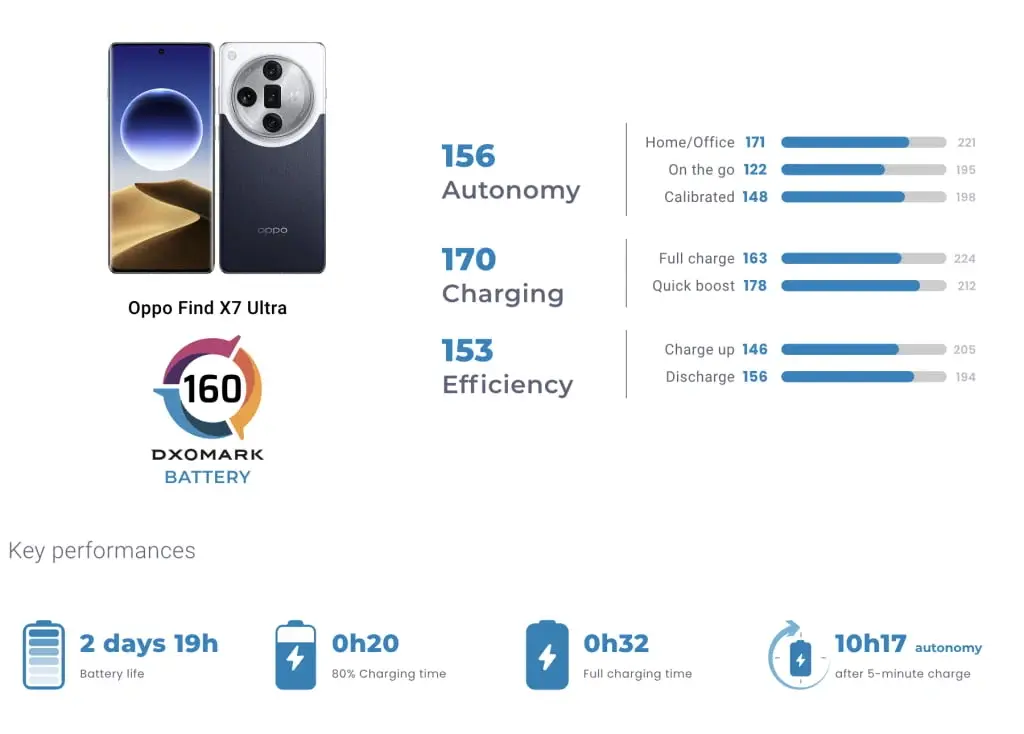
    The OPPO Find X7 Ultra achieves a full battery charge in 50 minutes with its 100W wired charger. The 50W wireless charger, on the other hand, takes 2 hours and 20 minutes to fully charge the device. DxOMark reports that a mere 5-minute charge can provide up to 10 hours of battery life. This autonomy encompasses indoor use, on-the-go scenarios, and calibrated use cases, effectively representing a mixed usage scenario. The ability to get 10 hours of battery from just a 5-minute charge is incredibly impressive.

    Charging Speeds

    The device reaches 98% battery capacity in 30 minutes and 80% capacity in just 20 minutes. Given that full capacity is not always needed, achieving 80% in 20 minutes is quite remarkable for quick battery top-ups. The phone can be fully charged in 32 minutes, based on wired charging tests.

    For wireless charging, the phone reaches 43% in 30 minutes and 80% capacity in 1 hour and 12 minutes. A complete charge is accomplished in 2 hours and 22 minutes.

    For more detailed battery test results, you can visit DxOMark’s official website.


    OPPO Find X7 Ultra Tops DxOMark as Best Battery Performer