Tag: Baidu

  • China’s Geely and Baidu Launch Jiyue 07 EV with an Award-Winning Design at Red Dot Award 2023

    China’s Geely and Baidu Launch Jiyue 07 EV with an Award-Winning Design at Red Dot Award 2023

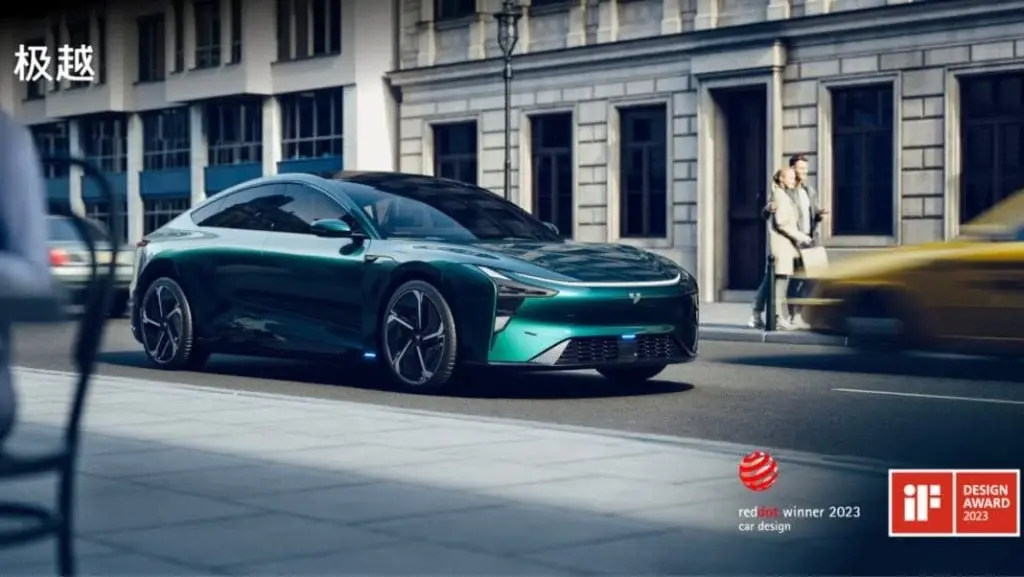
    The Jiyue 07, a new electric liftback, has been officially unveiled in China. This electric sedan is a collaboration between Geely and Baidu and has already been recognized as the winner of the Red Dot Award for 2023. Consumers in China can expect to see the Jiyue 07 available for purchase in 2024.

    Features

    The Jiyue 07, previously assumed to be named Jiyue 02, is built on Geely's SEA architecture and comes equipped with self-driving capabilities developed by Baidu. Jiyue is a joint venture between Baidu and Geely, with Baidu initially holding a 55% stake in the brand. However, after some restructuring, the brand was renamed Jiyue and Geely's holding increased to 65%. Geely handles the manufacturing aspect of the vehicle, while Baidu is responsible for the software, ADAS, and connectivity.

    The Jiyue 07 is the second model in the Jiyue lineup, following the release of the Jiyue 01 SUV. This mid-size liftback car is based on the Jidu Robo-02 concept and boasts sleek styling, a low beltline, and wide wheel arches. The Jiyue 07 distinguishes itself by omitting door handles and featuring buttons on the B and C-pillars instead. The front end of the car showcases Y-shaped headlights, similar to its predecessor. Additionally, the Jiyue 07 includes a large panoramic roof, an active spoiler, and a single taillight unit on the side.

    The Jiyue 07 electric liftback is equipped with five-spoke rims that come with aerodynamic covers. This model has been honored with two design awards: the 2023 Red Dot Design Award and the iF Design Award 2023. The Red Dot Design Award for 2023 recognized 16 cars, including the Peugeot 408, Genesis G90, Deepal SL03, and the Jiyue 07. In terms of specifications, the entry-level version of the Jiyue 07 features a single e-motor with a 200kW output and a 71.4kWh LFP battery. On the other hand, the 4WD version is equipped with a 400kW motor and a 100kWh NMC battery pack.

    The self-driving system of the Jiyue 07 relies on cameras and radars, but does not include hip LiDAR sensors. Unfortunately, pricing and full release details for the Jiyue 07 have not been disclosed at this time. However, it is anticipated that the EV will make its way to the Chinese market by mid-2024.
  • Baidu surpasses revenue expectations, tackles AI Chip obstacles amidst U.S. export restrictions

    Baidu surpasses revenue expectations, tackles AI Chip obstacles amidst U.S. export restrictions

    Baidu Reports Strong Q3 Performance, Exceeding Expectations

    Chinese tech giant Baidu has announced a robust third-quarter performance, with a 6% increase in revenue to 34.45 billion yuan ($5.44 billion). This surpasses analysts' expectations and has propelled U.S.-listed shares up by 1.8% in morning trading. The company's adjusted net income also showed a healthy 23% rise to 7.27 billion yuan ($1.15 billion).

    Potential Challenges in the AI Chip Landscape

    Despite these gains, Baidu acknowledges potential challenges in the AI chip landscape due to U.S. export curbs. CEO Robin Li Yanhong reassured stakeholders that the company's extensive stockpile of AI chips could sustain the upgrading of its Ernie large language model for the next two years. However, to mitigate future risks, Baidu is actively exploring alternative sources and is reportedly considering a potential deal with Huawei for domestically-made AI chips.

    U.S. Sanctions Pose Broader Concerns for AI Development in China

    The U.S. sanctions on AI chip exports to China, particularly from companies like Nvidia, pose a broader concern for the pace of AI development in the country. Baidu anticipates a potential consolidation of Chinese AI companies, specifically around leading large language models (LLMs). Competitors Alibaba and Tencent also express their anxieties regarding the impact of U.S. curbs on their cloud computing businesses.

    Optimism for Positive Growth in Q4

    Despite a 2% year-on-year decline in Q3 AI cloud revenue, Baidu remains optimistic about positive growth in Q4. The company attributes this optimism to the increasing demand for generative AI services.

    Ernie Bot Ecosystem Gains Traction

    The Ernie Bot ecosystem, a significant focus for Baidu, has gained remarkable traction since its launch in March. With 70 million users accumulated within three months and handling tens of millions of queries daily, Ernie Bot positions itself as a formidable player in the AI landscape. Its success is particularly noteworthy as Baidu, Alibaba, and Tencent all release competitors to OpenAI's ChatGPT.

    Future Outlook and Strategic Realignment

    While Baidu's current revenue from generative AI is relatively modest, CEO Li is optimistic about the future. He forecasts that generative AI products will contribute significantly to ad revenue in the fourth quarter. Baidu plans to strategically realign its resources to invest further in AI growth opportunities and move away from lower-priority efforts.

    Aligned with China's Economic Projections

    Baidu's revenue growth aligns with China's overall economic projections, which are expected to grow by 5.4% this year. As online consumer advertising spending increases, Baidu, which primarily derives revenue from advertising, stands to benefit from this trend.

  • Navigating AI Development: Baidu’s Strategic Approach amidst US Export Restrictions

    Navigating AI Development: Baidu’s Strategic Approach amidst US Export Restrictions

    Artificial Intelligence (AI) and the Role of Baidu in Navigating Geopolitical Challenges

    Artificial intelligence (AI) has become a dominant force in the tech industry, and Baidu, the Chinese tech giant, is determined to continue its AI development despite facing export restrictions on advanced AI chips imposed by the United States. In response, Baidu has devised a strategic plan to sustain its AI projects, offering valuable insights into how technology companies can overcome geopolitical challenges and thrive in the competitive AI landscape.

    Baidu’s CEO, Robin Li Yanhong, shared this strategy during the company’s recent third-quarter earnings call. Despite the limitations imposed by the U.S. curbs on AI chip exports, Li expressed confidence in Baidu’s ability to continue its AI initiatives, particularly its Large Language Model (LLM) called Ernie. Baidu has accumulated a stockpile of advanced AI chips, ensuring uninterrupted AI development for at least the next two years. This proactive approach demonstrates the importance of foresight and strategic planning in mitigating the impact of international trade restrictions.

    Li’s comments also shed light on the broader implications of export curbs. While Baidu has found a temporary solution to sustain its AI projects, these restrictions could potentially slow down the pace of AI innovation in China. This situation may lead to a consolidation of Chinese AI companies, with a focus on leading LLMs. It emphasizes the interconnectedness of global tech industries and the far-reaching effects of geopolitical decisions.

    Interestingly, Baidu’s situation highlights the potential of homegrown solutions. Li acknowledges that alternative chip sources may not match the advancements made in the United States. However, he emphasized Baidu’s strengths in unique AI architecture and algorithms. This suggests a potential shift towards self-reliance in AI technology, which could reshape the global AI landscape.

    Moreover, Baidu has redirected its focus towards its Ernie Bot ecosystem, directly competing with OpenAI’s ChatGPT. This shift signifies a significant departure from Baidu’s traditional revenue streams. The success of Ernie Bot, with 70 million users within just three months of its launch, exemplifies Baidu’s potential to lead in the generative AI space.

    In conclusion, Baidu’s response to the export restrictions on advanced AI chips showcases its determination to continue AI development through strategic planning and a stockpile of AI chips. This situation also highlights the potential consolidation of Chinese AI companies and the importance of homegrown solutions. Baidu’s success with its Ernie Bot ecosystem further solidifies its position in the generative AI domain. As AI continues to revolutionize industries worldwide, navigating geopolitical challenges will be crucial for companies seeking to thrive in this competitive landscape.

    Source: 1, 2

  • Consumer AI Becomes the Focus of China’s Leading Tech Giants Alibaba and Baidu

    Consumer AI Becomes the Focus of China’s Leading Tech Giants Alibaba and Baidu

    China’s tech giants, Alibaba and Baidu, are leading the way in the development of consumer AI services. This is particularly notable considering that popular Western AI tools like ChatGPT and Bard are not accessible in China.

    Multiple AI Services Launched in China

    Alibaba’s marketplace, Taobao, recently introduced Duxiaoxiao, a digital assistant powered by Baidu’s AI, Ernie Bot. Duxiaoxiao is designed to adapt to shopper preferences, showcasing the growing trend of personalized digital services. The service gained significant popularity and generated sales within days of its launch.

    Another Chinese tech giant, Meituan, is making its mark with Wow, an AI service aimed at creating a virtual community of AI friends for the younger generation. While still in its early stages, Wow signifies a shift towards interactive, youth-oriented AI experiences.

    Expanding into Innovative Territories

    Chinese companies are investing heavily in AI development as they seek to expand beyond traditional sectors and venture into more innovative territories. However, these AI services currently represent only a small fraction of their overall revenue, which is still dominated by their core businesses.

    For example, Baidu offers access to its AI models at competitive prices and has even launched a subscription-based model for its advanced Ernie Bot 4.0. This subscription-based approach aligns with the global trend of AI services being offered on a subscription basis.

    Challenges and Uncertainty

    Despite the progress being made, there are challenges that come with developing AI services in China. The country’s stringent AI regulations could potentially hinder the growth and innovation of these services. Beijing has only approved a select few AI chatbots, and strict rules are in place. This uncertainty regarding the future landscape of AI endeavors in China could potentially limit the country’s ability to compete globally in the personal AI product market.

    Nevertheless, China’s commitment to AI innovation is evident. The push for advancements in AI technology within the country showcases its determination to play a significant role in the global tech scene.

  • Baidu of China and Huawei Collaborate for AI Chip Purchase

    Baidu of China and Huawei Collaborate for AI Chip Purchase

    Baidu Chooses Huawei’s AI Chips to Embrace Local Tech Solutions

    Baidu, China’s leading web search giant, has made a significant move towards local tech solutions by purchasing a batch of homegrown AI chips from Huawei Technologies. This decision comes amidst political pressures and trade constraints from the US, which have prompted Chinese companies to seek alternatives and reshape the tech landscape.

    The order placed by Baidu includes 1,600 of Huawei’s Ascend 910B AI chips, with an estimated cost of around $61 million. This purchase indicates Baidu’s intention to reduce its reliance on foreign technology, particularly Nvidia’s AI chips that have been considered the industry’s gold standard. Although the order size is relatively modest compared to what Baidu usually procures from Nvidia, the significance lies in the step towards achieving technological self-sufficiency for China.

    It is worth noting that Baidu had not previously utilized Huawei’s AI chips, making this partnership noteworthy. While Huawei’s chips may not currently match Nvidia’s performance, they represent the most advanced AI chips available in China. This shift in preference is not solely driven by Baidu but also a response to the strict US regulations that have prohibited Nvidia from selling its top AI chips to Chinese companies.

    Baidu and Huawei have been collaborating since 2020 to ensure seamless integration of Baidu’s AI platforms with Huawei’s hardware. Despite Baidu having its own Kunlun AI chips, the reliance on Nvidia’s technology has been substantial. However, the US restrictions have compelled Baidu to alter its strategy and explore alternative options.

    While analysts view the US restrictions as an opportunity for Huawei to claim a larger share of the domestic market, the key question remains: Can China accelerate its chipmaking capabilities to not only compete but also lead in the tech arena? This deal serves as a glimpse into a potential future where China’s tech independence becomes a reality rather than just an aspiration.

    Conclusion

    Baidu’s decision to purchase Huawei’s AI chips marks a significant shift towards local tech solutions in the face of political pressures and trade constraints from the US. This move reflects China’s ambition to achieve technological self-sufficiency and reduce reliance on foreign technology providers like Nvidia. While Huawei’s AI chips may not currently match Nvidia’s performance, this partnership showcases the most advanced AI chips available in China. As China seeks to accelerate its chipmaking prowess, this deal serves as a stepping stone towards a future where China’s tech independence becomes a reality.

  • Baidu AI Powerplay: ERNIE 4.0 to Challenge GPT-4

    Baidu AI Powerplay: ERNIE 4.0 to Challenge GPT-4

    China’s homegrown tech behemoth, Baidu, recently unveiled its latest AI creation, ERNIE 4.0, in a direct competition with OpenAI’s GPT-4. This advanced generative AI model was showcased by Baidu’s CEO, Robin Li, at an event held in Beijing, demonstrating an impressive range of capabilities including creating advertising materials and penning a martial arts novel in real-time​1​.

    Aiming High

    Baidu’s ambitious venture into the AI arena, especially with ERNIE 4.0, is a part of a larger narrative. The Chinese tech giant’s stride towards enhancing generative AI across its products like Baidu Drive and Baidu Maps is seen as a strategic move to remain at the forefront of AI technology within China and globally. This new AI model is said to have a significant impact on the way Baidu’s search engine responds to queries, as it is designed to provide customized answers instead of just a list of links​2​​3​.

    A Close Rival to GPT-4?

    ERNIE 4.0 is being pitched as a close competitor to OpenAI’s GPT-4. The model is expected to understand complex queries and generate advanced responses. The live demonstrations of ERNIE 4.0 showcased its ability to handle creative tasks such as generating a car commercial, solving complicated math problems, and creating novel plots from scratch. These capabilities are being seen as a testament to the model’s improved understanding, generation, reasoning, and memory functionality, as stated by Baidu’s CEO​2​.

    The Road Ahead

    While the exact timeline for the full integration of ERNIE 4.0 into Baidu’s suite of products remains unclear, the potential it holds is substantial. This technology could reshape the search engine industry by changing how queries are answered and potentially affecting website traffic and ad positioning. However, the ERNIE 4.0 model is still in the trial phase with only a selected few invited to test its capabilities before it’s rolled out to the general public​2​​3​.

    The unveiling of ERNIE 4.0 is seen as a significant step towards China’s ambition to dominate the global AI industry, amid the ever-growing competition in the AI sector, marked by innovative models like GPT-4 from OpenAI.


    Source Links: Reuters, Search Engine Land, Euronews.