Tag: App Store

  • Challenges for EU Developers with Apple’s New App Store Policy

    Challenges for EU Developers with Apple’s New App Store Policy

    Apple’s Groundbreaking Decision: Allowing Third-Party App Stores on iOS

    Commencing from March this year with the rollout of iOS 17.4, Apple is introducing a groundbreaking change by permitting third-party app stores on iOS for the very first time.

    Furthermore, developers will now have the option to steer clear of Apple’s in-app payment system. This alteration signifies a significant departure from the past, as iPhone users will no longer be restricted to obtaining applications exclusively from the Apple App Store. This move by Apple is a direct response to the Digital Markets Act (DMA) enforced in the European Union.

    Apple’s New Fee Structure for Developers in the EU

    Preceding the introduction of the DMA, Apple imposed a 30 percent commission rate on most App Store transactions, such as app downloads and in-app purchases. Nonetheless, smaller developers generating less than $1 million annually were granted the liberty to pay merely 15 percent.

    Within the EU, Apple is revamping the charges applicable to iOS apps. Developers now have the liberty to select between a 17 percent commission (with an additional 3 percent if utilizing Apple’s payment system) or a 10 percent commission (plus 3 percent) designated for small businesses, a significant reduction from the earlier 30 percent.

    Structural Alterations in Core Technology Fee and Distribution

    Moreover, a new element has emerged, termed the Core Technology Fee (CTF) of €0.50 per annual installation for high-traffic apps (exceeding one million installations per annum). This charge is levied per customer account for the initial installation per year. The majority of developers will be exempt from this fee, as it pertains to a small fraction of apps.

    Despite developers now having the ability to circulate apps beyond the App Store, the CTF remains applicable once they cross the threshold of volume, irrespective of the platform. The exclusive domain over in-app acquisitions no longer stands, with a 3 percent charge in case developers opt for its utilization. Furthermore, alternative app marketplaces must also remit the CTF for downloads. Additionally, Apple will exert control over which app stores can be accessible on its App Store.

    Ramifications for Developers

    Nikita Bier, the co-founder of social-media startups Gas and tbh, emphasized that under the revamped structure, if a developer garners $10 million in revenue, Apple’s share would amount to $6.2 million annually. Factoring in presumed expenditures and taxes, the net earnings for the developer would stand at $2 million, representing a mere 20% of their overall sales.

    Bier raised a poignant concern that for numerous applications, especially those generating less than $0.57 per user, the novel fee arrangement may culminate in adverse earnings, translating to developers owing money to Apple rather than accruing profits. Consequently, Bier articulated a reluctance towards launching an app in Europe given these circumstances.

  • Spotify Given Permission by Google to Avoid Play Store Fees

    Spotify Given Permission by Google to Avoid Play Store Fees

    Spotify’s Deal with Google to Avoid Play Store Fees

    During Google’s legal battle with Epic Games, an interesting agreement between Google and Spotify was revealed. Don Harrison, Google’s executive responsible for international partnerships, testified that Spotify had struck a generous deal with Google. Under this agreement, Spotify did not have to pay any commission to Google for users who paid their subscription fees using Spotify’s own payment method. For users who made purchases using Google’s payment method, the commission paid was only 4%.

    Google’s Privileges for Spotify

    According to Harrison, Spotify’s popularity was deemed “unprecedented” and Google believed that it was crucial for Spotify to work seamlessly within the Android ecosystem. As a result, Google granted Spotify certain privileges to ensure its smooth operation. This decision was made to prevent users from considering a switch away from Android.

    Spotify’s Criticism of Commission Rates

    Spotify has been a vocal critic of app store commission rates, particularly in the case involving Apple and Epic Games. The company has accused Apple of monopolizing the market. In fact, a few months ago, Spotify made a bold move to stop accepting payments through the App Store in an effort to avoid paying commissions to Apple.

    Overall, while the issue of app store commissions remains a topic of debate, it appears that Google has shown favoritism towards Spotify by offering a more lenient commission structure. This highlights the ongoing competition and power dynamics between app developers and the major app stores.

    Source: 1, 2

  • Samsung received $8 billion from Google to secure its role as the default search engine, app store, and voice assistant.

    Samsung received $8 billion from Google to secure its role as the default search engine, app store, and voice assistant.

    Google’s Multibillion-Dollar Strategy to Dominate Android Ecosystem

    In a recent antitrust trial involving Google and Epic Games, significant information has come to light regarding Google’s tactics to maintain its dominant position within the Android market. A key aspect of this strategy involves its relationship with Samsung, the largest Android Original Equipment Manufacturer (OEM).

    A Lucrative Partnership

    According to a Bloomberg report, Google paid Samsung a substantial $8 billion over a four-year period to ensure that its key services, including Google Search, Google Assistant, and the Google Play Store, remained the default options on Samsung Galaxy devices. This move was part of Google’s broader agenda to solidify its presence within the Android ecosystem and discourage OEMs from promoting competing services. For instance, Samsung has its own Bixby voice assistant and Galaxy Store, which could have potentially overshadowed Google’s offerings.

    The Crucial Role of Samsung Devices

    James Kolotouros, Google’s Vice President for Partnerships, revealed these details during his testimony. He emphasized that Samsung’s contribution accounted for more than half of the Google Play Store’s revenue, underscoring the crucial role of Samsung devices in Google’s ecosystem.

    Project Banyan: Securing Dominance

    This partnership between Google and Samsung forms part of a larger initiative by Google, known as Project Banyan, aimed at maintaining the dominance of its services on Android devices. Under this project, Google not only secured its apps’ pre-eminence on devices but also shared advertising revenue and offered incentives to OEMs for prioritizing Google’s apps. For instance, in 2020, Google proposed spending $2.9 billion, which would increase to $4.5 billion by 2023, to ensure the availability of its search, Play, and other critical apps on various devices, including those from non-Android OEMs and wireless carriers.

    Responding to Competition

    Furthermore, Google’s agreement with Samsung initially included a proposal to prevent the Galaxy Store from being placed on home screens, though this plan was later abandoned. This strategy was partly in response to competition from Apple, as Google aimed to improve the Android experience to attract potential iPhone switchers.

    Overall, the revelations from the antitrust trial shed light on Google’s multibillion-dollar strategy to dominate the Android ecosystem. By investing heavily in its partnership with Samsung and implementing Project Banyan, Google aims to solidify its position and maintain its control over key services and revenue streams within the Android market.

  • WhatsApp’s Native Mac App Now Available Globally on the App Store

    WhatsApp’s Native Mac App Now Available Globally on the App Store

    WhatsApp’s Standalone App for Mac Now Available on App Store

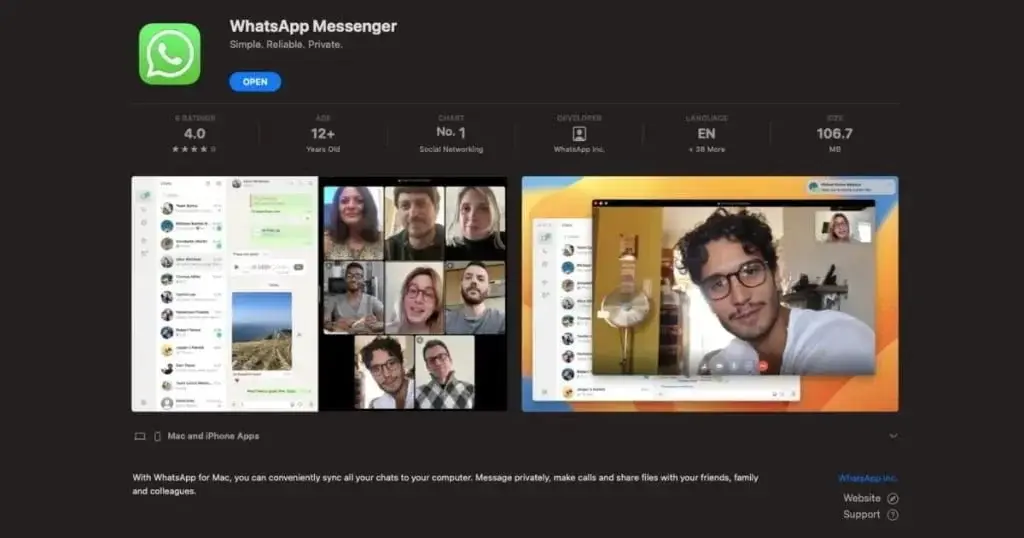
    WhatsApp users on Mac can now rejoice as the standalone app for macOS is finally available on the App Store. This means that Mac users no longer have to go through the hassle of downloading it from the instant messaging platform’s official website.

    Earlier this year, WhatsApp released a beta version of its native app for macOS. However, users had to download it from the official website, which could potentially be confusing for some. Now, in a recent post on X, the Meta-owned platform, the app is available for all macOS users worldwide.

    Improved Usage Experience

    The new dedicated app version of WhatsApp for Mac is based on Mac Catalyst and aims to enhance the overall usage experience. It retains most of the features found in the iOS version, including audio and video calling, incoming notifications even when the app is closed, and the ability to star important messages.

    It is important to note that the native app is compatible with macOS 11.0 or later.

    Downloading and Installing WhatsApp for Mac

    To download and install the WhatsApp app for Mac, users can either visit the Mac App Store and search for “WhatsApp Messenger” or simply click on this link. Once on the app’s page, click on “Get” and then “Install.”

    After the installation is complete, open the app, and it will display a QR code. This code needs to be scanned using the WhatsApp app on the user’s smartphone. To do this, go to WhatsApp Settings, select “Linked Devices,” and then “Link a device.” From there, follow the prompts to scan the QR code displayed on the Mac app.

    With the availability of WhatsApp’s standalone app for Mac on the App Store, Mac users can now enjoy a seamless and convenient messaging experience directly from their desktops. Whether it’s chatting with friends, making audio or video calls, or staying updated with important messages, the WhatsApp app for Mac has got you covered.