
Key Takeaways
1. China has launched a program to categorize and standardize solid-state batteries, emphasizing their importance in electric vehicles and energy storage over the next five years.
2. Local companies, including startups and major firms like CATL, are piloting solid-state battery production, achieving energy densities between 350-500 Wh/kg.
3. Initial solid-state batteries in mass production are expected to have lower energy densities than theoretical limits, with current products around 350-360 Wh/kg.
4. High production costs are a major challenge, but researchers have found ways to reduce costs by modifying traditional electrolyte structures, achieving significant price reductions.
5. A new solid electrolyte composition has been developed that improves ion conductivity, flexibility, and production efficiency, potentially making all-solid-state lithium batteries more viable.
China has recently launched a pioneering program for the categorization and standardization of solid-state batteries. This initiative highlights the country’s commitment to prioritizing solid-state battery advancements in its electric vehicle and energy storage strategies over the next five years.
Local Production Initiatives
Various local firms, ranging from new startups to major players like CATL, have begun pilot production of solid-state batteries. These batteries boast energy densities between 360 and 500 Wh/kg, and some have even pushed theoretical limits to 700 Wh/kg by utilizing polymer electrolytes in their designs.
Performance and Safety Challenges
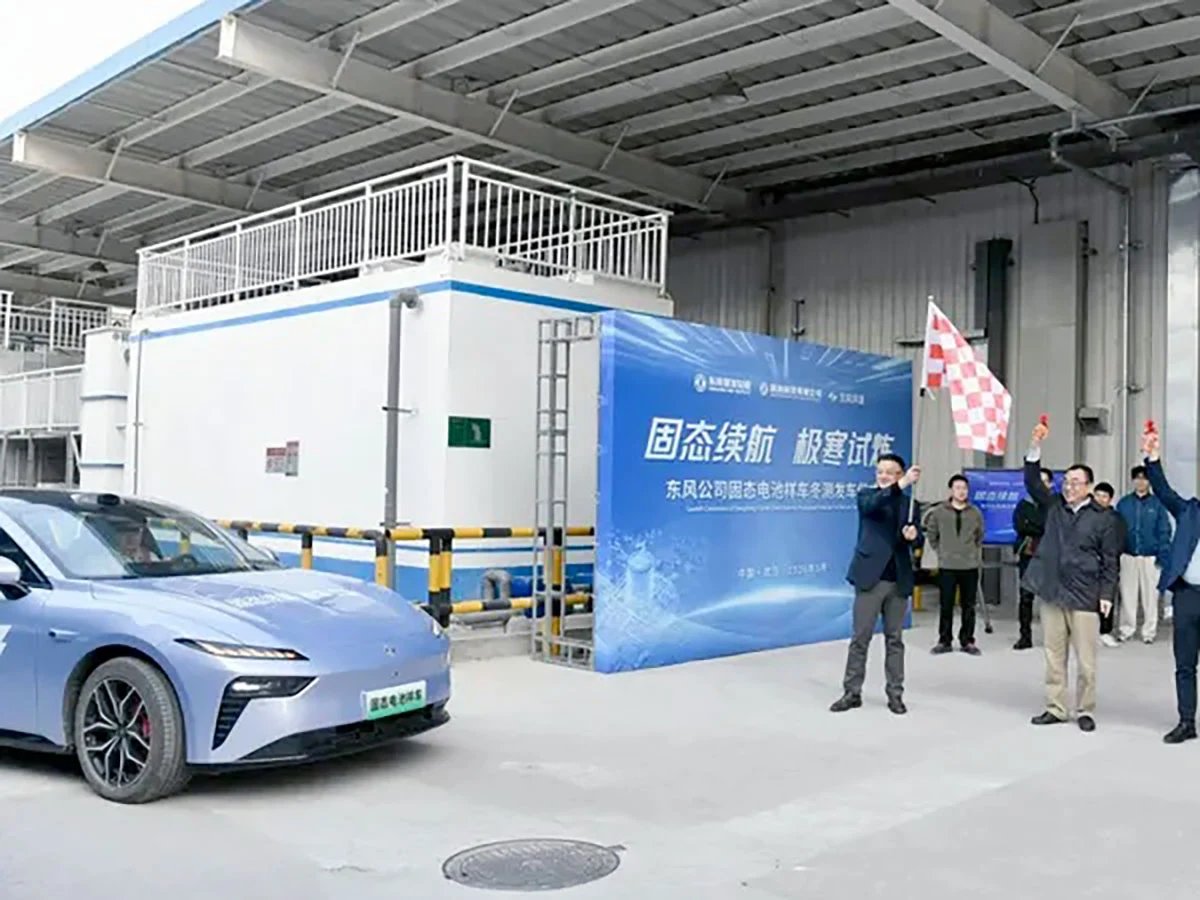
However, the energy density of the initial solid-state batteries in mass production is expected to be lower than the previously stated theoretical cap of 500 Wh/kg. Companies such as Hylic, which has launched the first dedicated production line for solid-state batteries, and Dongfeng, currently testing its own solid-state battery in extremely low temperatures, are both advertising energy densities around 350-360 Wh/kg. They are working hard to balance performance, safety, and manufacturing costs, which is why Hylic points out the lower energy density in their products.
Tackling Manufacturing Costs
One of the major hurdles for the successful commercialization of solid-state batteries is their high production costs. In response, Chinese researchers have been making progress in this area. They discovered a method to reduce costs by modifying the electrolyte structure of a traditional zirconium-based mixture. Another research group has adjusted the composition of this mixture to achieve an estimated material cost of $43.70 per liter, which is approximately 70% lower than the cost of the widely used Li₂ZrCl6 solid electrolyte known for its affordability.
Innovative Electrolyte Composition
The new solid electrolyte consists of lithium, zirconium, aluminum, chlorine, and oxygen in a ratio of 1.4Li2O-0.75ZrCl4-0.25AlCl3. This compound not only provides adequate ion conductivity but is also notably more flexible and can be applied with significantly less pressure, which greatly reduces production costs. The material has been tested for compatibility with existing manufacturing methods and has shown good capacity retention.
The research team from the University of Science and Technology of China states that achieving a balance of strong mechanical compliance, lithium-ion conductivity, and cost efficiency in the 1.4Li2O-0.75ZrCl4-0.25AlCl3 composition could be key to making practical all-solid-state lithium batteries a reality.
Source:
Link