
Key Takeaways
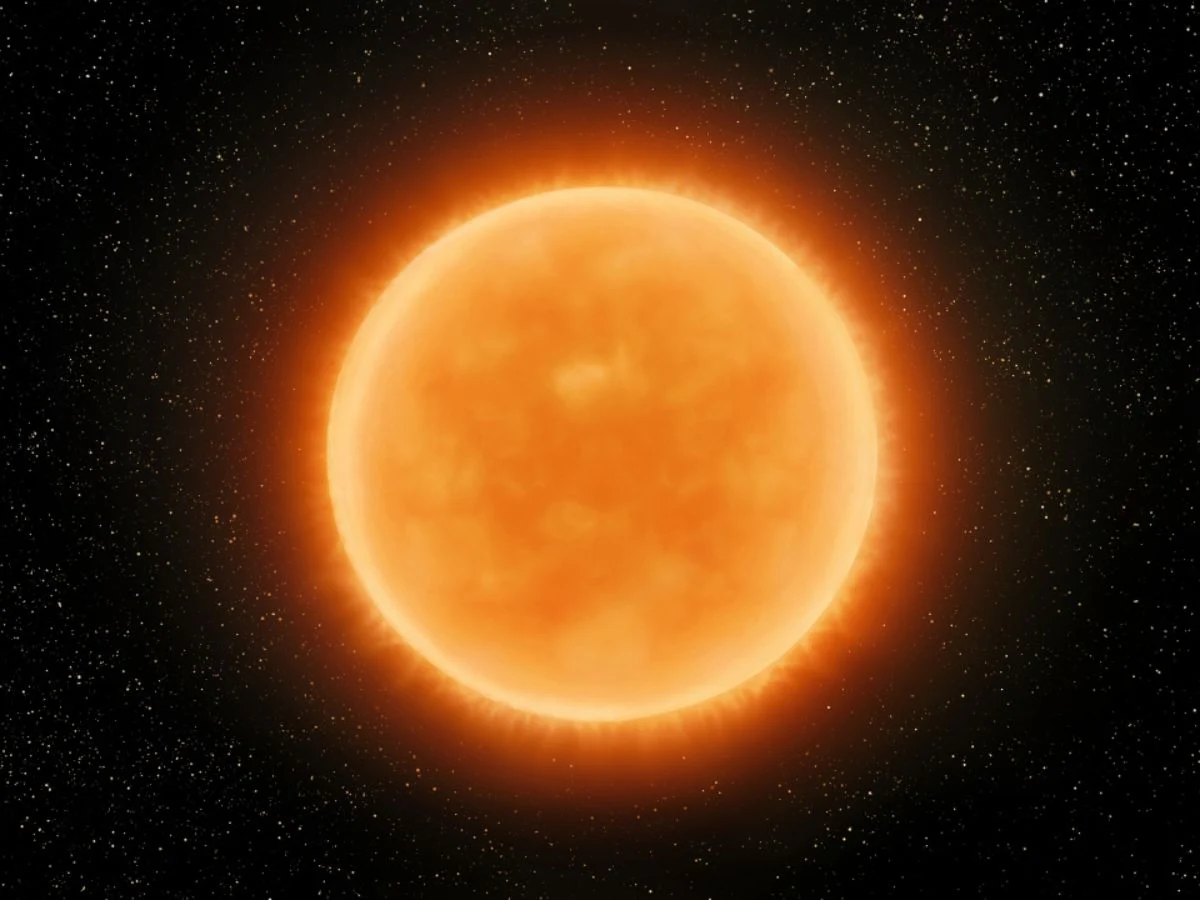
1. Betelgeuse is a massive star in the Orion constellation, 700 times larger than the Sun, and has shown signs of potential explosion.
2. A significant drop in Betelgeuse’s brightness between 2019 and 2020 was caused by a dust cloud it released.
3. Researchers identified a companion star near Betelgeuse using the Alopeke device, which helped minimize atmospheric distortions.
4. The newly discovered companion star is 1.5 times the mass of the Sun and orbits Betelgeuse at a distance of four times that of the Earth to the Sun.
5. The gravitational pull from Betelgeuse may cause the companion star to spiral inward over the next 10,000 years, leading to its demise.
Many stars twinkle in the sky throughout the year, but one that always captures the attention of astronomers is Betelgeuse, found in the Orion constellation. This star, which is 700 times bigger than the Sun, has recently sparked concern about its potential to explode, yet a remarkable finding has surfaced about it.
Luminosity Drop
Between 2019 and 2020, Betelgeuse exhibited signs of fading when scientists noted a significant decrease in its brightness. Ultimately, this was attributed to a dust cloud it had released. After this occurrence, researchers aimed to uncover the reasons behind the star’s fluctuating luminosity.
Research Findings
Scientists conducted numerous observations over periods ranging from 400 days to several years. It was only recently that they pinpointed the source of these variations. Utilizing a device named Alopeke, which is installed on the mirror of the Gemini North International Observatory on Mount Mauna Kea in Hawaii, astronomers were able to spot a smaller star adjacent to the red supergiant Betelgeuse.
Researchers used a technique that involved very brief exposure times to minimize distortions caused by the Earth’s atmosphere. Their findings were shared in the Astrophysical Journal Letters. The newly discovered star is six magnitudes dimmer than Betelgeuse and has a mass about 1.5 times that of our Sun.
Characteristics of the Companion Star
Moreover, this young, hot blue-white star has yet to initiate hydrogen burning. It orbits quite closely to Betelgeuse, at a distance of just four times that between the Earth and the Sun, which is relatively close for stars of such massive sizes.
In conclusion, while this discovery is extraordinary and provides insight into Betelgeuse’s brightness changes, the star’s future appears grim. The gravitational forces exerted by the red supergiant will likely cause the smaller star to spiral inward over the next 10,000 years, leading to a sudden demise.
Nonetheless, further observations of Betelgeuse are planned, particularly to gain a deeper understanding of its lifecycle and composition.
Source:
Link
Leave a Reply