
Key Takeaways
1. Sharp Corporation has introduced a prototype VR haptic glove and controller that simulates textures on fingertips.
2. The glove features basic controller inputs but does not offer force feedback or fine finger tracking capabilities.
3. It uses multi-segmented tactile actuators to create vibrations that mimic rough or smooth textures.
4. The glove is designed to be attached to existing VR controllers for improved precision in use.
5. The product is still in development, with an uncertain timeline for commercial availability.
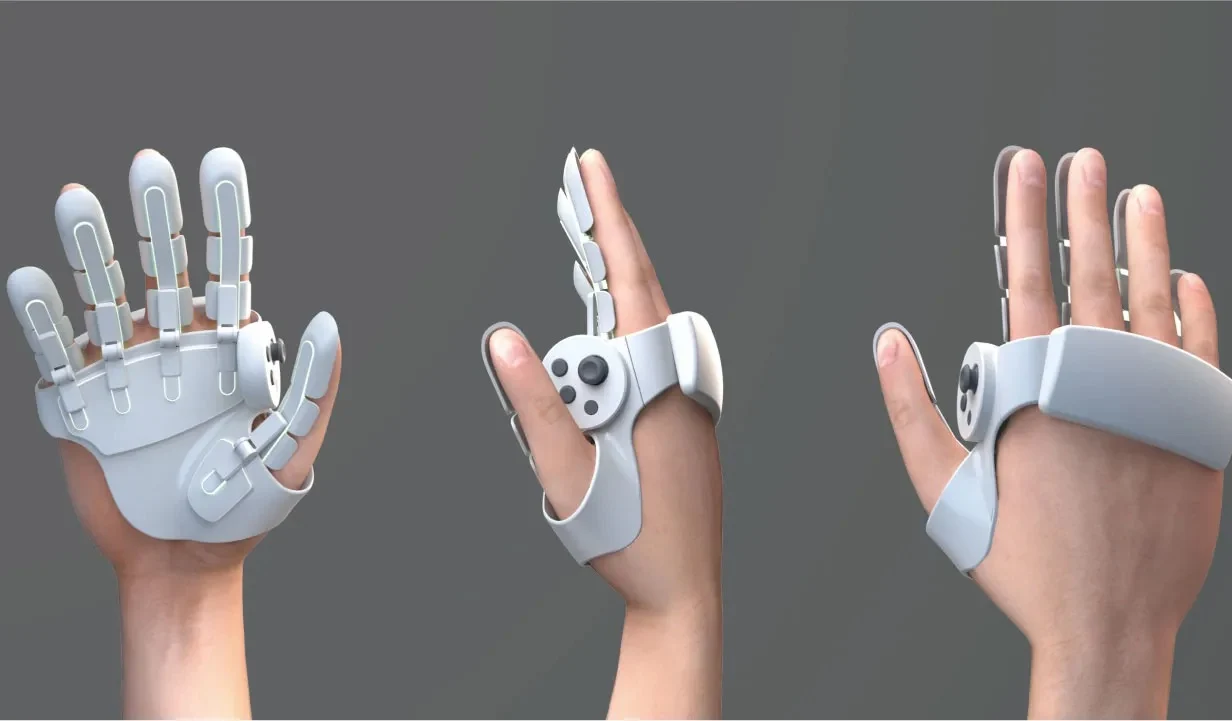
Japan-based Sharp Corporation has recently introduced a prototype for a VR haptic glove and controller designed to create delicate tactile sensations on the fingertips, enabling users to perceive textures in a virtual space. The glove features basic controller inputs, including a joystick and three buttons located between the thumb and forefinger, which could facilitate navigation and interactions within virtual environments.
Not a Force Feedback Glove
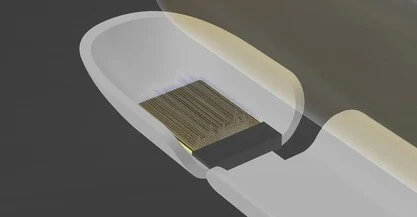
It’s important to clarify that this is not a force feedback glove that allows users to grasp or sense the shape of objects by providing resistance against the fingers. Instead, the device employs “multi-segmented tactile actuator elements” on each fingertip to simulate rough or smooth textures. These components are essentially electrodes on the transducer surface that send out vibration patterns.
Limited Finger Tracking Capabilities
In contrast to other full-glove controllers, this prototype does not offer fine finger tracking, raising questions about how it will utilize the unique texture-sensing abilities of each fingertip. Sharp indicates that they are developing a method to attach the glove to a popular VR controller, like those found with the Meta Quest 3S, which would enhance precision in positioning.
The glove was initially offered at a price of ¥100,000 (equivalent to $680) for early testers, but pre-registration for this opportunity has now closed. Sharp appears to be striving to reduce development time by involving users from the outset. The company envisions developers incorporating tactile data into VR settings using existing GUI-based image editing software, though they have not provided specific details on this process.
Uncertain Future of the Product
As the device is still in both development and testing stages, it remains unclear when, or if, it will become a commercially available product. It is somewhat revealing and possibly concerning that all images on the project page are computer-generated renders rather than actual photographs, but we remain hopeful for its future.
Source:
Link

Leave a Reply