
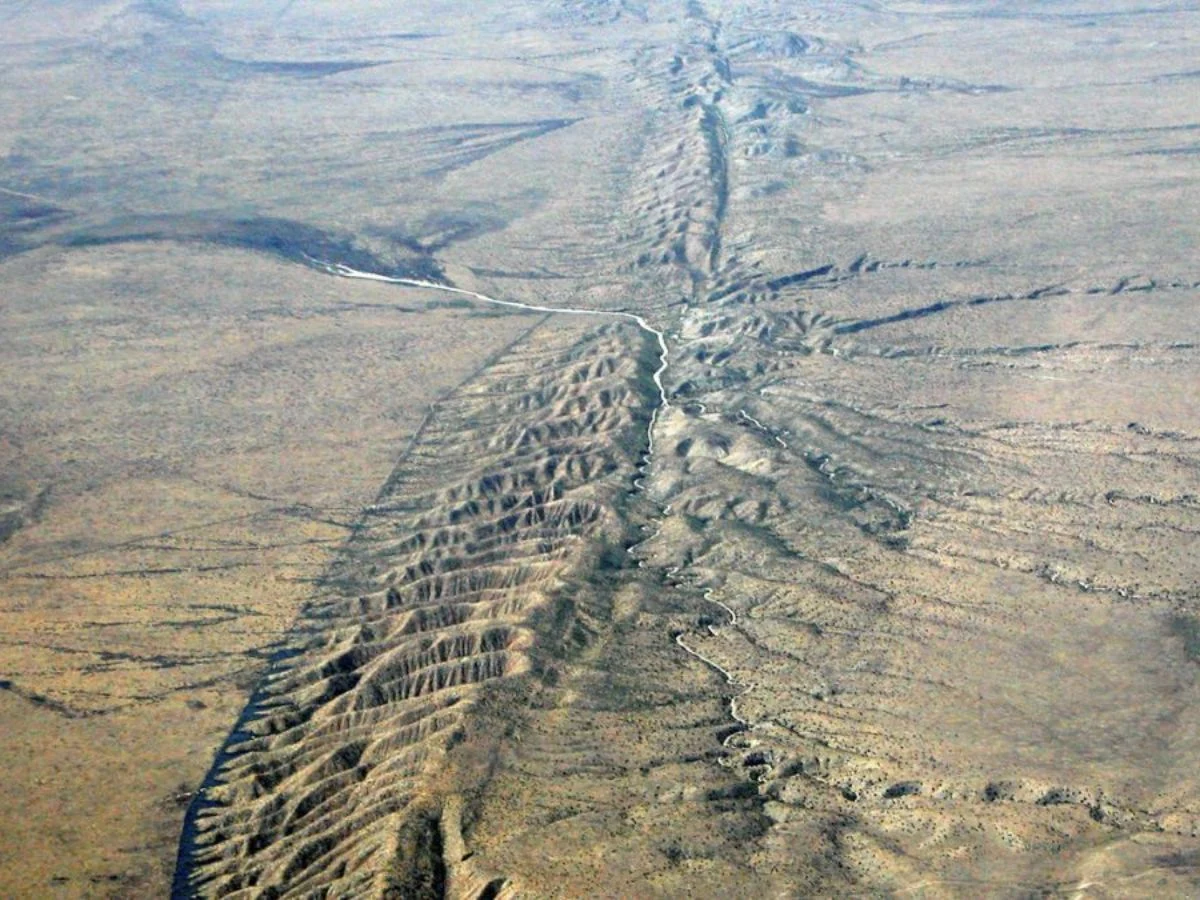
Key Takeaways
1. The San Andreas Fault spans over 1,200 km across California and is marked by two tectonic plates that slide against each other, creating a risk for significant earthquakes, known as the “Big One.”
2. Seismologists are increasingly concerned about the destructive potential of earthquakes from this fault, referencing historical events like the 1908 San Francisco earthquake, which had a magnitude of 7.8.
3. The fault is divided into three segments: the central segment is quiet, the northern segment is concerning for strong quakes, and the southern segment poses the highest risk to Los Angeles.
4. Scientists are attempting to forecast when the next major earthquake might occur, recognizing that while predictions are challenging, certain sections of the fault are lagging behind their usual seismic cycles.
5. Delays in seismic activity in some fault segments could lead to increased risk of severe earthquakes, potentially causing catastrophic consequences for residents and infrastructure.
Many individuals recognize the well-known San Andreas Fault, which spans over 1,200 km across California and is marked by two tectonic plates that gradually slide against one another. There is a prevalent fear of a significant earthquake, often referred to as the “Big One.” Unfortunately, it appears that this event has been postponed, which is troubling news.
Global Concerns
Seismologists and researchers worldwide are growing more apprehensive because the disasters triggered by these two plates can be tremendously destructive. It’s important to mention that their magnitudes on the Richter scale can break records, like the earthquake in 1908, which had a magnitude of 7.8 and utterly leveled San Francisco and its neighboring areas. To provide context, on this scale, a quake with a magnitude of 8 is thirty times more powerful than one rated at 7.
Fault Segments
The fault is categorized into three separate parts. The central segment is the quietest, as it shifts gradually and results in fewer strong earthquakes. The northern section is one to keep an eye on, as it has the potential to trigger a strong quake. Lastly, the southern segment poses the highest risk, as it could potentially annihilate the city of Los Angeles.
In light of the danger this fault presents, scientists are working to forecast when the next “Big One” might strike. While accurate predictions are impossible, there are typical cycles, as illustrated in the accompanying image.
Increased Seismic Activity
Nevertheless, researchers suggest that some sections of the fault are lagging behind their usual cycles. This delay could lead to a considerable surge in seismic activity. Essentially, if the postponement is genuine, vulnerable areas may face severe, destructive earthquakes, potentially triggering a chain reaction in other segments of the fault. Consequently, the aftermath could be catastrophic for residents, with thousands of casualties and extensive damage to infrastructure.
Source:
Link
Leave a Reply